
 Nia Bowers
Crossing the threshold into your teen years is challenging enough for a lot of young people. But when Sophie Yang was twelve years old, she started to feel that she was changing in an unexpected way. Every day sounds like other people chewing, tapping their fingers, even sniffling began to make her feel anxious or angry. As these reactions went from mild to severe and she started isolating herself from people, she finally had to tell my parents: Something is wrong.
Now at the age of 17 and finishing up high school, she has come to recognize that her journey is a common one for other teens who experience auditory triggers. Research indicates that close to 1 in 5 adults may suffer from misophonia to some degree, with more data showing how prevalent it really is among younger people, too. But unlike other well-known conditions, misophonia often goes undiagnosed or misunderstood, especially in teenagers already navigating so much change.
With few resources specifically for people her age, Yang launched Teens for Education and Advocacy on Misophonia (TEAM) in her freshman year of high school, a supportive platform that shares promising research, links to social media groups and websites, and interviews with thought leaders in the community. Through this experience, she’s learned that effectively communicating about misophonia is key to helping teens who struggle with it.
It’s been a whirlwind of almost three years since Sophie founded TEAM, with her cause resonating far more than she’d ever could have expected. Since its launch, she’s been interviewed on Spectrum News Los Angeles TV, featured in Vox, and included in a Psychology Today article. Her personal story has also been shared in venues such as the 2025 Misophonia Collaboration Forum organized by the Misophonia Research Foundation in Chicago, where she was invited to speak at the Lived Experience panel.
“I’ve been fortunate through my journey to meet so many caring people who are working hard to find solutions to Misophonia,” said Yang. “Organizations such as Duke University’s Center for Misophonia and Emotion Regulation or soQuiet are working tirelessly to help people like me who many times suffer in silence.”
Raising awareness of the little-known condition has remained her goal, even working with Congress to help introduce a bipartisan resolution to recognize World Misophonia Awareness Day, held annually on July 9. While nearer to home, Yang had to navigate how to deal with the negative impact of Misophonia on daily activities such as attending classes and taking exams.
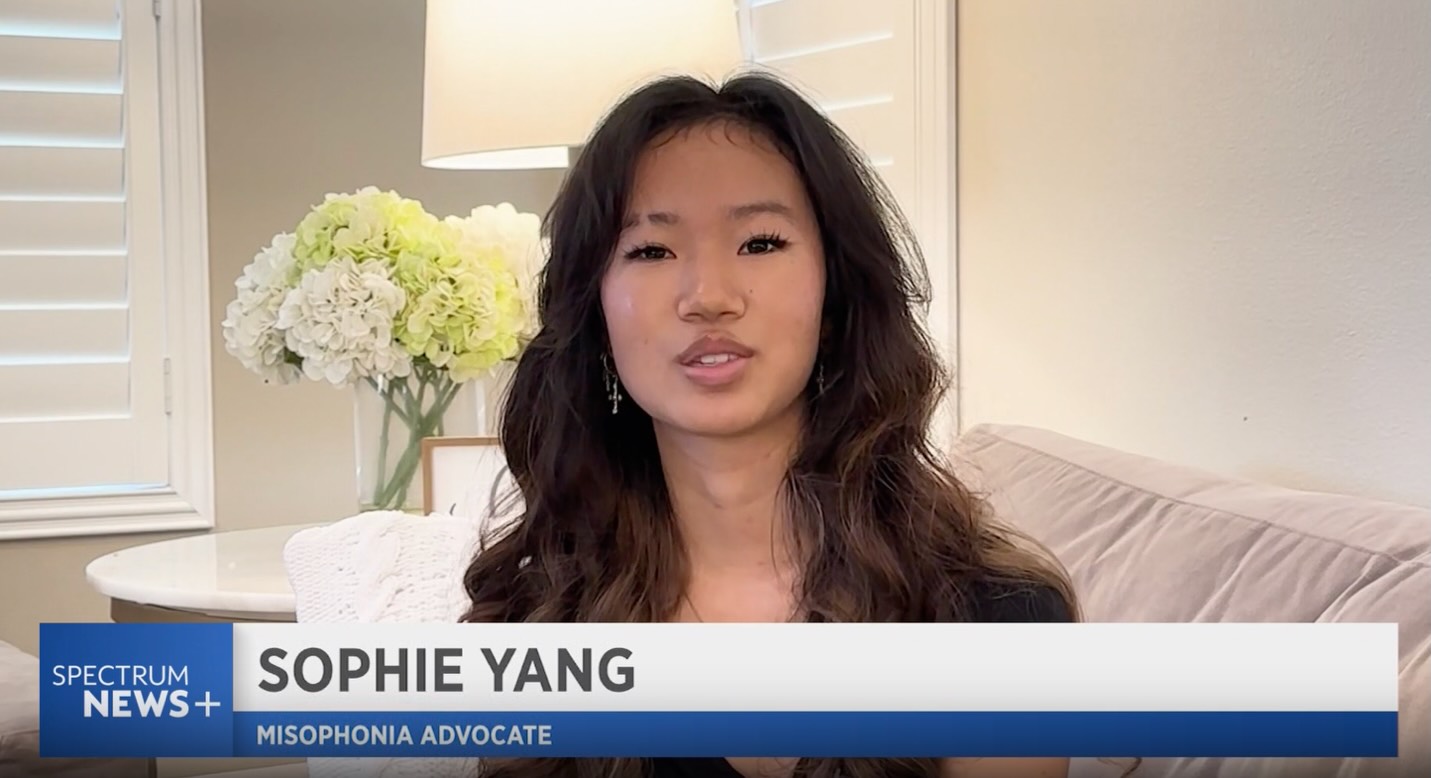
Policymakers and administrators that she speaks with are generally thankful to be briefed on the condition, as most have never heard of it before. Yet throughout history, many well-known individuals have suffered from Misophonia including Queen Elizabeth, Anton Chekhov, Franz Kafka, and Marcel Proust. More recently, celebrities have spoken out about their own struggles, including Melissa Gilbert, Kelly Osbourne, Kelly Ripa, and January Jones.
“Every week, it seems like there’s more news about prominent figures sharing their struggles, or more research discovering things about Misophonia that are new and helpful. I’m encouraged by the increase in dialogue and awareness, and want teens who feel hopeless to know that there is light at the end of the tunnel,” said Yang.
Efforts to find solutions to this debilitating condition continue, although much remains to be done. TEAM’s goal is to remove the stigma by giving teenagers accurate, age-appropriate information and a community where they can share what works. Their goal is also to motivate other teens to transform their own needs into advocacy. Communication is the bridge that can connect teens with parents, teachers, doctors, politicians and, most importantly, each other. And nothing is sweeter than the sound of cooperation.