
 Jordan Riefe
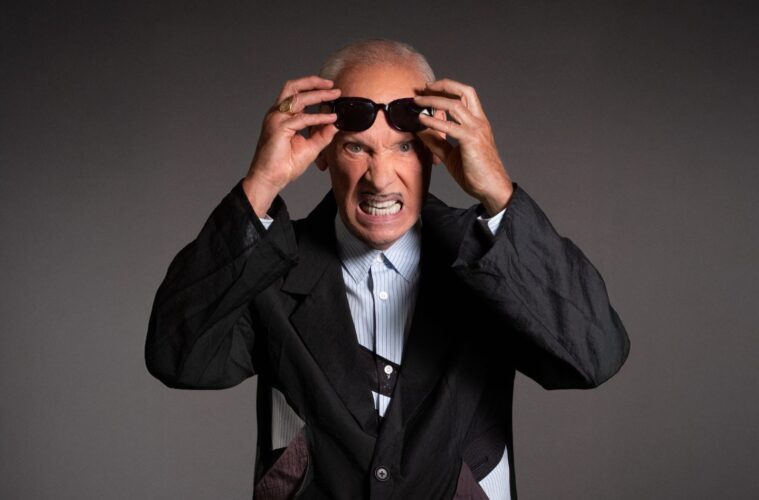
Dubbed by poet William S. Burroughs as “The Pope of Trash,” John Waters adds two more of his titles to the Criterion Collection June 23 — the vivacious teen comedy Hair Spray and the crudely heinous Desperate Living. The former is a charming look at teenyboppers in early 1960s Baltimore, centered around the integration of TV rock and roll dancefest, The Corny Collins Show. It features peaceful demonstrations, interracial romance, outsized hairstyles and lines like, “Our souls are black, even though our skin is white.” The latter is the third installment in what Waters calls his Trash Trilogy, the epitome of bad taste in cinema.
While hardly autobiographical, Hair Spray is based on real events. The Corny Collins Show is a simulacrum of a real-life program, The Buddy Deane Show, an American Bandstand-like offering that aired locally in Waters’ hometown of Baltimore when he was a teenager. It was eventually cancelled when it didn’t integrate, despite setting aside one day a month for Black teens called “Negro Day.”
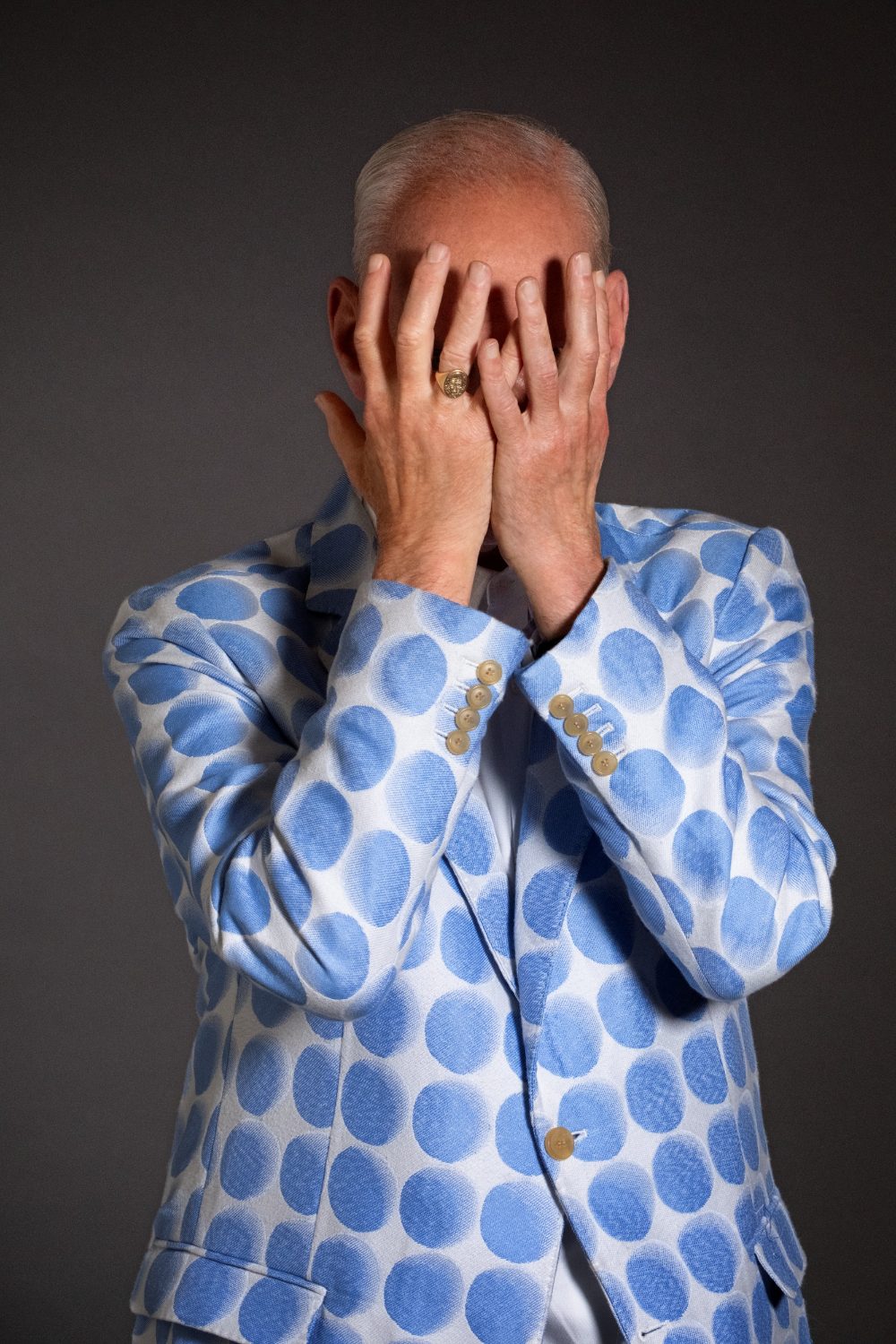
John Waters (Greg Gorman)
“I remember I used to watch it every day and I went on it with my friend Vivian Pierce,” Waters tells LA Weekly of the show on which he danced a step that was popular in the Black community at the time. “We did the Bodie Green, the one dance you’re not allowed to do, and we got thrown off.”
Played by Ricki Lake, Hair Spray’s Tracy Turnblad was actually modeled on the director’s experiences at the time. “Tracy stood for all my friends that were outcasts, from race, from sex, from being big or small or skinny or everything. She stood for all outsiders,” he explains. Those outsiders — gay, trans, beatniks black and white — became core members of Waters’ ensemble, the Dreamlanders, people like Divine (Harris Glenn Milstead), Mary Vivian Pearce, Edith Massey, Susan Lowe and the inimitable Mink Stole who appeared in every major John Waters film.
“I gave her the name Mink because her real name is Nancy Stoll,” Waters recalls of first being introduced to her by her sister in Provincetown in the summer of 1966. They later roomed together in New York and then Baltimore when they were making Pink Flamingos. “We were all like juvenile delinquents together. I used to go shoplifting with her. We were good at it. My scam was I’d go to department stores and say I ripped my tennis shoe on the escalator and get twenty dollars. And she would scam different charge account things. And then we’d come home and have dinner.”
Stole was immediately impressed with Waters’ intelligence and magnetism. “I’ve always had the impression that John was gathering people together,” she says. “I just never knew anybody like him. He was motivated, he was focused, he was self-directed, he was confident. All qualities that I lacked.”
Stole plays Corny Collins’ studio assistant, Tammy, in Hair Spray. It’s not a large role but one she calls the ‘cut-away’ girl — edits of her were used to smooth the transition between shots that didn’t match.
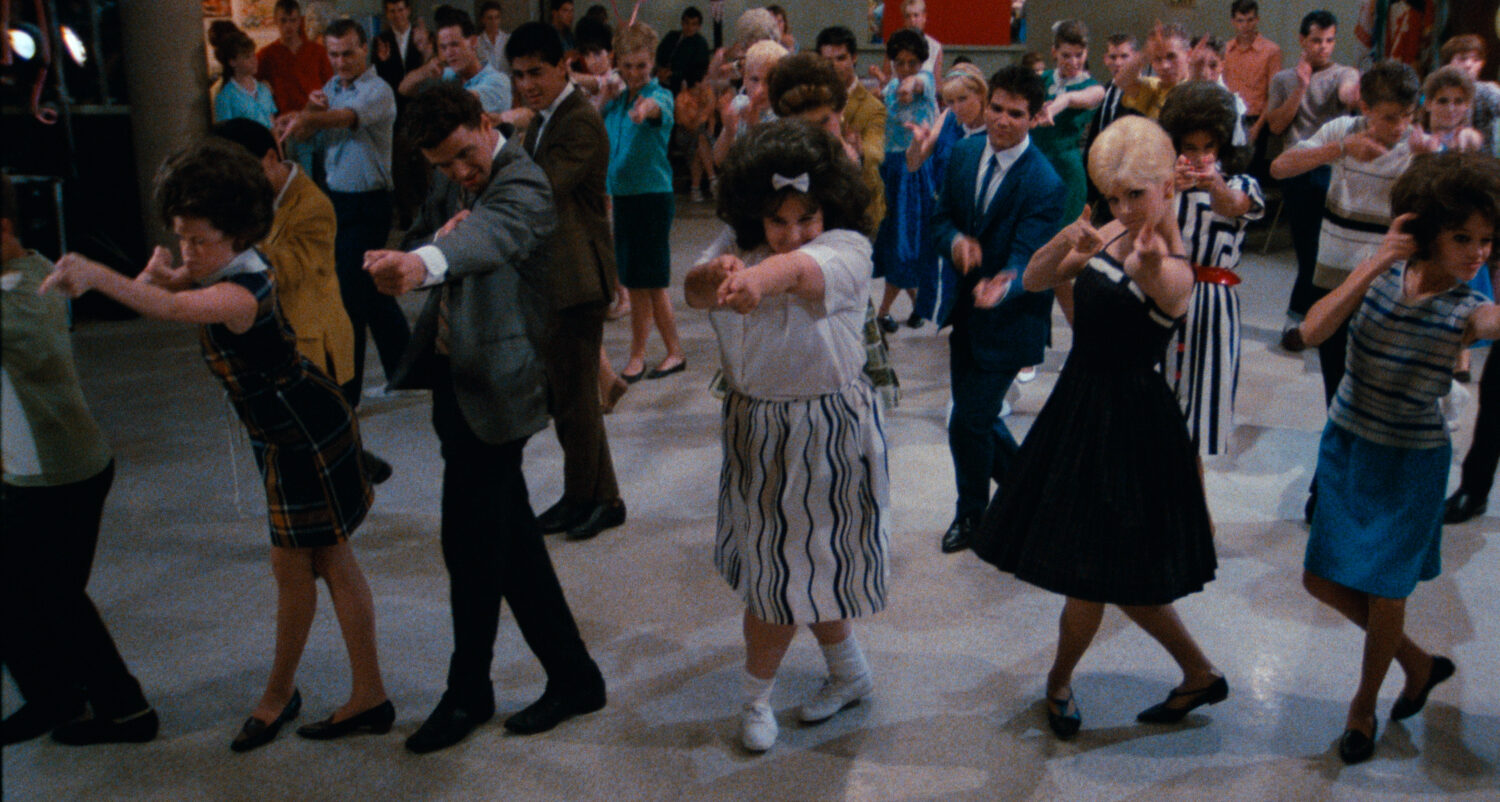
A still from “Hairspray.” (Courtesy of Criterion Collection)
Distributed by New Line in 1988, the film earned $9.17 million globally at the box office, representing a personal best for Waters at the time. Not only was it his first union film, it was a step away from his Dreamlander days, casting some of his old standbys like Divine and Stole alongside established performers like Debbie Harry, Jerry Stiller and Sonny Bono, who was, at first, hesitant to participate.
“He said to me, ‘Is somebody going to run in the room and eat dog shit or something?’” Waters recalls of Bono, who was referring to Divine’s infamous feces-ingesting scene in the director’s 1972 classic Pink Flamingos. Debbie Harry jokingly helped out when Waters told her about Bono’s hesitance, saying, “Tell him I’ll blow him.”
The movie marked a watershed in the career of Ricki Lake who went on to talk show stardom in the 1990s. Starring as Tracy Turnblad, the “ample” (as the film describes her), irrepressible teen underdog, she anchors the film in an indelible way. It might have been a different story if some of the deleted scenes showing the dark side of her character had remained in the film. In them, she’s rude to customers in her father’s store, she’s licentious, and she breaks into rival Amber Von Tussle’s house. Waters had no qualms about cutting the scenes at New Line’s request after the movie did not test well.
“It was a wise decision. I had done enough movies where I learned to realize that [studio execs] are not always wrong,” Waters says of the discarded scenes. “At one point, when I first brought the movie to New Line, I wanted Divine to play Tracy and the mother. That would have been amazing. That would have been a different movie, but it still might be good.”

A still from “Hairspray.” (Courtesy of Criterion Collection)
As it is, Divine plays both Tracy’s mother, Edna, as well as Corny Collins’ station manager Arvin Hodgepile. To also take on the role of Tracy would have been a tour de force for the actor who died of a heart attack at the age of 42, roughly a week after the movie’s release.
“It threw a pall over everything,” Stole recalls. “One of the things that I knew about Divine right away, he had a willingness to be ugly. He had a willingness to be horrifying. He would do anything. And he did it with esprit. He was absolutely fearless.”
Stole didn’t work with Divine in 1977’s Desperate Living, though the role of Mole McHenry was written for him. Instead, another Dreamlander, Susan Lowe, got the lead part of a butch outlaw with a disfigured face. Stole played neurotic suburban housewife Peggy Gravel who, with her 400-pound maid, murders her husband then takes it on the lam to the dystopian shantytown of Mortville, where they become mixed up in a bizarre revolution against the town’s tyrannical Queen Carlotta. Along the way there’s a breakfast with rat on the menu, a female-centric bathroom glory-hole through which a pair of breasts appear, and the immortal bit of dialogue: “I don’t want no white man lookin’ at my Tampax!”

A still from “Desperate Living.” (Courtesy of Criterion Collection)
“It is the shrillest movie we ever made,” says Stole. “I start screaming at the beginning, and I’m screaming till the end.” It opens with her yelling at some kids playing in front of her house: “How about my life? Do you get enough allowance to pay for that? I know you were trying to kill me! What’s the matter with the courts? Do they allow this lawlessness and malicious destruction of property to run rampant? I hate the Supreme Court! Oh, God. God. God. Go home to your mother! Doesn’t she ever watch you? Tell her this isn’t some communist day-care center! Tell your mother I hate her! Tell your mother I hate you!”
New York Times critic Janet Maslin said of the film, “You could look far and wide to find a more pointlessly ugly movie than John Waters’s Desperate Living, but why would you bother?”
Waters called it an angry film and a shriek of rage that represented his own personal struggles at the time. “I guess I was pissed at everything,” he recalls, noting that he spent a lot of time in lesbian bars in those days. “It was me being a male, a lesbro and trying to show the humor, because the lesbians in Baltimore in those days, they would look like Johnny Cash. They were really tough. And their girlfriends had like eight-foot beehives and were like hillbilly women that left their husbands because they beat him up. Now the dykes beat them up. So it was a rough world in Baltimore.

A still from “Desperate Living.” (Courtesy of Criterion Collection)
It was a rough world on the set, too, considering Waters actually put a baby in a refrigerator for one scene. “The worst thing is I put it back in for a second take when it was screaming,” he laughs, noting that he maintains a friendship with the woman who was that baby. “She said she doesn’t remember. I get a Christmas card from her every year. Show business isn’t easy. That was a stunt job for a baby that just didn’t know it.”
Other stunt jobs involved cockroaches crawling on the naked ass of former gangster moll, Liz Renay, who used to date LA outlaw Mickey Cohen. Renay had no problem with the roaches, but Ricki Lake still resents the fact that he put them in her hair for a scene he later cut. “It’s not that big a deal,” he shrugs, “Divine ate dog shit. It’s stunt work. Have you met Johnny Knoxville? He made the closest movies to Pink Flamingos.”
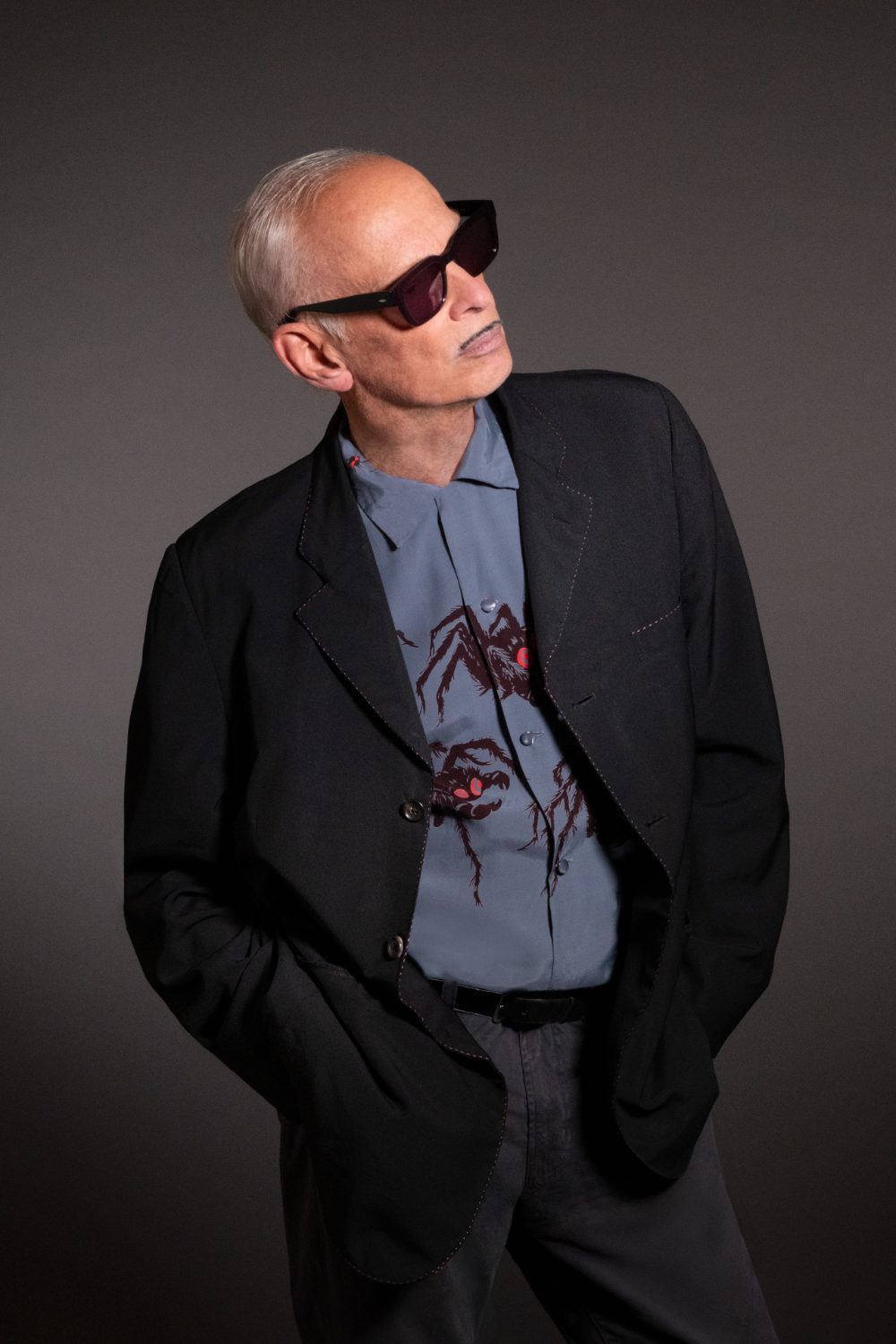
John Waters (Greg Gorman)
A hallmark of the Criterion Collection is the abundance of extra features on their 4K Hi-Def and Blu-Ray combo packages. Hair Spray includes commentary by Waters and Lake, and interviews with both alongside multiple cast members who revisit the making of the film. Deleted scenes provide a glimpse at what might have been, and the 1987 doc, Get to Know John Waters, is a closeup look at the eccentric auteur. For Desperate Living, he talks to film programmer Cristina Cacioppo and provides commentary with actor Liz Renay. Back to Mortville is a tour with the director through the film’s main Baltimore location. And castmates Susan Lowe, Mary Vivian Pearce and Mink Stole offer their memories in an interview.
At the age of 80, Waters proudly embraces his title, The Pope of Trash, but the placard he carried at a No Kings march reading, “Trump ruined bad taste,” indicates he might have a challenger. “Bad taste is not fun anymore,” he laments of our current President. “Bad taste as being interesting is over because of him. And her [Melania’s] Christmas decorations, that was the final nail two years ago.”
He had hoped to turn his “feel-bad romance” novel Liar Mouth into a film (his first since 2004’s A Dirty Shame), with Aubrey Plaza attached to star. But the production company collapsed in 2024, and the project is now dead. Fortunately, that frees him up to star in the new season of American Horror Story, premiering in September and co-starring Sarah Paulson, Evan Peters, Angela Bassett, Kathy Bates, Emma Roberts, Jessica Lange and Ariana Grande.
As for his legacy, some might be surprised to hear it was never about shocking people. “It’s easy to shock. I’m shocked every day, but by bad stuff. I’m shocked at how formulaic romantic comedies are,” he gasps. “I’m shocked at the movies that people love that I hate. They’re the number one best-grossing movies.”
Instead, Waters sees his legacy as something else entirely. “I think I’ve made bad taste one percent more respectable,” he grins. “And that’s why I was put on this Earth.”
For more information on the Criterion Collection, visit criterion.com.
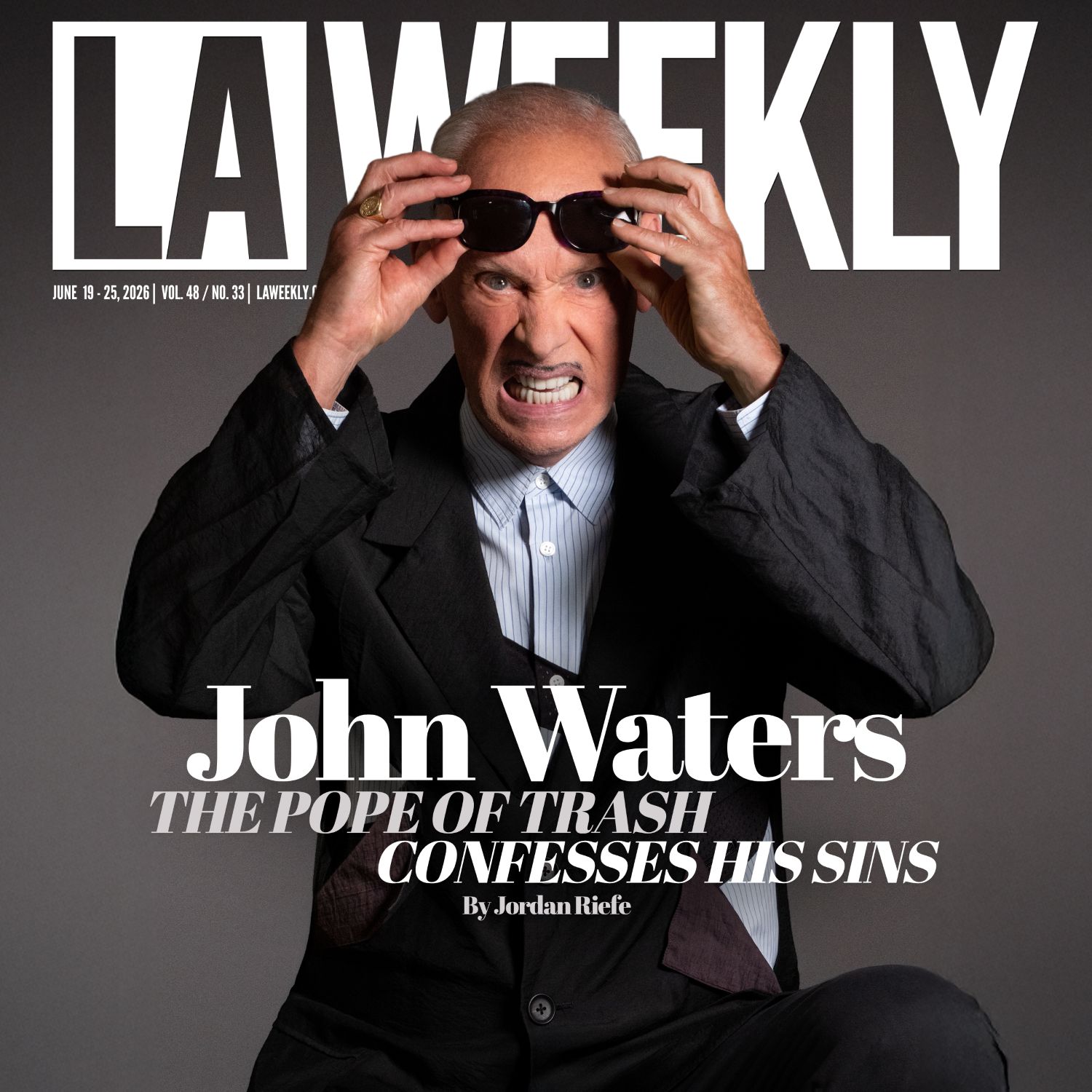
John Waters on the June 19, 2026, cover of LA Weekly. (Photo: Greg Gorman; cover design: Mark Stefanos)