
 Will Jones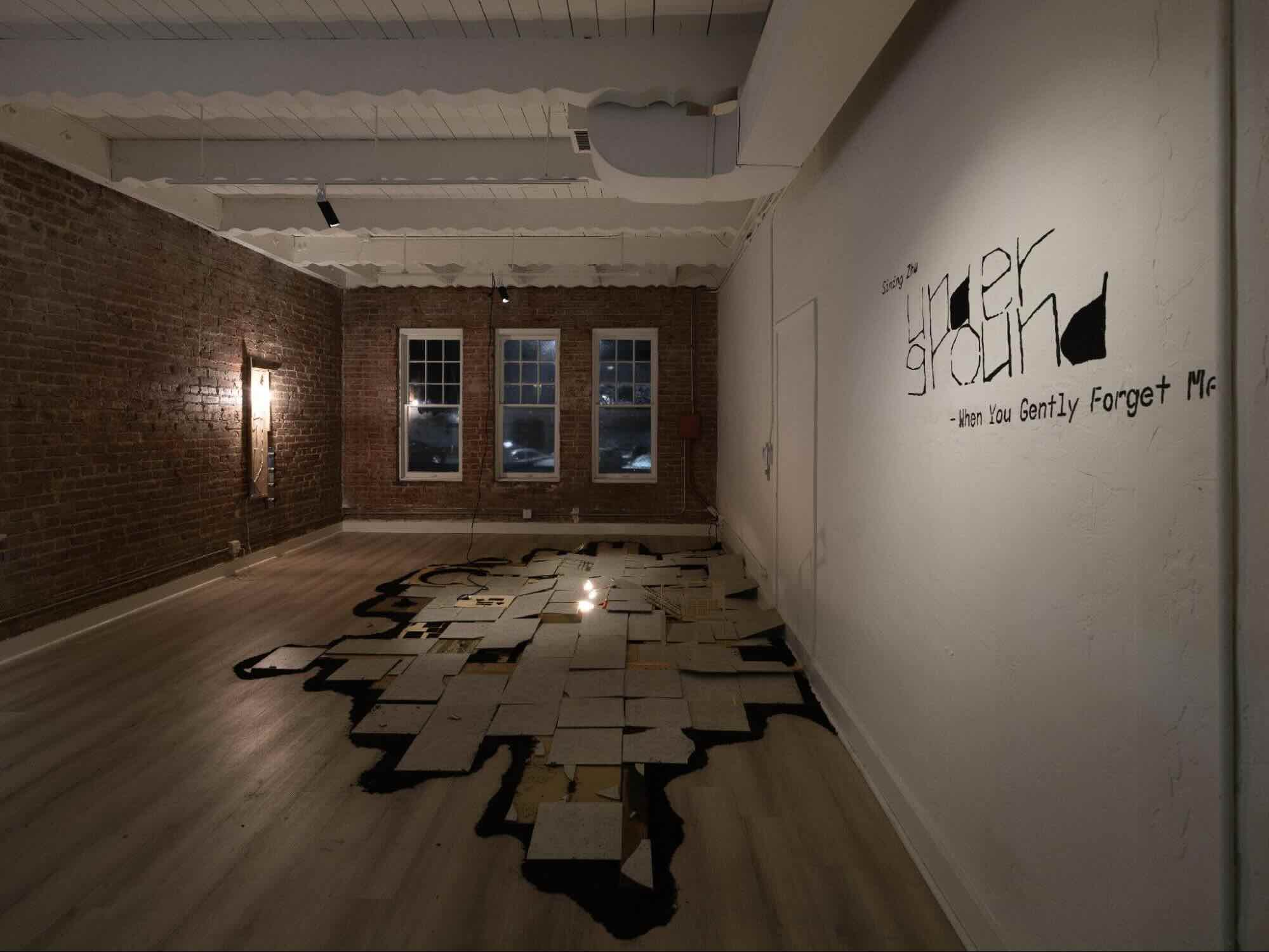
Sining Zhu: Underground——When You Gently Forget Me (Exhibition view), 2026,Documentation by Zengyi Zhao
A gray vinyl floor at Cevera Yoon Gallery looked ordinary enough to walk across. It resembled the kind of commercial surface designed to disappear into daily use: flat, durable, and unremarkable. Yet beneath it, Sining Zhu had assembled an uneven accumulation of salvaged wood, soil, pipes, and electrical lines. Over time, pressure from below caused the floor to lift, buckle, crack, and slowly release water through its seams.
That gradual disturbance anchored Underground — When You Gently Forget Me, Zhu’s exhibition at Cevera Yoon Gallery, on view from May 2 through June 6, 2026. Rather than staging collapse as a dramatic event, the installation focused on a quieter condition: the moment when a system continues to function even as the structures supporting it have already begun to shift.
The exhibition was followed by Rehearsing Space, developed during Zhu’s residency at The Reef and on view from June 13 through July 26, 2026. Seen together, the two presentations trace a sustained inquiry across installation, performance, video, and site-based research.
Throughout both exhibitions, Zhu asks what happens when the systems supporting everyday life—from floors and pipes to neighborhoods and bodily habits—begin to shift.
Working across installation, performance, video, sound, and multimedia, Los Angeles–based artist Sining Zhu investigates the shifting relationships between self and others, individuals and collective structures. Drawing from site-based research, everyday materials, and observations of collective behavior, Zhu constructs spatial situations in which personal memory, social systems, and shared perception continually intersect.
In Underground, the gallery floor became more than a surface. It recorded the accumulated pressures of weight, maintenance, material, and use. Visitors could still move through the installation, yet the space no longer promised a dependable foundation. What appeared solid relied on conditions that had to be actively maintained.
That question also shapes Zhu’s long-term engagement with Los Angeles Chinatown. Rather than focusing only on what happens after redevelopment becomes visible, her work attends to an earlier, less perceptible stage, when buildings remain standing, businesses stay open, and daily routines continue even as leases change, local networks loosen, labor shifts, and place-based knowledge gradually fades.
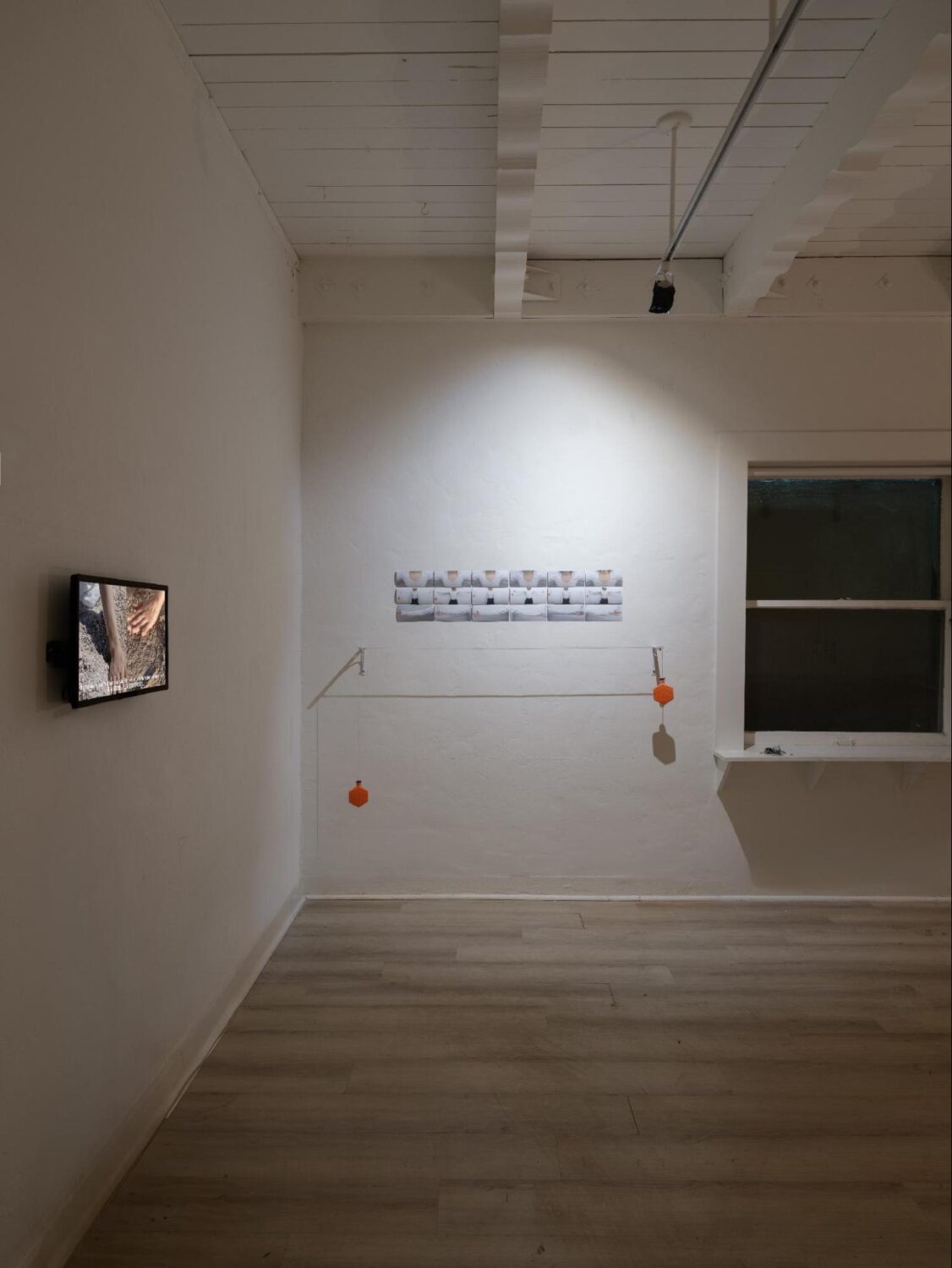
Untitled (On Left), Arms Open Until It Can No Longer Align (On right), 2026,Documentation by Zengyi Zhao
In this context, a building depends on more than its physical structure. It also relies on the relationships that make it inhabitable. What begins to disappear is often not the building itself but the habits, labor, tenancy, and everyday exchanges that give it meaning to those who inhabit it.
The exhibition’s performative works extend this inquiry to the body. In Arms Open Until It Can No Longer Align, Zhu repeatedly attempts to position herself along a fixed horizontal datum. Breathing, fatigue, and duration gradually interrupt that alignment. Rather than presenting deviation as failure, the work reveals the continuous effort required to sustain precision.
That inquiry continues in Untitled (ongoing project), which turns toward the geological landscape of the San Andreas Fault near the Salton Sea. Through repeated acts of digging, Zhu searches for stable ground while gradually exposing the limits of that search. The fault line is presented not simply as a site of danger but as a condition that unsettles the assumption that foundations can remain unchanged.
The Starcatcher introduces a subtle shift in direction. Within an awkward construction of wood, wire, metal, and light bulbs, Zhu arranges screws according to the constellation of the Big Dipper. The work moves away from a downward search for origins and toward the question of orientation. A constellation offers no permanent foundation. Instead, it provides a way of locating oneself while remaining in motion.
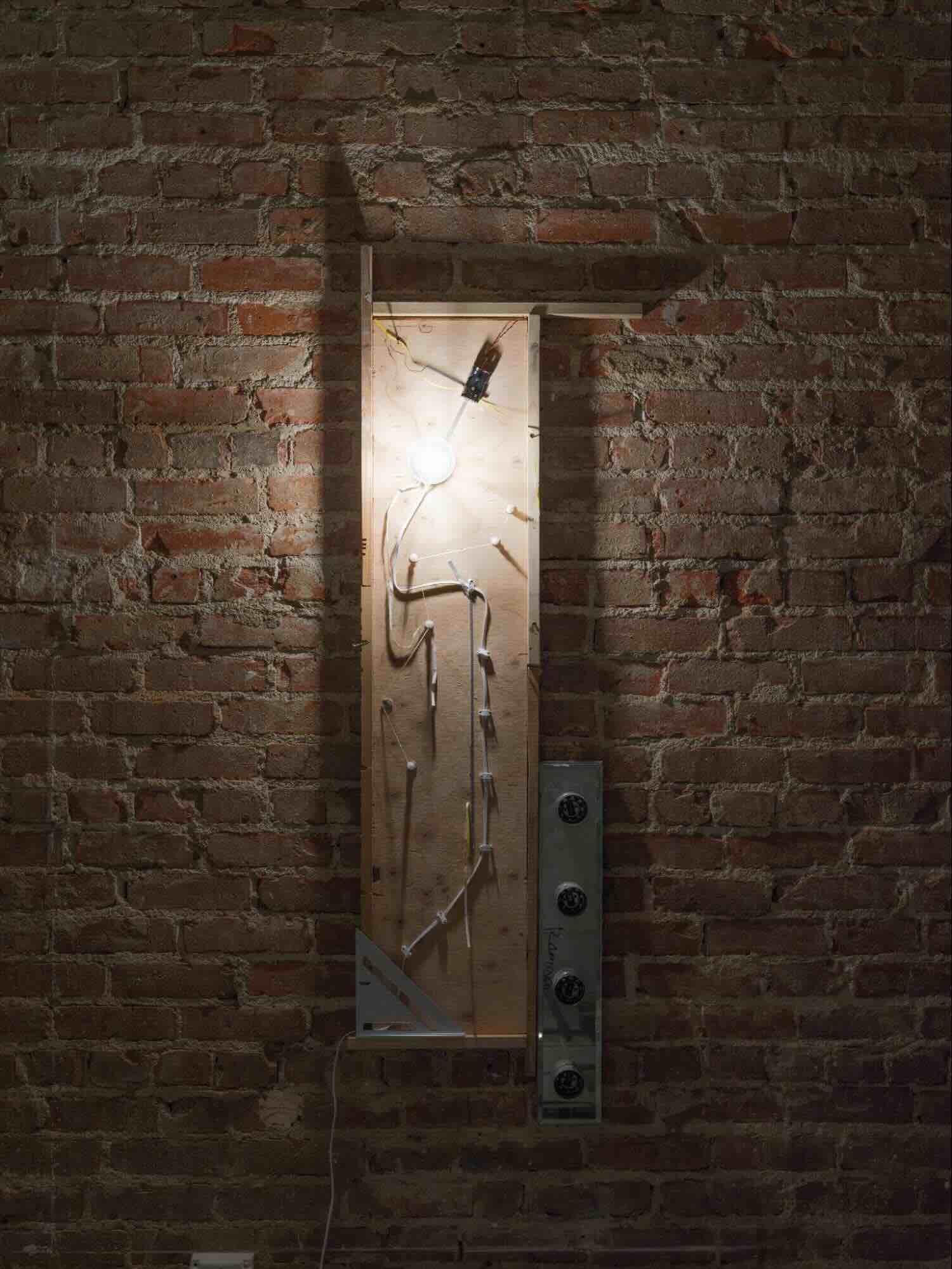
The Starcatcher, 2026
That shift becomes especially important in Rehearsing Space, developed during Zhu’s residency at The Reef and presented from June 13 through July 26, 2026. The project moves away from the hidden infrastructure beneath the floor and toward the continually shifting arrangements within the room itself. Pipes, connectors, wooden structures, furniture, tools, sound, and moving image form an environment that remains deliberately unresolved. Rather than presenting itself as a finished installation, the space remains open to continual reconfiguration through new additions and the movements of visitors.
A single connector redirects circulation. An exposed pipe alters the body’s path. Sound reshapes attention and duration. In this context, stability is understood not as permanence but as a space’s ongoing capacity to absorb change while remaining inhabitable.
Two accompanying video works continue this investigation through touch and description. One quietly records Zhu repeatedly touching every object within a domestic interior. The other removes the image entirely, offering only spoken descriptions of the same gestures and objects. Together, they suggest that touch and language can renew awareness of space through repetition, memory, and sustained attention.
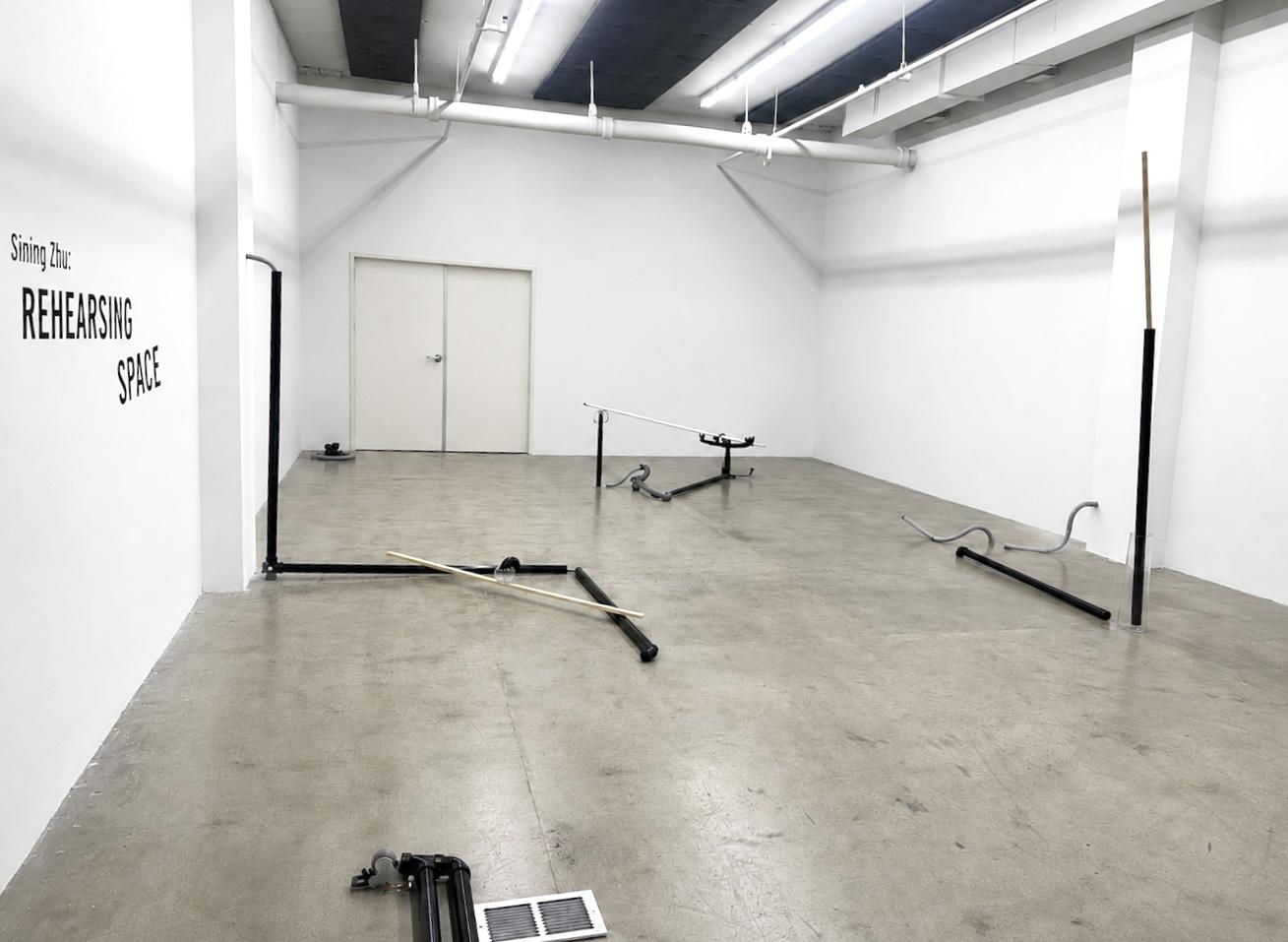
Rehearsing Space (Exhibition view), 2026
Taken together, Underground and Rehearsing Space reveal an increasingly coherent trajectory within Zhu’s practice. The first project exposes the support systems that quietly organize everyday life, making visible the pressures already embedded within seemingly stable environments. The second asks what happens after that recognition. Once instability becomes ordinary, how might people, materials, and spaces continue to relate to one another?
For Zhu, rehearsal is not preparation for a final or completed condition. It is a way of remaining responsive. Bodies, spaces, and infrastructures stay in continual negotiation as conditions shift. Rehearsal is neither restoration nor repair but an ongoing practice through which coexistence remains possible.
Zhu ultimately suggests that instability is not a temporary interruption awaiting repair but a condition through which everyday life is continually negotiated. As structures loosen and alignments drift, the question is no longer how stability might be restored, but how people continue to perceive, act, and remain in relation to one another within systems that are already beginning to fail.