
 Michele Stueven
Award-winning producer and director Baz Luhrmann’s EPiC: Elvis Presley in Concert, arguably the most definitive and heart-pounding documentary on the King of Rock, was purely an accident.
During the making of Elvis in 2022, Luhrmann’s team searched for rumored, unseen footage from the 1970s concert films Elvis: That’s The Way It Is and Elvis on Tour, which had reportedly been lost. The initial thought was that if anything was found, the unused footage could be restored and included in the Austin Butler film.
The team descended into film vaults buried in underground salt mines in Kansas, and to their astonishment, uncovered 69 boxes with 59 hours of film negatives.
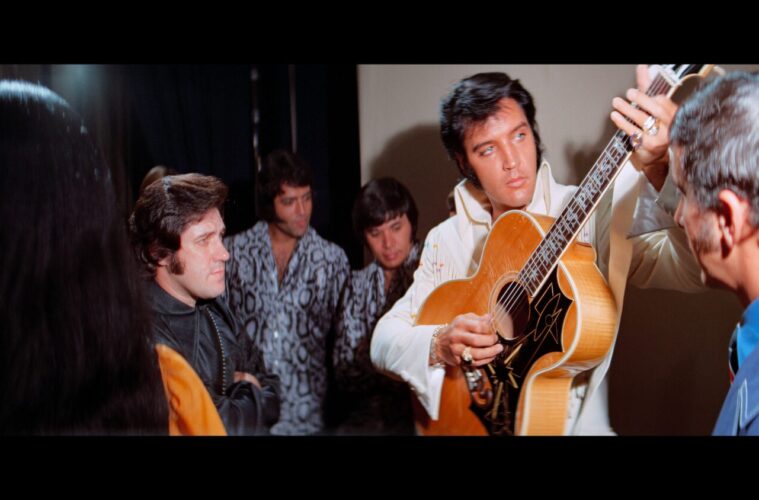
With the help of Angie Marchese, Vice President of Archives and Exhibits and the curator at Graceland, they were also able to unearth some never-before-seen Super 8 from the Graceland archives.
“The boxes of film were literally in salt mines,” Luhrmann tells LA Weekly ahead of the concert film’s Friday, Feb. 27 release. “ MGM negatives are kept in salt mines in Kansas. They do that to preserve the negatives. It cost $100,000 just to go down and look. I’m sure Gone With The Wind is down there somewhere. We got it back to Warner Bros., and it all smelled like vinegar because it was starting to disintegrate.”
So Luhrmann and film editor/executive producer Jonathan Redmond sat there, wondering what to do with all of these smelly boxes and miles of negatives. They didn’t need it for Elvis because they ended up building a showroom for the film.
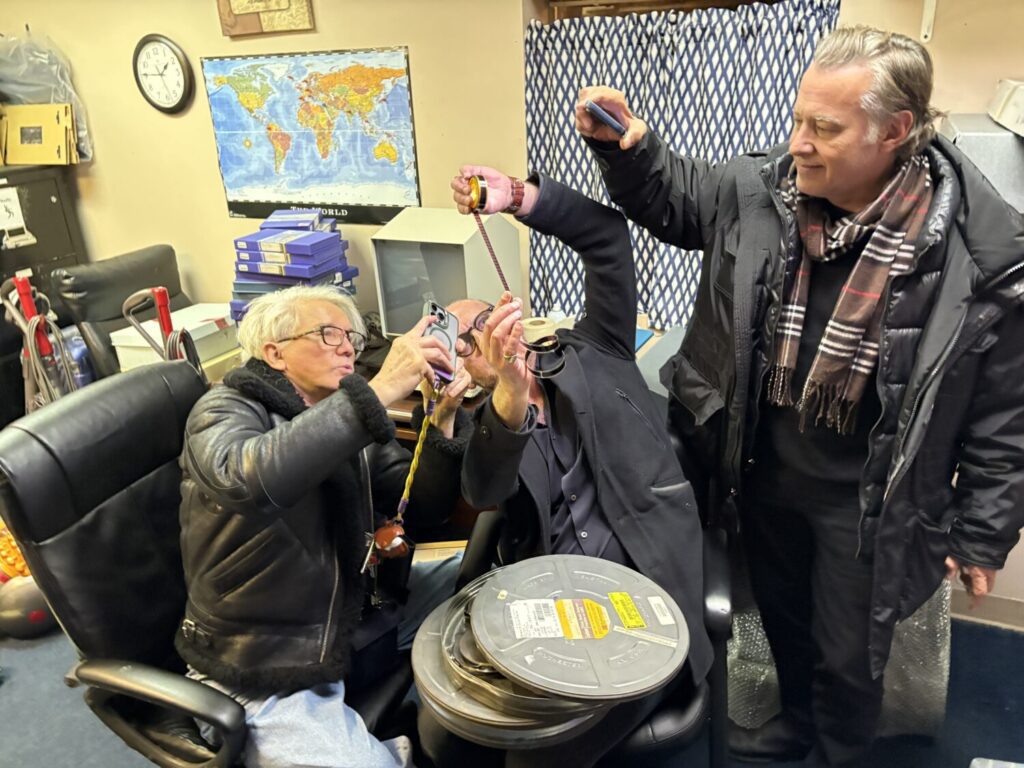
Baz Luhrmann, left, and team sift through 69 boxes with 59 hours of film negatives (Courtesy NEON)
“So we scanned it to save it, and the more we kept looking at it, the more incredible it got,” says Luhrman of what he describes as a labor of love. “But we didn’t have a sound. Fortunately, we found some magnetic tape, which doesn’t degenerate, and it gave us his voice and the sound of the band. Some of the orchestrations were damaged, and some backup vocals weren’t strong enough. We finally got up enough money after two years of agreements and publishing rights to where we could make something.
“Then we found this half-hour audio tape of Elvis speaking really unguarded, and that’s when the lightbulb went on,” says the director. “Up until now, it was always somebody else telling his story. We wanted to let him speak from the heart as much as we could and let the songs articulate that. That became the journey, and honestly, once that journey began, I truly enjoyed it. Sometimes when you’re making a film, you write it, and you shoot it and get pretty exhausted, but this was just pure joy.”
Weaving it all together from various sources and with the meticulous help of Peter Jackson’s Park Road Studios, the result has brought the 16 and eight millimeter films back to life with quality that holds up to the IMAX screen, which is truly the way to watch Elvis in action. And I defy anyone who does to sit still, it’s just not possible. (Luhrmann says it’s ok to yell, scream, dance, and feel like you’re at an actual Elvis concert.)
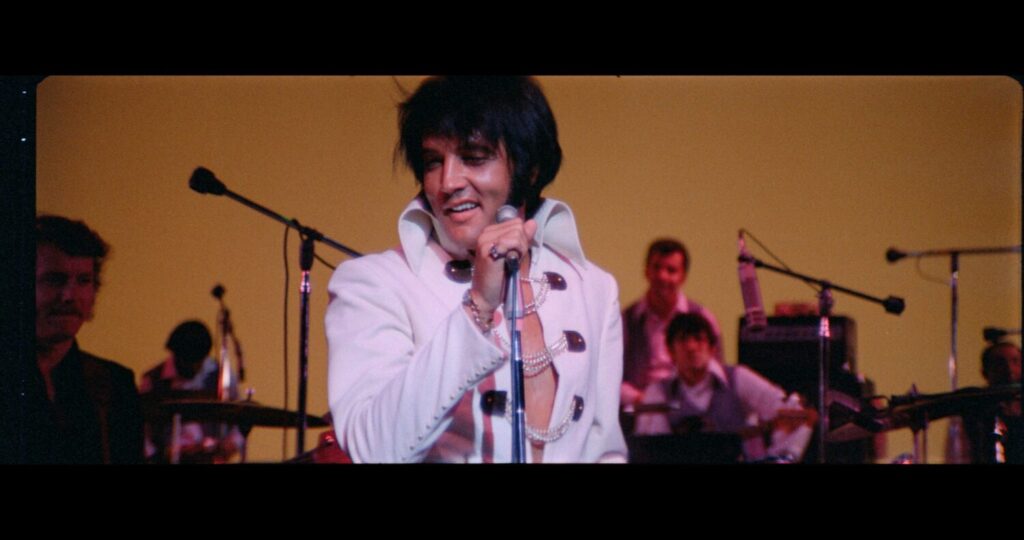
EPiC: Elvis Presley in Concert (Courtesy NEON)
The film shows the King of Rock in a keen and honest light, not as the caricature he’s often portrayed. Luhrmann calls it the Halloween Costume. A combination of rehearsals, live performances, and candid interviews shows that he’s not the weak victim of manipulation by those around him or a drug-addled zombie. He controls the band and the orchestras as every member keeps their eyes focused on him for the next musical cue.
The music is a pounding and mesmerizing combination of classic tunes and other lesser-known performances, including his version of the swamp rock song Polk Salad Annie that transcends Tony Joe White’s soulful original.
The wealth of vintage location footage is an endearing time capsule of the 50’s, 60’s, and 70’s and its inhabitants. The film also touches on Presley’s personal life and relationship with his manager, Colonel Tom Parker, and the tension between commercialism and selling and creativity, and yes, how much he hated those cheesy films.
“Our focus was to really get out of the way and just let him be him,” says Luhrmann, who was a competitive dancer that killed the jive when he danced to Presley’s Burning Love when it dropped in 1972. “There’s the image, and then there’s the man, and we wanted it mainly to be about the man. I morally couldn’t let it all go back into the salt mines. It was made for the big screen.”