
 Nia Bowers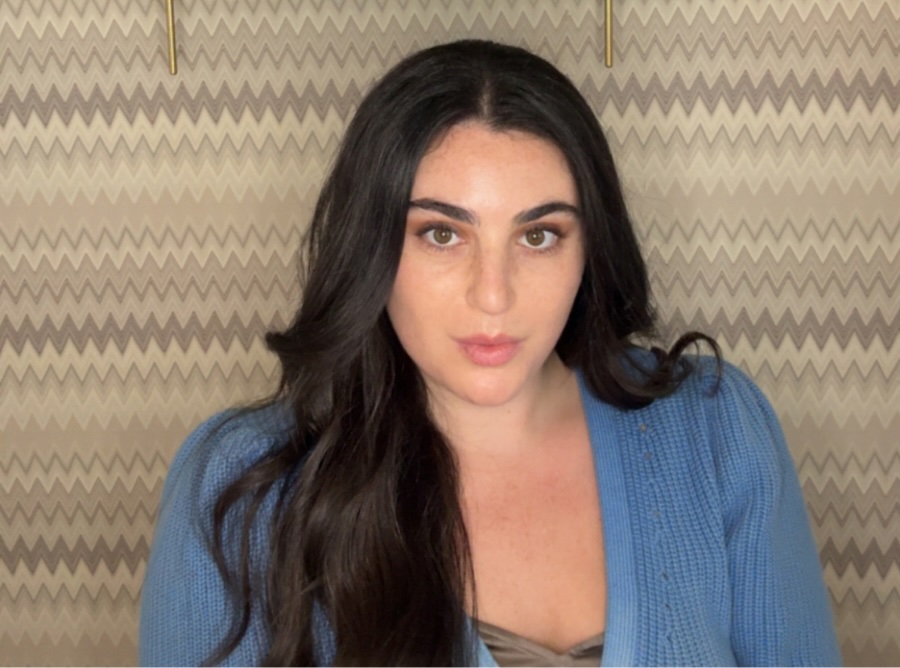
If you are reading this right now with a body that feels like it is actively failing you, while everyone around you insists that you look “just fine,” know something right out of the gate: you are not crazy, you are not lazy, and you are not making this up.
Since it’s May, you’re probably seeing the usual Lyme Disease Awareness Month campaigns. They tell you to wear bug spray, pull your socks over your pants when you go hiking, and check your dog for ticks after a walk. What they don’t say loudly enough: ticks aren’t just in deep woods. They’re in your front lawn, on the golf course, at your kid’s soccer game, and at the baseball field. Check yourself and your kids every time you’ve been outside, not just after a hike. But here’s the part that catches people completely off guard: if somehow your precautions fail and you do end up getting the disease, no one prepares you for the terror of the healthcare system that’s waiting for you. Nobody tells you what it feels like to sit in a doctor’s office under fluorescent lights, desperately pleading for help, only to have a medical professional look you in the eye and dismiss your pain as anxiety.
If that has happened to you, you know how deeply isolating and disorienting medical gaslighting is. But here is the truth that the healthcare system rarely admits out loud: when it comes to Lyme disease, this gaslighting is not just the issue of one doctor who didn’t have the knowledge of it, but a deeply structural, institutional feature.
A System Built to Doubt You
Maybe you can relate to Samantha Sloves. When she was just fourteen years old, her legs gave out, her energy plummeted, and her life came to a screeching halt. She was diagnosed with Lyme disease early, which should have been the entire story. But then, a pediatrician called her specialist a “quack” and told her parents to stop her antibiotics.
That one phone call from an overly confident doctor derailed her life. Samantha spent the next four years in a wheelchair. She endured nearly 40 hospitalizations, lost her high school friends, and was repeatedly told her rapidly declining body was just a manifestation of teenage stress.
Why does this happen so often? In the United States, the medical establishment is deeply divided over how to treat tick-borne illness. The Centers for Disease Control and Prevention maintains that Lyme disease is easily cured with a short, two- to four-week course of antibiotics. They do not formally recognize “chronic Lyme disease” as a legitimate diagnosis, and they strongly warn that long-term antibiotic treatments are dangerous.
So, what happens when you finish your 21 days of pills and you still can’t get out of bed? The system essentially abandons you. As recent documentaries like The Quiet Epidemic and I’m Not Crazy, I’m Sick have powerfully exposed, doctors receive almost no education on chronic tick-borne illnesses in medical school. When physicians lack the training to treat a complex, multi-system illness, the default is too often to question the patient instead of the gap in their own knowledge. Instead of “I don’t know,” patients hear “it’s in your head.”
As Samantha puts it so perfectly: “You feel like you’re dying, you can’t do things that you want to do, and the doctor is acting like you’re making excuses to get out of going to school.”
The Permanent Cost of Treatment Delay
We need to talk about the physical and mental cost of a doctor’s disbelief. The medical system may procrastinate, but the bacteria in your body do not. Left untreated or undertreated, Lyme can breach the blood-brain barrier, meaning the “brain fog” so many patients describe is not laziness or sadness. It is a real, neurological consequence of an infection that was not stopped in time. Advanced MRI imaging from the Johns Hopkins Lyme Disease Research Center has shown that these symptoms stem from real, biologically based structural changes in the brain.
Yet, instead of treating the infection, the medical system loves to funnel patients into psychiatric care. When Samantha was admitted to a renowned children’s hospital, completely immobile, a psychiatrist was sent to her room eight times a day.
“They told me I was acting out, that it’s all because I’m unable to process the pain of my parent’s divorce,” she remembers. “The fact that they concocted this crazy theory shows you that their focus is just not in the right place.”
Even after Samantha eventually got the care she needed, the institutional delay left its mark. She lives with permanent nerve damage and a hand tremor today. Her physical reality today is the direct consequence of a doctor’s refusal to listen yesterday.
The Exhaustion of Looking “Fine”
If you are a woman reading this, you already know that this burden falls disproportionately on your shoulders. How many times have you been told to just lose some weight, manage your hormones, or see a psychiatrist?
The psychological toll of this constant invalidation is staggering. You are forced to be the CEO of your own medical crisis while your brain is actively inflamed. A major 2021 study by Columbia University and the Copenhagen Research Centre for Mental Health found that patients diagnosed with Lyme disease have a 28% higher rate of mental disorders. Most heartbreakingly, they are twice as likely to attempt suicide. The trauma and toll it takes on you isn’t just the physical pain; it is the exhausting daily work of trying to convince the world that your suffering is real, day in and day out.
Believe the Patient
Once out of the wheelchair, Samantha Sloves made a promise to herself: to turn her pain into purpose and build the help she didn’t have. Today she runs My Lyme Coach, a concierge advisory practice for people navigating Lyme and other complex chronic illnesses — the medical logistics, yes, but also the identity shifts and life transitions that chronic illness forces. She is not a doctor, and she does not practice medicine. She sits in on appointments, in person and virtually, as an advocate and strategist, so her clients don’t walk into another fluorescent room alone. She knows the system, she knows the questions to ask, and she maintains a vetted network of physicians across the specialties Lyme patients actually need. And if a doctor starts to dismiss a client’s symptoms, she steps in.
“I make it very clear. This isn’t laziness, this isn’t the person they were,” she explains. “They’re sick, they’re fighting for their life and they need help, not judgment.”
If you are currently fighting this battle, please know that it’s the system that’s broken, not you. It shouldn’t take a private care advocate, a documentary, or a decade of lost time for you to be taken seriously. You deserve a medical system that listens. But until we build one, believe in your own pain, keep fighting, and keep searching for the right doctors. Remember that your story matters, and you are absolutely not alone.