
 Jon Stojan
With childhood anxiety, teen suicide, depression, isolation, and teen mental illness at an all-time high, childhood and adolescence seem fraught with dangers, both real and imagined. Over the last 20 years, parents have sought to protect their children from the dangers of the outside world when the wolf at the door has already infiltrated their homes through the internet and smartphones. This mix of sheltering and helplessness to protect our children has produced fragile, inexperienced kids who lack the skills and means to process the tsunami of influences hitting them relentlessly.
But there is hope. Dr. Rick Stevenson, author of the upcoming book The StoryQ Method: Finding Our Place in the World by of Personal Story Mentoring, has filmed 7000 in-depth interviews with kids and teens from six continents over the last two decades. Through his 5000 Days Project, he has found an elixir: Personal Story Mentoring. The methodology arms youth with the power of their own story.
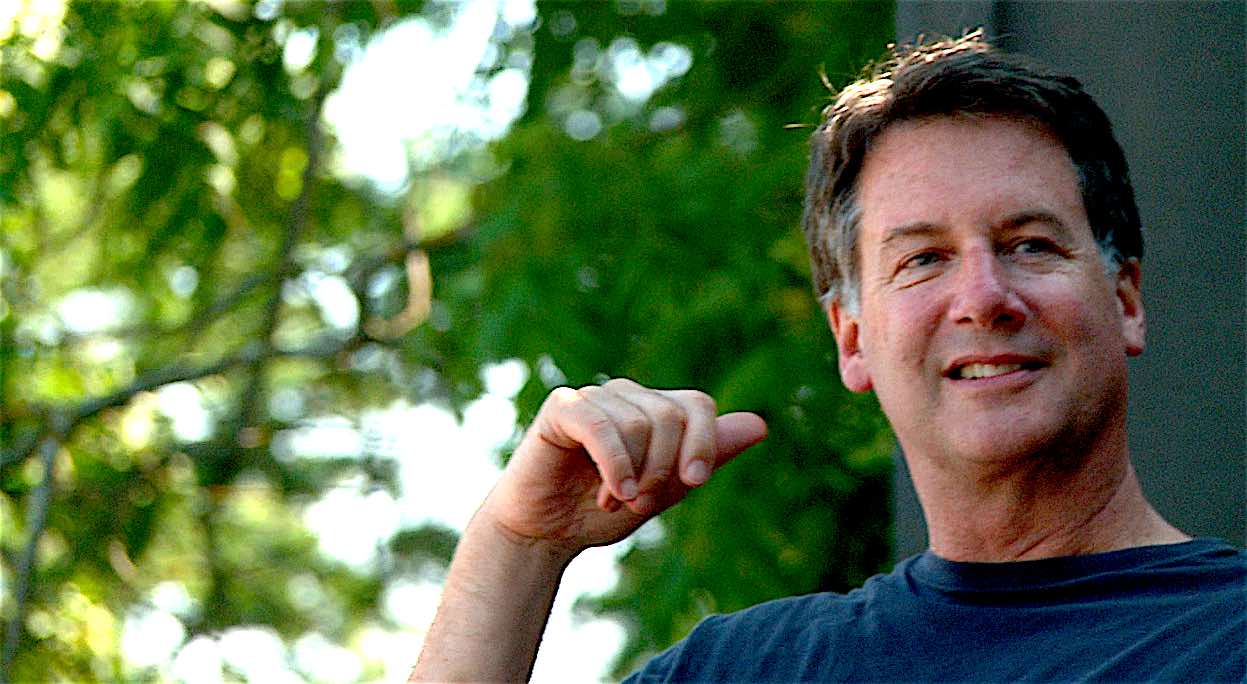
Dr. Rick Stevenson
“It’s been said that the confidence a bird has lies not in the strength of the branch on which it lands but in its ability to fly. We’ve been wrongly focusing on strengthening the branch when really we need to be strengthening our children’s wings,” said Dr. Rick. The world will not slow down nor become more predictable. Our only option is to give our children the tools to process the complicated world around them.”
“Despite its effectiveness, many kids do not want to do therapy. However, they are willing – if not anxious – to tell their own story. When guided through the right questions, in the right order, in the right setting, and at the right time, kids are more than likely to get to their right answers. If knowledge is power, self-knowledge is superpower. When kids gain perspective on their lives and articulate their values, they become capable of making smart, sometimes lifesaving, decisions.”
He first discovered this when interviewing his nine-year-old nephew, who had asked to join the project. When asked if he was ready, his nephew nodded and then immediately burst into tears. “I said, ‘Andy, I haven’t even asked you a question yet.’ He nodded, then tearfully said, ‘I know. But I know what you’re going to ask me. You’re going to ask me the last time I cried and why.’ I said with a smile, ‘Well, that’s normally question seven, but it sounds like you know the answer.’”
His nephew nodded and then tried to tell him about something that had happened in his school three days before. He got partway through the story and then broke down. Stevenson listened empathetically and told him to take his time.
Soon, his nephew tried again but failed to make it through, still breaking down. Finally, on his third attempt, he was able to spit out the story. Evidently, he’d been cast in his school musical, and when the teacher asked him to stand up in class and sing his solo, his classmates laughed at him. He ran out of the room crying – exactly the sort of thing that would put you in therapy when you’re 40 and afraid to speak in front of an audience.
“Just for stupid filmmaker reasons, I asked him if he’d repeat the story one more time. He did, and he got through it more easily.” This gave Stevenson an idea. He asked Andy if he trusted him. Andy nodded. Stevenson asked him to tell the story one more time, but this time, he wanted Andy to sing it. Andy looked at him strangely, shrugged, and then started to sing, ‘I was in my class, and the teacher asked to sing my solo, and…’ Andy suddenly burst out laughing.
“I saw within the space of six minutes something that had been so dark, so painful, so cancerous that he could not even get it out of his mouth… I saw him barf it up, hold it up to the healing light of day, and laugh at it. That’s when I fully understood the power of telling your story. I watched Andy gain power over something that was tormenting him. I watched him heal himself.”
The brain science behind journaling is extensive, but there are indicators that this type of verbal journaling is even more effective. According to Dr. Rick, “All of our big feelings start in the little almond-shaped part of the brain called the ‘amygdala.’ When you are given the opportunity to tell your story, the raw emotion moves from the amygdala to your prefrontal cortex, where your language and reasoning skills preside. This is how you process your emotions. Contrary to common practice, emotions are not to be dismissed, denied, or deflected. Doing so causes mental illness. Doing so leads to us seeking pain relief through distractions like video games, drugs, and alcohol. On the contrary, properly processing our emotions keeps us in tune with ourselves, which enables us to successfully navigate a complicated world.”
The StoryQ Method that Stevenson created is effectively a Socratic dialogue that, instead of using psychology or philosophy, uses a personal story—something to which all of us have access. “I’ve watched this process work its magic in kids, teens, and adults across the world. We are either defined by our circumstances, or we define ourselves. It all starts with being able to tell our own story.”
Note: Meet Nicki, whose gauntlet of adolescence was an eating disorder spurred on by the social media-driven pressures on girls. By bravely learning how to tell and share her longitudinal story from age 10-18, she has gained resilience and empowered herself, along with many others.