

 Michele Stueven
Before there was Amazon and the internet, there was the Sears Catalog Big Book. It offered everything from ready-to-build home kits to clothes, furniture, tools, jewelry, appliances, and even opium in the early days. And anything that was ordered west of the Mississippi came from the huge Sears, Roebuck & Co. mail order building in Boyle Heights.
Built in 1927, the building was used for mail order until 1992, when Sears closed the distribution center and sold the building. While Sears still operated a retail store on the ground floor until 2021, the enormous 1,800,000-square-foot complex remained vacant and the subject of much handwringing and speculation among preservationists.
Until now.
The halls are lined with the overflow of building owner Izek Shomof’s classic car collection, which includes two Sears motorcycles, as well as galleries, showrooms, and music. The Israeli-born, longtime LA resident and real estate developer, Shomof, opened Tony’s Burger in downtown LA at the age of 16 and has bought and saved landmarks like the historic Leland Hotel, the King Edward Hotel, and the Hotel Alexandria in 2012. Shomof, who wrote the book Dreams Don’t Die, bought the Sears building in 2013, which holds a soft spot in his heart.
“I started working at a young age,” Shomof, who is also a film producer, tells LA Weekly. “I immigrated to America in 1973, and my parents were not doing so well. One day, when I got out of the house, I saw my mom walking on the street to the laundromat with a heavy basket of dirty clothes, which broke my heart. So I saved up some money and went down to the Sears store in Boyle Heights and bought her a washer and dryer.”
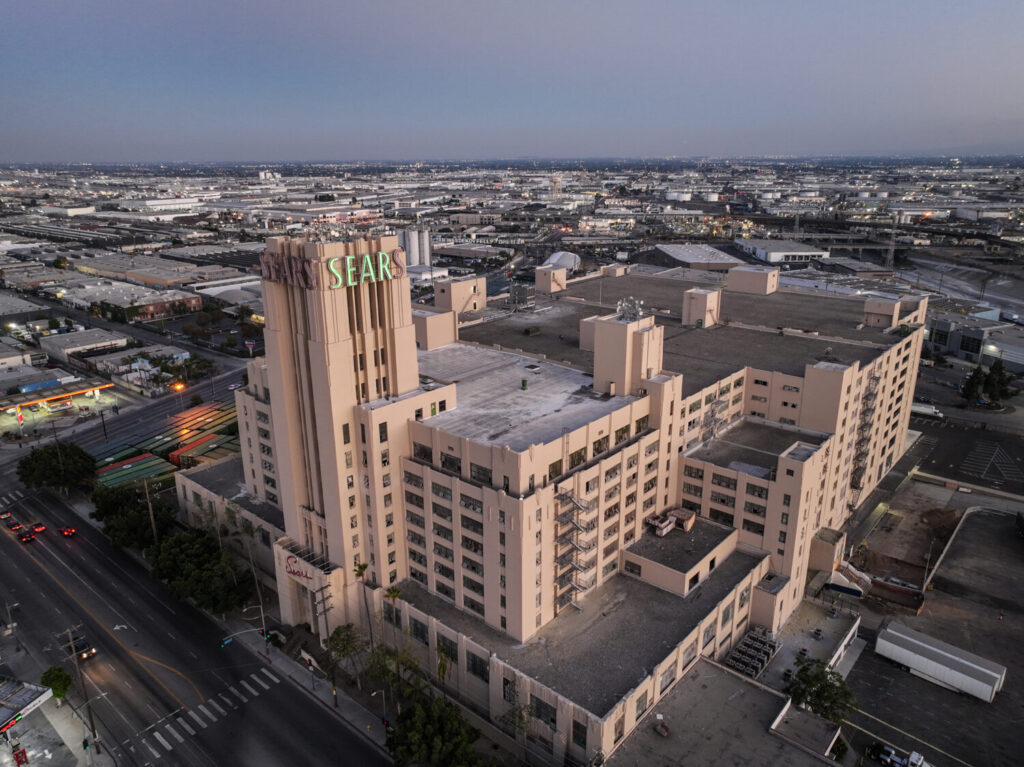
The iconic Sears building in Boyle Heights. (Robert Gauthier/Los Angeles Times via Getty Images)
And now there are new family memories being built on the sprawling warehouse floors.
What began in a small apartment as a passion project between former restaurateur Mark Jude and his twin sons, Jackson and Nicholas, has now evolved into The Mark Jude Gallery, a more than 3,000 square foot multidisciplinary art space. The family has transformed the once-dormant landmark into an interactive destination for experimental exhibitions, cinematic curation, and cross-genre events that blend visual art, live performance, and immersive storytelling.
The exhibition that opens on Thursday, July 24, will feature artists like Antonio Kim, Italian artist Caterina Piccardo, who is based in Joshua Tree, Samuel Scharf, and Megan Mueller, working across ceramics, digital media, conceptual installations, and urban archival scans.
With backgrounds in film, architecture, and international arts, the family team draws from European cinema, UCLA research labs, and NYU’s Tisch School to create a space that feels more like a creative encounter than a traditional gallery visit.
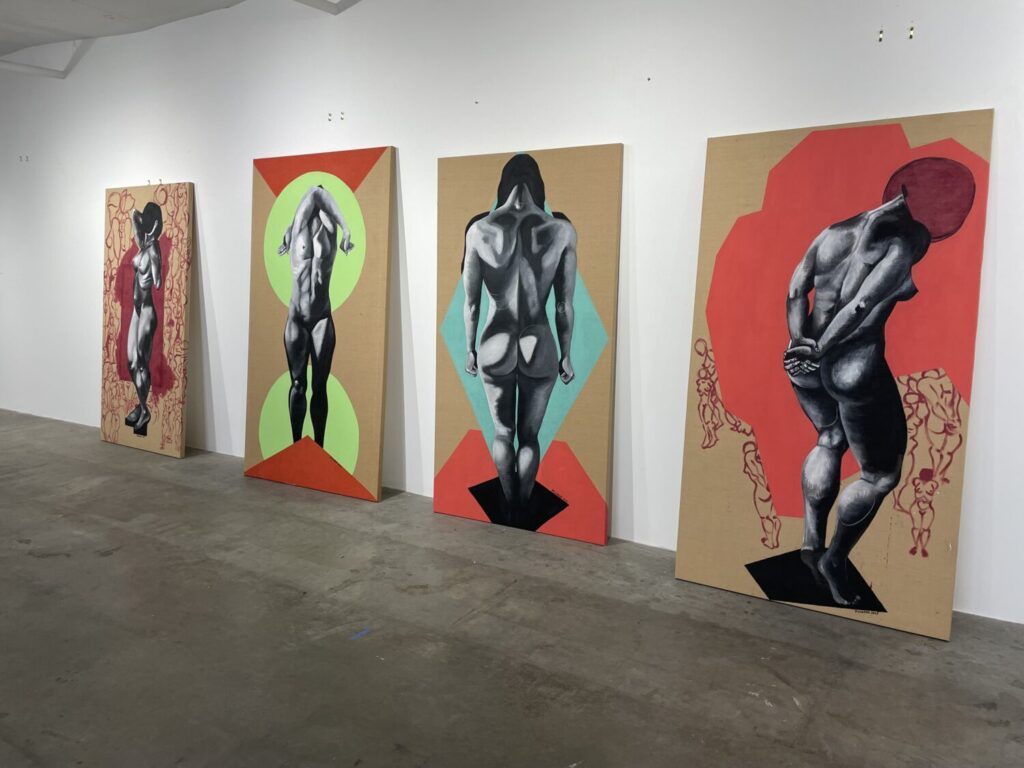
Joshua Tree artist Caterina Piccardo puts herself into her paintings at the Mark Jude Gallery (Michele Stueven)
“This is a family project between me and my twin sons,” Mark tells LA Weekly on a tour of the space that still houses the rusty old circular shafts and chutes that would slide the packages down to the loading docks of the nine-story building.
“I used to work in the museums in Washington D.C., the Smithsonian and National Gallery of Art, and went to art school,” he says. “ I was a chef in these museums, and my sons were in the museums all the time, so this is a natural place for us to be. We also had a couple of restaurants, where artists would come in and we’d show their work in the restaurant. It’s a lot more fun showing art than running a restaurant.”
One of the highlights in the gallery is the ceramic interpretation of the ancient moon jug by local Korean American artist Antonio Kim.
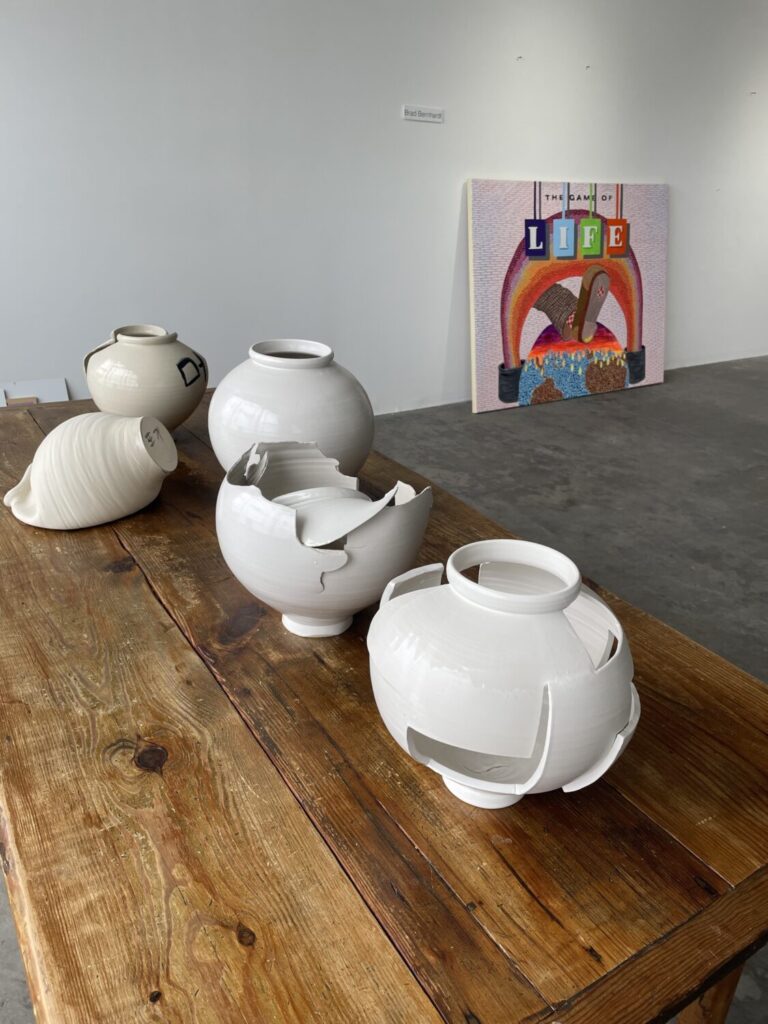
Disruption of the moon jug by LA artist Antonio Kim (Michele Stueven
“The moon jug is an iconic piece of Korean design and sculpture, and he reinterprets it by creating moon jugs that are destroyed or in the process of being destroyed,” Nick Jude explains during the tour. “His message is that Korean society is still very rigid and traditional, steeped in the past, and he wants to break that up. It’s a visual representation of how Korean culture needs to evolve and break down to become something else.”
Other plans for the space include interactive supper clubs combining art and food.
“What we’re excited about doing with this gallery is starting a cultural community space and curating immersive art experiences,” says Nick. “In August, we’re going to have two supper clubs take place in the space where a fine art video game designer will create something interactive where you can make it, take it apart, see, taste, and hear the food. We’re also working on a shoebox opera, which will be 20-minute opera segments in collaboration with a singer and a music designer. We want to produce art experiences that you don’t normally see in a gallery. Coming out of the pandemic, people really want to experience things again.”

Historic circular shafts that slid Sears merchandise down to the loading docks (Michele Stueven)