
 Michael Atkinson
 As heinously ludicrous as any movie spawned this decade by a filmmaker whose name you might recognize, Nicolas Winding Refn’s first film since 2016, Her Private Hell, is at least honestly titled — Hell it is, as well as being resolutely, monstrously private. As in, what was going on in Refn’s head, and in his pants, remains an inscrutable mystery. It’s one of those movies devised by runaway design-aholics who come to believe their every chintzy-sexy visual idea is so fabulous that narrative content and cohesion are unnecessary. Auteurism has always been about appreciating the obsessions and psychosexual imperatives imprinted on films by their makers — but what if that maker is developmentally arrested?
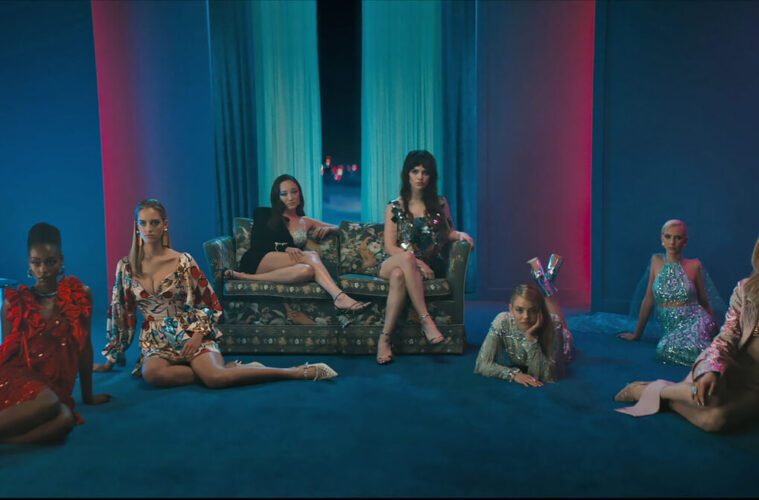
The film is all look — and its mise-en-scène resembles nothing so much as a cheap ’80s wannabe-softcore perfume ad, all vamping models draped around polypropylene sets and shrouded in a pink dry-ice fog that feels left over from the ’60s. Refn obviously thinks this palette of old cheese and tinny fluorescence is cool, or beautiful, or arousing, or something; what’s clear is that he’s not being ironic about it, not even by way of the white go-go boots, the undefined misty set clotted with giant illuminated crystals, or the central super-slick, mood-lit hotel room (in, we’re told helpfully, the “Tower Hotel”), which looks like just more hotel corridors.
We’re in Unnamed Cheap-Set Every-City, which does not seem to be inhabited by anyone but a handful of model/actresses gathering to star in a film that looks like a conscious yet unfunny parody of Barbarella (1968). But Her Private Hell barely has a script (co-written with Esti Giordani); characters just show up, looking hot. Sophie Thatcher’s Elle is the “her,” whose sleazy but “very powerful” producer father (Dougray Scott) is glimpsed telling the girls a serial-killer boogeyman story; Kristine Froseth is a new blond ingénue; Havana Rose Liu is Elle’s ex-lover/new stepmom, etc. Other wide-eyed Asian beauties show up now and then for no discernible reason, lounging and staring and pausing — part of Refn’s jones here is that the risible dialogue and editing scheme get slowed down to 33 1/3 RPMs. The entire cast seems to be on Oxycontin.
Meanwhile, the boogeyman rips a few babes apart, more for the orgasmic splooge of blood than for the story (the “deaths” are barely mentioned afterward), and Charles Melton shows up in a parallel story (or adjacent “reality,” we’re never sure) as a muscly and indestructible non-Japanese cop looking for his vanished daughter in pink-befogged Japanese alleys, bloodletting sleazy gangsters. Look for purpose or coherence and you’ll be looking at your watch. Refn’s constant glowing images and lo-o-o-ong pauses continually suggest significance, but at best you get twinges of The Neon Demon (2016), insofar as the new film could pass for the ketamine-slurred dream enjoyed by one of the earlier movie’s models after she’s passed out on a nightclub bathroom floor.
Wikipedia defines Her Private Hell as a “science fiction thriller,” which suggests only that a Wikipedian somewhere gave up. Despite his earlier films — the Pusher trilogy (1996–2005) remains a barbed ultra-realist crime ballad and The Neon Demon snarked nicely at the fashion industry — by now it’s clear that NWR (as he credits himself) could no longer manage a convincing filmic moment with a gun held to his temple. He admitted years ago to slavishly following his “fetishes,” and we couldn’t ask for a more concise reason to turn the page on him for good.