
 Matt Emma
In the contemporary design industry, many works attempt to attract attention through exaggerated forms or visual impact. For Pasadena-based designer Lincoln Chen, however, the value of design lies much deeper.
A product does not need to speak loudly. As long as it consistently brings stability and comfort into everyday life, it has already fulfilled its purpose.
Emotion and rationality are not opposing forces. Together, they form the two fundamental threads that shape his design language.
Lincoln’s practice spans furniture, lighting and water-feature related product development. Years of work have gradually shaped a steady methodology. Clear structure, honest materials and measured emotional expression are essential to giving a product its presence. When the interaction between object and user becomes effortless, design naturally comes into focus.
Clarity Builds Trust, Not Distance
In Lincoln’s design system, rationality is not an expression of cold structure, but a way of maintaining order.
Clean construction, truthful material expression and balanced proportions directly influence how a user responds at first touch.
A product should remain clear in both appearance and tactility, allowing people to understand how it behaves the moment they encounter it.
This rationality is not ornamental language. It is a source of reliability.
The more straightforward an object is, the more easily it becomes part of daily life.
Emotion Comes from Experience, Not Form
Parallel to rational structure is the emotional dimension of design. It does not rely on dramatic curves or large amounts of ornamentation. Instead, it appears quietly in the moments of touching, approaching, sitting or moving.
The way light spreads, the temperature suggested by a material and the distance between object and body all form the basis of emotional experience.
When a design gradually earns a place in someone’s routine, it has found the right balance.
Ori Floor Lamp: A Visible Expression of Principle
The Ori Floor Lamp is a concentrated expression of Lincoln’s thinking.
Metal is folded into a calm posture, and light travels gently across its surfaces. There are no unnecessary elements, yet the object maintains a steady presence in different environments.
The work has received several international awards not because of a striking exterior, but because it functions in a way that encourages long-term use.
Its structure is clear, its light is soft, and its emotional resonance is subtle but persistent. These qualities shape its lasting appeal.

Ori Floor Lamp by Lincoln Chen
Klein Lounge Chair: When the Body Defines the Design
The Klein Lounge Chair focuses on the relationship between body and structure.
The stainless steel lines are precise, neither overstated nor fragile in feeling.
The texture of the upholstery, the support of the backrest and the moment of sitting down are the core of the piece rather than its outline.
The experience after long-term use often reveals whether a chair succeeds.
Klein holds its presence by being unobtrusive, quiet and consistently dependable.
The design does not seek attention. It allows people to sit without needing to think.
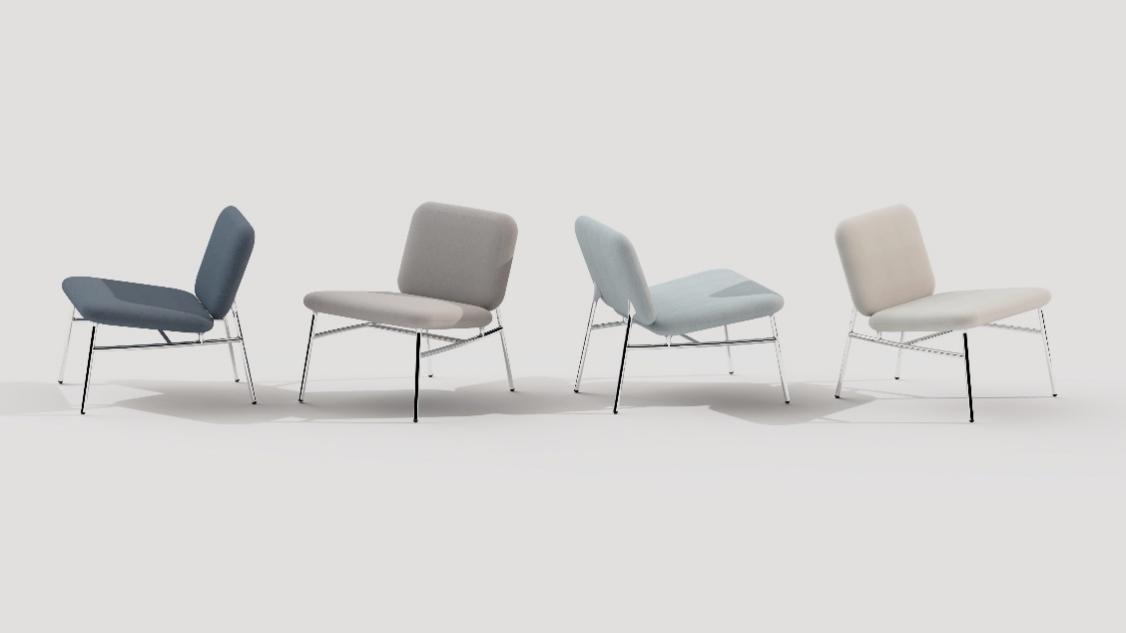
Klein Lounge Chair by Lincoln Chen
Extending a Philosophy Across Major International Water Features
At WET Design, Lincoln expands his design approach from furniture and lighting to water features and related product development.
The speed of water, the direction it falls, the way light moves through the water and the rhythm of people walking near it all become essential considerations.
Even with larger scales and higher technical demands, the underlying logic stays the same. Experience comes first, and form grows naturally from it.
This method allows large water installations to maintain a sense of calm even within complex engineering.
The design does not rely on dramatic visuals. Instead, it invites people to come closer through controlled flow, water pressure, light interaction and delicate shifts in rhythm.
Looking Ahead: A Continued Reflection on Design
A single question runs through all of Lincoln’s work: How can design integrate into life rather than sit on top of it?
When a piece is clear, stable and straightforward, it gains the ability to stay relevant over time.
Its power comes from itself, not from trends or external narratives.
Across furniture, lighting and water features, Lincoln continues to explore a common path.
Objects need order in their structure, space for emotion and patience in their relationship with time.
This approach brings design back to its simplest intention, which is to allow objects to accompany life rather than to become a burden to it.