
 Wyles Daniel
Photo Credit: SPACE305
For years, corporate offices were built on repetition. Open-plan offices mimicked each other from coast to coast: gray carpet, white walls, ergonomic chairs, fluorescent light. The design language of productivity was uniform, a silent agreement that neutrality equaled focus. But as remote work fractured old routines, companies began asking more fundamental questions about what a workplace should feel like, not just how it should function.
Across industries, architects and behavioral scientists have converged on a new thesis: that the built environment can train the nervous system toward calm. Biophilic architecture, circadian lighting, and chromatic psychology are no longer decorative trends; they represent a recalibration of space as a biological and emotional interface. In Miami, one artist is helping to translate that language into form.
At SuperSure’s new office located in the Wells Fargo Center’s penthouse, the artist known as Super Buddha has turned 25,000 square feet of office space into what he calls a “living nervous system.”
In one multi-pillar piece, Super Buddha paints sweeping tree forms across a sequence of structural columns, their trunks branching upward like arteries through the building’s body.
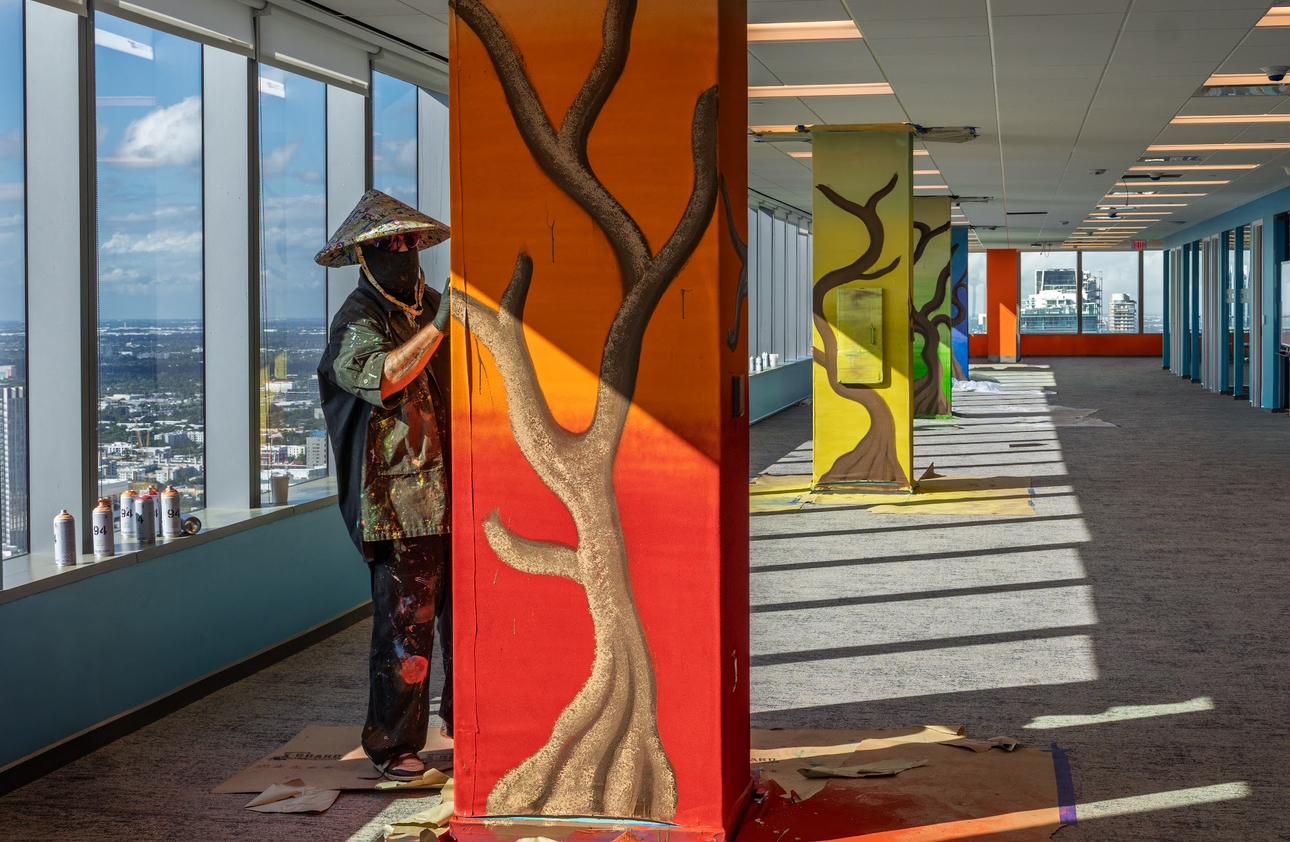
Photo Credit: SPACE305
He coats the same shapes in gradients of ochre, red, and gold, each hue designed to regulate different states of awareness throughout the day.
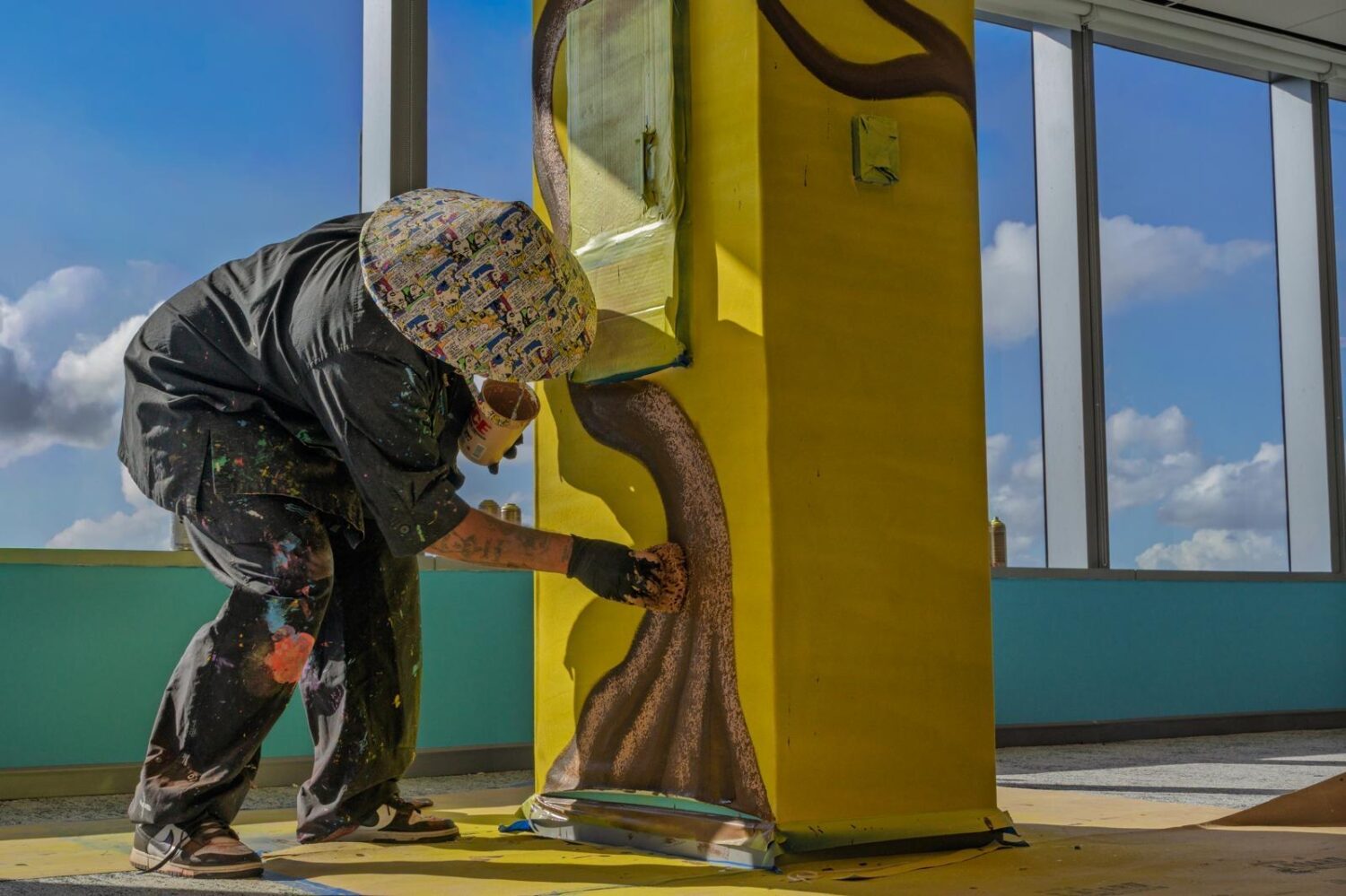
Photo Credit: SPACE305
These columns, rendered in successive tones, function as visual anchors that guide movement and emotion across the floorplate. Yellow symbolizes creative awakening, red signifies embodied focus, and bronze represents grounding energy. The sequence is not decorative; it is physiological, meant to cue subtle shifts in mental rhythm.
Super Buddha’s project suggests that the next era of corporate interior design and architecture will not be about aesthetic innovation but emotional literacy.