
 Mark Stefanos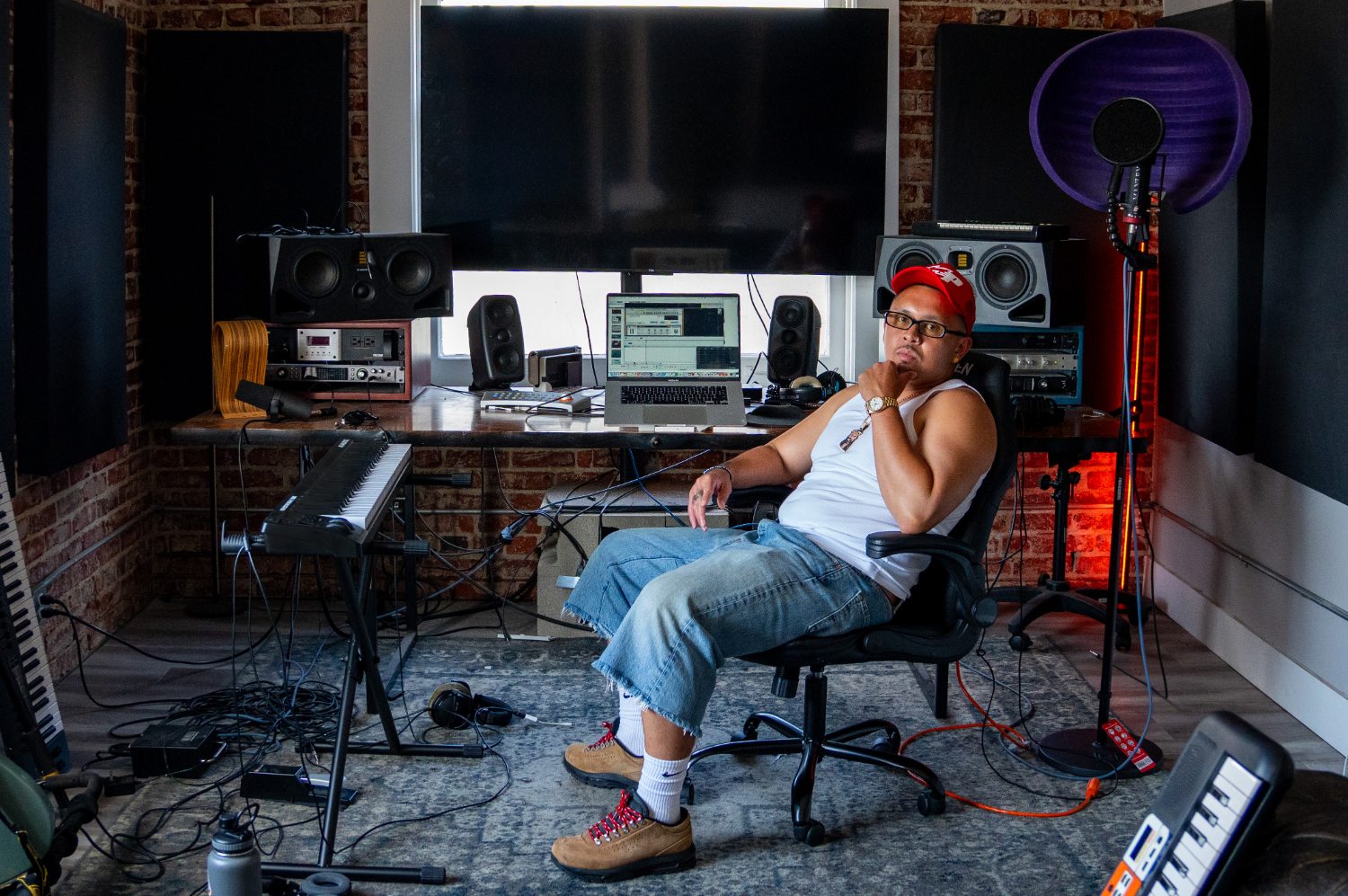
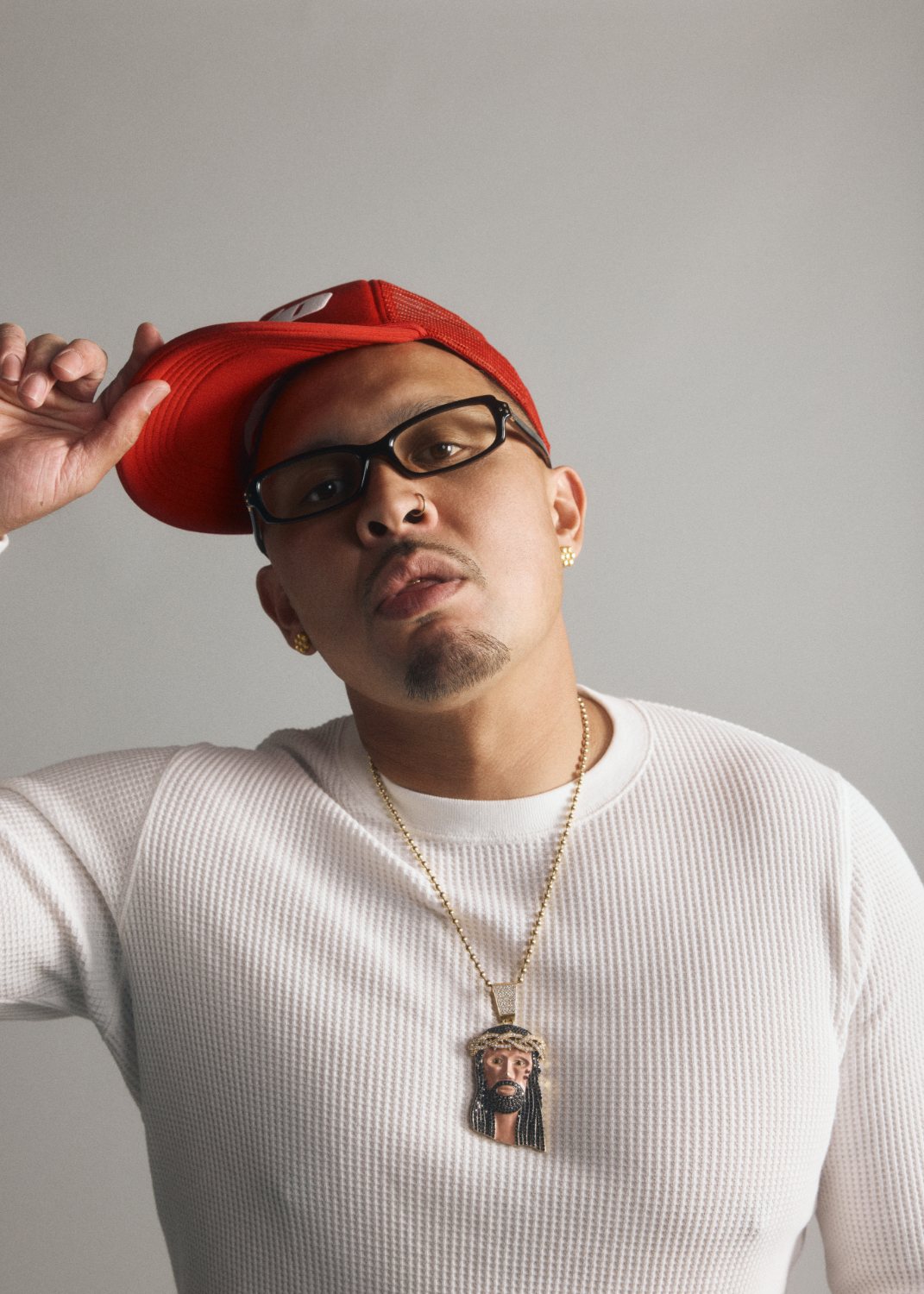
The week before Super Bowl LX, P-Lo was on the 5 Freeway, driving north.
The biggest event in American sports was being hosted in the Bay, and P-Lo had work waiting for him there, as usual. Then his phone rang: his friend and fellow Bay Area artist Karri was working on Drake’s Iceman, and had passed along some of P-Lo’s beats. Drake liked a sample and wanted drums, and P-Lo needed to make them.
“So I’m literally driving on the 5 with my homie, and I’m like, ‘Hey bro, could you switch seats with me? Could you drive for a little bit? I gotta make this beat,’” P-Lo recalls. He climbed into the passenger seat and got to work, then sent it over. “By the time I get to the Bay, they’re like, oh shit, Drake recorded to it.”
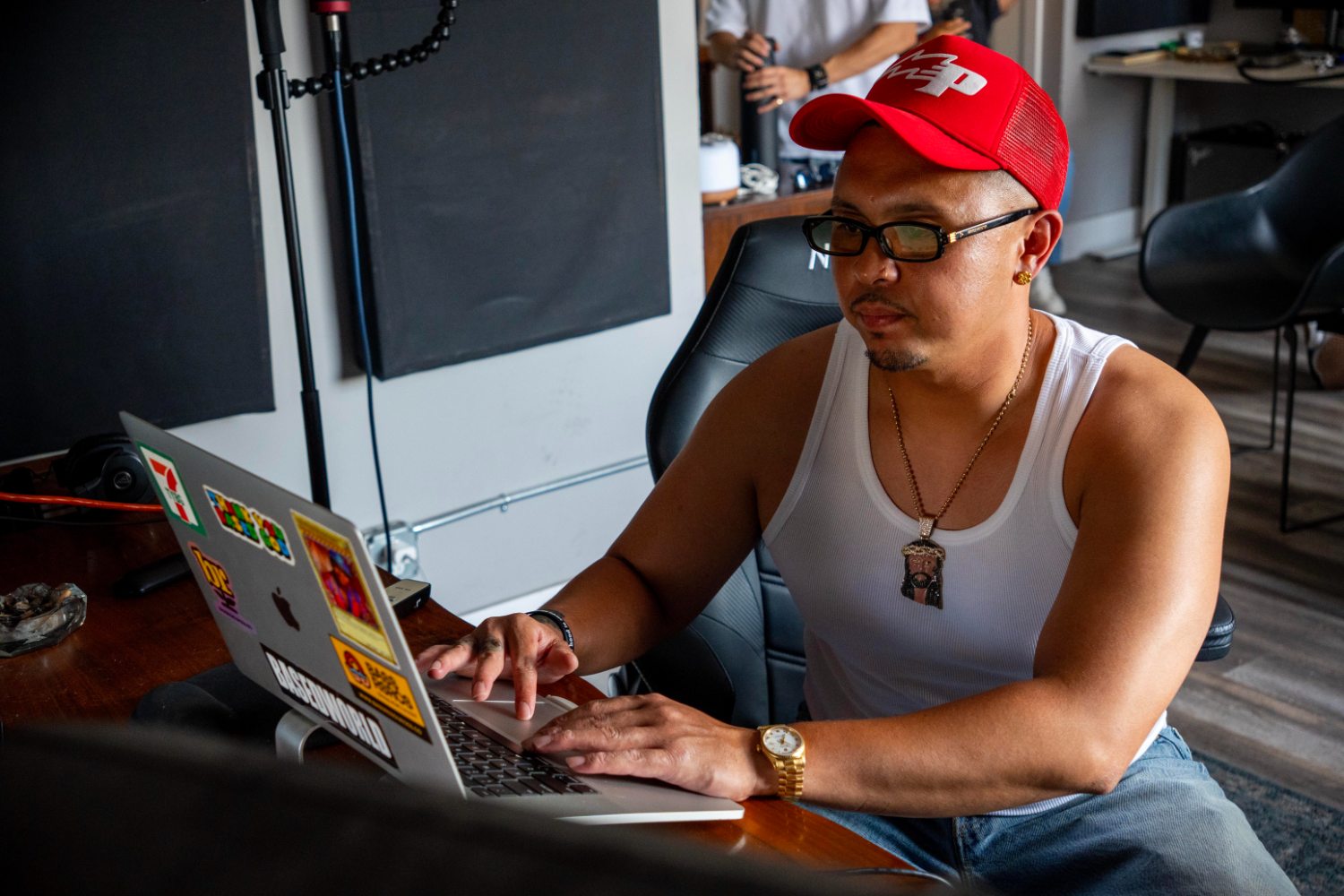
Six months later, during a hookah session in his Koreatown studio, he laughs thinking about where this all went down.
“I must’ve been in like Bakersfield or Lost Hills or something.”
That drive on the 5 sums up a lot about P-Lo’s career. He has spent years moving between the Bay Area and Los Angeles, between producing and performing, between making records and building the infrastructure around them.
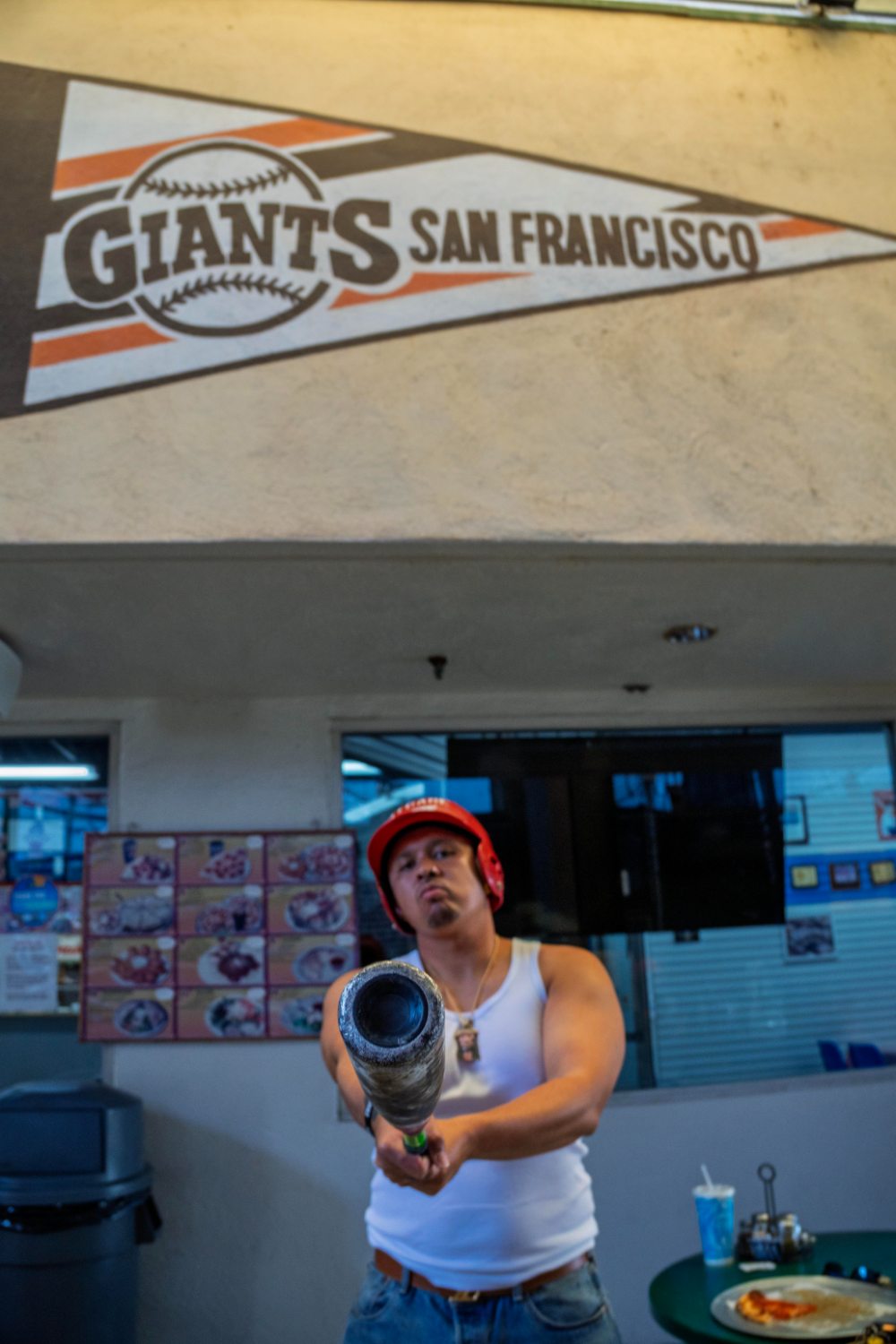
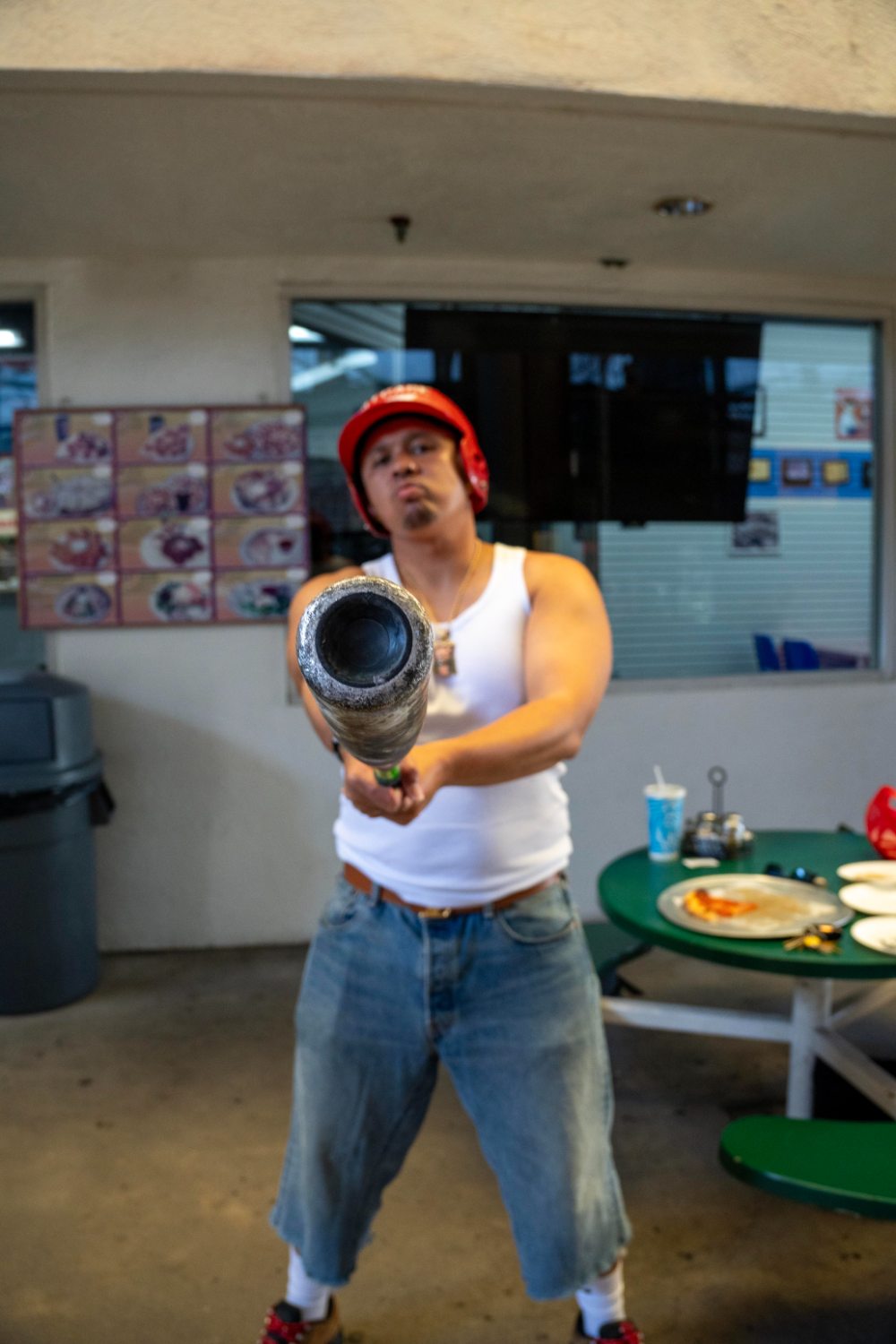
P-Lo at BatCade in Burbank. (Photo: Mark Stefanos)
Born Paulo Rodriguez in Pinole in 1991, P-Lo came up through HBK Gang, a crew he helped found alongside artists including Iamsu! and Sage the Gemini, helping re-energize Bay Area rap after the hyphy peak. He built a parallel career as a producer, landing credits on Yo Gotti’s “Act Right,” Flo Rida’s “GDFR,” Wiz Khalifa’s “Bout Me,” and records with Kehlani, YG, Chris Brown and others. His own catalog — More Than Anything, Prime, Shine, Stunna — has stayed rooted in the bouncy, bass-forward tempos of the Bay while steadily expanding, making him one of the recognizable figures of the Bay Area’s post-hyphy generation.
His sixth solo studio album OUT THE BOX arrives today, Aug. 14, after more than a decade of establishing himself as a producer, artist, entrepreneur and advocate for the communities that shaped him.
On his 34th birthday last year, Pinole handed him the key to the city and declared May 7 P-Lo Day. These days, he keeps a roughly 60/40 split between LA and Alameda, with his family still concentrated north, and most of the day-to-day work happening down here.
OUT THE BOX implies a break from something, but after spending an afternoon with him in his element, it feels less like a departure and more like an artist detailing the intricate gears of his business.
“The unknown is where a lot of the great stuff’s at,” he says. “Everybody wants security. But learning to embrace the unknown is where we find everything we truly want in life — continuing to grow and embracing the uncomfortable.”
Comfort with uncertainty started long before P-Lo made music his profession. His parents immigrated from the Philippines. His father, who worked as an electrical engineer, came to the United States alone, leaving P-Lo’s mother and older sister behind before eventually bringing the family together.
Music was everywhere in the Rodriguez household. P-Lo’s older brother, Oliver — an accomplished producer in his own right known as Kuya Beats — was the first in the family to make music, while his sister introduced him to ’90s R&B. His father’s stereo system and extensive record collection meant music flooded the house.
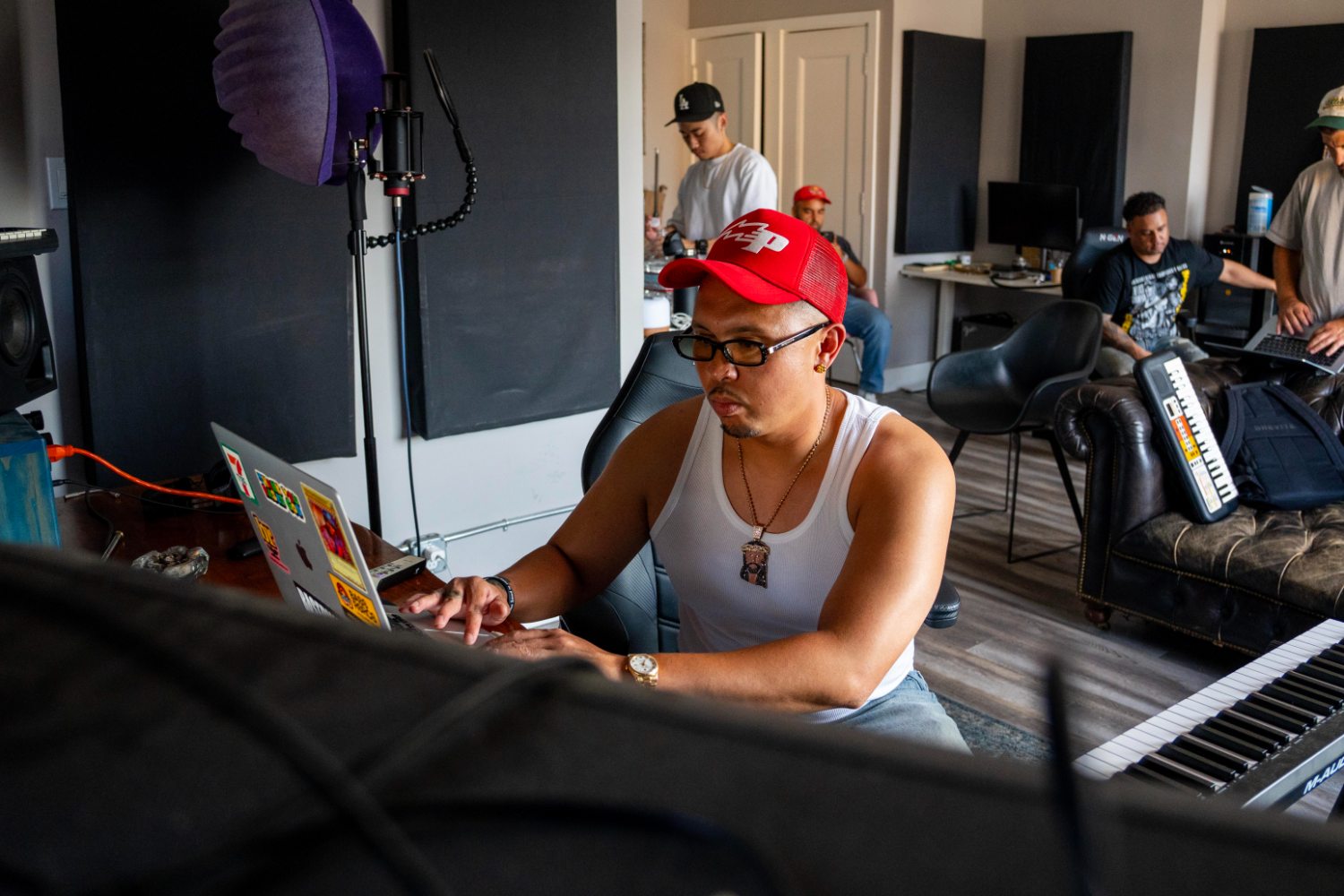
P-Lo at his Koreatown studio. (Photo: Mark Stefanos)
But that didn’t mean his parents were excited for him to make a living out of it. P-Lo recounts — “Me and my homies would come into my parents’ house and we’d just be in the front room making beats, and my dad would come in like, ‘Hey, what are you guys doing? Are you guys gonna actually do something, or make some money, or get jobs?’”
His brother helped create room for P-Lo to figure it out. “He acted as a shield for my parents. He talked them off the ledge.” For what it’s worth, his parents are super proud of him now.
What P-Lo took from his parents was appreciation for the scale of the gamble they took. “What wakes me up every morning is really knowing the risk that my parents took to even come here,” he says. “If you would have told me at 25 years old that you would move across an ocean to a place that you don’t know anybody, don’t speak the language, and really ended up figuring it out and raising some kids — I would be scared straight.
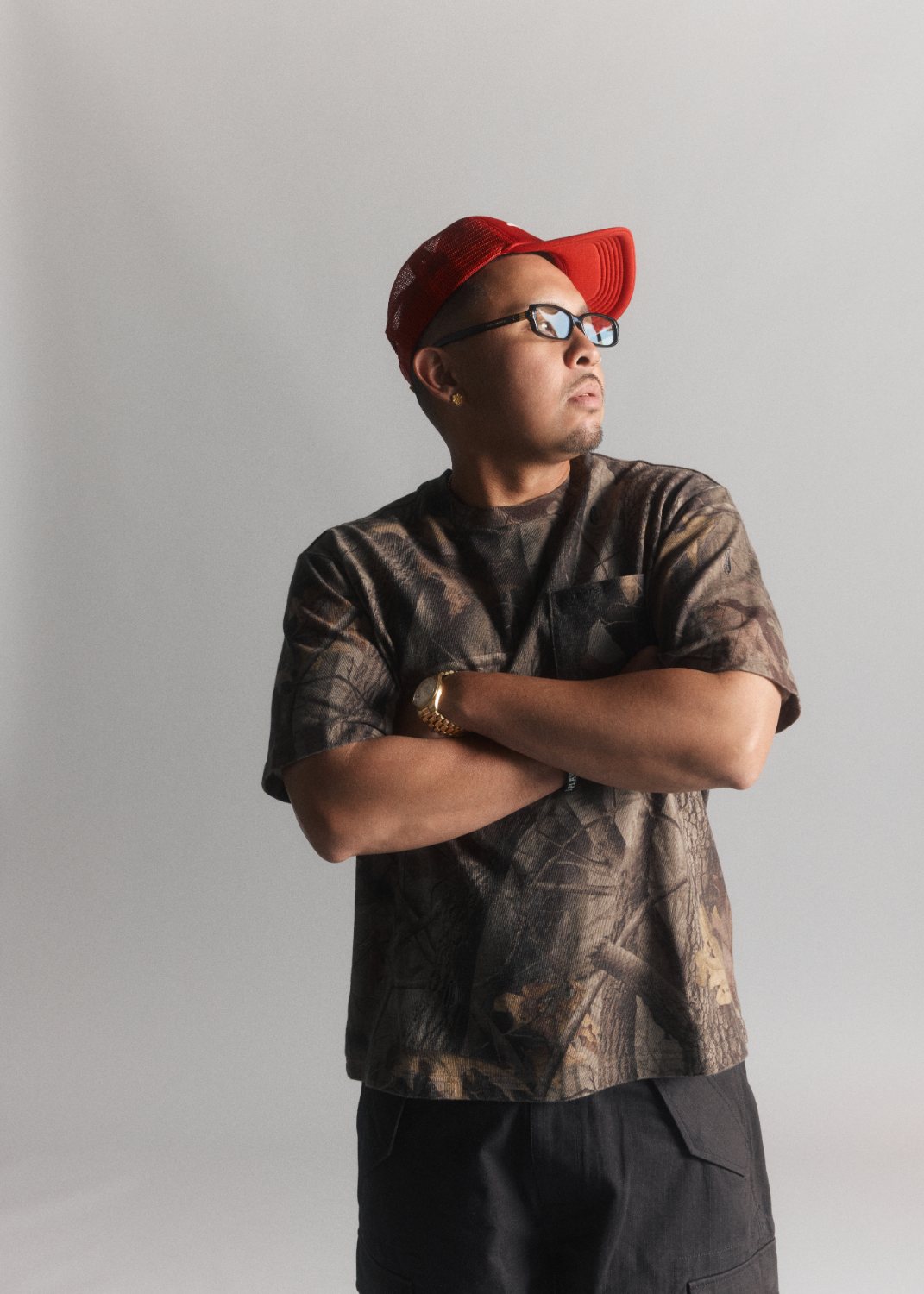
P-Lo (Photo: Bryan Berry)
“Knowing the kind of courage and work ethic that my parents had to do that and really make it happen and really allow me this opportunity to just express myself through music — I’m super grateful for that,” he says.
There’s also an almost improbable piece of symmetry in the family history. When P-Lo first moved to LA, his first studio was in Koreatown. Years later, he learned that when he first arrived in America, his father touched down in the same neighborhood.
“I was talking to him about that. He was like, yeah, I stayed right there in K-Town. And I’m like, what?! What are the odds of that?”
A quick aside to address the five people who care — we’re LA Weekly and repping our city is the first thing in our title.
I could write an e-book about the Bay/LA rivalry. It’s hard to parse what of it is real, but for me, an old-world adage helps clarify the alliance hierarchy: “Me and my brother against our cousin, and me, my brother and our cousin against the stranger.”
We have much more in common with our NorCal cousins than we do with all the strangers outside of California. So while you won’t catch us wearing the SF hat anytime soon, we share the Cali sun and soul, multiculturalism and sense of humor with our neighbors. And, of note, in the bedrock of both regions you’ll find the Filipino community.
What we always respect is standing tall for the streets and folks that raised you, i.e., being loyal to your soil. That’s a universally honorable trait. While P-Lo now splits his life between the two, his ten toes are firmly planted in Bay soil. It was a part of every conversation we had, and in a lot of ways, it’s the mission of his work.
P-Lo made his own migration south roughly a decade ago, following a familiar path for Bay Area creatives.
“Really, if you wanted to make stuff happen, you had to come to LA,” the warm and articulate musician says. “Coming down here, you really got to see how things were done. You get to see the best of the best and it really made you step your game up. It was either you’re gonna rise to the occasion, or fall and tuck your tail and go back to the Bay.”
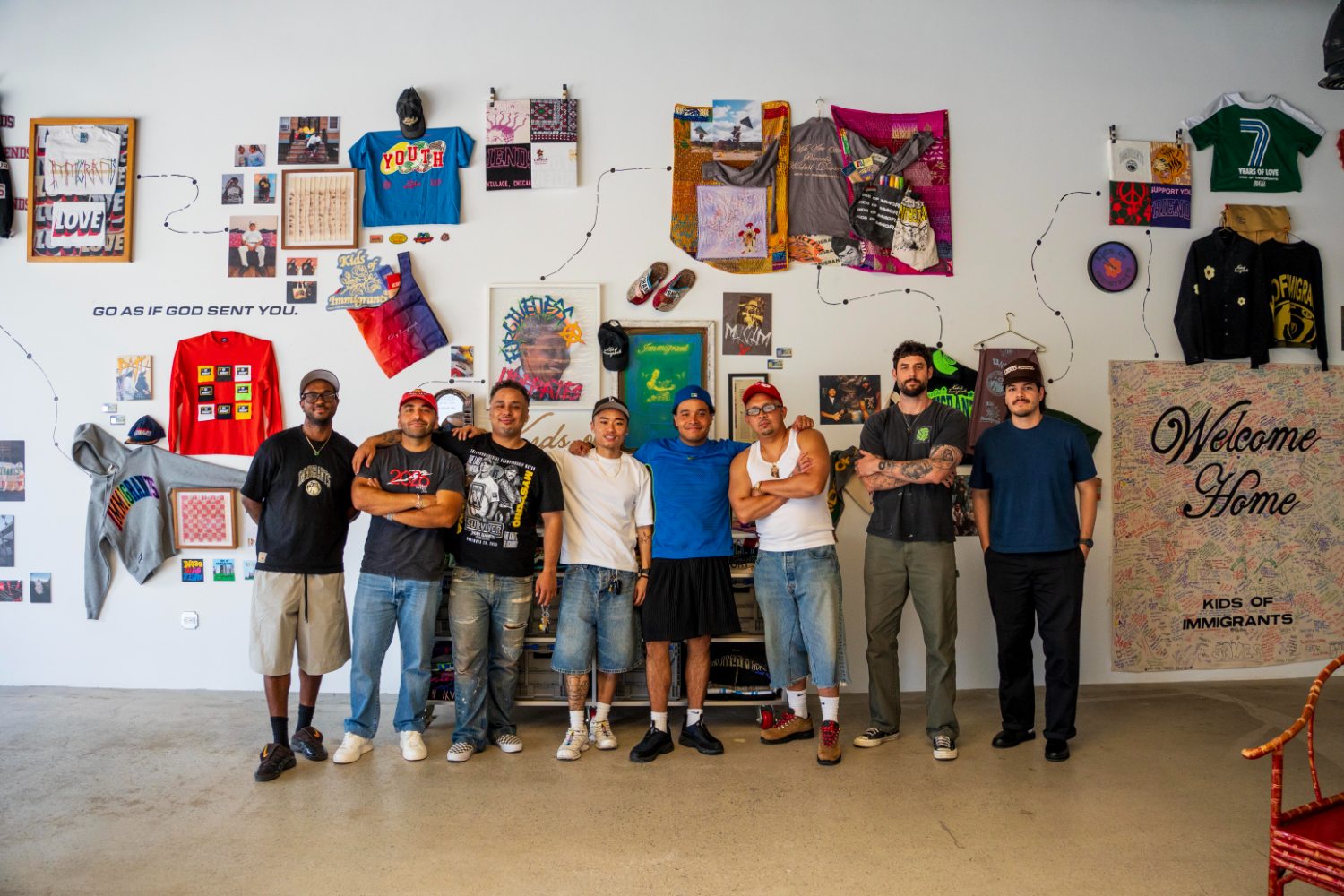
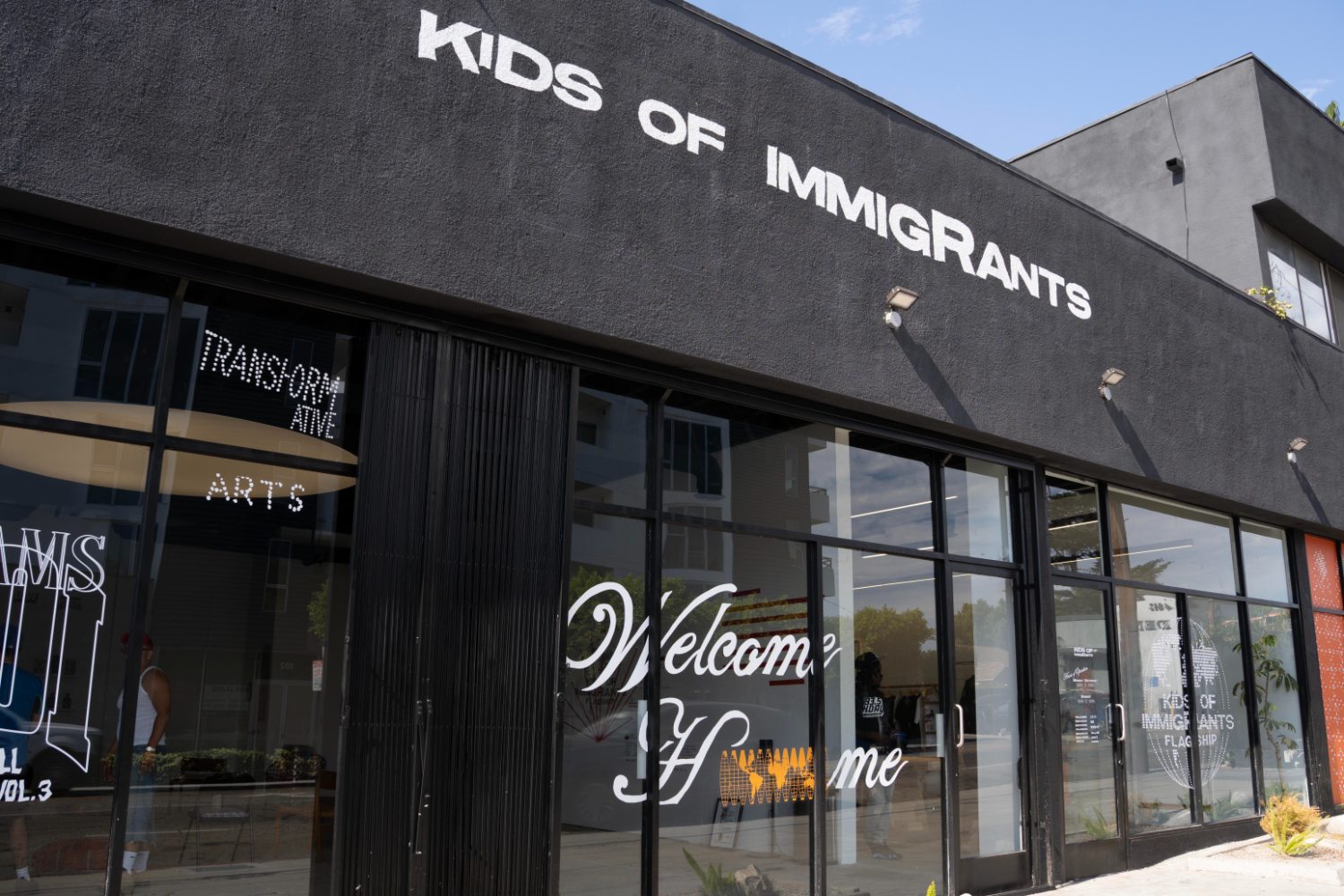
P-Lo and friends at Kids of Immigrants flagship store. (Photo: Mark Stefanos)
He found some of his footing through members of his creative network from back home. P-Lo became friends with Daniel Buezo, who co-founded the streetwear and lifestyle label Kids of Immigrants, through their mutual friend David Ali, who was managing Kehlani. The network eventually followed everyone south.
The early days were modest. “We used to be like seven deep in a two-bedroom apartment on Hoover and Pico,” P-Lo says. “Sleeping on the floor, sleeping on couches. Really started from the bottom with those guys.”
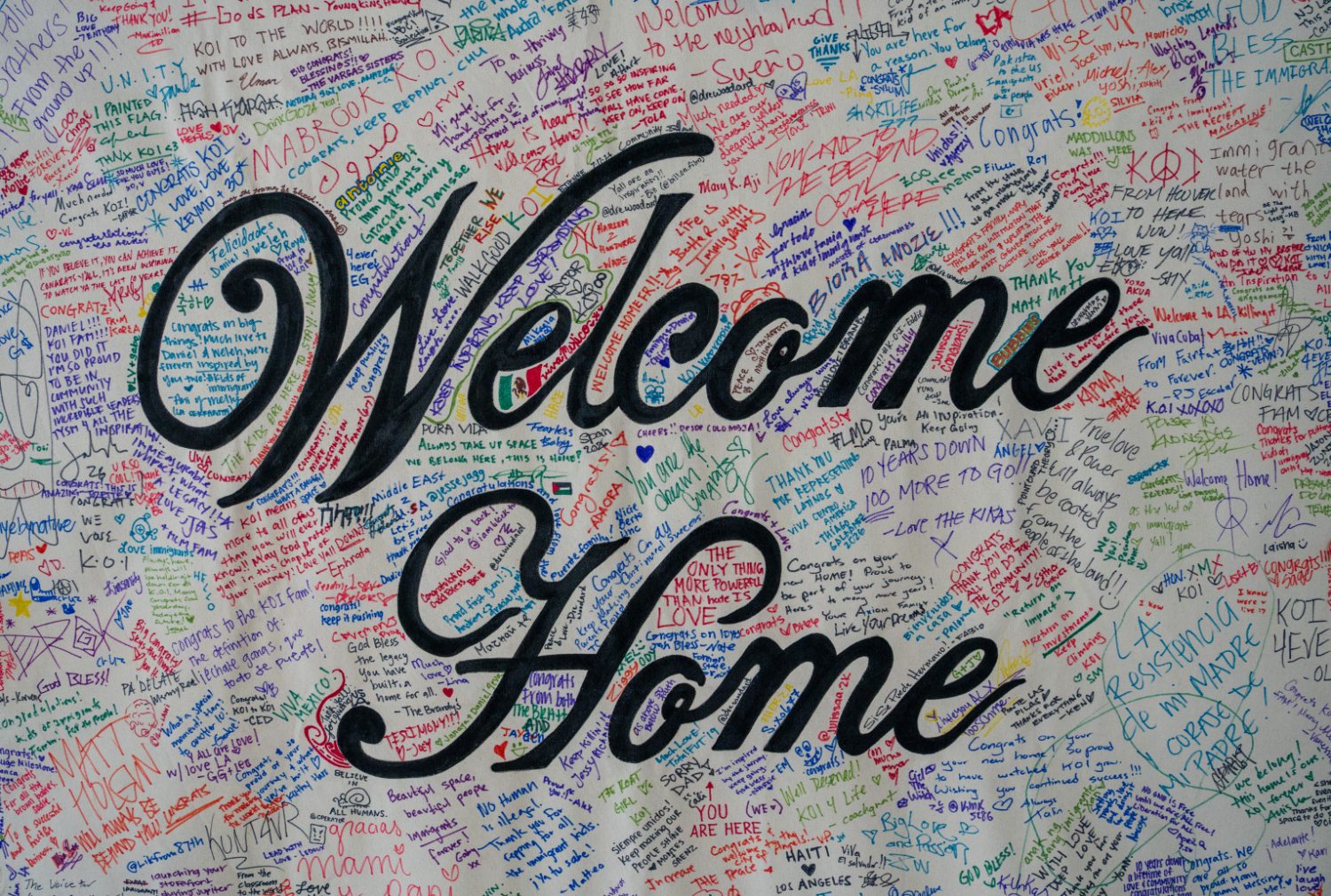
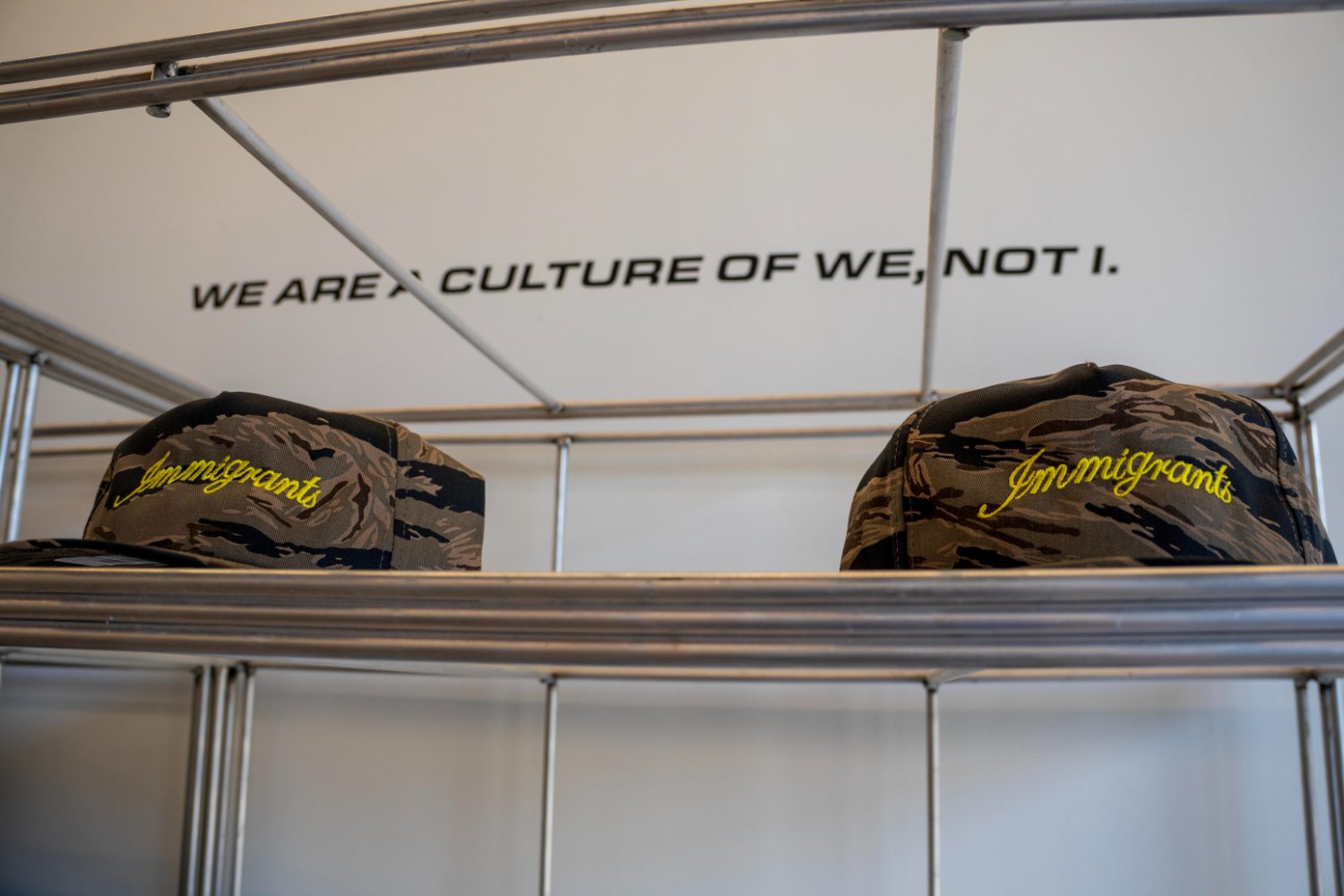
One of the first collaborations Kids of Immigrants did was for P-Lo’s debut album More Than Anything, released in 2017. Now celebrating 10 years in business, Kids of Immigrants just opened their flagship store in Melrose Hill. Growing alongside each other, P-Lo’s album release party will be hosted at the Kids of Immigrants flagship from 7 to 10 p.m. tomorrow, Saturday, Aug. 15.
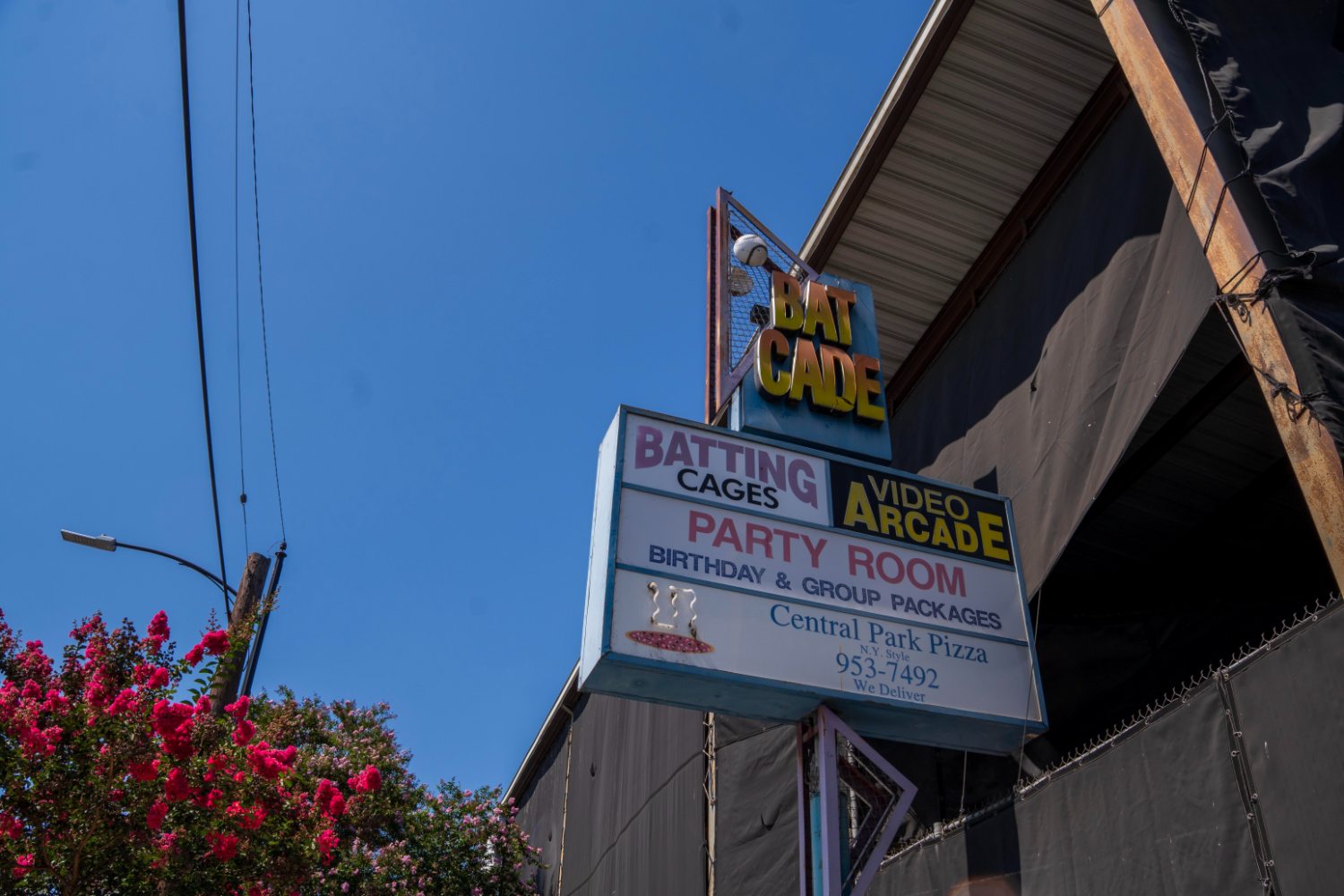
On the day I interviewed P-Lo, we hit the Burbank batting cage BatCade, then stopped by the Kids of Immigrants flagship store before heading to P-Lo’s studio — the latter two only separated by a few blocks. The KOI stop felt like a family gathering for Sunday brunch. “It’s been a dope journey just to see where our whole family tree has gone,” P-Lo says.
The phrase “family tree” comes up repeatedly when P-Lo talks about his career. It describes the Bay Area network that raised him, the artists who migrated south alongside him, and the people he has met along the way. It also describes what he is trying to build now.
Since establishing his roots as an Angeleno, P-Lo has evolved beyond just his artistry — he has become the infrastructure. His LA studio has become a portal for Bay Area artists who make the same trip he once did. P-Lo and friends take up several rooms on their floor in K-Town, and Bay artists landing in LA tend to end up there inside a week.
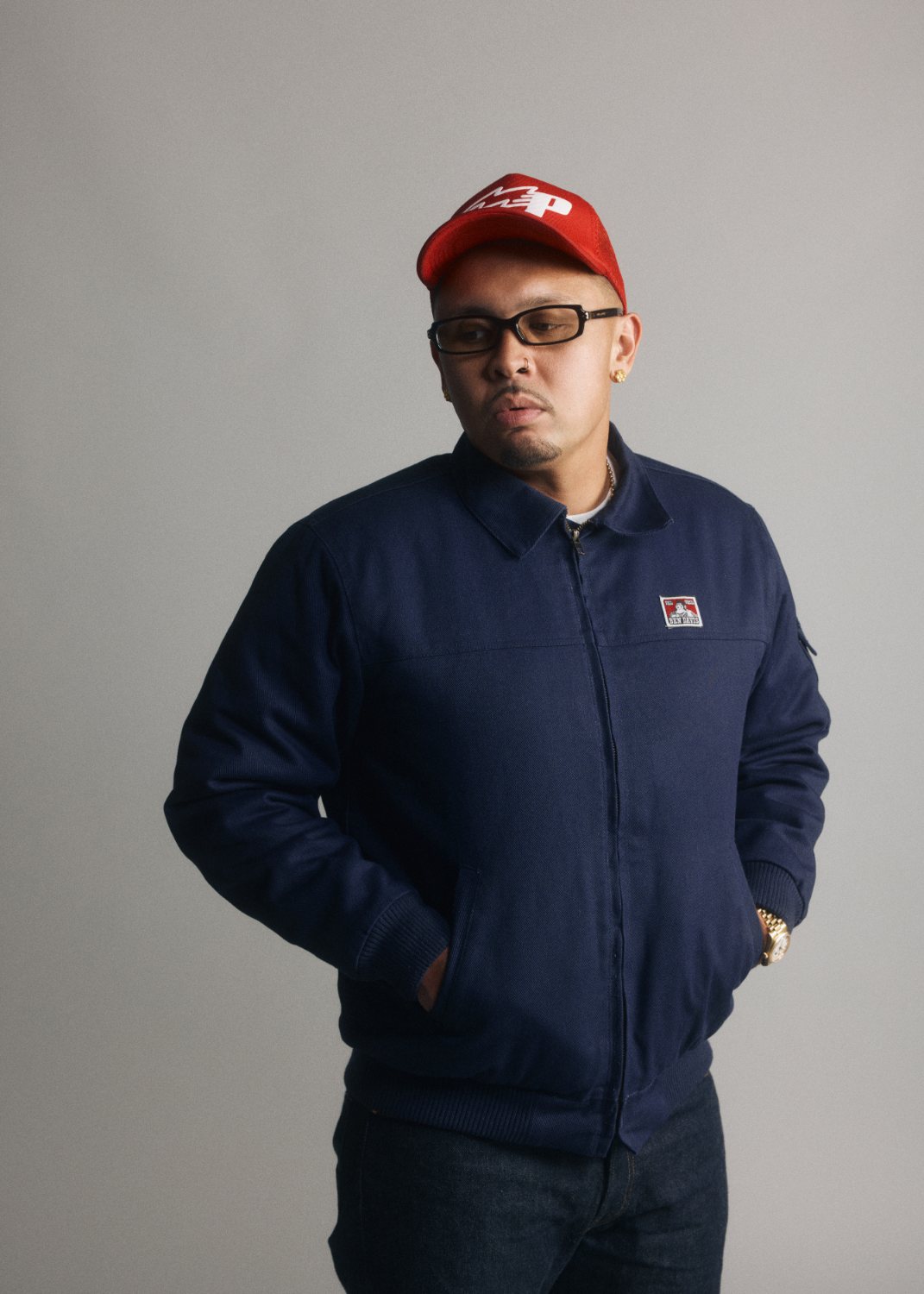
P-Lo (Photo: Bryan Berry)
“Most often they’ll be like, ‘Hey P-Lo, you at the studio?’” he says. “And I’m like, yeah, come through, just come kick it, come hang out. We want to build that hub for Bay creatives to come down here and just at least have a home.”
Stephanie Ramos, co-founder of Filipino cultural collective Baryo, is familiar with that kind of ritual. She moved from New York — a city where she says she never connected with her Filipino heritage — and began hosting annual dinners during Filipino American History Month. P-Lo was invited to the first one. She (and you might be detecting a pattern here) is also from the Bay.
“When we grew up in the Bay, it’s so easy to just get, I hate to say, stuck there, but it’s so easy to just be in our little bubble,” Ramos says. “So once we’re able to get out, all we want to do is put people on from there too. People from the Bay — we’re not selfish people. We want to bring everybody with us.”
P-Lo abides by the same philosophy. “There’s so many talented people from the Bay that don’t necessarily get the resources or the knowledge to really get in the creative fields and really be able to thrive,” he says. “Anything that I do here, I want to be able to bring it back to the Bay and be able to share anything that I got, whether it’s knowledge or resources or anything.”
The impulse to pay things forward also works in reverse. The beat P-Lo was cooking up while on the 5 Freeway became the song “2 Hard 4 the Radio” — Drake’s tribute to the Bay Area rap legend Mac Dre on Iceman, which interpolates Mac Dre’s 1989 track, “Too Hard for the F—in Radio.”
Mac Dre died in 2004 without receiving an RIAA certification, but is now officially eligible for his first-ever platinum plaque because Drake’s new song credits him as a songwriter. “He’s someone that never really got his flowers while he was alive,” P-Lo says. “Me growing up, listening to his music, his music gave me so much confidence and self-worth.”
He’s got Mac Dre’s silhouette tattooed on his wrist. “If you would have told seventh-grade me, one day you’re going to get Mac Dre a plaque, I’d be like, oh, what the fuck?!”
The record also illustrates P-Lo’s place within a lineage. Mac Dre helped define one generation of Bay Area rap. P-Lo came of age during another, helping HBK Gang bring a newer, more melodic and party-oriented version of Bay rap to a national audience. His production work eventually put him in rooms with artists far beyond NorCal, and an emissary of the region’s evolving sound. Now he is becoming part of the transmission himself.
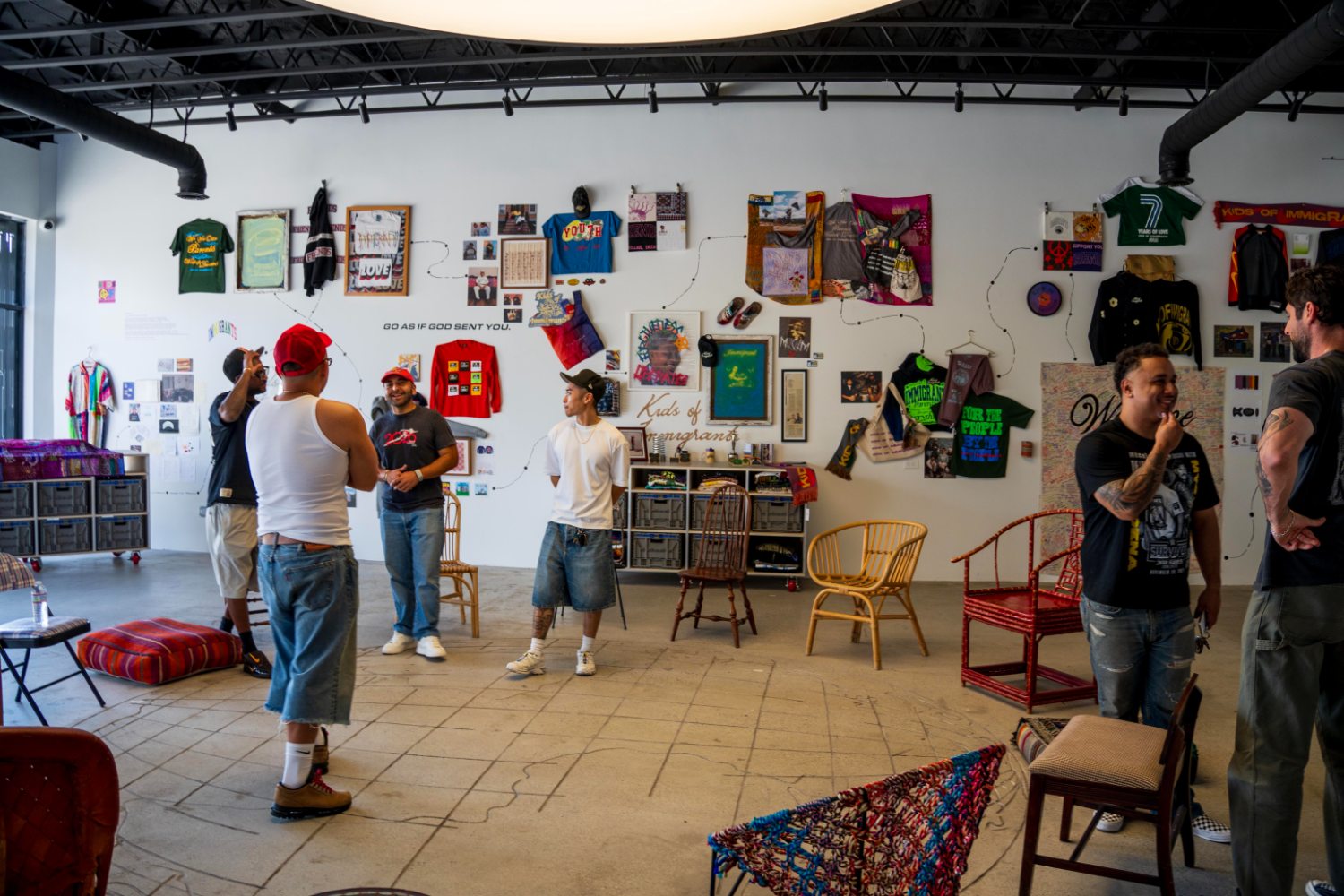
P-Lo and friends at Kids of Immigrants flagship store. (Photo: Mark Stefanos)
That’s especially visible in P-Lo’s relationship with Baryo. Their annual Historic Filipinotown celebration, Baryo HiFi, began as a community gathering and has grown dramatically. Ramos says the first block party drew about 10,000 people, the second about 17,000, and the third, held in 2026, about 22,000. The event brings together restaurants, small businesses, artists, an art gallery and a karaoke contest.
“We knew that Historic Filipinotown exists in LA, but not in the way that a Japantown or a Koreatown does,” Ramos says. She wanted the whole city to walk through it.
Ramos says P-Lo helps identify emerging artists who deserve the stage and has also helped Baryo develop relationships with brands and organizations, while pushing the festival toward a broader vision.
“He’s always been a connecting thread for us,” she says. “He has such a huge network. He’s just like, ‘Oh, we can get this artist there. Well, how about this brand?’ He’s just so selfless when it comes to continuing to build Baryo.”
One of the festival’s goals is bridging generations. Last year, P-Lo and fellow artist Yeek worked with the seminal Filipino disco band VST & Company (think the Filipino Bee Gees) to recreate the group’s classic “Awitin Mo at Isasayaw Ko,” bringing a foundational Filipino pop act together with younger artists.
The connection gave P-Lo a new perspective on his own music. VST’s Roger Rigor explained to him that during the political turmoil of President and kleptocrat Ferdinand Marcos’ rule, the band’s upbeat music and emphasis on dancing provided people with an outlet.
VST’s goal “was to get people to dance and free the stress from their hips,” P-Lo says. “Because it was some real deep shit. And I was like, ‘Damn, dancing is like freedom.’ They were being so intentional with that at that time.”
The conversation made him reconsider something he had been doing his entire career. “I want to get people to dance,” he says. “I want people to feel confident. I want people to liberate themselves through my music.”
P-Lo’s new album aces that assignment. Across 16 tracks, OUT THE BOX gathers the knowledge from more than a decade of production and solo work into one intentional project. There are dance-floor turns that lean toward Brazilian funk, tracks that double down on classic Bay sonics, and a high-spirited through-line that’ll keep your body bouncing. Guests include Killer Mike, SadBoi, Kreayshawn, 1Umbrella and SOBxRBE — voices P-Lo treats like instruments inside his world.
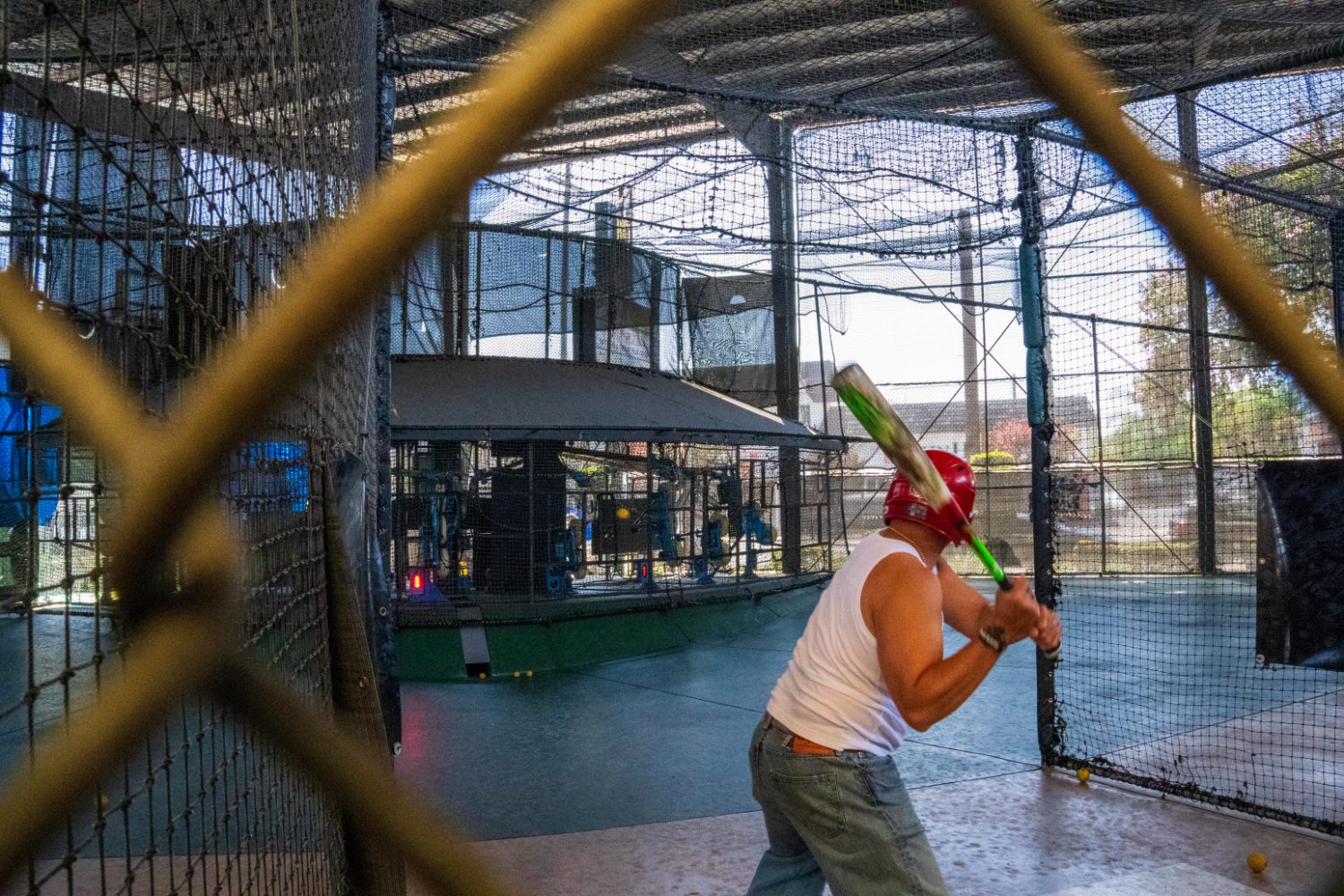
P-Lo at BatCade in Burbank. (Photo: Mark Stefanos)
He describes the project as his most complete and personal reflection of where he is now. “It takes a lot of personal growth for my art to continue to grow,” he says. “If you’re not necessarily growing as a person, how is your art going to grow?”
But even with the evolving sounds, it’s undeniably a Bay Area album. “I never really wanted my music to not sound like I’m from the Bay,” he says. “People want to say, ‘Oh, the Bay sound doesn’t translate.’ But I know it does. I know these tempos and these sonics translate across the world. I’ve been in other parts of the world and they love what I do.”
That’s a sentiment the rap literati has long observed about the Bay broadly: they invent something, someone else drives it up the charts, the Bay gets a footnote.
I ask about that: “I feel like that’s always been the case,” he says. “I feel like we’re always five to ten years early on a lot of things. And that’s cool. That’s our contribution to the sphere of the world, in the world of music.”
Some — maybe most— artists would get salty about originating a concept and not getting the full credit. But when I pressed to see if he feels any way about that, P-Lo is magnanimous and doesn’t spend a breath of negativity.
“No, no, no,” he says. “Like, yeah, someone could lead with that. But not especially where I’m at now. That’s just the nature of things. And that’s the contribution. We got to continue to contribute to the sphere of the world. That’s all that matters. Because there’s a lot of people not contributing and just taking.”
You can connect the dots to find how that generous and worldly view got baked in from his upbringing. “The Bay Area that I grew up in was like a melting pot, and everyone kind of really had to learn how to be together, whatever that meant,” he said earlier in the conversation. “If you probably looked in my classroom when I was in elementary school, you’d see every walk of life. It was able to give us this empathy for everyone.”
That environment also made room for experimentation. P-Lo points to Lil B, whose prolific output and unconventional approach eventually helped shape the language of internet-era rap. “At first, some people didn’t necessarily understand what was going on,” he says. “Some people did, some people didn’t. But then that’s ultimately what the game became.”
When the conversation turns to the idea of unconventional digital connection — Lil B’s interacting directly with fans, building community before the business model existed — P-Lo laughs. “Bro, that’s out the box.”
P-Lo is also clear-eyed about how Silicon Valley’s boom is transforming the place that raised him. “It’s moved a lot of Black and brown people out of the Bay, out of San Francisco, out of Oakland,” he says. “Black and brown people are the culture of the Bay. And until the housing becomes affordable, it’s gonna be like that.”
His answer is cultural persistence. “People that truly grew up in the Bay at that time — we just continue to try to do our best to keep that spirit of open-mindedness and diversity alive.”
Ask P-Lo who he wants to become after decades in the music business, and he names two artists who have spent decades defining the Bay on their own terms.
“I aspire to be someone like E-40 and Too $hort,” he says. “Those are my blueprints. Both of them are at their largest right now. And they’re deep in — 30, maybe 40 years into the game. Can anyone really say that? Other than Jay-Z.”
True to his humble form, what he admires most is the way they have maintained their relationships.
“How they’ve moved, how they treated people, their relationships with people — you can’t hear people talk bad about them,” he says. “That’s something I want to continue. To be solid and do right by people, and continue to contribute to the spirit of music, to the spirit of the Bay.”
P-Lo’s “OUT THE BOX” is out today on your favorite platforms. Follow P-Lo on Instagram @p_lo.
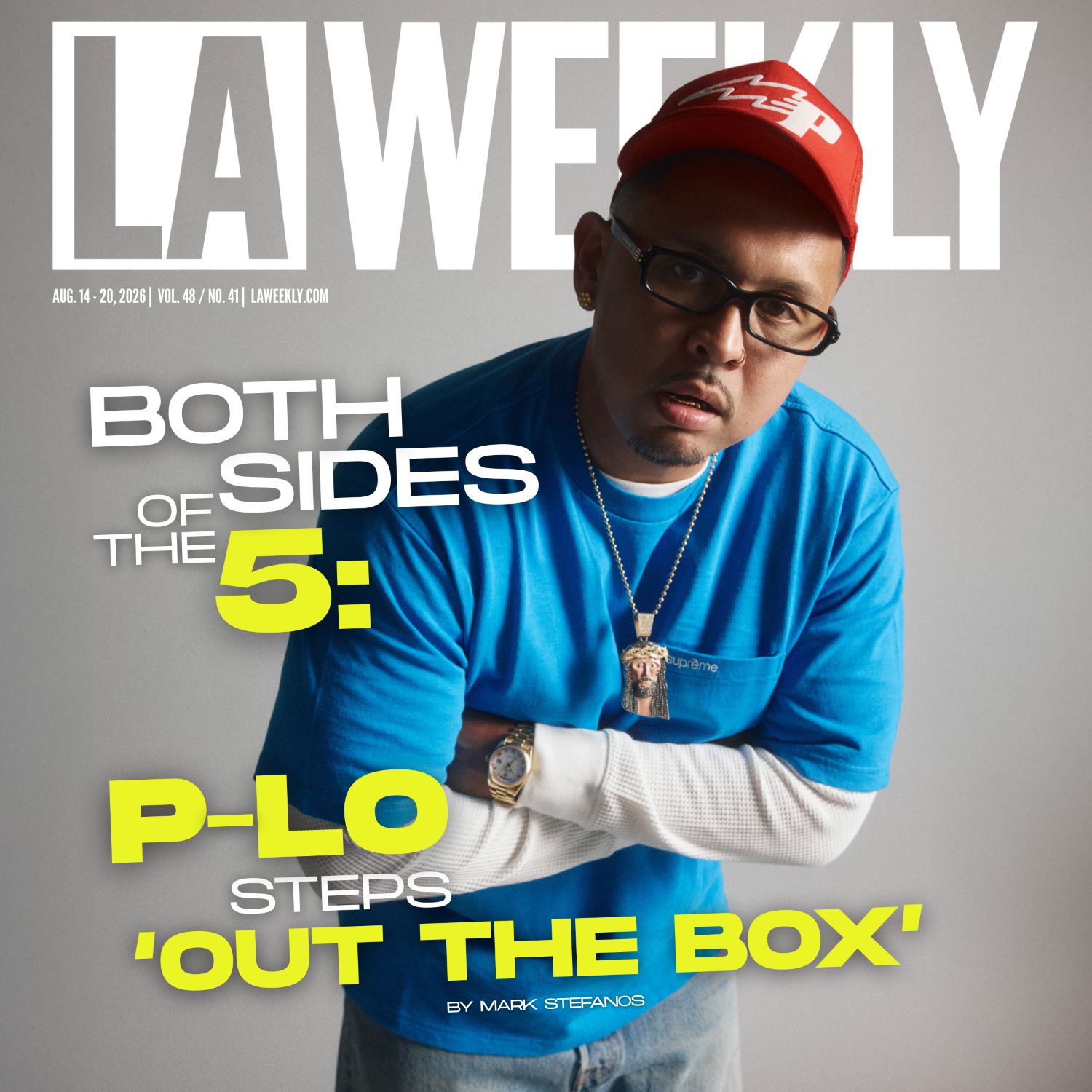
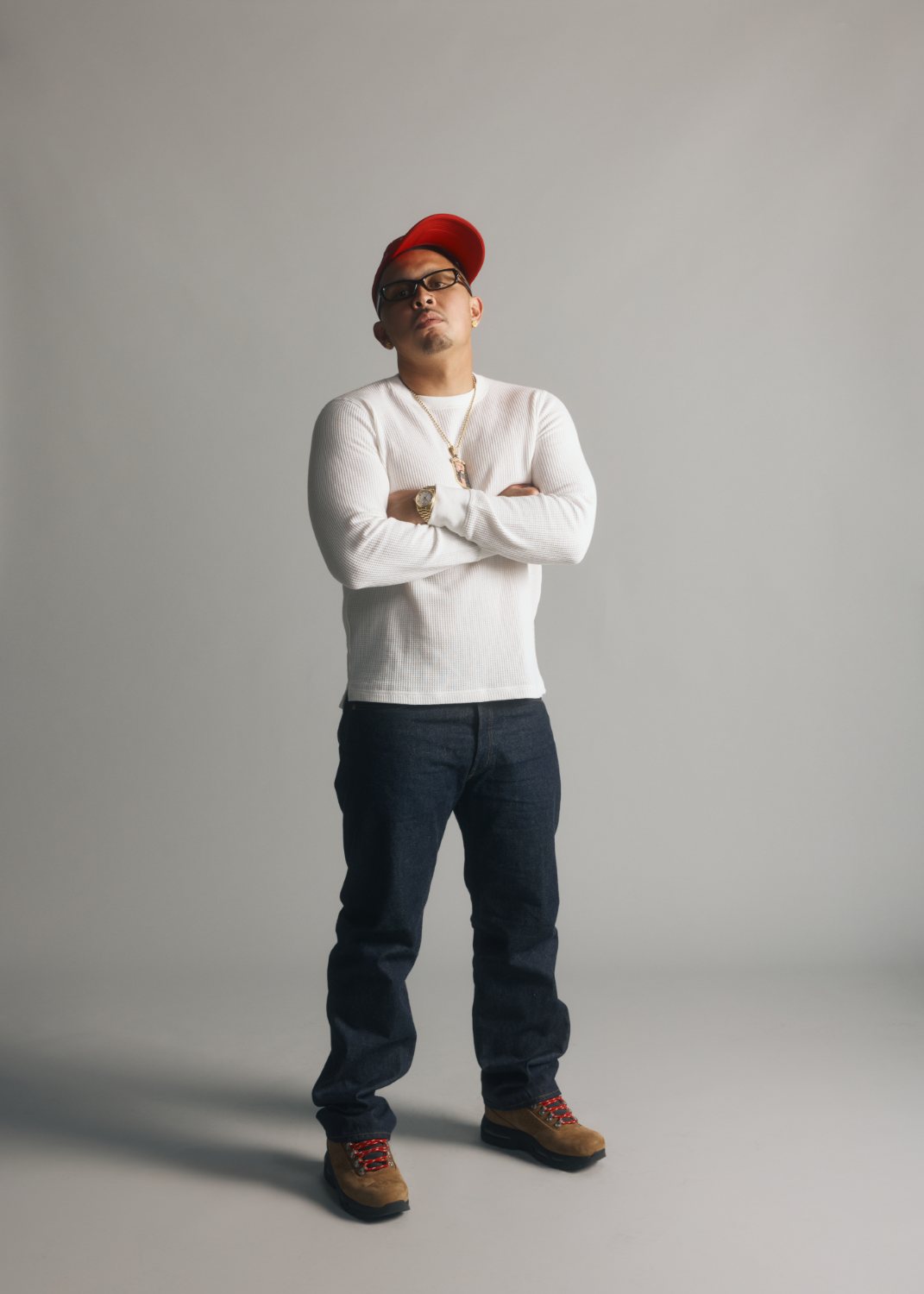
P-Lo on the August 14, 2026, cover of LA Weekly (Photo: Bryan Berry)