
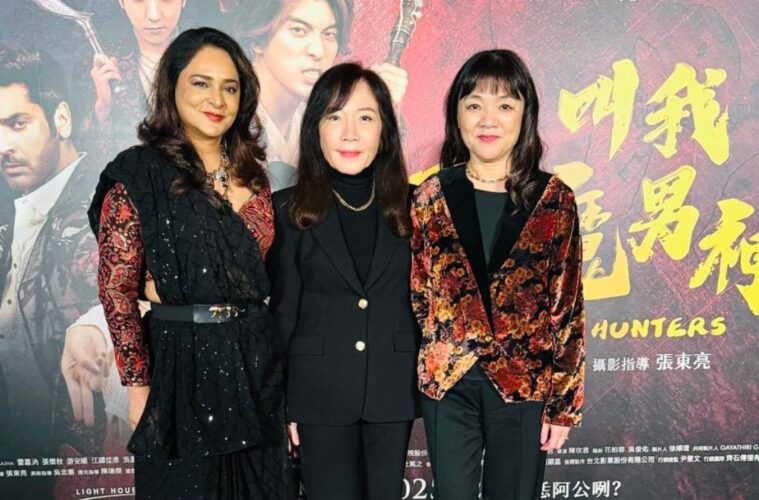
 Jordan Riefe
In Indian mythology, Asura are power-seeking superhuman “antigods,” proud and vain entities who shun sacrifice, violate sacred law, eschew holy places, torture the living, create confusion and brazenly challenge the Deva (gods). In the West, Asura mainly refers to the 2012 video game “Asura’s Wrath,” which mixes science fiction with elements from Hindu and Buddhist mythologies. With the release of the new film Demon Hunters, out today on Amazon Prime and Apple TV, Western notions just might change.
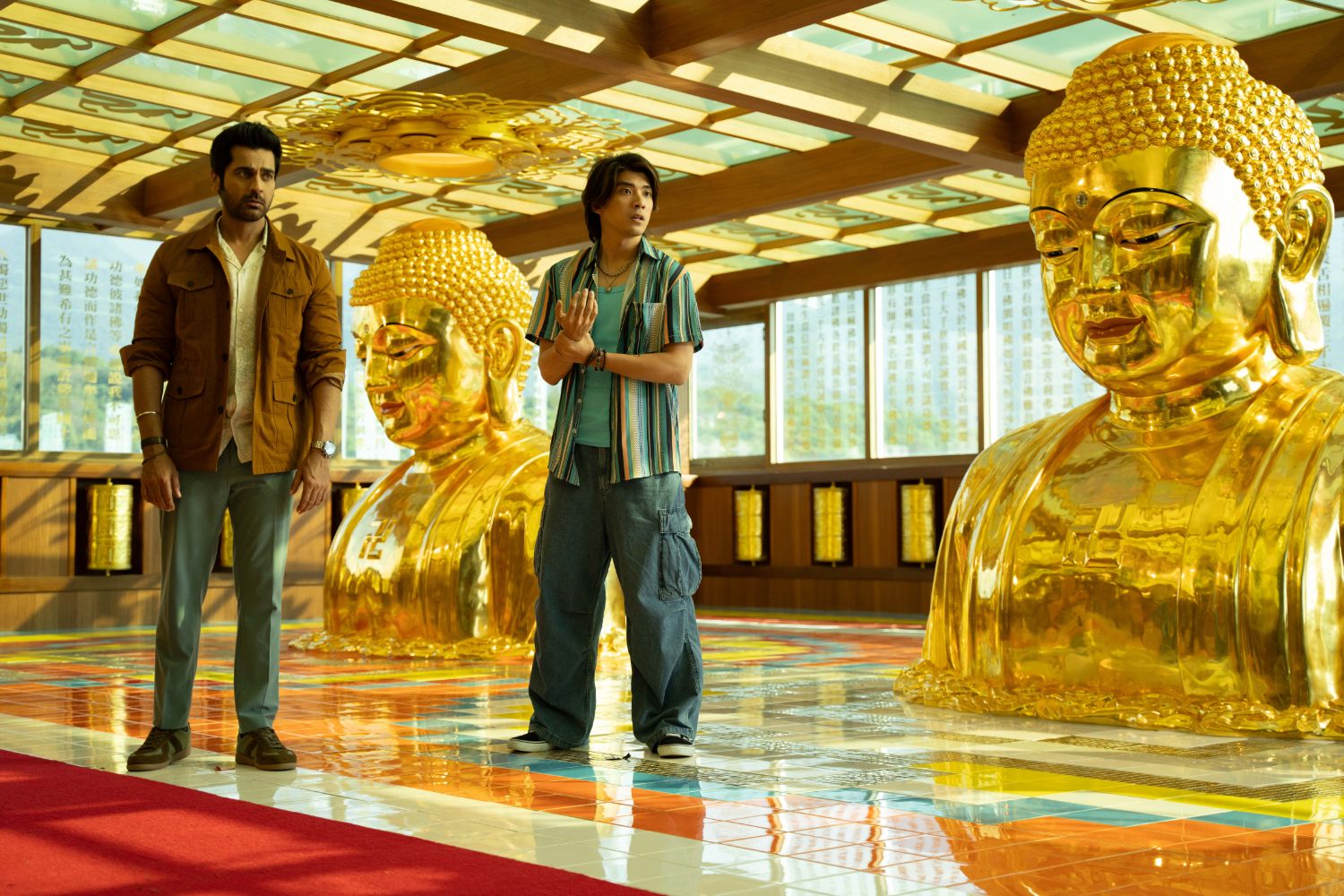
The first of its kind, the new film blends Taiwanese and Indian culture, conjuring a unique contemporary brew of humor, action, horror and just a little bit of Bollywood. JC Lin plays Tommy, a YouTuber who performs fake exorcisms for an ever-dwindling audience. Arumi (Regina Lei) is his long-suffering but supportive girlfriend. When a real-life Asura appears in the form of Fengji, played by Taiwanese pop star Harry Chang, Tommy and Sanjay (Bollywood star Arjan Bajwa) are confronted by a force of evil unlike any they’ve ever encountered. Coming to their aid are Fengji’s uncle, Tie Xiong, played by Taiwanese film legend Jack Gao, and Sanjay’s grandfather Babaji (Jayanta Meetei), a veteran exorcist experienced in fighting Asura.
“Taiwanese are not unfamiliar with Asura,” LA-based director Mei-Juin Chen tells LA Weekly. “He’s in Hinduism, but also in Buddhism, and nowadays also in video games. So, young people are also familiar with Asura.”
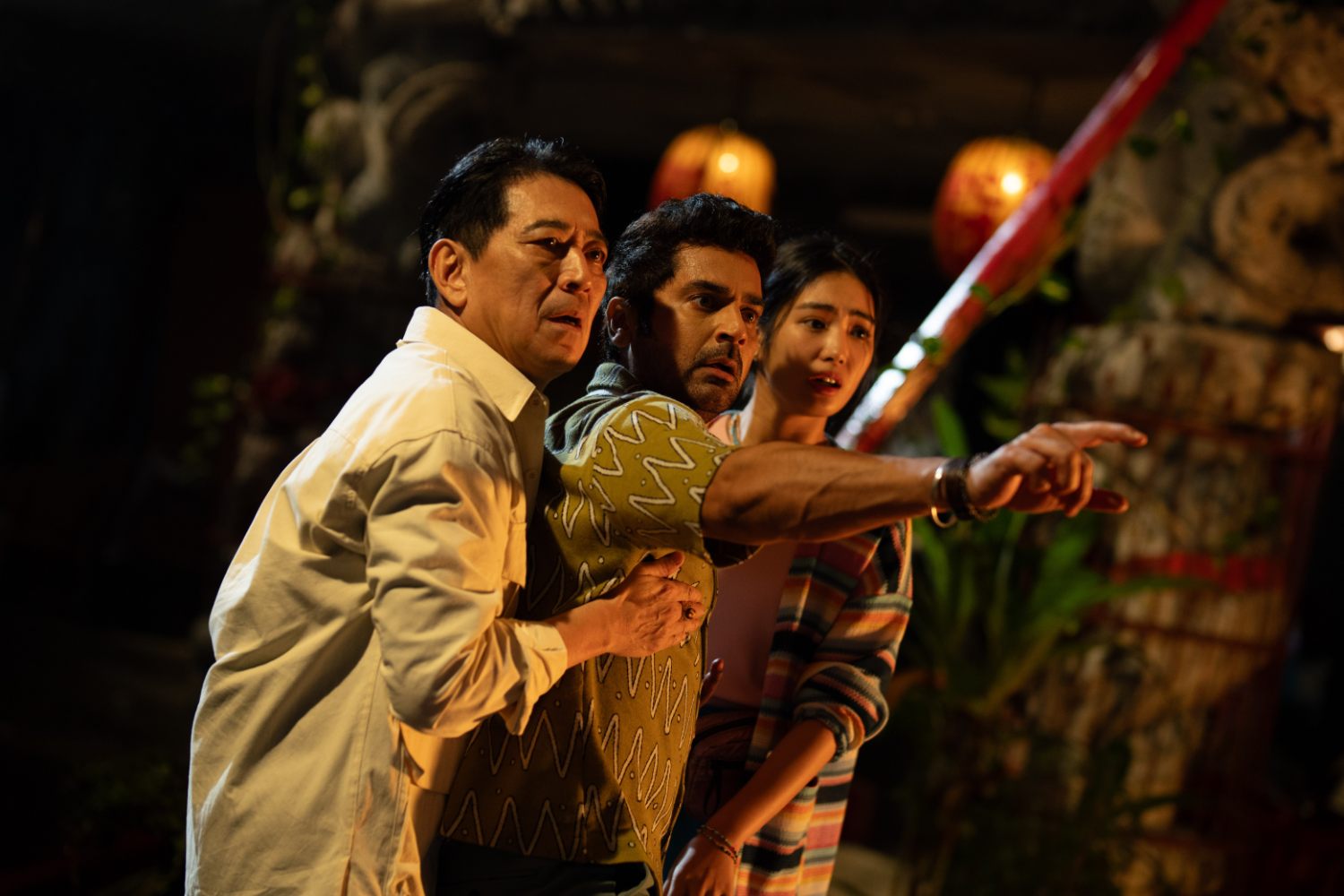
(Courtesy of Demon Hunters)
Culturally, India and Taiwan are not that far apart — both have rich mythological traditions populated by spirits that govern most aspects of daily life, both have long spiritual traditions that keep local temples buzzing, both embody a strong sense of filial piety, and Buddhism, the majority religion of Taiwan, originated on the subcontinent.
“In India, like Taiwan, people will go to temples at any time of the day to get exorcisms, or to pray for a better college entrance exam score,” says Pasadena-based executive producer Cindy Shyu. “I thought that’s very interesting. It’s very similar to Taoism, especially in Taiwan. And I want to blend the two, Hinduism and Taoism.”
While living in Hong Kong with her investment banker husband, Shyu became familiar with the ex-pat Indian community there, and frequently traveled between the two countries. Current foreign minister Subrahmanyam Jaishankar introduced her to his daughter through whom she met co-producer Gayathiri Guliani who works extensively in Bollywood. Familiarizing herself with Indian cinema, she noticed the only Chinese films that Indians watched starred Jackie Chan, so she hired Chan’s cinematographer, Tony Cheung, and his crew.
“As Indians, we are a little animated on the set,” notes Guliani. “On this film, everybody worked in silence, whereas in India everybody’s very loud because everybody knows everybody. That was something the Indian actors really felt a little bit of a cultural shock. It was like, ‘Oh, my God, they are so quiet! Everybody speaks in such a low volume!’”
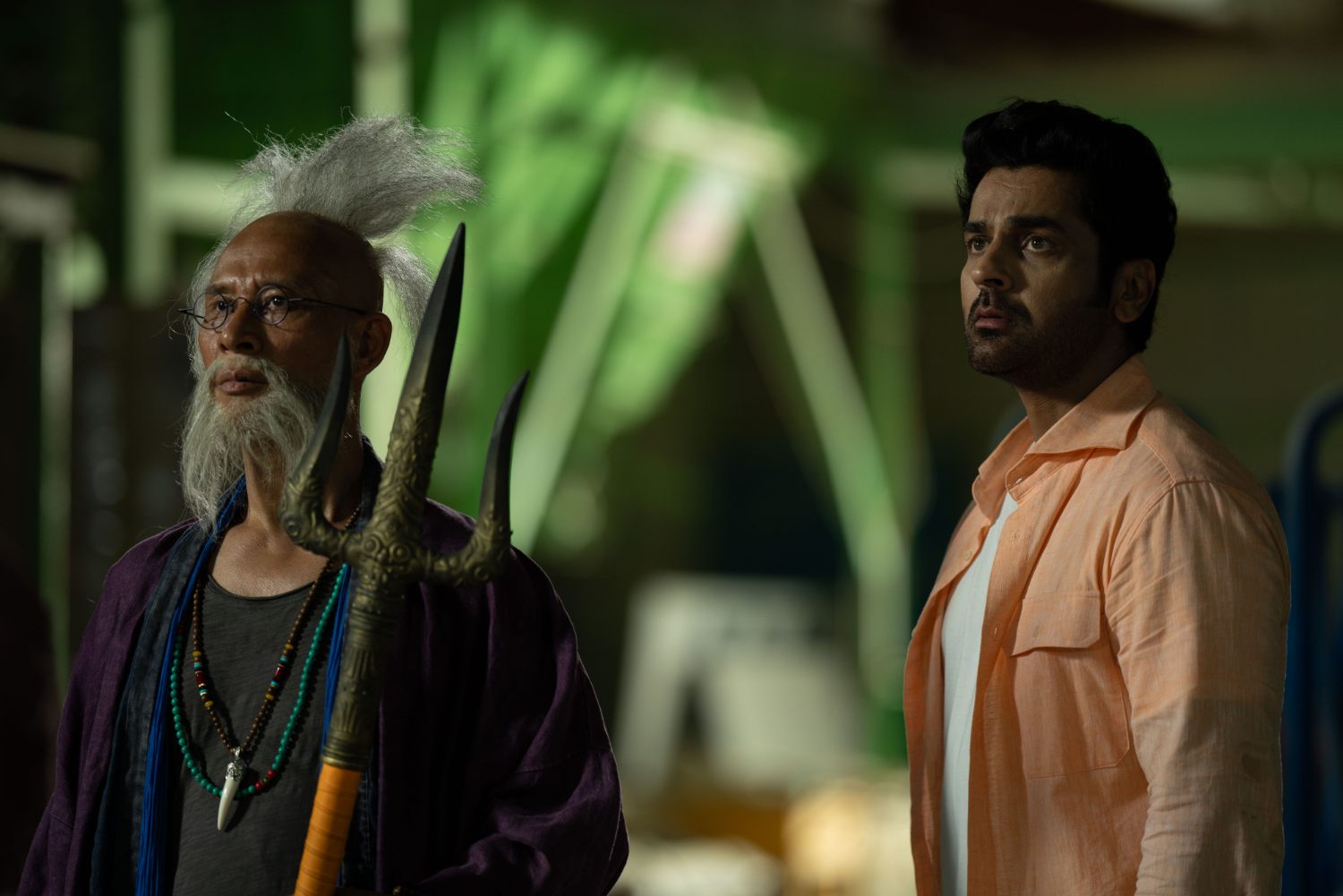
(Courtesy of Demon Hunters)
Overcoming culture shock took nothing more than a good old-fashioned Bollywood dance number like the one that occurs at the end of the film’s first act, something never before seen in a Taiwanese film.
“In India, Bollywood, the songs are an integral part of our movies because music plays a very important role for us — songs depict every kind of emotion,” says Guliani, pointing to the film’s two numbers by Taiwanese choreographer Lil How, who works with popular local hip-hop groups like Nine One One and Caotun Boyz.
“He’s a lot of fun and very quick and talented,” says Chen. “He watched a great deal of Bollywood dances and created this. And I requested that it have strong Taiwanese elements as well. The main actors are not the best dancers, of course, so we have to surround them with really good professional dancers. But surprisingly the main actors performed really well. They train very hard and I think the music created the right mood for them. I was very happy. It turned out really well.”
Still, the set was a veritable Tower of Babel with a mix of Cantonese, English, Taiwanese, Mandarin and Hindi being spoken. Alongside on-set translators was Jayanta Meetei, who plays Babaji, also instrumental in facilitating communication.
“He lived in Taiwan for decades. He has a Taiwanese wife,” notes Chen. “And Sanjay, he learned Mandarin pretty quickly. But Hindi certainly became part of the process because we have a little bit of Hindi dialogue. So, the pronunciation, cultural references and religious terminology, it requires careful attention, and we had cultural advisers to make sure everything felt authentic. Ironically, I think the different languages brought everyone closer together because people become very patient listeners.”
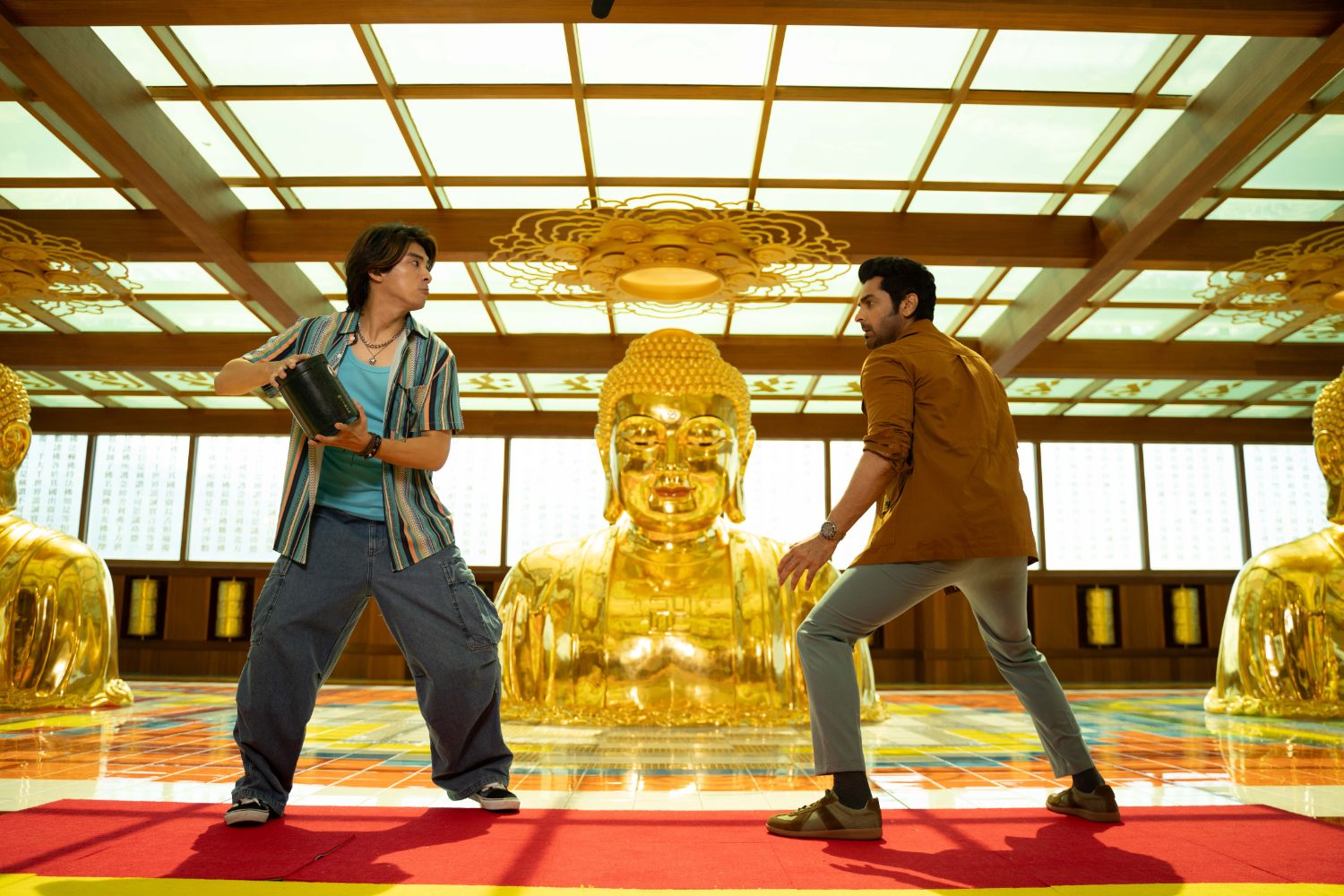
(Courtesy of Demon Hunters)
Credit for the easygoing vibe on set was due, in some part, to the all-woman production team, unheard of on an action film in Asia. Assembling a distaff team wasn’t a stated objective, but occurred by simply hiring the most talented personnel available. Still, they were met with some skepticism in the male-dominated industry — questions about whether they could handle the logistics, the crew, action or VFX scenes.
“It’s very pioneering. Nothing like this has ever been done. Leadership, it’s not about volume or authority. It’s about creating a certain kind of environment where everyone can do their best work,” notes Chen. “We had a really good relationship with all the departments. They listened to us and respected our decisions. We never got into arguments or insisted on our opinion. Women listen very well. I think communication is very good among women.”
Guliani describes the trio as zen. “Mei-juin knows what she’s doing, and we know our job. Once that framework is set, then I think it’s great,” she says, adding that Shyu was the grounding factor.
“Our actors and crew thought we’re unusually calm. We don’t shout at people,” notes Shyu. “But our cinematographer, the Hong Kong crew, was very rough. They do shout. Taiwanese people are generally more shy, they don’t speak up. Hong Kong people are more straightforward and sometimes they have conflicts because of that.”
(Courtesy of Demon Hunters)
According to Shyu, the film was warmly received in India, including a sold-out screening in New Delhi hosted by Taiwan ambassador Dr. Mumin Chen, and a screening at the International Film Festival Delhi in a 600-seat cinema. Shyu and Guliani have already completed preproduction in their next film, Masala Boba, to be directed by Canadian-Indian filmmaker Uzair Merchant. But location scouting in Abu Dhabi and Jordan is on hold while the US-Iranian war rages.
A veteran documentary filmmaker, Chen made her first feature in 2017, The Gangster’s Daughter, which received excellent reviews and was profitable at the box office. Currently scoping out her next project, the US premiere of Demon Hunters looms large, taking her back to fond memories of the two-month shoot.
“This international team is just so unusual and interesting. It became a big family,” she says, recalling the experience. “We were together 16 hours a day, and it became very tight. And when we were parting, it was just really, really sad. I couldn’t believe it ended.”
“Demon Hunters” is streaming now on Amazon Prime and Apple TV.