
 Matthew Kayser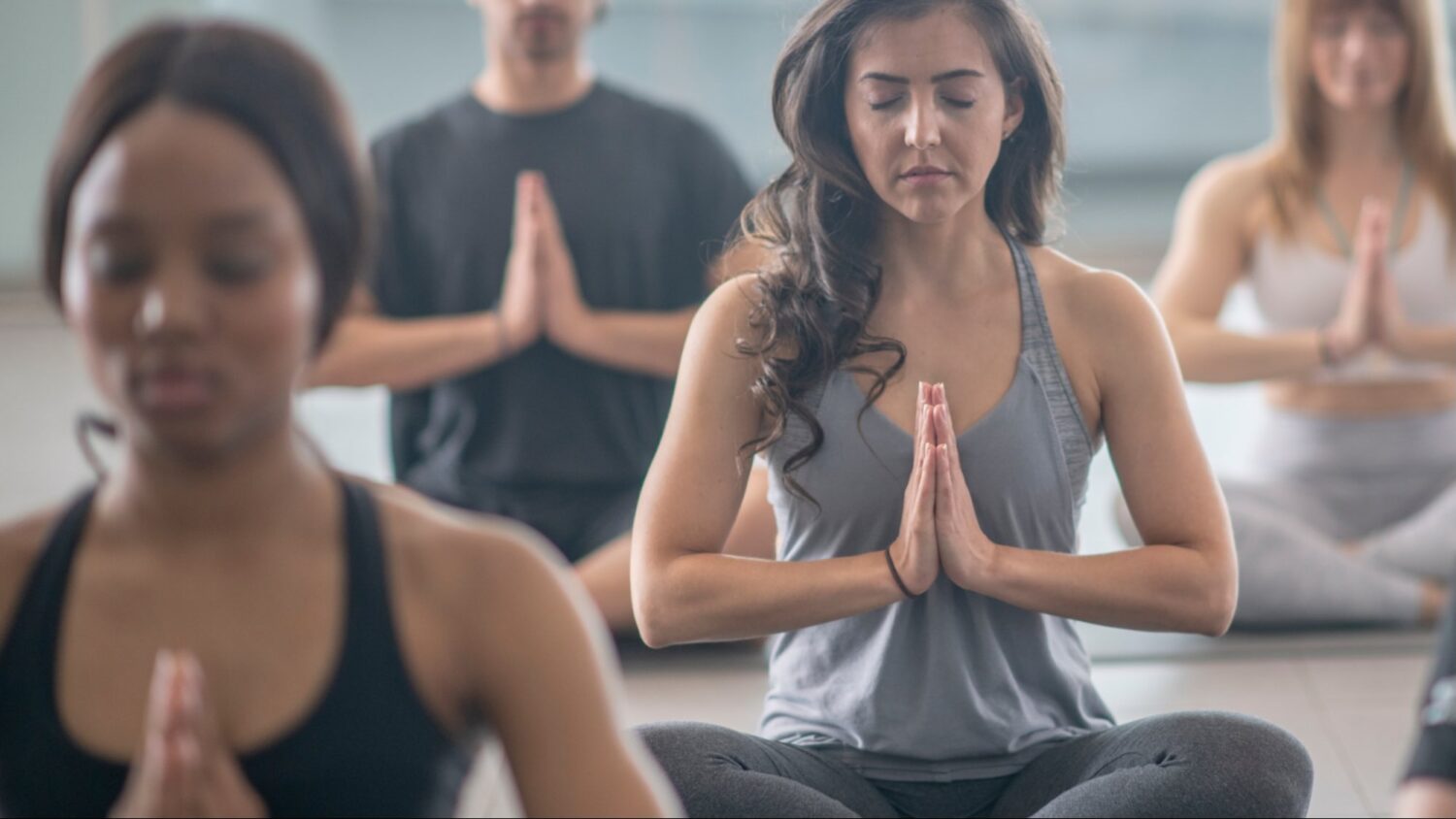
A group practices meditation—part of a growing U.S. movement toward mindfulness and mental wellbeing
Across the country, signs of strain are everywhere. More Americans are feeling anxious, disconnected, and overwhelmed than ever before—often without clear solutions. From small towns to major cities, the emotional toll is mounting.
According to the National Institute of Mental Health, roughly one in four adults experienced a mental illness in the past year. Nearly half of them went untreated. Between long waitlists, insurance hurdles, and a growing reliance on medication, many people are finding the system difficult to navigate.
In response, a growing number of Americans are looking elsewhere—toward tools and traditions that predate modern psychiatry. Meditation, yoga, breathwork, and plant-based eating are finding a foothold in daily routines, workplaces, and even clinical settings. What once sat on the margins of health conversations is now becoming central to them.
Traditional Care Meets Its Limits
To be clear, therapy and psychiatric treatment remain essential for millions. But for others, access is limited, care is inconsistent, or the experience feels incomplete.
Prescriptions for antidepressants have been climbing steadily for more than a decade. Anxiety disorders now affect over 42.5 million adults, making them the most common mental health condition in the U.S. Depression is rising too, especially among younger generations.
Against this backdrop, many are reaching for complementary approaches that offer something different: a sense of empowerment.
Turning Inward
Meditation has quietly made its way into schools, hospitals, military programs, and even prisons. Its appeal lies in simplicity—no special equipment required—and in its potential to help people regain some control over their internal state.
Among those bringing meditation into the mainstream is Sadhguru, an Indian yogi and founder of the nonprofit Isha Foundation. His programs—including Inner Engineering and Isha Kriya—offer structured practices that are presented in secular terms, making them more accessible to a broad audience. His Miracle of Mind app stands out as a forever free platform for guided meditation, with over 2 million downloads so far.
“Inner wellbeing is not about belief—it’s about tools,” he often says, framing the practice not as spiritual doctrine, but as something practical and repeatable.
What the Research Is Saying
A growing body of research is beginning to back up what practitioners have long claimed.
At Harvard Medical School, Dr. Balachundhar Subramaniam has led several studies exploring how meditation affects both mind and body. One study focused on participants in the Isha Foundation’s Samyama meditation retreat—a week-long silent program. The findings were compelling: participants experienced notable reductions in anxiety and depression, along with increased vitality, clarity, and emotional balance. The benefits persisted for months after the retreat ended.
Another study looked at Isha Kriya, a 15-minute daily practice. After just two weeks, participants reported lower anxiety levels. A majority stuck with the practice through the full six-week study period.
A Lifestyle Shift
This shift toward self-care isn’t limited to meditation. For many, it’s part of a broader change in how they think about health—including what they eat.
The gut-brain connection has become a growing area of research, and evidence increasingly points to a link between nutrition and mood. During Samyama, participants follow a vegan diet—something researchers believe may contribute to both physical and psychological outcomes. Improvements in inflammation, energy levels, and even triglyceride levels were observed during the study.
In short: what we eat might be affecting how we feel, more than we realize.
It’s Not for Everyone—And That’s Okay
While the benefits of meditation are real for many, experts caution that it’s not a one-size-fits-all solution.
For those with certain mental health conditions, such as severe trauma, psychosis, or bipolar disorder, unguided or intensive meditation might not always be the best approach. For those individuals, shorter or movement-based practices (such as walking meditation or breath-led sessions) may be more appropriate.
The key, clinicians say, is understanding your own needs and choosing the right path accordingly.
A Different Kind of Mental Health Movement
What’s unfolding in America isn’t just a trend—it’s a quiet cultural shift. People aren’t turning away from doctors or prescriptions. They’re simply expanding the toolkit. And increasingly, they’re embracing the idea that mental health isn’t just something to fix when it breaks—it’s something to maintain and nurture over time.
Apps, online programs, and free guided meditations have made these practices more accessible than ever. And in a world that often feels out of control, the ability to pause—even briefly—can be powerful.
Whether someone is meditating in the early morning before work, attending a retreat, or experimenting with mindful eating, the goal is the same: not to escape life’s difficulties, but to meet them with greater clarity.
For many Americans, that’s not just a wellness choice. It’s a way forward.