
 Will Jones
Dirt Locker®, a modular hillside terracing system developed by Mark Trebilcock, reframes land use in Los Angeles with the premise that the usefulness of terrain depends on how well it holds together over time, not just where it sits. This idea offers a basis for reconsidering how slopes are managed, maintained, and brought back into everyday use in a region marked by sharp elevation shifts.
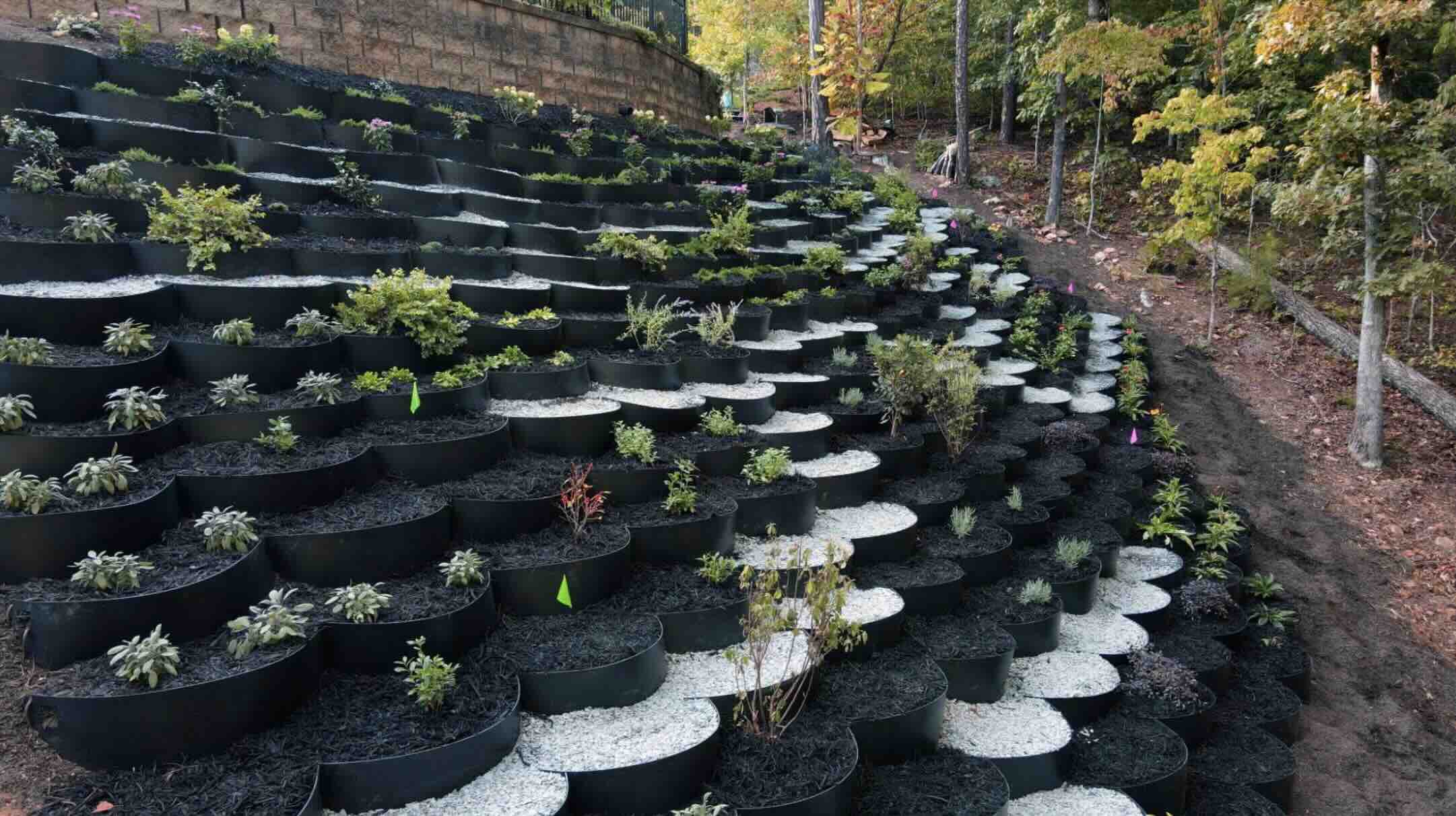
Image Credit: Dirt Locker®
Across Los Angeles, the link between land and stability has grown more complex. Decades of hillside construction have pushed development into areas once considered difficult to manage. These landscapes, shaped by a Mediterranean climate, move between long, dry stretches and concentrated seasonal rainfall. “After a while, you start to see where the old methods fall short. We’ve relied on rigid retaining walls for decades, but the environment is changing, and it’s forcing us to take a harder look at how the land actually reacts under pressure,” Trebilcock states.
Wildfire activity has added another layer to that conversation. According to a report from the U.S. Geological Survey and the National Oceanic and Atmospheric Administration, burned hillsides across Los Angeles County may remain susceptible to debris flows for two to five years following a fire, particularly when rainfall intensifies. The same report notes that soil, once altered by fire, can become less permeable and more prone to movement, creating conditions where water, sediment, and organic material travel downslope with greater force.
In parallel, guidance from UCLA’s Sustainable LA initiative highlights how the loss of vegetation and root systems reduces soil cohesion, while changes in soil composition can shift how hillsides absorb and release water. “These conditions change the expectations around slope management,” Trebilcock says. “A hillside that once appeared stable may behave differently as its internal structure changes.”
In this context, Trebilcock’s early observations align with broader environmental patterns. His initial challenge of addressing erosion on his own property reflects a wider regional reality in which soil movement results from both natural cycles and human activity. “Water moving across a slope will tell you something about the land’s condition,” Trebilcock states. “If we pay attention to that movement, we can start to understand how to work with it.”
This understanding becomes especially important as rainfall interacts with post-fire terrain. California state leadership has emphasized the need to stabilize hillsides after fire events. An executive order issued by Governor Gavin Newsom in early 2025 highlights how burn scars can alter water absorption rates, increasing the risk of landslides and debris flows during seasonal storms.
The response has included accelerated efforts to reinforce slopes, manage runoff, and limit the buildup of loose material in vulnerable areas. These initiatives reflect a growing recognition that hillside stability requires ongoing adjustment, particularly in regions where environmental conditions shift quickly.
Within this changing landscape, Dirt Locker® offers a method built on modular components and incremental intervention. The system uses interlocking cells that follow the contours of a slope, forming terraces that slow water movement while holding soil in place. This marks a shift away from singular, monolithic structures toward systems that respond to terrain through smaller, interconnected segments. By dispersing the force of flowing water across multiple levels, the design supports a broader principle: stability can emerge through distribution and adaptability.
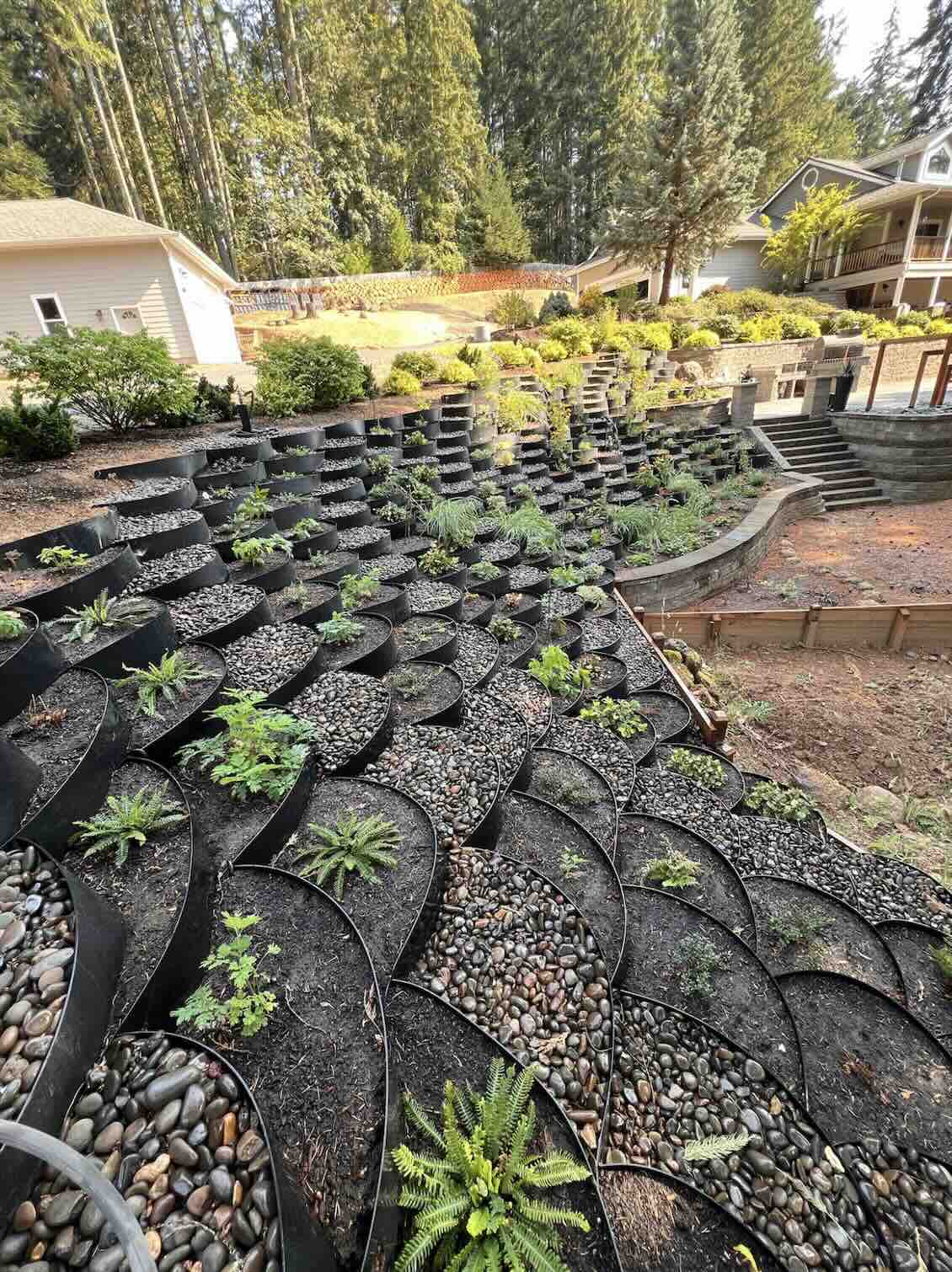
Image Credit: Dirt Locker®
Trebilcock says, “The challenge is not only the presence of water, but how quickly it moves and how much it carries with it. When that movement is interrupted in a controlled way, the land has more opportunity to settle and support new growth.” His perspective signals a change in thinking, where the goal expands beyond preventing erosion to creating conditions where soil, water, and vegetation interact more predictably.
But the control and speed reduction of the water’s movement is not the only problem that Dirt Locker® aims to fix. Trebilcock states, “Water retained within the system not only supports the life within the system itself. It fundamentally reduces wastewater that becomes a burden for municipalities due to downstream systems being overwhelmed. In other words, it prevents much-needed resources from being spent on the treatment of wastewater.”
This shift also reflects changing expectations among property owners, planners, and communities living in hillside environments. As more homes occupy the wildland-urban landscape, the boundaries between built and natural systems become less distinct. Historical development patterns in Los Angeles show how hillside expansion often prioritized views and access, while long-term land behavior received less attention. As environmental data and lived experience accumulate, the focus increasingly includes how these landscapes perform under pressure.
Dirt Locker®’s role fits within a broader movement toward adaptable land solutions. Its installations, which convert sloped ground into tiered planting areas, demonstrate how erosion control can intersect with practical use. A hillside becomes a space that can support vegetation, manage water, and allow access. “There’s a point where a problem on a slope starts to reveal an opportunity,” Trebilcock says. “Once the ground is supported, people often see possibilities they hadn’t considered before.”
As Los Angeles continues to navigate the interaction between climate patterns, land use, and recovery from environmental events, strategies for hillside management will continue to evolve. Systems that incorporate flexibility, responsiveness, and long-term observation may play a larger role in how slopes are maintained and restored. Dirt Locker® contributes to this ongoing discussion by offering a method that engages directly with the terrain, encouraging a closer look at how stability can be achieved through alignment with natural processes.