
 Nia Bowers
This new wave of school closures across the United States is real. The unfortunate question is whether districts have run out of options or just run out of time.
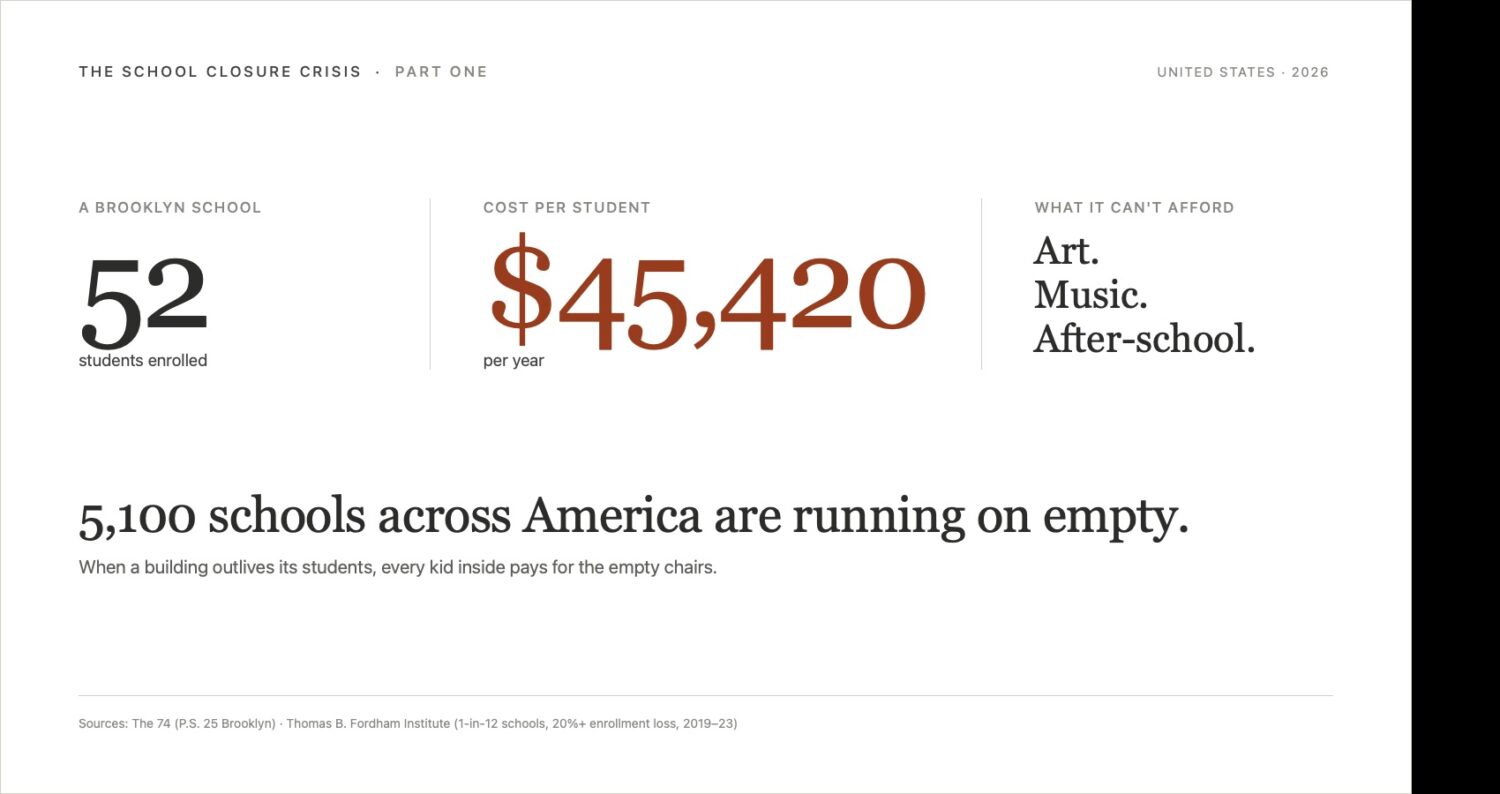
Image courtesy of School Leaders
In the wake of declining enrollment, funding issues, and budget cuts, many schools nationwide are being forced to close. Not only does this result in the loss of employment for many educational professionals, but it also displaces many students, which can be detrimental to their long-term learning.
In California specifically, research has shown that many of these closures fall disproportionately on schools serving Black and Latino students. State law already requires fiscally distressed districts to perform an equity impact analysis before closing or consolidating a school; however, is there more that can be done?
That is the question that School Leaders, a practitioner firm that aims to help districts combat these issues, is working tirelessly to answer.
About School Leaders
School Leaders is a California-based K-12 advisory firm specializing in fiscal stabilization for school districts, bond program management, capital strategy, and leadership services for districts. The firm’s team tackling the school closure crisis of five well-versed members addressing this issue: Joe Dixon, Dr. Jason Viloria, Dr. Stella Kemp, Michael Bishop Sr., and Jay Dixon. They have built a unique set of tools and processes to assist districts across the country. What really sets School Leaders apart from its peers is the depth of its practitioner team. The firm’s leadership has collectively occupied every seat at the table that a fiscal stabilization or closure decision touches, from Superintendent to Chief Business Official, board advisor, capital program operator, and educator-leader. As such, no member of the team is merely a commentator or observer; they have all actively worked within the California educational system and understand it firsthand.
The Reality of School Closures
California K-12 enrollment dropped by almost 75,000 students in the last year, the largest decline in several years. However, to say that these issues are limited to California would be erroneous; these are nationwide concerns. The country’s overall fertility rate is at a historic low of 1.599, and major districts such as Philadelphia, Cleveland, Houston, Austin, and Atlanta have all approved multiple closures for the upcoming year. Experts project an escalation to 1,000-1,500 annual closures by 2030—potentially totaling 7,000-10,000 nationwide, according to The Learning Counsel.
The Federal Counterweight
Fortunately, steps are being taken to prevent these losses. The Rebuild America’s Schools Act of 2026, introduced on February 4, 2026, would invest $130 billion in high-poverty districts with health and safety facility risks. While the act itself has yet to be officially approved and enacted into law and is marked for facilities, districts that begin preparing for it now are the ones best positioned to take full advantage of it if it is passed. However, this doesn’t address the enrollment and funding challenges we are expected to experience this decade.
Why Schools Matter
School districts are among the most essential institutions in any community. They help foster, protect, and grow the minds of tomorrow in a way that is critical to the continued growth and success not only of California but of the world at large. Cutting them down in the name of short-term financial returns demonstrates an inability to understand their long-term value. By asking these institutions to make multi-million-dollar capital decisions amid budgets, board cycles, instructional programs, and political pressures, they are being subjected to unfair conditions in a system not designed for that scale.
The School Leaders Difference
For decades, the team at School Leaders has watched districts across America forced into reactive choices, emergency closures announced months before a board vote, deferred maintenance backlogs ballooning into safety hazards, and bond programs underperforming because no one was managing them as integrated capital programs. The pattern is almost always the same: by the time outside expertise gets called in, the menu of options has already collapsed to the worst ones.
That’s why the firm’s value isn’t simply in the work it delivers, it’s in when districts engage it. A neutral, third-party lens applied early, while structural deficits are still trends rather than crises and while enrollment decline is still recoverable rather than entrenched, changes the entire decision tree. Internal teams, no matter how capable, operate inside the political and historical gravity of their own districts. Board members, labor partners, community stakeholders, and decades of institutional precedent all shape what feels possible to put on the table. An outside team isn’t bound by any of that. They can pressure-test assumptions internal staff can’t, surface uncomfortable truths leadership already knows but can’t openly say, and model the full range of operational, capital, and revenue alternatives before closure becomes the only lever left.
The firm was built on a simple conviction: districts deserve the same caliber of capital strategy, governance, and execution that any well-run institution gets, and when they get it, painful decisions like closing a neighborhood school stop being the first lever.