
 Will Jones
Most businesses still run on repetitive tasks that drain time. Updating a CRM, sending follow-ups, logging activity, and managing outreach are necessary, but they rarely require real judgment. Many teams still rely on manual effort or fragmented tools to address this issue. However, Kumar Abhirup, the founder of Dench, takes a different approach. His company focuses on AI agents that handle operational work directly inside the tools businesses already use. The goal is to give people their time back.
Internet Access as a Competitive Equalizer
Abhirup’s story starts far from Silicon Valley. “I grew up in Nashik,” he says. “If you’re not from India, you probably haven’t heard of it.” Without access to startup networks or elite schools, he relied on the internet to learn and build.
He taught himself to code at 11, spoke at WordCamp by 13, and exited his first startup at 16. He later worked on Airchat alongside AngelList co-founder Naval Ravikant. In this capacity, he gained first-hand exposure to how high-level startups operate. That progression led him to Y Combinator (YC).
At YC, he joined a network that has backed companies like Airbnb and Stripe and is widely regarded as the world’s most selective startup accelerator, with an acceptance rate of less than 1%. His credibility did not come from credentials. It came from output. “Credentials are a tax you pay when you don’t have output,” Abhirup says. That mindset still defines how he builds.
Why AI Still Falls Short for Most Businesses
Despite rapid adoption, most companies only use AI at the surface level. Chat interfaces can answer questions, but they do not execute tasks. Abhirup saw this early. “Most people’s experience of AI is still ChatGPT,” he says. “Ask a question, get an answer. That is not technology. That is the tutorial.”
The real shift, in his view, is AI acting across systems. Writing emails, updating pipelines, making calls, and completing workflows without constant human input. This is where DenchClaw, as an OpenClaw CRM, comes in. These tools focus on execution, not novelty. The same principle extends to AI agents for SEO. In this instance, automation handles keyword research, content updates, internal linking, and performance tracking without constant manual oversight.
DenchClaw gained traction quickly, with over one million impressions, 1.5K GitHub stars, stronger developer adoption, and visibility on Hacker News. Backings from the NVIDIA Inception Program and public support from Y Combinator president and CEO, Garry Tan, further validated the ecosystem. Related tools, such as OpenClaw, have demonstrated strong developer adoption, including claims of outperforming widely used open-source projects in popularity on GitHub.
AI That Works Like a Colleague
Dench is designed for practical use cases like CRM management, sales outreach, and email automation. Instead of adding another dashboard, it works inside existing systems. The idea is to reduce friction, not add to it.
“We are not building a productivity app,” Abhirup says. “We are building the infrastructure for American businesses to move at the speed AI makes possible.” This approach reflects his broader view of the market.
AI is not just a tool for assistance. It is becoming an execution infrastructure. Businesses that adopt it gain leverage, and those who do not fall behind.
Time Ownership as a New Advantage
Kumar Abhirup’s work also ties into a larger shift. Access to powerful tools is no longer limited by geography or background. His own experience proves that. “The internet doesn’t know where you come from.” That belief continues to guide his ambition.
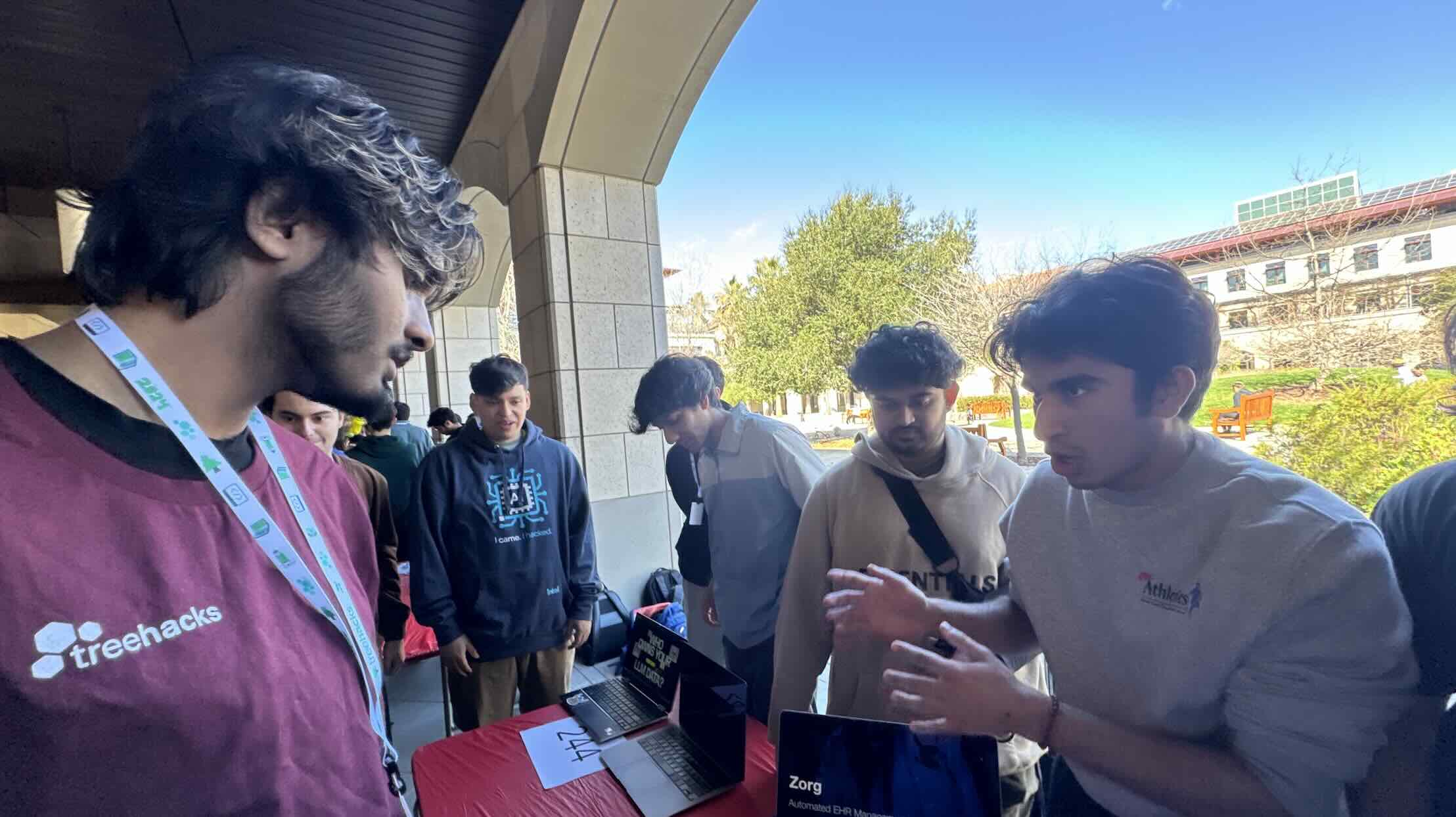
In addition to his technical and entrepreneurial achievements, Abhirup has gained wider recognition in the ecosystem, including participation as a Nonce Korea 2022 fellow and being selected as a judge at Stanford Treehacks 2024, a hackathon featured in the New York Times.
He is not focused on scale for its own sake. Instead, Kumar Abhirup’s goal is fundamentally connected to time: he aims to empower more people to manage how they spend it. This concept holds significant importance in an economy that continues to rely on repetitive labor.
As AI continues to move from assistance to execution, the conversation is shifting from what these tools can do to how they are integrated into everyday workflows. For many businesses, the challenge is no longer access to AI, but how effectively it can be applied without adding complexity.
Abhirup’s approach reflects this shift. By focusing on systems that operate within existing tools rather than alongside them, the emphasis remains on reducing friction rather than introducing new layers of software. In that sense, the value of AI may not be measured by how advanced it appears, but by how seamlessly it fits into the way people already work.
Whether that model becomes standard across industries remains to be seen, but the underlying premise is clear: time is becoming a more visible constraint, and tools that can meaningfully reduce manual effort are likely to play an increasingly central role in how businesses operate.