
 Carlos Eduardo Medeiros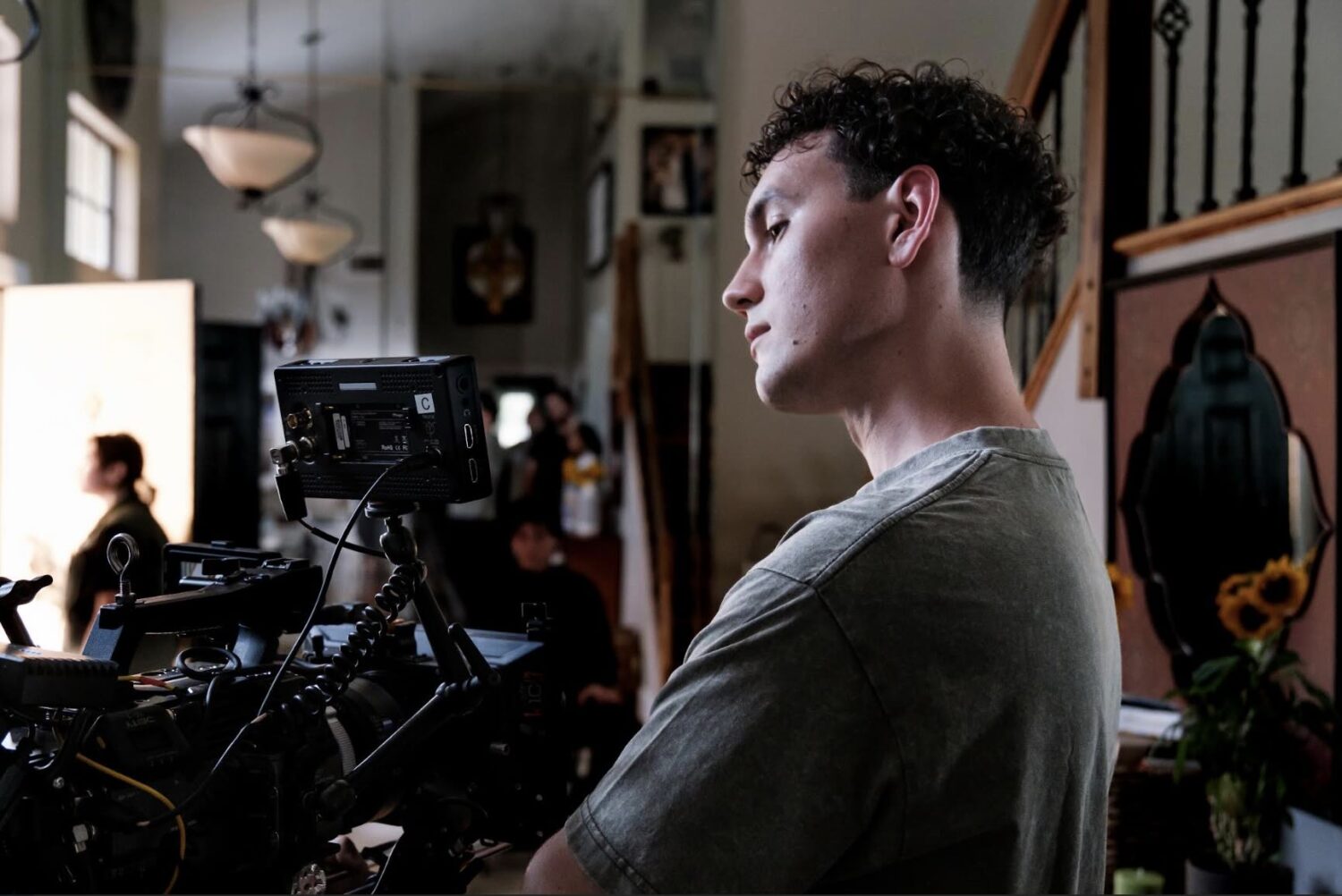
When people talk about “film school,” they often picture lectures on aesthetics or group critiques over coffee. But for Kewen Soares dos Santos, Valencia College’s Film Production Technology program wasn’t about theory in isolation—it was a pressure-tested, boots-on-the-ground preparation for the real thing.
“I don’t think I would’ve accomplished everything I have without Valencia,” Kewen says. “The knowledge, the mentorship, the hands-on learning—if I’m even somewhat good at what I do now, it’s because of what I learned there.”
Today, Kewen works across multiple production roles—production coordinator, director, assistant director, and more—on both school-based and professional projects. He credits Valencia’s immersive training model and its culture of shared responsibility as key reasons he hit the ground running after graduation.
Learning the Job by Doing the Job
It wasn’t just one classroom or one professor that made the difference for Kewen. It was the total integration of education and action.
“Set etiquette, the language, how to think two steps ahead—that was drilled into us,” he recalls. “And now, when I’m on set, people actually compliment my work ethic and attitude. That all came from school.”
One project, Lake Jesup, stands out as a turning point. Produced through Valencia Motion Pictures, the film offered Kewen his first taste of a feature-length production environment. “I was the production coordinator, and it was a huge step up,” he says. “We were working with industry professionals and name actors. It was a dream, but also very real work. That experience taught me how to scale up and lead without losing the collaborative spirit.” On set, Kewen was relied upon to exercise sound judgment and collaborate directly with the director and producers when unforeseen challenges arose, including weather-related disruptions, last‑minute cast scheduling changes, and crew availability issues. His decisive problem‑solving ensured continuity of operations, preserved production efficiency, and maintained overall crew morale.
Leadership, On and Off Set
Before his name showed up on call sheets, Kewen was already building leadership muscles through student development at Valencia College. The connection between organizing events and managing film crews may not be obvious, but to him, the parallels are clear.
“Producing a film is basically organizing a big event for people with different tastes and backgrounds,” he says. “In student leadership, I had to learn how to make sure everyone was being heard while still ensuring things were getting done. That translated directly into production, where people come from different departments and skill sets but all have to work together.”
It also taught him patience. “Working with different people can be a challenge,” he adds. “But it’s also what makes a good leader—being able to handle that dynamic with care and clarity.”
Teaching as Learning
Even now, Kewen hasn’t fully left the classroom behind. As a Production Coordinator for the program, he supports students and faculty by performing hands-on tasks typically associated with a Laboratory Aid, from completing the proper documentation to addressing inquiries regarding production standards.
“It keeps me learning,” he says. “Each production brings new challenges, and sometimes the students approach problems in a way I hadn’t considered before. It sharpens my problem-solving skills.”
That cyclical relationship—learning while teaching—has only deepened his understanding of the field.
Bridging the Gap Between School and Industry
Kewen is careful to note that transitioning from school sets to professional sets comes with an adjustment in pace and expectations.
“In school, every set is a learning opportunity, so the pace is slower. But on a real-world set, things move fast, and you’re expected to keep up,” he says. “Knowing the difference is key. Makes you stay sharp and humble.”
He encourages other students to take every opportunity, especially those that might seem minor or unglamorous. “There are no small roles on set,” he says. “Everything matters. You don’t find your place without trying different things. I’ve done so many different roles now—grip, assistant director, production office assistant—and each one taught me something I bring to directing and producing today.”
Looking Ahead
Kewen’s long-term goal is clear: to direct and write his own feature-length film, as well as contribute to other film production companies as a production coordinator and, eventually, a head producer. He’s already taking tangible steps toward that dream, having received offers from several production companies.
“I can’t say too much yet,” he teases, “but I’m currently in talks to produce a feature-length film. It’s happening sooner than I expected.”
In the meantime, he’s staying sharp by producing and writing as much as he can. “That’s how you get better, but it’s also how you build the relationships that matter,” he says. “Connections open doors in this industry, and I want to be ready when they do.”
Kewen Soares dos Santos is part of a growing wave of working filmmakers who see film school not as a bubble, but as a proving ground. With programs like Valencia College’s Film Production Technology program that combine diligent training with real-world production, students leave not just with credits, but with a craft.
“School gave me the foundation,” he says. “Now I’m just building on it, one project at a time.”