
 Jon Stojan
For many 3D artists working in the game and entertainment industry, creative influence often stays behind the screen. Characters appear in blockbuster titles, environments shape player experiences, yet the artists themselves remain largely invisible to the public. Linyao (Freya) Li represents a different trajectory—one in which deep production experience has gradually moved from the studio into public conversation, professional judgment, and cultural visibility.

Linyao (Freya) Li discussing the creative ideas behind monster design in a behind-the-scenes interview for Diablo IV: Vessel of Hatred.
Li is a senior 3D artist whose career spans large-scale commercial production and public-facing creative leadership. She built her foundation working in major production environments such as PlayStation, later contributing to AAA game development at Blizzard Entertainment, before joining NVIDIA, where her practice continues to evolve within an advanced digital creation ecosystem. Best known for her work as a key monster designer and modeler on major titles such as Diablo IV and its expansions, she has spent years shaping digital characters at the highest level of industry production.
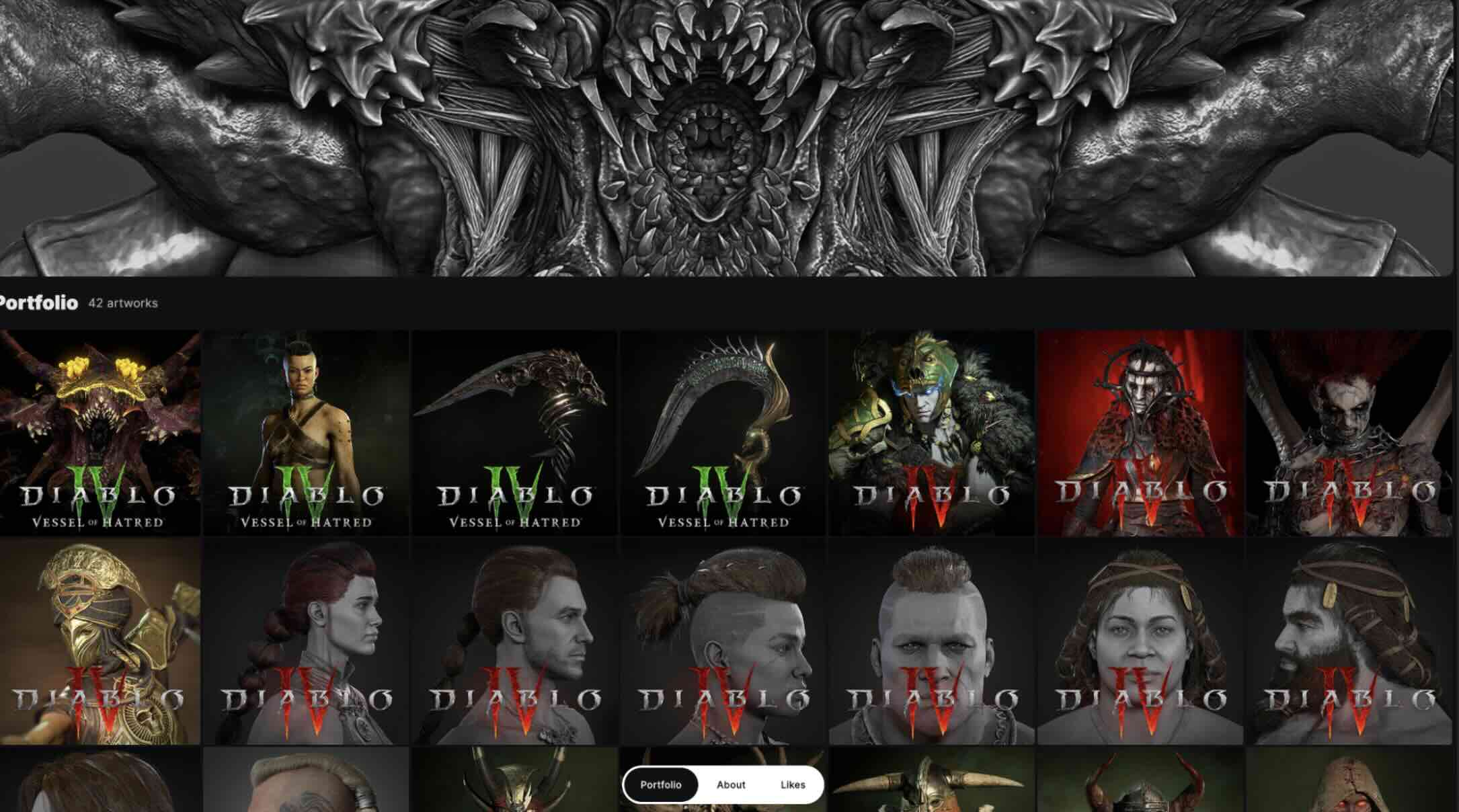
Artwork by Linyao (Freya) Li on ArtStation
In recent years, her role has expanded beyond asset creation. Increasingly, she has been invited to speak, evaluate, and represent the field itself.
“For a long time, artists like us were expected to stay invisible. But as digital worlds become more central to culture, the people shaping them are being asked to step forward and explain how those decisions are made,” Li says.
That shift became visible through her presence on major industry stages. Li has spoken at Adobe Substance Days, sharing insights grounded in real-world production experience rather than abstract theory. She was also invited to speak on the Dell Stage at Gnomon, one of the most respected institutions for digital art and entertainment design, with the session livestreamed to global audiences on Twitch and YouTube. These invitations reflect more than technical proficiency—they signal professional trust in her perspective and judgment.
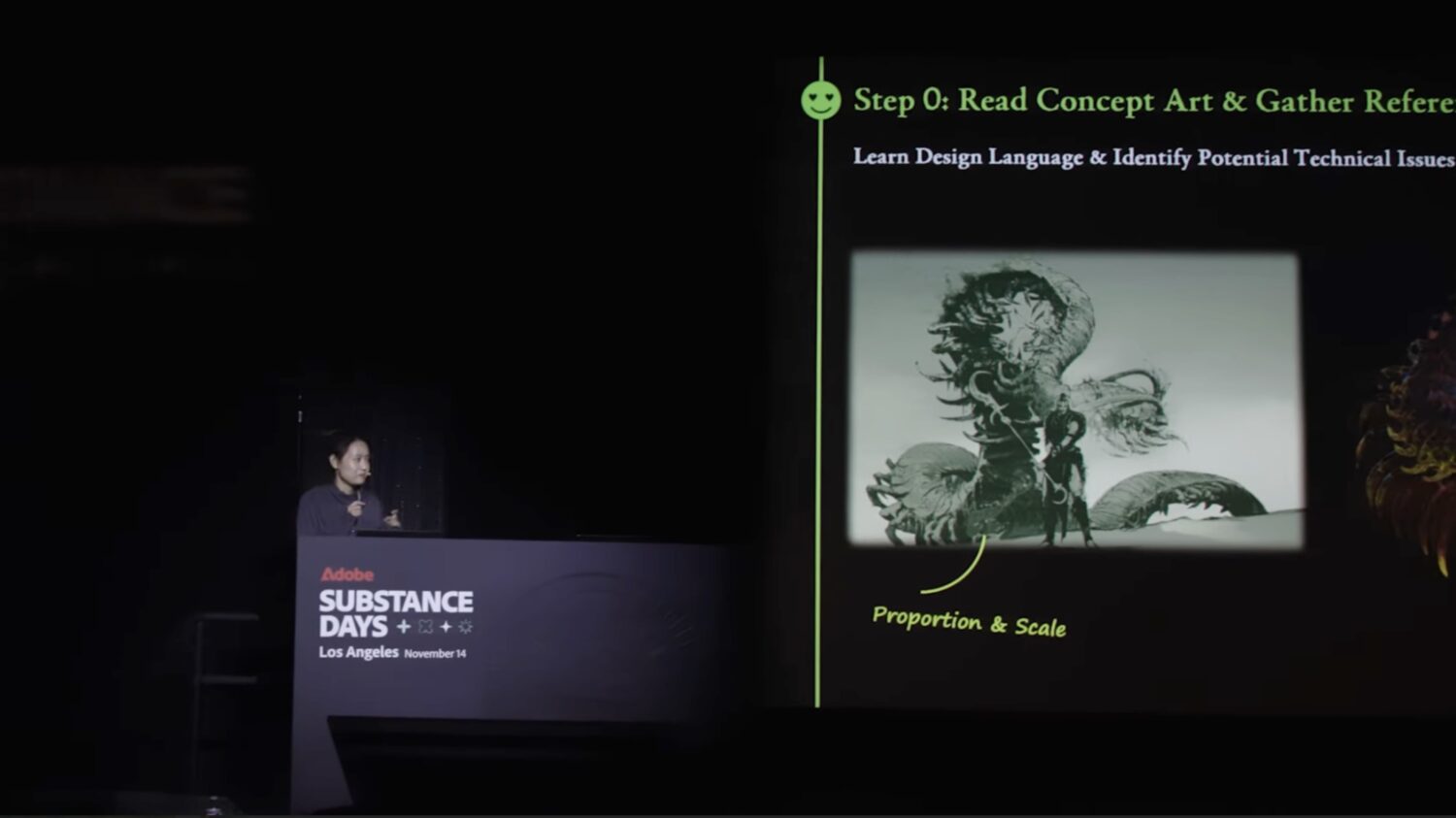
Linyao (Freya) Li presenting at Adobe Substance Days.
Linyao (Freya) Li presenting on the Dell Stage at Gnomon.
What distinguishes Li’s public voice is not a focus on tools or trends, but on standards. As a practicing 3D artist embedded in AAA production, she speaks from experience about what separates functional assets from compelling digital characters. Her talks emphasize decision-making, artistic responsibility, and long-term visual coherence—topics that resonate with both emerging artists and seasoned professionals.
“Production teaches you that every artistic choice has consequences. Once something ships, it lives with millions of people, and that responsibility changes how you think about quality and intent,” Li notes.
That same professional authority led to her appointment as an Official Judge for the Rookie Awards in both 2024 and 2025, a widely recognized international platform for emerging talent in digital art, games, and visual effects. In addition to The Rookies, Li has also served as a judge for MeetMat, an international creative platform that brings together artists, designers, and industry professionals across disciplines.
Serving as a judge across multiple independent platforms places Li in a role that extends beyond personal achievement. She is entrusted with evaluating the work of others, comparing artistic quality across different contexts, and contributing to the standards by which emerging creators are assessed within the field. For Li, judging is not separate from making. Years of production work—often under tight creative constraints—inform how she evaluates originality, execution, and artistic intent.
“Judging isn’t about imposing taste,” she says. “It’s about recognizing when an idea is clearly articulated and responsibly executed—regardless of style or genre.”
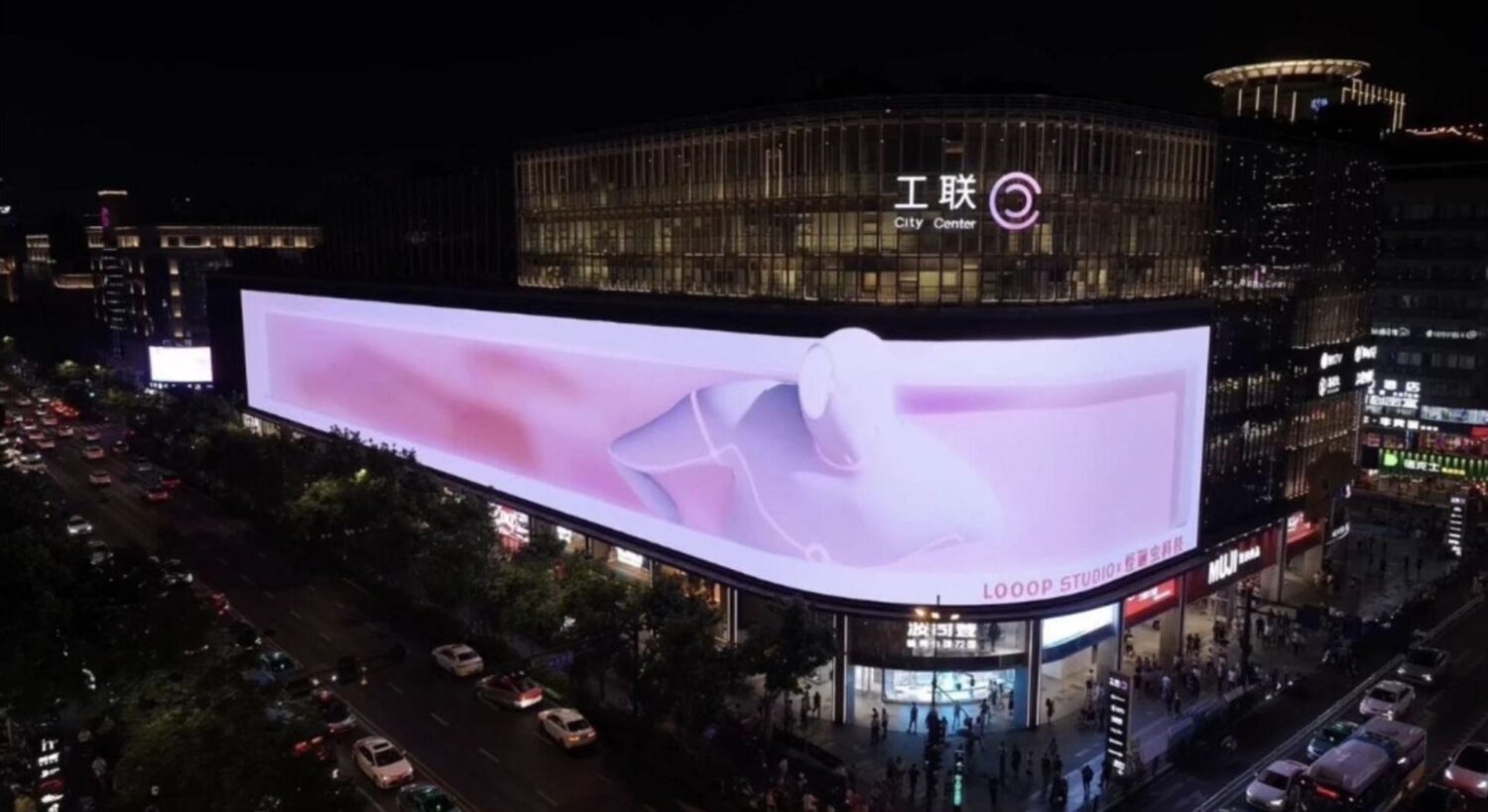
Her digital artwork A Trip to Infinity, for which she served as a principal creator, was presented as part of the City Digital Skin Art (CDSA) exhibition at the West Lake Sky Screen in Hangzhou, currently recognized as the largest 3D naked-eye digital display in Asia. Installed in a high-traffic urban environment, the work reached millions of viewers outside traditional galleries or industry contexts.
A Trip to Infinity was shown on the West Lake Sky Screen, an urban landmark in Hangzhou, China.
Displayed at architectural scale in a public setting, the project marked a departure from screen-bound entertainment. Audiences encountered digital imagery not as players or consumers, but as part of everyday city life. For Li, the exhibition represented an extension of her practice: applying the same discipline used in commercial production to a shared civic visual experience.
Taken together—her AAA production work, cross-studio background, public speaking engagements, judging responsibilities, and large-scale public exhibition—Li’s career reflects a broader shift within digital art. As the field matures, experienced practitioners are increasingly called upon not only to produce content but to articulate values, mentor others, and help define what quality means.
Li’s path from studio production to public voice underscores this change. She did not step onto stages or into judging roles by branding herself as a commentator. Instead, her visibility emerged organically from years of work that others recognized as authoritative and instructive. In an industry often driven by speed and novelty, her career highlights a quieter but enduring form of influence—one grounded in sustained practice, critical judgment, and public trust.
As digital characters and environments continue to shape visual culture, figures like Linyao (Freya) Li demonstrate how creative leadership can extend beyond production pipelines. Her work shows that the role of a 3D artist today is not only to build worlds, but to help shape the standards and conversations that define the field itself.