
 Nia Bowers
Los Angeles has no shortage of visual storytelling, but few artists create imagery that feels as immersive, atmospheric, and emotionally weighted as Elizabeth Glazko. Last week, her highly anticipated exhibition Dark Solitude made its Los Angeles debut at Exhibit A Gallery.
From the moment visitors entered the space, the exhibition commanded attention. Large-format cinematic prints were presented within a carefully designed gallery environment, complete with sculpted lighting and a curated musical atmosphere. A live DJ set by Vento, created specifically for the exhibition, featured tracks from Deftones, Pink Floyd, Radiohead, Massive Attack, Gunship, and other influential artists. Rather than functioning as background sound, the music became an integral emotional layer, deepening the audience’s engagement with the work.
The result was neither a traditional photography show nor a conventional multimedia installation. Instead, Dark Solitude existed somewhere in between, offering a cinematic, literary gallery experience where imagery, text, and sound combined to form a cohesive narrative.
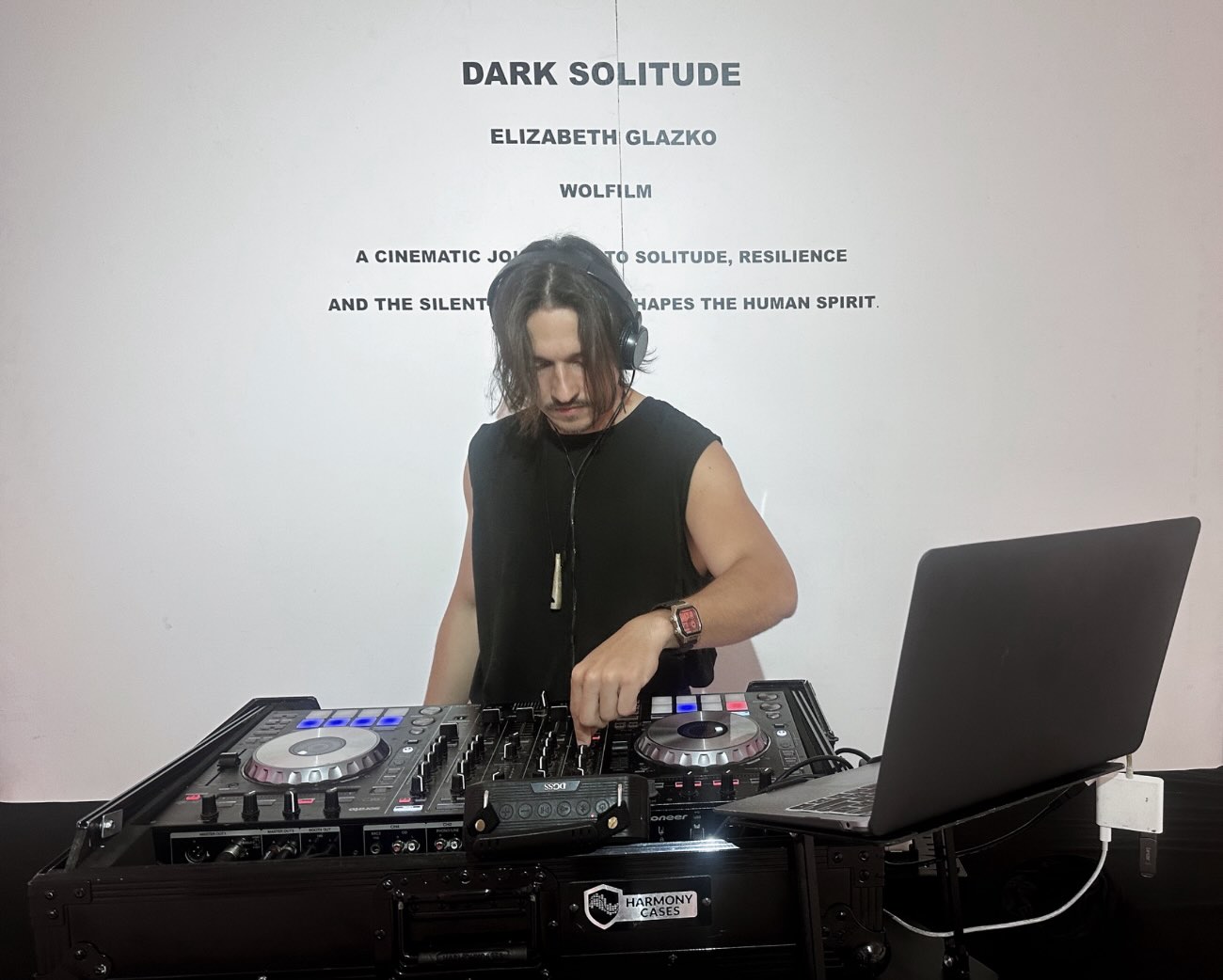
About the Project: Dark Solitude
Dark Solitude is a cinematic visual universe built around themes of solitude, inner strength, freedom, resilience, and personal transformation. The photographs feel like stills from an unwritten film, fragments of untold stories that reveal the emotional interior of a central character.
Unlike standard photography exhibitions, Dark Solitude is structured as a narrative project. The works function as interconnected visual chapters, each accompanied by written text that expands the story beyond the frame. It is Glazko’s most personal body of work to date, reflecting an internal dialogue shaped by emotional struggle and the strength that emerges from confronting darkness.
The series explores the invisible barriers that limit human progress, the internal conflicts endured in silence, and the shift that occurs when pain evolves into empowerment. Motifs of loss, devastation, external pressure, and resistance appear throughout, mapping the difficult path toward personal growth.
Beneath these themes lies a broader, almost cosmic understanding of transformation, informed by the artist’s own experiences with hardship and reinvention. Visitors described the exhibition as “stepping straight into someone’s head.” Others called it “quietly emotional, like something hits you without warning.” Several compared it to “a movie scene that keeps playing in your mind long after you leave.” One attendee remarked, “You don’t just look at these photos, you feel them. The room itself feels heavier.” Another noted how seamlessly the sound and visuals merged, saying the experience “pulls you in completely.”
At the core of Glazko’s philosophy is a simple belief: it is not the fall that defines us, but the rise. As long as we rise, we cannot be defeated. That idea echoes throughout Dark Solitude and continues to shape her future work.
From New York to Los Angeles
Dark Solitude first premiered earlier this year at Mriya Gallery in New York City, where it drew attention for its cinematic pacing and structured narrative approach. The Los Angeles presentation expands on that foundation, introducing the project as a full-scale West Coast installation. Here, the emphasis on narrative architecture becomes even more pronounced, offering new audiences a deeper look into Glazko’s fusion of film language, photography, and written storytelling.
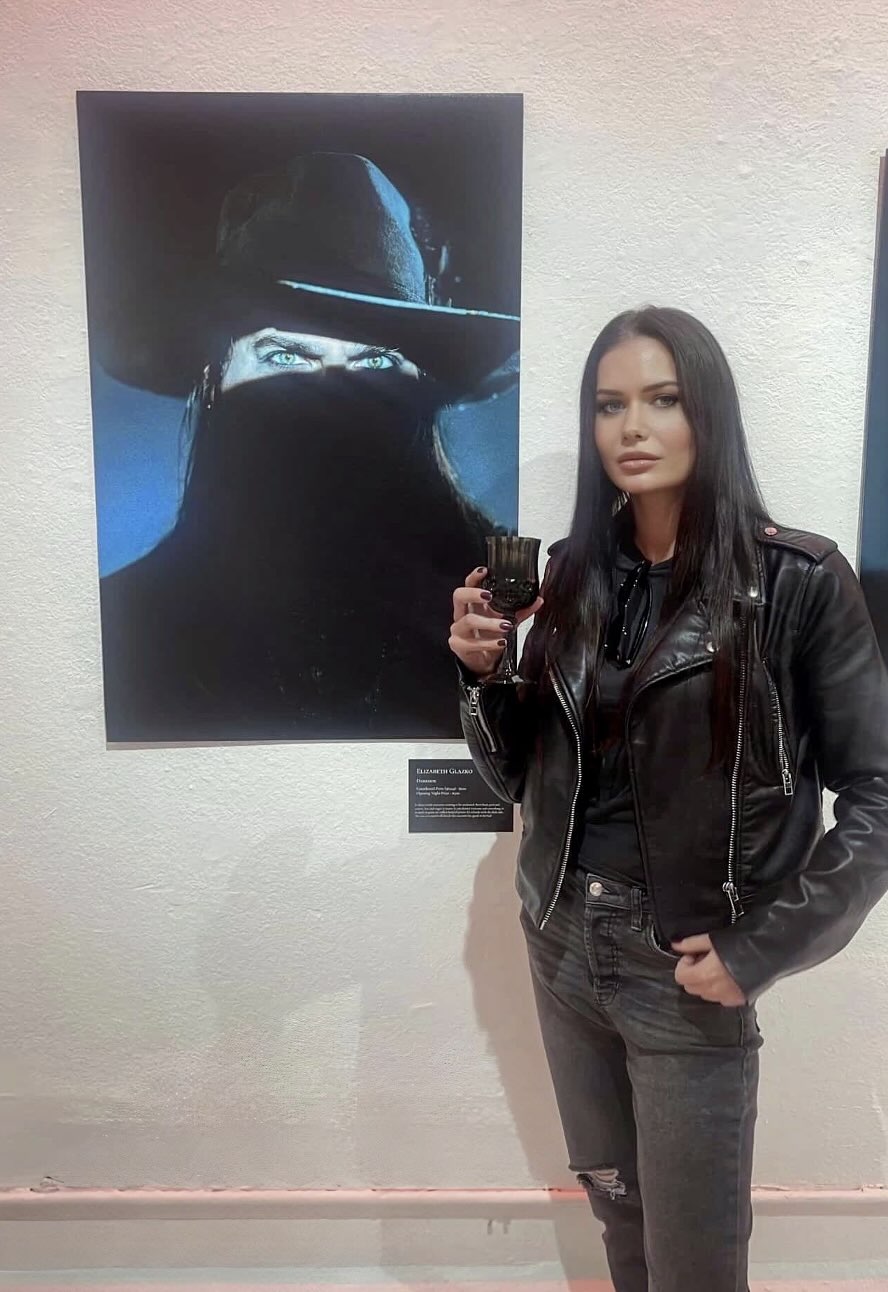
Elizabeth Glazko: Cinematic Photographer and Visual Artist
Elizabeth Glazko is a Los Angeles-based visual artist, photographer, and founder of WolFilm, a creative production company focused on cinematic visual art. With more than a decade of experience, she has developed a distinct artistic language that merges photography with the emotional and narrative depth of cinema. Her work is recognized for its dramatic atmosphere, low-key lighting, expressive color grading, and bold post-production that transforms each image into a fully realized cinematic moment.
Working at the intersection of fine art and film, Glazko treats each photograph not simply as an image, but as an emotional statement. Every frame carries narrative tension, energy, and presence, designed to linger long after it is seen.
Background and Creative Foundation
Glazko’s connection to visual storytelling began in childhood. Growing up in Eastern Europe, she found refuge in movies, music, and art, creative worlds that offered both escape and self-discovery. She learned to draw and paint early on and later studied graphic design at MHPI art school, building a strong foundation in composition, color theory, and visual communication.
Her passion for cinema has deeply shaped her artistic vision. She has studied and analyzed more than a thousand films from a cinematographic perspective, focusing on lighting, framing, direction, and emotional structure. This immersion eventually led her to study filmmaking at the New York Film Academy in Los Angeles, where she refined her ability to merge cinematic atmosphere with photographic expression.
Artistic Practice
Throughout her career, Glazko has worked across a wide range of genres, including fashion campaigns, studio portraiture, street photography, and film set stills. She collaborates with musicians, actors, filmmakers, and visual artists both in the United States and internationally. Her work has appeared in editorial features, creative campaigns, and international competitions.
At the center of her practice is storytelling. Glazko does not create images to follow trends or appeal to the mainstream. Her work is designed to challenge, provoke, and open emotional dialogue. She invites viewers not just to see her images, but to feel them.