
 Matthew Kayser
In an era when technology often accelerates faster than human understanding, Tianqi Liu stands out for asking a different set of questions. How should machines perceive and respond to human experience? How can digital systems go beyond executing commands to recognize intent, emotion, and need? As a computer and information science researcher, Tianqi is redefining the boundary between humans and intelligent systems. Her work spans virtual reality, physiological computing, and empathetic AI, uniting technical precision with a deep sensitivity to human experience. Guided by the belief that technology should listen as much as it speaks, she envisions a future where interaction design centers on understanding—where machines become attentive, adaptive, and profoundly human in how they respond.
A Pursuit of Human-Centered Innovation
Tianqi’s journey began at Tsinghua University, where she majored in Computer Science. “The allure of computer science for me lies in its boundless potential, particularly where it intersects with human lives,” she reflects. As an undergraduate, she developed a redirected walking algorithm that adapts to users’ natural movement patterns to enhance immersion in virtual reality. By combining mathematical modeling with user-centered design, she demonstrated how algorithmic intelligence could serve human experience—creating systems that adjust to people in real time. Yet beyond performance and precision, Tianqi became increasingly fascinated by a deeper question: how technology can reflect and amplify the human meaning within interaction. “I realized that technology’s real power lies not just in accuracy,” she says, “but in how it resonates emotionally and socially with people.”
Listening to the Body, Understanding the Mind
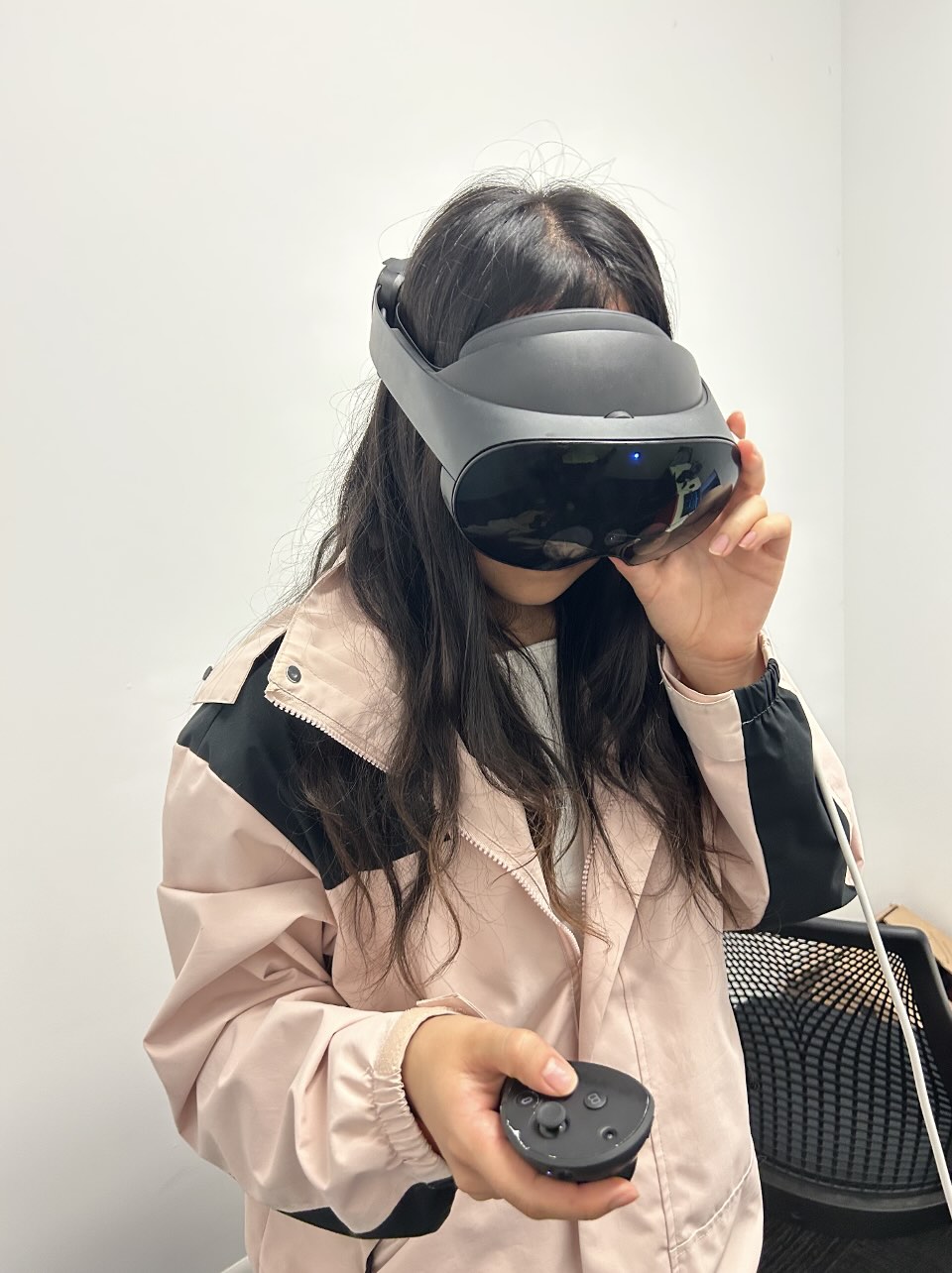
As remote collaboration reshaped daily communication, Tianqi became intrigued by how virtual environments influence emotional comfort and presence. “I wondered—if we replaced real faces with avatars, could that actually help people feel more at ease?”
Her experiments revealed that physiological signals tell a story words cannot. By analyzing indicators such as heart rate and skin conductance, her team found that stylized avatars or real faces tended to reduce users’ anxiety—while hyper-realistic avatars amplified it.
For Tianqi, this insight was transformative. “Physiological signals are ‘honest’ and sensitive—they reveal how people truly feel,” she explains. That realization solidified her conviction that technology should listen to the body as well as the mind, creating systems that sense, adapt, and care. It became a defining principle of her work—human-centered design where empathy is not an addition, but the foundation.
Designing for Meaningful Connection
Tianqi’s perspective on human–computer interaction expanded during her collaboration with Professor Michael Bernstein at Stanford University, where she explored how computational systems could enhance social connection rather than replace it.
Together, they conceived “Burst,” a new social media model that leverages close social circles to share meaningful content safely and authentically—prioritizing trust and relevance over algorithmic reach. “That experience made me realize that design isn’t just about optimizing interfaces—it’s about shaping the social infrastructures that define how people connect,” she says.
From that moment, Tianqi’s vision evolved from user-centered toward a human–society-centered approach—designing technologies that respect diversity, strengthen trust, and foster meaningful relationships in digital spaces.
Proactive AI to Sense Human Needs
At Cornell University, Tianqi now works with Professors Saleh Kalantari and Andrea Stevenson Won, pioneering new ways for artificial intelligence to recognize human cognitive states. Her focus is not on machines that obey instructions, but on those that can anticipate needs and respond with empathy.
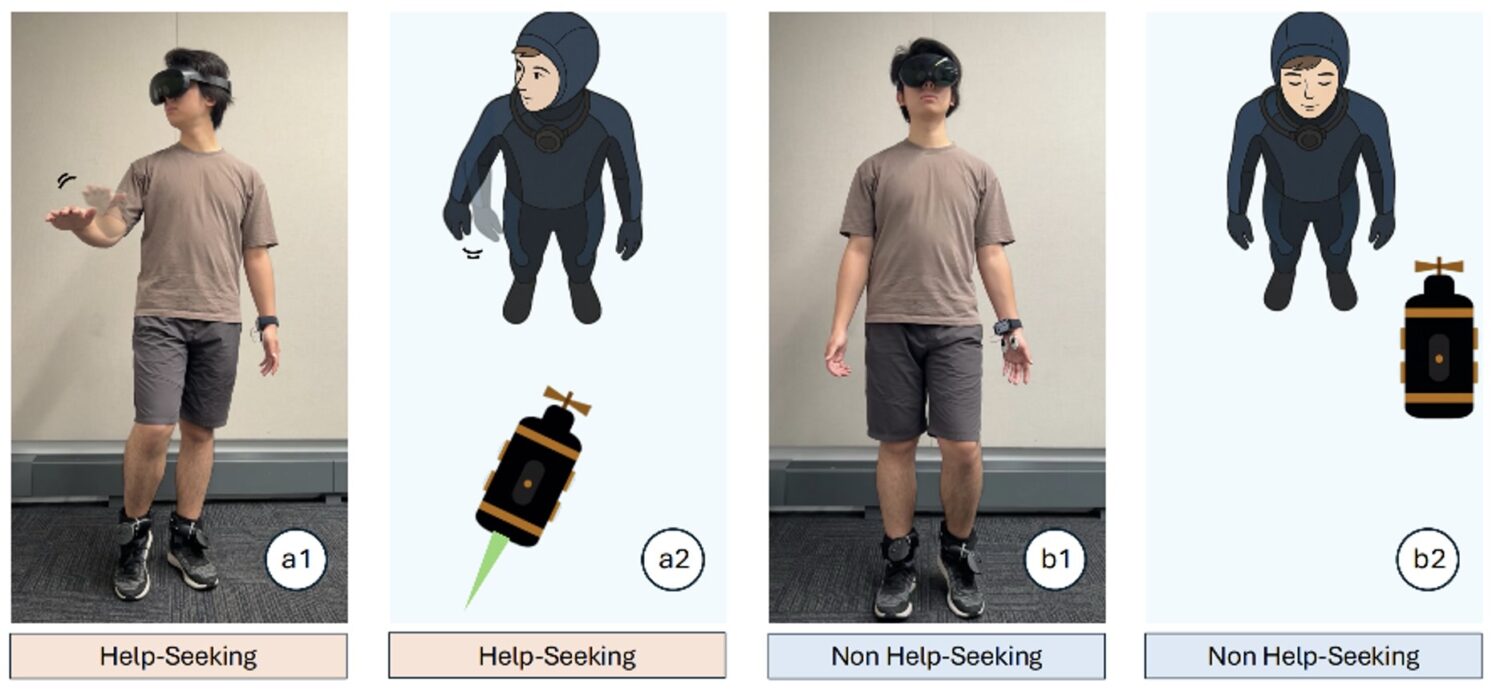
In one of her recent projects, Tianqi developed an AI model capable of detecting when users need help from a robotduring navigation tasks—moments when someone might pause, look around, or change pace. By integrating behavioral and physiological data, her work shows how machines can interpret subtle human cues in real time. “For humans, these signs might be intuitive,” she explains. “For AI, learning them represents a leap toward understanding.”
Her vision is clear and courageous: to build proactive, emotionally intelligent systems—AI that knows when to help, not just how. From underwater navigation to healthcare and education, her research moves technology closer to something once thought uniquely human: the ability to care.
Rethinking Intelligence: When Technology Learns to Care
Across her research—from virtual reality to empathetic AI—Tianqi Liu continues to advance a singular vision: technology should center around human experience, not the other way around. Her work reframes what it means to be “intelligent,” arguing that the next generation of AI will depend more on understanding and responsiveness.
“The real power of technology lies not in precision alone,” she says, “but in how it resonates emotionally and socially with people.” By teaching machines to sense human needs through both body and behavior, Tianqi envisions a future where AI becomes a genuine partner in well-being—a presence that perceives, supports, and ultimately, cares.