
 Nia Bowers
I Tested the Viral Derila Ergo Pillow for Two Weeks. Here’s What I Found.
The Derila Ergo Neck Support Pillow is everywhere. Search for it on YouTube or TikTok and you’ll find hundreds of reviews – many of them starting with something like “please don’t buy this pillow” before spending the next ten minutes explaining why you absolutely should. It’s the kind of marketing paradox that makes you wonder: Is this product genuinely good, or is the hype just really, really effective?
I’ll be upfront about my bias: I’m skeptical of viral sleep products. Most are overhyped, design-forward but functionally mediocre, and backed by marketing that preys on our desperate desire for better sleep. So when the Derila Ergo landed on my desk -a butterfly-shaped memory foam pillow that’s supposedly life-changing – my first instinct was doubt.
But I decided to actually test it. Not just sleep on it once and judge, but really live with it for two weeks and try to figure out what’s real and what’s hype. Because the question everyone’s asking is simple: Is the Derila Ergo a scam, or is there actually something going on here? What I found was more complicated than either answer would suggest.
Quick Verdict
The Derila Ergo pillow is a legitimate ergonomic memory foam pillow, not a scam. It offers good neck support and durable construction, but the benefits are more incremental than revolutionary. For sleepers looking for structured support and willing to adapt to the unusual shape, it can be a worthwhile upgrade.
What Is the Derila Ergo Pillow?
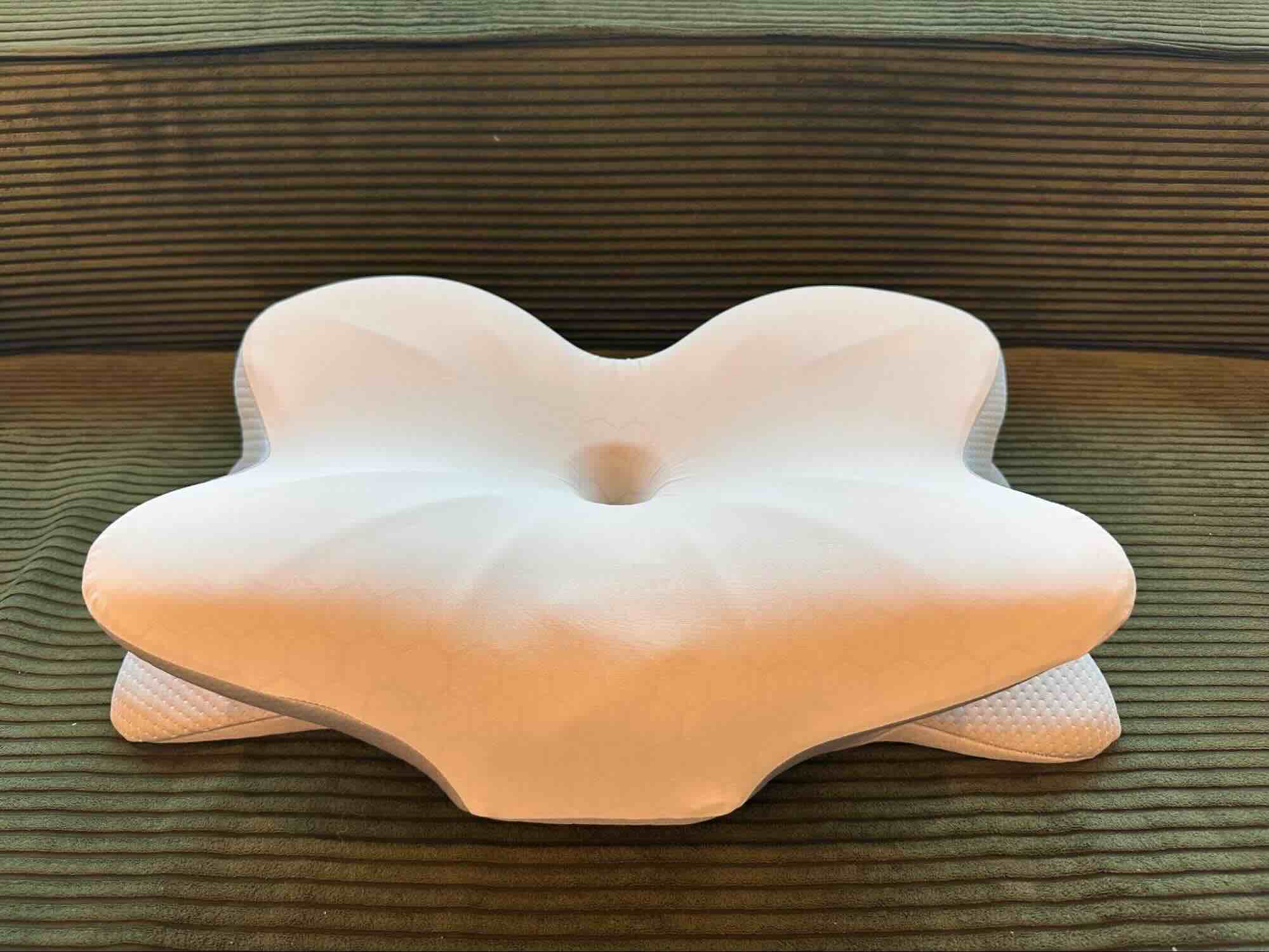
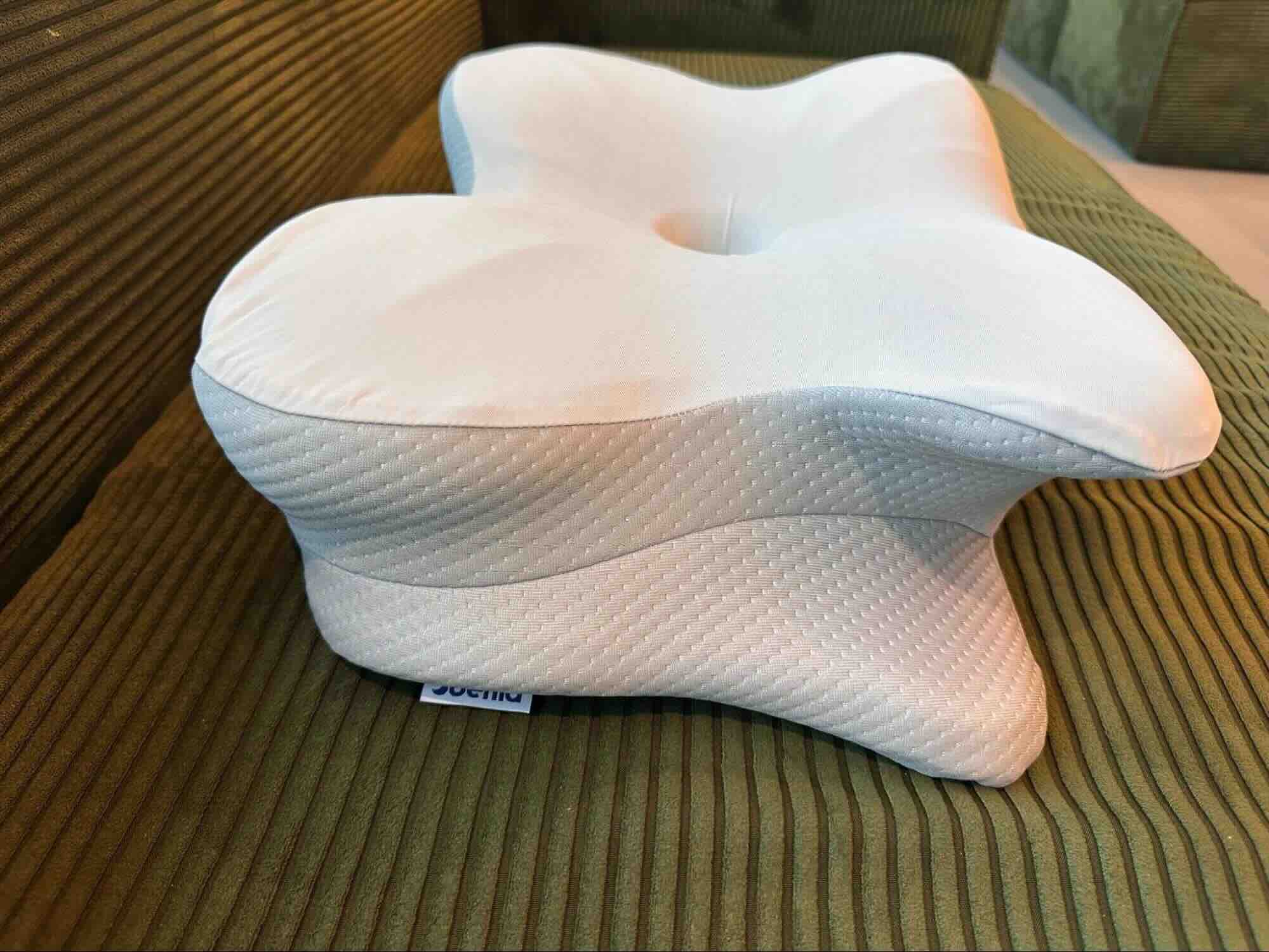
The Derila Ergo Pillow is an ergonomic memory foam pillow with a distinctive butterfly-shaped contour. Measuring about 21 inches wide and weighing a few pounds, it’s designed to provide structured support for the head and neck while sleeping. The pillow features a contoured design, breathable cooling fabric, and a shape intended to help keep the head and neck in a more neutral position during the night.
Derila Ergo Pillow Specifications
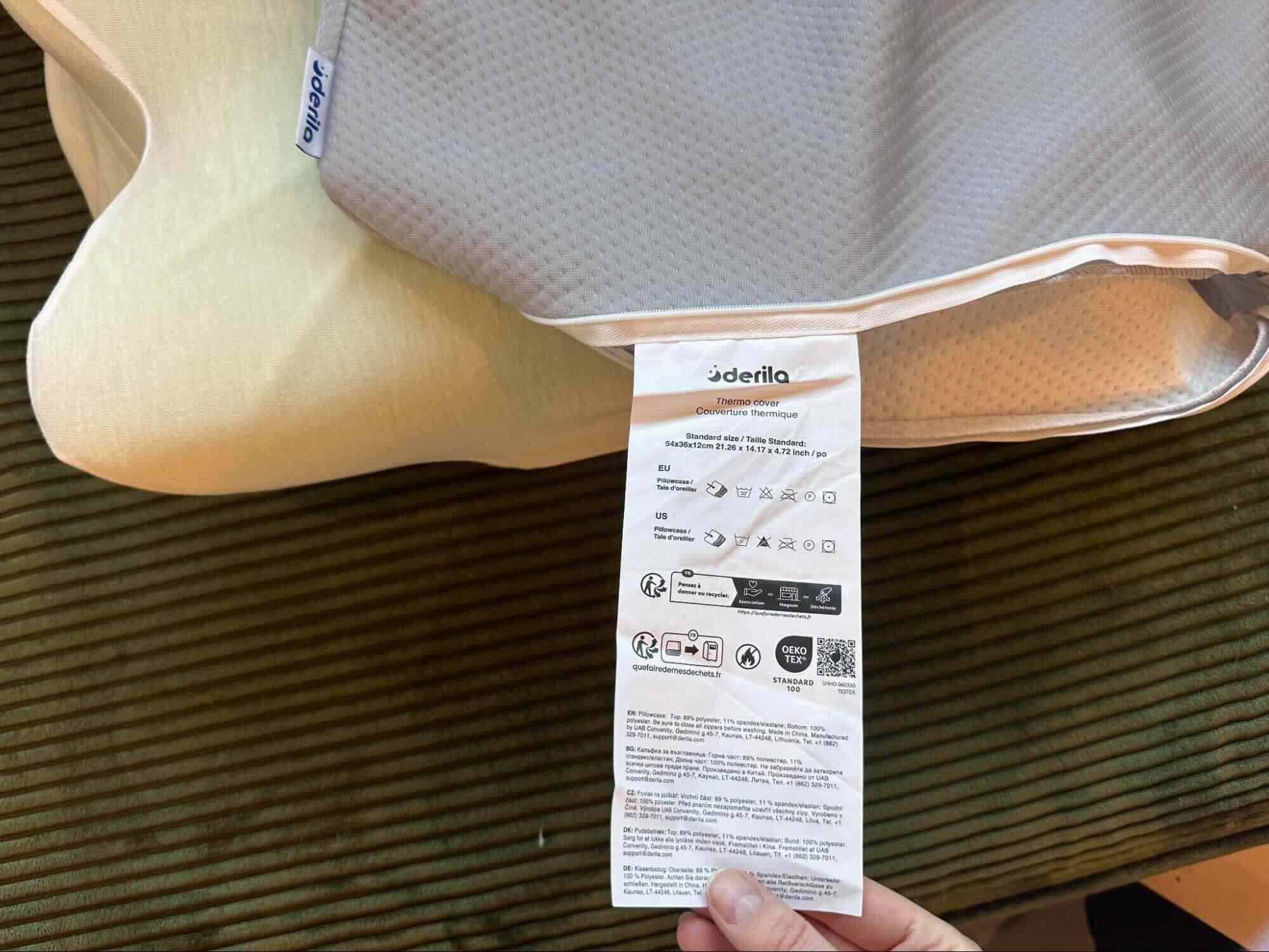
| Dimensions | 21.3″ × 14.2″ × 4.7” |
| Weight | 36.9 oz |
| Materials | Polyurethane (high-density memory foam) core, hypoallergenic fabric cover with cooling technology |
| Average rating | 4.8/5 (based on website reviews) |
| Best For | Those who:
● Side sleepers ● Back sleepers ● People seeking firmer neck support ● Those who prefer ergonomic pillows |
| Benefits | ● Ergonomic neck support ● Durable memory foam ● Cooling fabric cover ● Maintains shape over time |
| Drawbacks | ● Adjustment period required ● Height may not suit petite sleepers ● Shape requires specific pillowcases ● Only available online |
| Money-Back Guarantee | 60 days |
My Testing Approach
I’m not going to pretend I sent this pillow to a lab. I slept on it. For two weeks, in my normal sleeping position, in my normal bedroom, during my normal life. I paid attention to how my neck felt in the morning, whether I was waking up in pain, and whether the pillow felt different from the four other pillows currently in rotation on my bed.
I also did something I don’t usually do: I looked at my own expectations. Before opening the box, I assumed I’d find the pillow mediocre but with good marketing. I wanted to see if that assumption held up.
The First Night: Confusion
Unboxing the Derila Ergo felt like unboxing a designer object. The pillow is wrapped nicely. The packaging uses words like “ergonomic”. It’s clearly manufactured to feel premium.
But then you actually look at the shape. That butterfly design isn’t immediately practical. A normal pillow is rectangular. You can position it however you want. This pillow has a specific design with a central cradle and two wings, and you have to figure out what it’s supposed to do.
The first night, I tried it like a normal pillow. My head kind of sat in the middle depression. My neck rested in the targeted support zone. It felt… fine? Not uncomfortable. Not transformative. Just fine.
I woke up without particular neck pain (but then again, I don’t usually wake up with neck pain), and the pillow hadn’t flattened overnight. So far, it seemed like a normal pillow, just more expensive and weirder-looking.
Nights Two Through Five: Adjusting
Night two, I noticed the cooling fabric. Not because the pillow felt cold – the viral reviews make it sound like you’re sleeping on an actual ice pack – but because the surface felt slightly cooler to the touch than regular pillowcases. Whether that actually affects your sleep temperature, I honestly can’t say. It’s possible the cooling effect is partly psychological.
By night three, I stopped thinking about the shape. Your body adjusts. The pillow has a specific design, and after a few nights of sleep, that design starts to feel intentional rather than strange.
But here’s what I noticed, and this is important: I wasn’t sleeping noticeably better. I was sleeping fine, which is what I always do. The pillow was comfortable. It supported my neck. But there was no “aha” moment. No sudden revelation that this pillow had unlocked some secret to better sleep.
This is where I started wondering about the purpose of the 60-day trial period. According to Derila, the pillow needs time to adjust to your sleeping habits, and users may also need a short period to get used to the contoured design. In my experience, the first week didn’t feel dramatically different, but the pillow started to feel more natural after some time.
Days Seven Through Ten: Where It Gets Interesting
Around day seven, something odd happened. I stopped paying attention to the pillow. It wasn’t remarkable anymore. It’s just… worked.
But I also noticed my neck felt slightly less stiff when I woke up. Slightly. Not dramatically. Not in that “my chronic pain is cured” way the marketing suggests. Just incrementally less stiff than it usually does. The kind of thing you might not notice unless you’re actively trying to notice it.
I started wondering if this was the pillow working or if I was just getting more sleep because I’d stopped analyzing how the pillow felt. Your mind does weird things when you’re paying attention to something.
The real test came during a few nights of stress and poor sleep (regular life). On those nights, the pillow did what a pillow is supposed to do: it provided a comfortable surface to rest your head. It didn’t magically fix my sleep quality, but then again, no pillow can fix insomnia caused by work stress.
The Downsides: What Actually Annoyed Me
Here’s where the honest part gets important:
The Breaking-In Phase Is Real and Kind of Rough
It takes around 5-7 nights for adjustment. What they don’t emphasize is that those first few nights can actually feel uncomfortable. The foam is firm- intentionally so-and if you’re used to a soft, cloud-like pillow, the Derila Ergo pillow can feel almost too rigid. Your neck essentially has to relearn what neutral spine alignment feels like, and that process isn’t always pleasant. A few people I know who tried it gave up after night three because they thought they’d made a mistake. They hadn’t, but the adjustment period is genuinely a barrier.
The Height Is Not One-Size-Fits-All
At 4.7 inches tall, this pillow is engineered for average to tall frames. I’m 5’10” and it felt right. But my shorter partner found it pushed her chin down too far, creating tension rather than relief. If you’re petite, have a short neck, or are on the smaller side, this height might actually cause problems. And because the memory foam is high-density and fixed, you can’t adjust it. You either live with it or you return it.
The Shape Limits What Cases You Can Use
Standard pillowcases don’t fit the butterfly shape properly. They bunch up with excess fabric, and when you move at night, that fabric creates pressure points that actually undermine the ergonomic design. Derila sells branded pillowcases for around $15 each to fix this. You don’t technically need them, but using a standard case defeats a lot of the pillow’s purpose. It’s another cost that adds up.
Active Sleepers Will Have Problems
If you toss and turn a lot during the night- which is actually most people – you’ll slip out of the central cradle and end up on the firmer side wings. This isn’t catastrophic, but it means the pillow isn’t doing what it’s supposed to do for part of the night. For still sleepers, it’s great. For the rest of us, it’s a limitation worth knowing about.
Expansion Takes Time
The pillow arrives vacuum-sealed and compressed. It takes 2-4 hours to fully expand and reach its intended height. You can’t sleep on it the moment you open the box – you have to wait for the foam cells to fully oxygenate. Not a huge deal, but it means planning ahead.
What Actually Works
Despite all that, there are things this pillow does well.
The support is legitimate. After two weeks, my neck does feel slightly less stiff when I wake up. Is it because of the pillow’s specific design, or is it because I’m sleeping on a pillow with better neck support than whatever I was using before? Hard to say. But the result is the same.
The memory foam hasn’t flattened. The pillow feels exactly the same on day fourteen as it did on day one. For a pillow you’re considering keeping for years, that matters.
If you’re the type of person who appreciates a structured, supportive pillow and you’re willing to adjust to an unconventional shape, the Derila does what it claims to do. It supports your neck and shoulders. It doesn’t flatten. It looks kind of cool. And yes, the fabric is genuinely pleasant to rest your head on.
For someone who’s been sleeping on bad pillows, this would feel like a revelation. For someone who already has a decent pillow, the difference is subtle.
Who This Pillow Is Actually For
If you’re someone who:
- Sleeps primarily on your side or alternates between side and back
- Wants a pillow that maintains its shape over time
- Appreciates a structured, supportive feel
- Doesn’t mind an adjustment period
- Prefer strong neck and shoulder support
So, Is It Actually a Scam?
Let me answer the headline question directly: No. The Derila Ergo pillow is not a scam. It’s a real pillow with real construction and real support. The company isn’t lying about what it is. The memory foam is what they say it is. The cooling fabric exists. The support is legitimate.
But here’s where things get complicated: the pillow itself is solid, but the hype around it can be a bit much.
The viral reviews claim things like “this pillow changed my life” and “it’s the best pillow I’ve ever owned.” Those claims aren’t wrong exactly – they’re just not universal. For someone who’s been sleeping on a terrible pillow, this would feel like a revelation. For someone who already has decent neck support, the improvement is subtle.
Is that a scam? No. Is the marketing exaggerating the benefits? Absolutely.
Final Thoughts
After two weeks, here’s my take: the Derila Ergo is a competent pillow that largely does what it promises. The marketing around it can feel a bit excessive, but the pillow itself is not a scam. The shape works if you’re willing to use it the way it’s designed, and the structured support was noticeable for me.
That said, the viral hype doesn’t really do the product any favors. It isn’t revolutionary or life-changing. It’s simply a well-designed pillow. And in a world full of mediocre pillows, a good one is still worth something – it’s just important to be realistic about what you’re getting.
You’re not buying salvation in pillow form. You’re buying a thoughtfully designed pillow with specific features that may work better for some sleepers than others.