
 Jon Stojan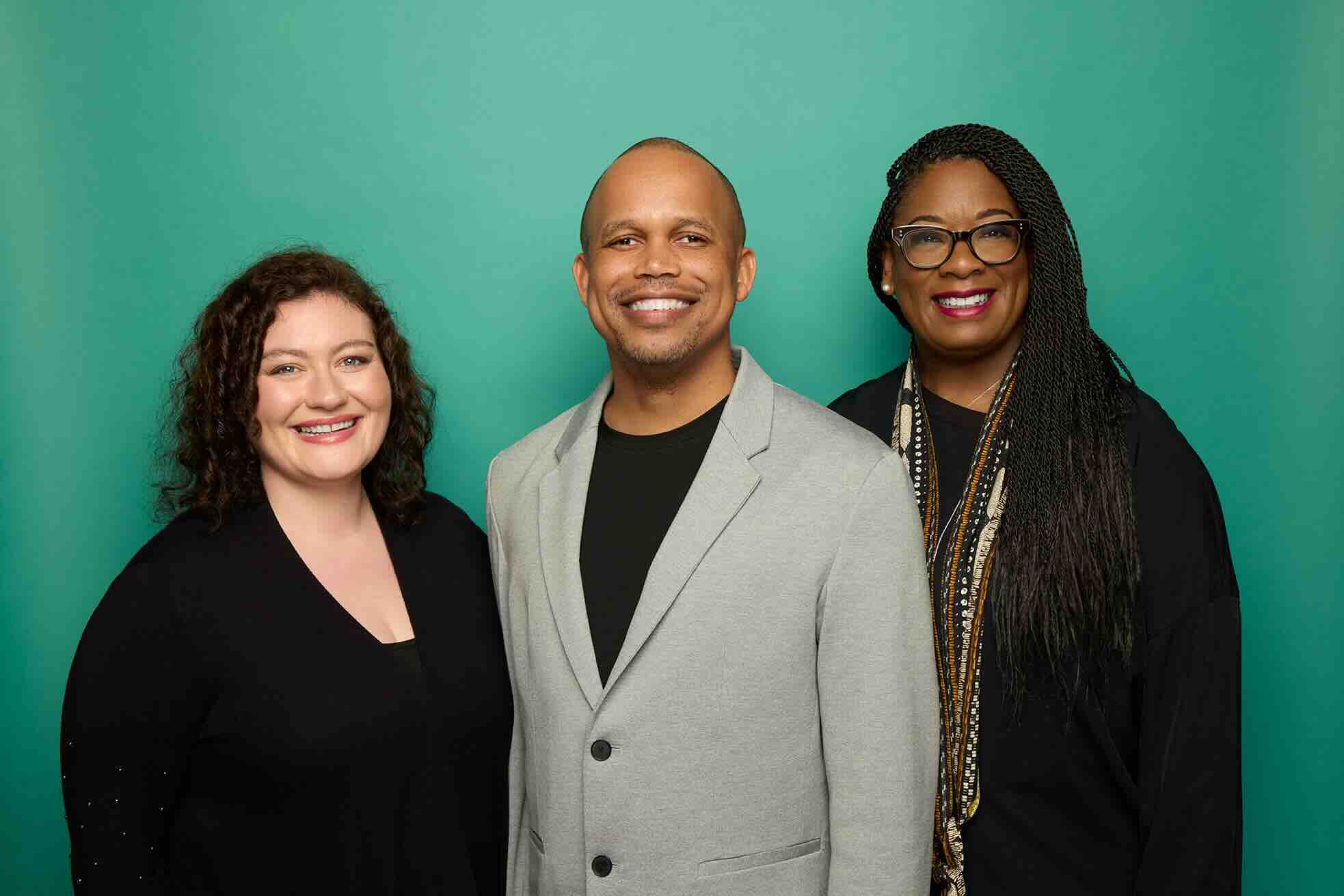
Image credit: Best Yet Entertainment
Mainstream Hollywood is an industry still dominated by gatekeepers, but Best Yet Entertainment is rewriting that script.
Co-founded by award-winning Bahamian filmmaker Kareem Mortimer and indie powerhouse producer Trevite Willis, the Los Angeles-based media company is putting its stake in the ground with a bold mission: amplify underrepresented voices, tell courageous stories, and do it all without waiting for permission.
“We support films that offer a unique lens on humanity and stretch across genres,” says Mortimer, who serves as Chief Producer and Director. “We wanted to create a company that’s both creatively ambitious and deeply intentional.”
And they’ve done just that. In the last few years, Best Yet Entertainment has backed Sundance standouts, launched a writers’ room web series during a pandemic, and even co-produced the recent Broadway revival of The Wiz. But their vision started much smaller—an idea born between three collaborators, just before the world shut down.
Best Yet was formed by Mortimer, Willis, and producing partner Julia Chatwin in early 2020. They had just secured initial funding when the pandemic hit. Instead of waiting out the storm, they launched a digital comedy series that unexpectedly evolved into something bigger.
“A web series with a writers’ room? Sure, why not,” Willis laughs. “But during the edit, it became clear: this wasn’t just a web series—it was a show, a fun comedy with real potential for mass appeal.”
The trio officially moved to LA in 2022 and turned Best Yet into a fully operational production company. But then came the writers’ and actors’ strikes of 2024. Still, they pressed on.
“Despite that, we’ve been able to financially support films and Broadway projects, while also creating several in-house productions,” says Willis. “The landscape looks wild right now, but we’re committed to experimenting with new approaches and finding different ways to tell our stories.”
Mortimer and Willis couldn’t have come from more different corners of the industry, but their synergy is undeniable. Their creative partnership began with Children of God, a groundbreaking LGBTQ+ drama set in the Bahamas. It was a turbulent production, but one that cemented their working relationship.
“After 18 years, our partnership works because we trust and deeply respect each other and each other’s vision,” Willis says. “Our first film… we were definitely fighting the wind on that one. But it gave us the time to learn and develop our communication skills. We’re both pretty driven, and I think that drive is what continues to push us.”
Mortimer brings the vision. His work spans narrative film, commercials, experimental cinema, and television. He says, “I don’t chase stories. They chase me, they haunt me. Not in a terrifying way, but if I find myself obsessing about something, a feeling, an image, or a moment, I take it as a sign that it’s something we need to be doing. Somewhere in there is where the magic lives.”
That instinct has taken him far: over 35 awards, two Bahamian Icon Awards, screenings across 40 countries, and a filmography that includes Cargo, Windjammers, and Passage.
Still, it’s not about accolades. “Success, for us, is about impact,” he says. “Did it move the audience? Did it make them feel something lasting — laughter, catharsis, joy, discomfort? That’s the metric that matters most.”
Willis, who leads development and production at Best Yet, is a master of execution. She’s executive-produced Sundance hits like Forty-Year-Old Version, To Live and Die and Live, and Kidnapping Inc., and she knows what it takes to bring a bold vision to life without sacrificing quality.
“We don’t just raise funds,” she says. “We are so many things: collaborators, editors, therapists, problem-solvers, and, most of the time, the glue that keeps the entire project from unraveling.”
Courage as Currency
Being a Black woman in the industry shapes so much about how Willis approaches storytelling. “I gravitate to projects that challenge racial and gender stereotypes, celebrate our complexity, and amplify our voices,” she says. “Most of the time it means fighting for our stories, pushing for bold, inclusive storytelling and filmmakers.”
She adds, “Since a majority of my films have been geared towards the African American market, which isn’t monolithic, I have only had to figure out which audience within the community I should target.”
Mortimer echoes this commitment to authenticity and resonance. “I’m currently co-directing a documentary in post-production called Brigidy Bram, about the abstract painter Kendal Hanna. At one point, Kendal says, ‘If you feel it, they have to feel it too.’ That stayed with me. I believe truth is universal, not in the sense of ‘for everyone,’ but in the sense that there are shared truths across communities that transcend appearance or background. The power of art is that it can dismantle the invisible walls we build between ourselves.”
Both founders are clear about their mission: tell stories that shake the table.
“There are a lot of reasons I’m drawn to stories that deal with complex or taboo subjects,” says Mortimer. “But at the core of it, I really believe art has the power to shift how people think and feel… soften hearts, change minds, and maybe even inspire action.”
For Willis, it’s about embracing the discomfort of truth. “Courage comes in many forms,” she says. “From telling a personal story before you’ve even worked through it inside yourself, to bringing down societal systems, to creating art without resources.”
Their upcoming slate proves the point. Mortimer’s next feature House on Fire is slated to enter production this fall, while I Am Not A Dummy, a personal story he’s been developing for years, feels like his true north. Meanwhile, Willis is producing The Inquisitor: The Barbara Jordan Documentary, a long-overdue film about the trailblazing Texas congresswoman.
“She was a total badass,” Willis says. “It’s surreal to know that we are, once again, fighting for the same rights that she did. We think it will provide inspiration for us all for where we are right now.”
Additionally, the team has recently launched a distribution arm of the company, and will be distributing the Sundance film, Kidnapping Inc., in select Caribbean territories. The film recently opened in Caribbean cinemas in the Dominican Republic in April, a huge deal for the company.
Looking Forward
Right now, the Best Yet Entertainment team is finishing post-production on This Is Paradise: Rachel In LA, the second season of a series that began as a pandemic experiment and grew into a statement on independent television.
“Kareem and Julia wanted to break away from the traditional sitcom format we used in the first season,” Willis says. “We can’t wait to share the show’s new look with our in-between season release.”
From underground galleries to Broadway stages, from Caribbean islands to LA soundstages, Best Yet Entertainment isn’t just building a production company…they’re building a movement.
They’re also bridging cultures in a way few indie production houses dare to try. With Mortimer’s roots in the Caribbean and Willis’ Southern U.S. perspective, Best Yet operates with a global consciousness. It’s not just about representation. It’s about honoring nuance, identity, and intersectionality.
“I’ve always felt like an outsider in some ways, more of an observer,” Mortimer reflects. “And I think that’s why I’ve been drawn to stories like these.”
It’s that same outsider empathy that led Willis to launch her own film festival in Huntsville, Alabama, now in its seventh year, with the goal of fostering community through cinema. “Being an indie producer taught me to start a project thinking about the film’s audience,” she says. “Not that the audience should dictate the story, but who does the film serve?”
Their ability to serve both story and audience is what sets Best Yet apart. Whether financing projects, mentoring emerging filmmakers, or redefining the indie series format, Kareem and Trevite are proving that bold storytelling isn’t a trend. It’s a necessity.
Or as Mortimer puts it: “The power of art is that it can dismantle the invisible walls we build between ourselves.”
That wall? Consider it breached.