
 Malana VanTyler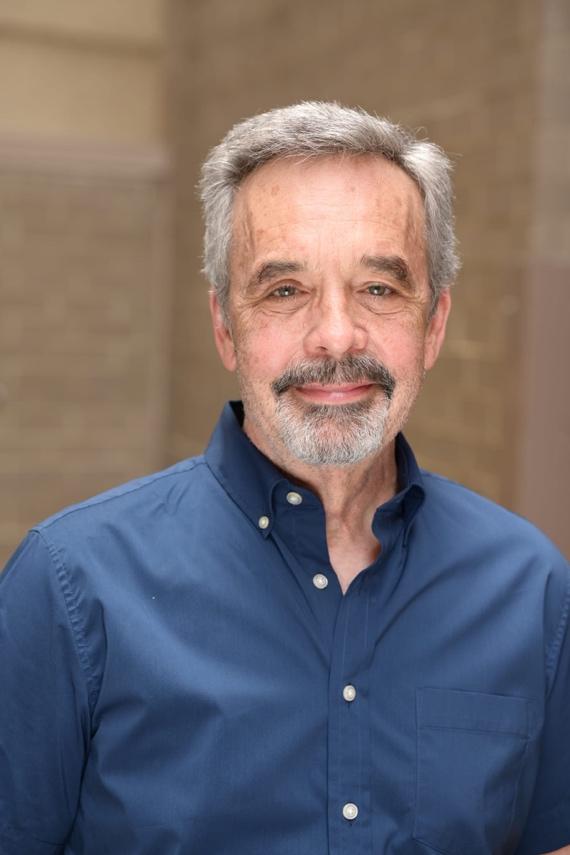
Image Credit: Brian Barber
Imagine growing up in a region where schoolbooks are carried past bullet-pocked walls and the smell of grilled eggplant mixes with the stench of sewage in narrow alleyways.
In Gaza, trauma isn’t just a moment; it’s a lifestyle. Every day, people of Gaza experience a new trauma. Generations have learned to live with curfews, navigate checkpoints, and survive bombardments with nothing but grit and family to hold them steady. Yet amid the crushing weight of occupation, something extraordinary endures: the quiet defiance of those who still strive to make life work. This is the Gaza that American psychologist Brian K. Barber came to know, the one defined by heartbeats.
Barber, an American psychologist and Professor Emeritus at the University of Tennessee, has spent three decades witnessing the lives of Gazan families not as a distant observer, but as a devoted chronicler and participant.
His nonfiction book, No Way But Forward: Life Stories of Three Families in the Gaza Strip, captures the soul of a people struggle for dignity every single day.
A Scholar Among the Displaced
From his earliest visit to Gaza in 1995, Barber felt compelled to study life under occupation and understand it from within. While other researchers lodged in secure hotels, he stayed in the cramped, stone-floored homes of refugee families, sharing meals, cradling infants, witnessing marriages, and grieving with those who lost everything.
“I did not go to Gaza to confirm theories,” Barber reflects. “I went to listen—and to live among those I sought to understand.”
Born in Los Angeles and trained in family therapy and developmental psychology, Barber had already distinguished himself in the academic world. His research on intrusive parenting and adolescent behavior appeared in top journals like The Lancet and Child Development. But it was in Gaza, where bombs fell and life still blossomed, that his scholarship found its moral center.
The Faces Behind the Headlines
No Way But Forward is not a history book or another academic treatise on political trauma. Instead, it is a literary act of witness—told through the lives of three men Barber has followed since their teenage years: Hammam, the affable school principal and tribal mediator; Hussam, the introspective scholar and academic dean; and Khalil, the fierce human rights advocate.
Each of them embodies resilience shaped by heartbreak. Hammam failed his college exam not because he was unprepared, but due to a bureaucratic error. Hussam was imprisoned and tortured multiple times for his activism. Khalil was shattered when the clerics he admired beat a boy for a minor mistake. Yet none surrendered to bitterness. They married, raised children, pursued graduate degrees, and, above all, stayed.
“My book is a set of stories, deeply human accounts of three young men who came of age during the intifada as they navigated that formative movement and life ever since, facing unending obstacles. These are stories of everyday life in a grim and sorely misperceived corner of the globe, tales of capacity and remarkable steadfastness in trying to forge a good and dignified life.” – Barber writes.
A Life Committed to Telling the Truth
For Barber, bearing witness goes beyond narrative—it is an ethical imperative. His long career in psychology taught him that trauma not only damages, but it also transforms. In Gaza, he found proof that the human spirit, anchored in culture and community, can transmute suffering into strength.
Education and family are sacred in Palestinian culture, he notes. Gaza’s literacy rate rivals that of developed nations. Children face checkpoints and bombings to attend school. Parents sell land to send their kids to university. Even amid 50% youth unemployment and daily electricity blackouts, the people Barber met refused to let war define their worth.
Barber’s previous works, such as Adolescents and War, laid the groundwork for understanding youth in conflict zones. The trust he built with his subjects granted him a level of access that few Westerners ever attain, especially in conservative Muslim households. Mothers and wives welcomed him, shared their stories, and in doing so, broadened his understanding of strength.
Bearing Witness in the Wake of 2023
The book arrives at a moment of acute relevance. Following the events of October 7, 2023, and the devastation that ensued, the world’s gaze once again turned to Gaza—but briefly, and often reductively. What Barber offers is not a snapshot, but a mosaic—crafted over years of friendship, observation, and sorrow.
“No Way But Forward reminds us that Gazans are not just victims of war,” Barber insists. “They are survivors of life. They are poets, teachers, caretakers, and parents who navigate loss not with vengeance, but with an unshakable belief in moving forward.”
Now based in Washington, D.C., Barber continues his work as a senior fellow at the Institute for Palestine Studies and the Middle East Policy Council. He spends his days writing, mentoring, and photographing wildlife—a hobby sparked by a National Geographic expedition. But his heart, he admits, remains in Gaza.
He remains unmarried by choice, a decision that has afforded him the mobility to return year after year. “It is not a sacrifice,” he says simply. “It is a privilege.”
Through No Way But Forward, Brian K. Barber offers a bridge between cultures, conflict, compassion, statistics, and the stories that breathe beneath them.
Barber turns toward them in a world that often turns away from brutal truths. In doing so, he hands the microphone to voices that have been too long unheard, not to speak on their behalf but to stand beside them as they do.