
 Nia Bowers
There is a growing contradiction at the heart of modern education. Never before has so much information been accessible, and yet belief in well-documented history appears increasingly fragile. In recent years, surveys have suggested that a significant portion of young people question or misunderstand the Holocaust, including estimates that roughly 20% of individuals aged 18 to 29 believe it is a myth or exaggerated. At a time when the subject remains embedded in school curricula, this raises a more difficult question than whether history is being taught. It asks whether it is being understood at all.
According to Leslie Benitah, Founder of The Last Ones Foundation, the issue is not rooted in a lack of content, but in a lack of connection. She points out that educational systems often respond to misinformation by increasing exposure to facts, assuming that repetition will lead to retention.

Judith Sherman & Leslie Benitah, photographed at the United Nations
“We often respond by saying we must teach more, but perhaps the question is not how much we teach, it is how we teach,” she explains. “It is the structure of education itself that may need to be reconsidered if we want real understanding to take place.”
This challenge becomes more urgent when considered alongside a generational shift that cannot be reversed. The world is approaching a moment when the last Holocaust survivors will no longer be present to share their experiences firsthand. Benitah reflects on this transition with clarity, noting that society is entering the end of living memory.
“Soon, there will be no one left to answer questions, no one left to correct us, and no one left to remind us that this did not happen to others, but to people just like us,” she says. “And when those voices are gone, the responsibility to carry their truth forward will fall entirely on us.”
In this context, the limitations of traditional teaching methods become more visible. Facts and figures remain essential, providing scale and historical grounding, but they are not sufficient on their own. Benitah underscores that numbers, while important, do not inherently create understanding. “Facts and figures are part of the story, but they are not the story itself,” she explains. “If people do not feel the weight behind those numbers, they will not remember what they represent, and that is where memory begins to fade.”
The broader environment in which young people consume information further complicates this issue. Research shows that Gen Z consumers trust content from individuals, reflecting a shift toward personal narratives over authoritative sources. This evolving trust dynamic suggests that simply presenting verified information is no longer enough to ensure belief, particularly when competing with a constant stream of unverified digital content.
It is within this gap that The Last Ones has built its approach. The nonprofit organization focuses on preserving and transmitting the testimonies of the last living Holocaust survivors through film, books, and educational programs, ensuring that these voices remain accessible even as the survivors themselves disappear. Rather than treating history as a sequence of events, the organization frames it as a lived experience, emphasizing personal narratives that transform abstraction into something tangible.
Benitah frames the distinction in simple but profound terms. “A survivor does not just teach you what happened,” she says. “A survivor makes you feel that it happened, and that feeling is what stays with you long after the lesson ends.” This emphasis on emotional resonance does not replace factual learning, but deepens it, allowing individuals to connect with the meaning behind the data.
That philosophy is now being applied directly within classrooms. Benitah’s book, The Last Ones of Auschwitz, has begun to be introduced into school systems, including partnerships within Florida’s education network, where it is used as a structured learning tool. The book presents survivor testimonies in a format designed to engage students not only intellectually but emotionally, bridging the gap between historical knowledge and personal understanding.
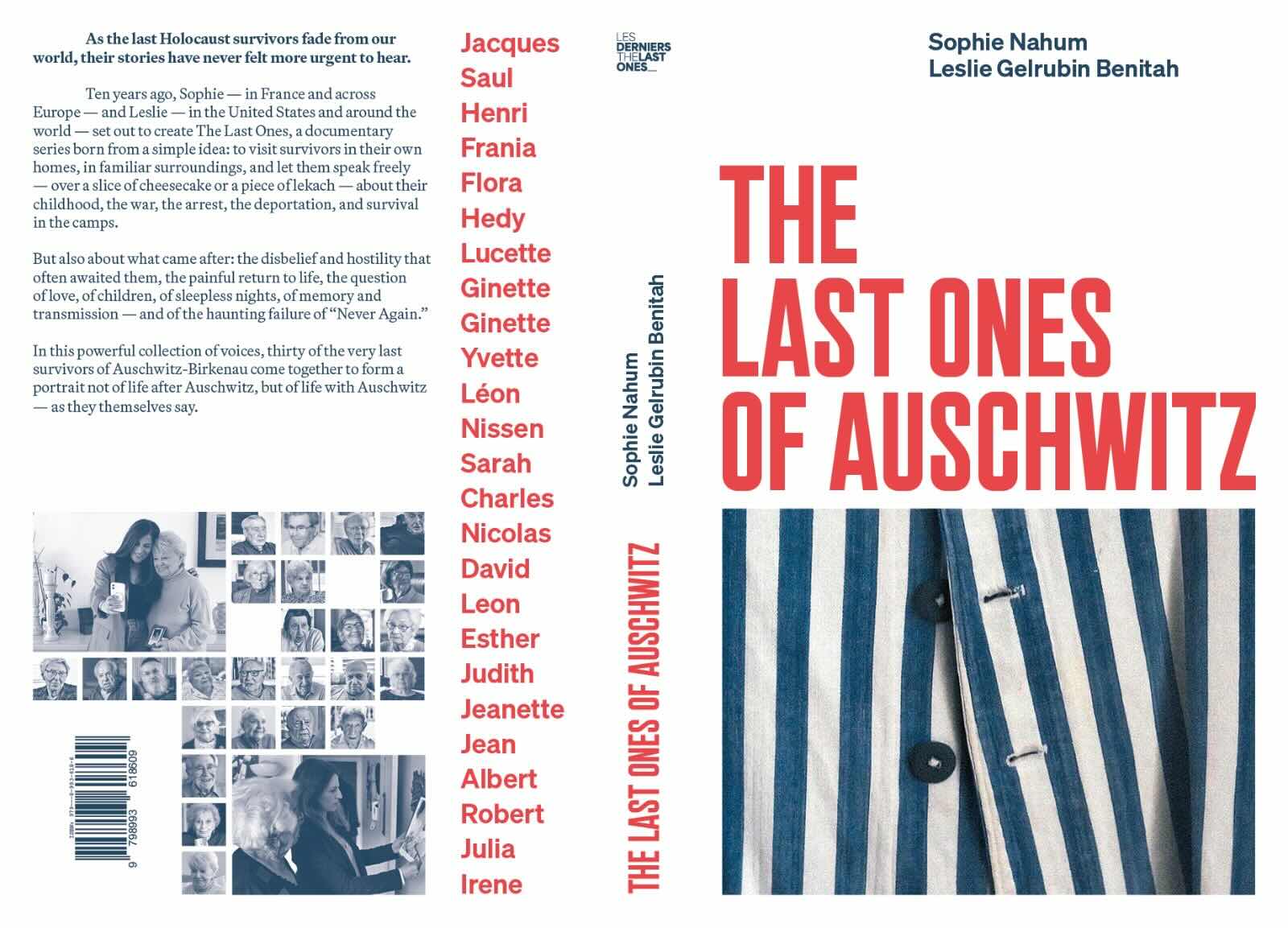
The Last Ones of Auschwitz
Benitah further explains that innovative methods, such as having students perform or interpret testimonies, can create a deeper level of engagement. By stepping into the perspective of survivors, students are encouraged to process history through empathy rather than memorization.
“When students connect emotionally, they carry that understanding with them far longer than any list of dates or figures,” she notes. “That is the kind of learning that stays, because it prioritizes meaning alongside accuracy.”
The reach of this work reflects both its relevance and its urgency. The Last Ones has presented its documentary at international platforms, including screenings connected to the United Nations, while continuing to expand its educational initiatives across regions. For Benitah, this is not a localized issue but a global one, shaped by misinformation, digital fragmentation, and declining trust in traditional authority.
“If we allow these stories to disappear, we are not just losing history, we are losing the ability to recognize the warning signs when they appear again,” she explains. “Remembrance is not passive; it is a responsibility we carry forward to prevent history from repeating itself.”
As the world moves further from living memory, the challenge is no longer simply to preserve facts, but to preserve meaning. In an era where information is abundant yet belief is uncertain, the future of education may depend not on how much is taught, but on whether it is felt.