
 Nia Bowers
How expat technical leaders are quietly shaping the region’s manufacturing backbone — and one journey from marine engine rooms to Inland Empire production lines
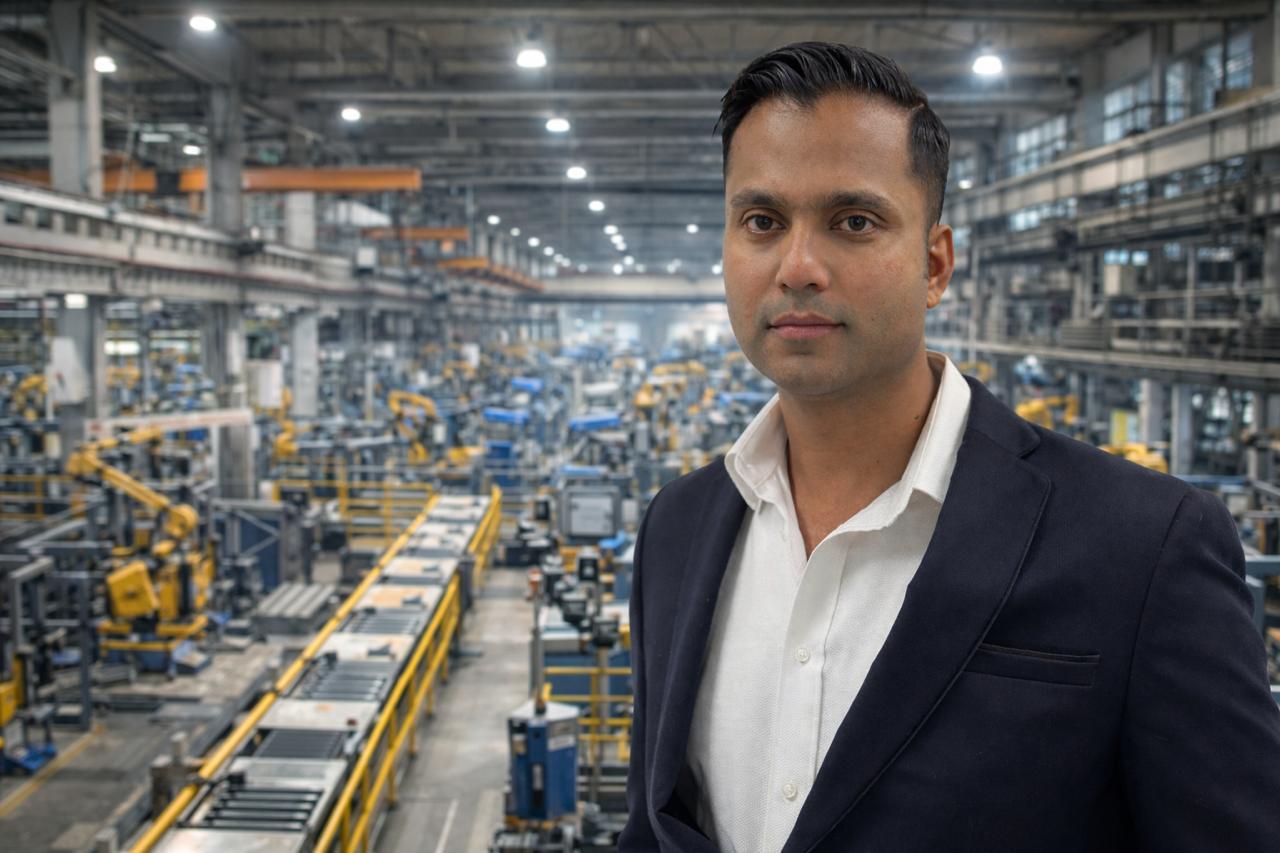
Southern California is often defined by its ports, freeways and sprawling logistics corridors, but less visible are the high-speed production facilities that feed those distribution networks every day. Inside these plants—many located across the Inland Empire—automated lines run continuously, translating volatile demand signals into physical output at a pace few consumers ever see.
Behind that operational choreography is a cadre of globally trained engineers and operators who have migrated to the United States over the past two decades, bringing with them technical depth forged in very different industrial environments. Among them is Niraj Jha, a manufacturing and supply chain leader whose professional path traces from marine engine rooms in India to advanced production operations in Southern California.
His journey reflects a broader, underreported story: how immigrant technical talent is helping shape the resilience and performance of America’s modern manufacturing systems.
From Marine Engineering to Manufacturing Systems
Jha’s early career began in marine engineering, a discipline grounded in maintaining large mechanical systems under unforgiving conditions. Working in engine rooms where reliability failures carried immediate consequences, he developed a working familiarity with preventive maintenance, energy systems, and operational continuity—skills that later translated naturally to high-throughput factory environments.
“You learn to treat the entire operation as a system,” Jha says. “If one component drifts out of alignment, the effects compound quickly. Stability comes from understanding how everything interacts.”
That systems mindset became a defining feature of his leadership approach, but he soon recognized that engineering execution alone was not enough to influence large-scale industrial performance. Pursuing an MBA broadened his focus from individual equipment reliability to enterprise-wide value chains, including how production decisions ripple through logistics, customer commitments, and cost structures.
The combination of technical rigor and strategic perspective would ultimately guide his transition to the United States’ manufacturing sector.
Finding Opportunity in Southern California’s Industrial Corridor
Over the past fifteen years, Jha has built his career in American manufacturing, much of it centered in Southern California—a region that has evolved into one of the country’s most critical hubs for high-volume production and distribution. Facilities here operate at the intersection of automation, just-in-time delivery expectations, and some of the nation’s most complex transportation networks.
In this environment, plant leadership often requires balancing precision engineering with rapid operational decision-making. Colleagues describe Jha as a “floor-oriented” leader who prioritizes direct engagement with production teams while using data-driven tools to guide performance management and planning.
At one high-speed production facility in Inland Southern California, he helped guide a multi-year operational stabilization effort focused on improving line consistency and strengthening coordination between manufacturing and outbound logistics. The initiative emphasized preventive maintenance discipline, standardized performance tracking, and tighter synchronization between production schedules and distribution commitments—an approach increasingly associated with resilient consumer goods manufacturing operations.
Industry vendors familiar with the project say the effort aligned with a larger shift across advanced manufacturing: moving from reactive troubleshooting toward predictive, system-level optimization.
A Systems-Based Model for Operational Stability
Jha’s approach centers on diagnosing operational issues not as isolated breakdowns but as signals of misalignment between interconnected functions—equipment reliability, workforce deployment, material flow, and planning assumptions. By addressing these interactions collectively rather than individually, facilities can improve performance more sustainably.
“Factories today are highly automated but also highly interdependent,” he notes. “If planning, maintenance and execution are not synchronized, variability grows quickly. The goal is to design stability into the system, not just chase efficiency in one area.”
Manufacturing partners say this systems-based mindset is gaining relevance as companies confront demand volatility and tighter service expectations. Rather than maximizing output at all costs, many facilities are now prioritizing predictable throughput and operational resilience—especially in regions like Southern California, where disruptions can ripple across entire distribution networks.
The Expat Perspective in a Local Industrial Context
Jha’s background as an expat professional has shaped how he approaches leadership in U.S. manufacturing settings. Early exposure to India’s industrial ecosystem provided grounding in large-scale engineering operations, while his American career demanded adaptation to advanced automation, regulatory complexity, and diverse workforce dynamics.
“Engineering fundamentals travel well across borders,” he says. “But execution always depends on understanding local constraints and the people who operate the system every day.”
That cross-cultural perspective has proven particularly relevant in California’s manufacturing landscape, where facilities must reconcile high output expectations with compliance requirements and evolving labor models. Leaders capable of bridging global technical principles with local operational realities have become increasingly valuable as companies seek to maintain reliability amid shifting market conditions.
Supporting Supply Chain Resilience from the Plant Floor
In recent years, attention has increasingly turned to how factory operations influence broader supply chain resilience. Transportation bottlenecks, demand spikes, and input variability have underscored that distribution stability often begins with predictable plant performance.
Jha’s operational focus has included strengthening alignment between production scheduling, maintenance cycles, and outbound logistics coordination so facilities can absorb variability without significant loss of throughput. Industry peers note that such integrated operational models are becoming central to maintaining service reliability in high-volume consumer goods sectors.
This plant-level emphasis on resilience mirrors a national conversation about the future of American manufacturing—one that highlights not just capacity expansion, but the ability of facilities to remain stable under rapidly changing conditions.
Practical Digital Transformation on the Factory Floor
Like many modern manufacturing leaders, Jha has also been involved in integrating digital decision-support tools into day-to-day plant management. Rather than treating digital transformation as a standalone initiative, his approach embeds real-time performance visibility and predictive insights into existing operational routines.
The objective, he says, is to augment frontline judgment rather than replace it. Performance dashboards, predictive maintenance alerts, and planning simulations help teams identify bottlenecks earlier and respond more quickly to changing production conditions.
This pragmatic view reflects a broader industry trend: the most effective digital investments are those that measurably improve reliability, throughput, and workforce productivity rather than simply adding layers of technology.
A Representative Story in Southern California’s Manufacturing Evolution
Jha’s professional arc—from marine engineering in India to leadership roles in Southern California’s advanced manufacturing ecosystem—illustrates how globally trained technical professionals continue to influence the evolution of U.S. industrial operations. His experience highlights the growing importance of leaders who can connect engineering fundamentals with strategic supply chain execution in high-speed, automated environments.
For the region’s industrial economy, stories like his underscore a larger dynamic: many of the facilities underpinning Southern California’s distribution networks are operated by leaders whose expertise was shaped across multiple geographies and industries before converging here.
Looking Ahead
As manufacturers invest further in automation, data integration, and more resilient supply networks, the demand for leaders capable of aligning complex operational systems is likely to grow. Jha’s career—rooted in technical discipline, expanded through business education, and refined on American factory floors—reflects the emerging profile of that leadership model.
In a region better known for entertainment and technology headlines, the quiet evolution of advanced manufacturing often goes unnoticed. Yet inside the Inland Empire’s production facilities, the influence of globally trained engineers and operators continues to shape how goods are produced, stabilized, and delivered at scale.
Niraj Jha’s journey offers a window into that transformation—one that connects international technical training with the practical realities of keeping Southern California’s industrial engine running.