
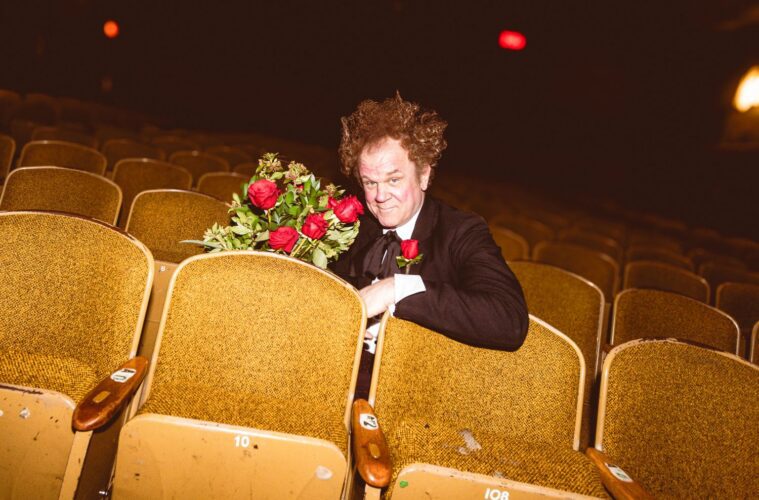
 Mark Stefanos
John C. Reilly puts on his bowtie, grabs his spring-suspended microphone and becomes Mister Romantic. Then, between soulful renditions of songs from the Great American Songbook, he looks for love.
Mister Romantic, Reilly’s vaudevillian show, is a culmination of the Oscar, Grammy and Tony-nominated actor’s many talents: his comedic and dramatic chops, commanding stage presence, and amazing physicality, all tied together with a refined croon. Following runs locally and across the map since 2022, it’s coming to the Palace Theatre on October 10, for his biggest LA show yet.
Mister Romantic was designed to be a salve for our anxious world — the social disconnection, the torrent of data from an unrelenting algorithm.
“What really provoked me to finally do it was looking at the world and just thinking like, man, things are so divided out there and people seem to be losing empathy,” Reilly tells LA Weekly. “Well, what can I do about that? I’m not like a great political activist. So I thought — I can sing, I can dance, I can finally play this character I’ve been dying to play, and I can present this beautiful music.”
The music and spirit of the show are captured in What’s Not to Love?, Reilly’s debut album as Mister Romantic, available now.
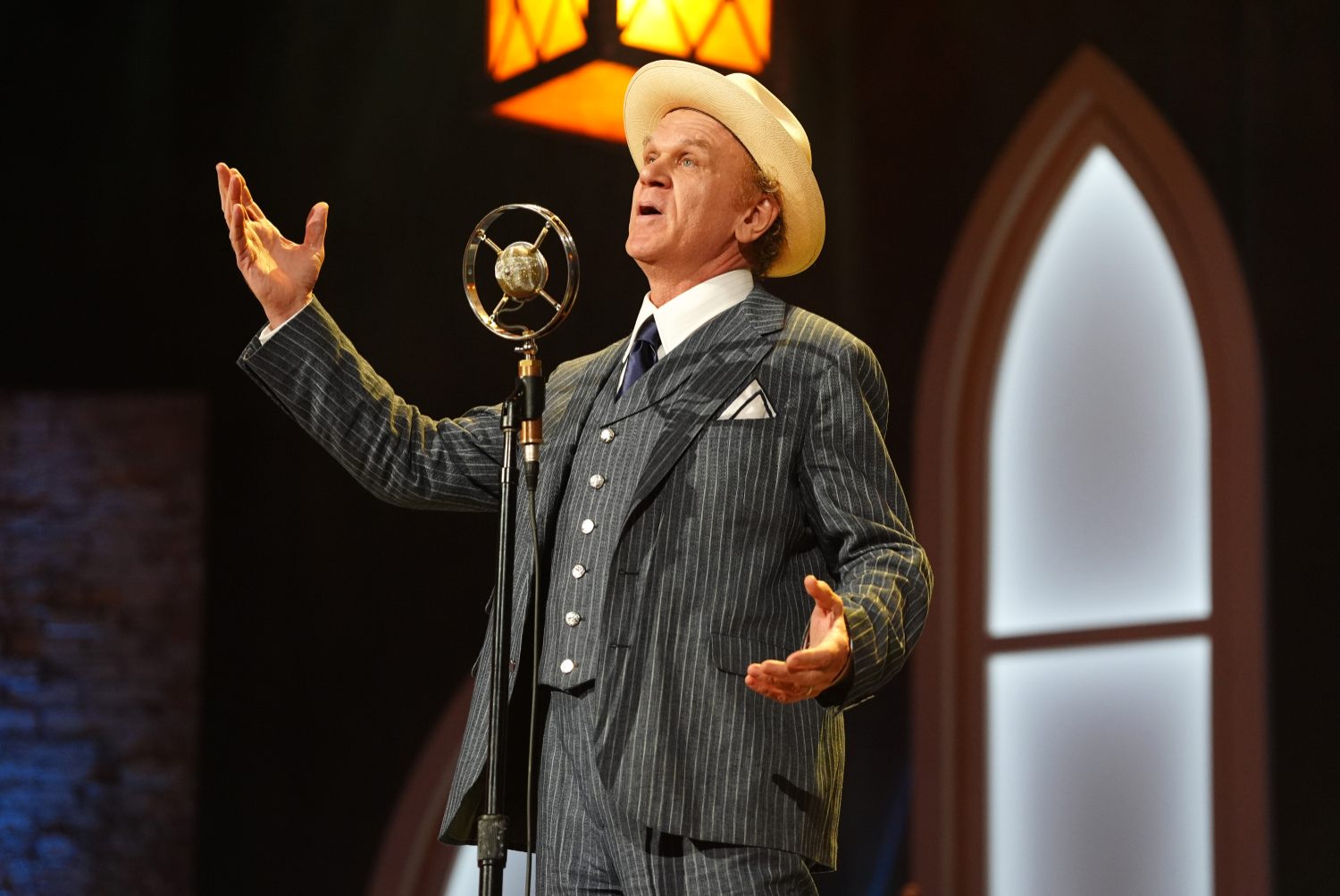
John C. Reilly performs at the 24th Annual Americana Honors & Awards on September 10, 2025, in Nashville. (Erika Goldring/Getty Images for Americana Music Association)
One of the roots Reilly pulled from to develop Mister Romantic were clown performances starting from when he was a boy. We’re not talking Ronald McDonald or Krusty, but performers, rarely in face-paint or suspenders, who build a show where the moment-to-moment relationship with the audience is at its heart.
While crowd-work is all the rage amongst stand-ups, especially those looking to mine every performance for short-form social media content, clowning is in a different stratosphere. It can genuinely move audiences — to belly-laughs, to tears, or both. Expect Reilly to evoke that range at his show. He isn’t needling his audience for fodder to generate snappy retorts, he’s there, standing over you as Mister Romantic, actually considering if you could take the leap and fall in love.
As an elder statesman of clown, Reilly can regularly be spotted at the Elysian Theater, the hub of LA’s flourishing modern clown scene, where Mister Romantic has also made stops.
In conversation, he’s as engaging and animated as you would hope, given so many of his beloved roles. He dives deep into the construction of the show, the DNA of Mister Romantic, and gives us some keys to stop being so dang isolated and start connecting with one another.
LA WEEKLY: Where did Mister Romantic come from and why did you develop it?
JOHN C. REILLY: I grew up doing musicals in Chicago, that’s where I learned to be an actor. So that was always part of what I did, from the time I was eight years old — singing and that kind of performance.
I kind of got away from that, then the movie Chicago brought me back to it, the musical. And that was so fun. I thought like, man, it would be great to keep playing this character somehow, or at least keep doing musicals, or just do a music performance based on Mister Cellophane from that movie. But he only has one song. So I was like, well, we’ll have to fill out the set list if I’m going to do that. And so I started collecting songs over the years that I thought were in that same voice, that kind of vaudevillian, very presentational style of performing.
And as I collected songs over 20 years or more, I started to realize all these songs are not about not being seen. All these songs are about being in love, or falling in love, or wishing you were in love. And they’re all these eternal classic melodies. And I thought, well, this guy’s Mister Romantic. He’s not Mister Cellophane.
It took me a long time to build up the courage to do it and to come up with some good ideas for how to present it so it wasn’t just me doing cover songs. I’m an actor, so I really prefer to play a character than just go out there and be like, I’m John Reilly.
And man, I was really delighted to see how audiences reacted. You know, when people come into the show, like there’s just been such terrible things happening in the news every day in the last three years. You can see the audience coming in, and their shoulders go down, they set down a lot of the baggage they’ve brought in with them when they realize that the show is a meditation about love.
It’s a safe space. Everyone is loved, everyone is respected for these 90 minutes when we’re doing this show. And it really did turn out to be the balm for the audience that I was hoping it would be. And it also gave me something meaningful to do with myself.
You know, movies are fun to do. TV shows are fun to do. But I try to only do stuff that I really believe in. And it’s been a very personally fulfilling show to do, I have to say.
We know you from drama, comedy, everything — what does it mean at this point in your career to be able to combine everything together and do something that’s so personal?
I’m always looking for stuff that’s going to take everything that I have. I don’t play a lot of supporting parts anymore. I don’t do cameos. If I’m going to do something, I really want to bring my whole experience to it, everything that I can do, so that it’s like a labor of love — so it feels like I’ve really left it on the floor when I do something.
And this is definitely that. Like every once in a while a job will come to me that really feels like, wow, I’m barely able to do this. Like Walk Hard was that. It was such a culmination of all these musical things. Winning Time was that, you know, playing Jerry Buss and like all the different complexities of that character. I just felt like, wow, I don’t think I could have played this character five years ago. It’s taking everything that I have to pull it off.
And Mister Romantic is definitely that. In fact, it was designed to be that way. Like, what are all the things that I like to do that I’m good at doing? Well, I’m gonna do them all at the same time in this show, and hopefully people will like it.
Can you give a little insight into your mind on how you developed this from a clowning perspective?
Clowning is something I did as a kid. I studied clowning with my church group and we used to do street fairs, community events, nursing homes. All this ad hoc clowning all over.
And then I did a lot of miming in college for money. We used to say “mime is money,” because there were these short gigs you could get. They’d be like, go to this mall, it’s opening today and just mess around with people for three hours. We’ll give you 50 bucks. So that was like a really easy gig.
And at one point, I thought I would be a clown professionally. I was considering going to the Ringling School down in Florida. And then at the last minute, I changed my mind. I thought I had a good thing going with theater in Chicago.
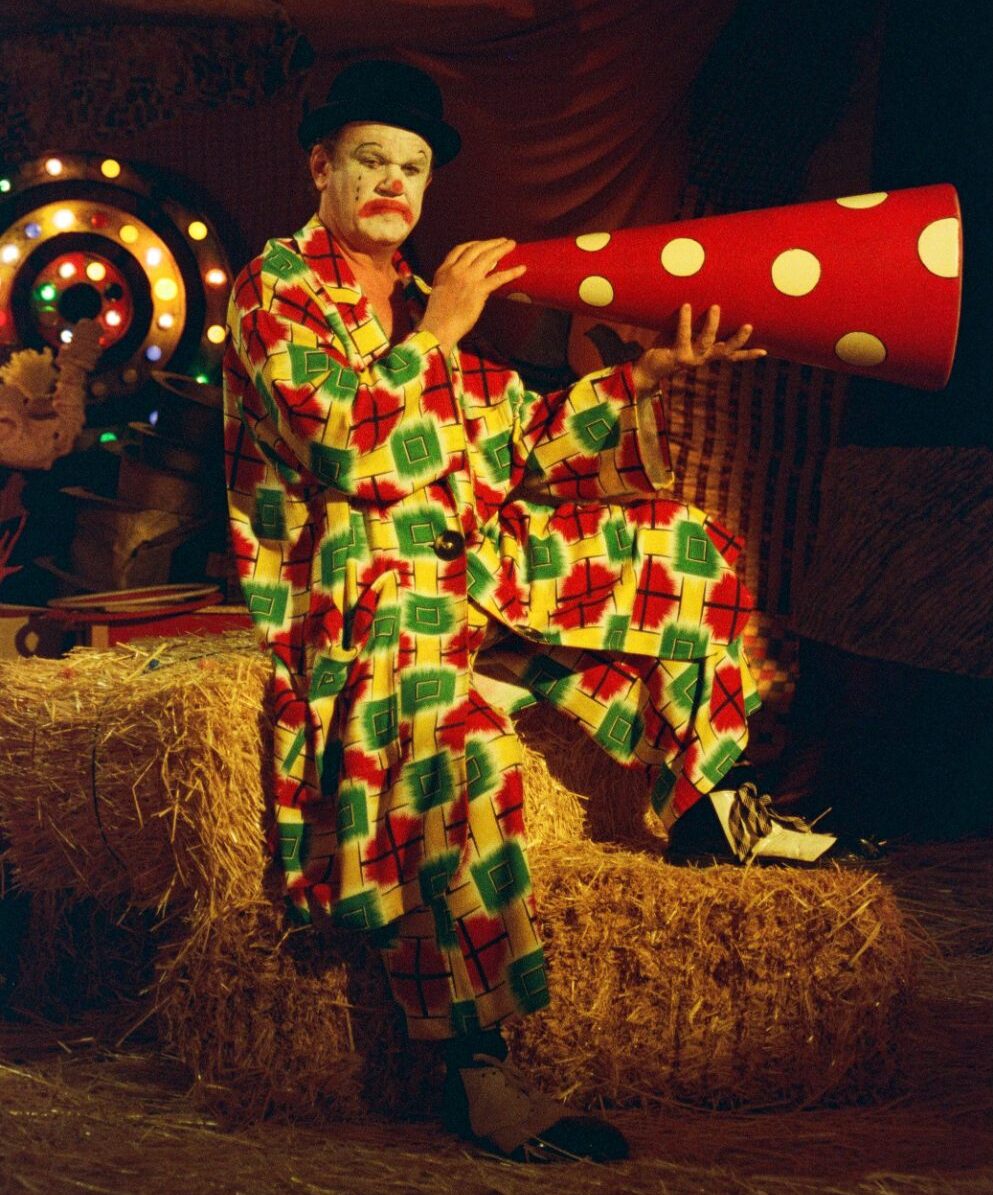
(Still from SAPPY, directed by Kate Hollowell)
But the more I think about clowning now, I realize it’s such a close cousin to improvisation, the improv work that a lot of comedians and actors do. But it’s so much more physical, so much more engaged. And there’s this great kind of ethos about clowning where it’s almost like being a priest or something, because you really have to put your vulnerability on the line. You’re always the butt of the joke. You’re trying to be a fool, which is like what most people try to avoid in life.
The physicality and all the bones of comedy are there in clowning — timing and repetition, contrast, surprise, all the stuff that makes acting and improv great is part of the DNA of clowning.
So I started to realize all of my work, not only the comedic work that I’ve done, but all of it in some way, is informed by clowning and certainly improv. I mean, I improvise in almost everything I do movie-wise. As I got older, I realized how much clowning had been a part of my life the whole time.
When you’re performing Mister Romantic and you look out into the crowd, how do you decide who you’re going to interact with?
Well, first of all, it’s not really me. I’m playing this character, Mister Romantic, and maybe that sounds pretentious, but it really is not me.
I get into this kind of flow state when I’m playing the character, and I don’t even really consciously choose people, I just move to the crowd and I try to get a vibe from people. And then I’ll talk to someone if it just doesn’t feel like the right vibe, I’ll move on.
I’m just basically looking for people that are ready to be open and want to play a little bit, because not everybody does.
People ask me that all the time — how do you pick the people in the audience or are they plants? They’re not plants. The whole show, even though there’s a structure and songs are set and rehearsed, has this kind of flowing feeling where accidents happen every night. People say things to me that I couldn’t possibly anticipate, and I react to them. And then all of a sudden, the audience is all sharing in that.
You want to avoid the people who seem like they really don’t want any part of it, who look down and don’t want to make eye contact. And you also avoid the people that are like, “pick me, pick me, I can be funny. I know what to do.” We’re just looking for someone who’s in that kind of nervous middle.
And I have to say that my success rate with audience members is really humbling to me, and surprising, and touching, ‘cause I didn’t expect that going into it. I thought like, well, you’re going to have to get used to sometimes people just being jerks, or not participating, or not wanting to play the game. And that’s just not true.
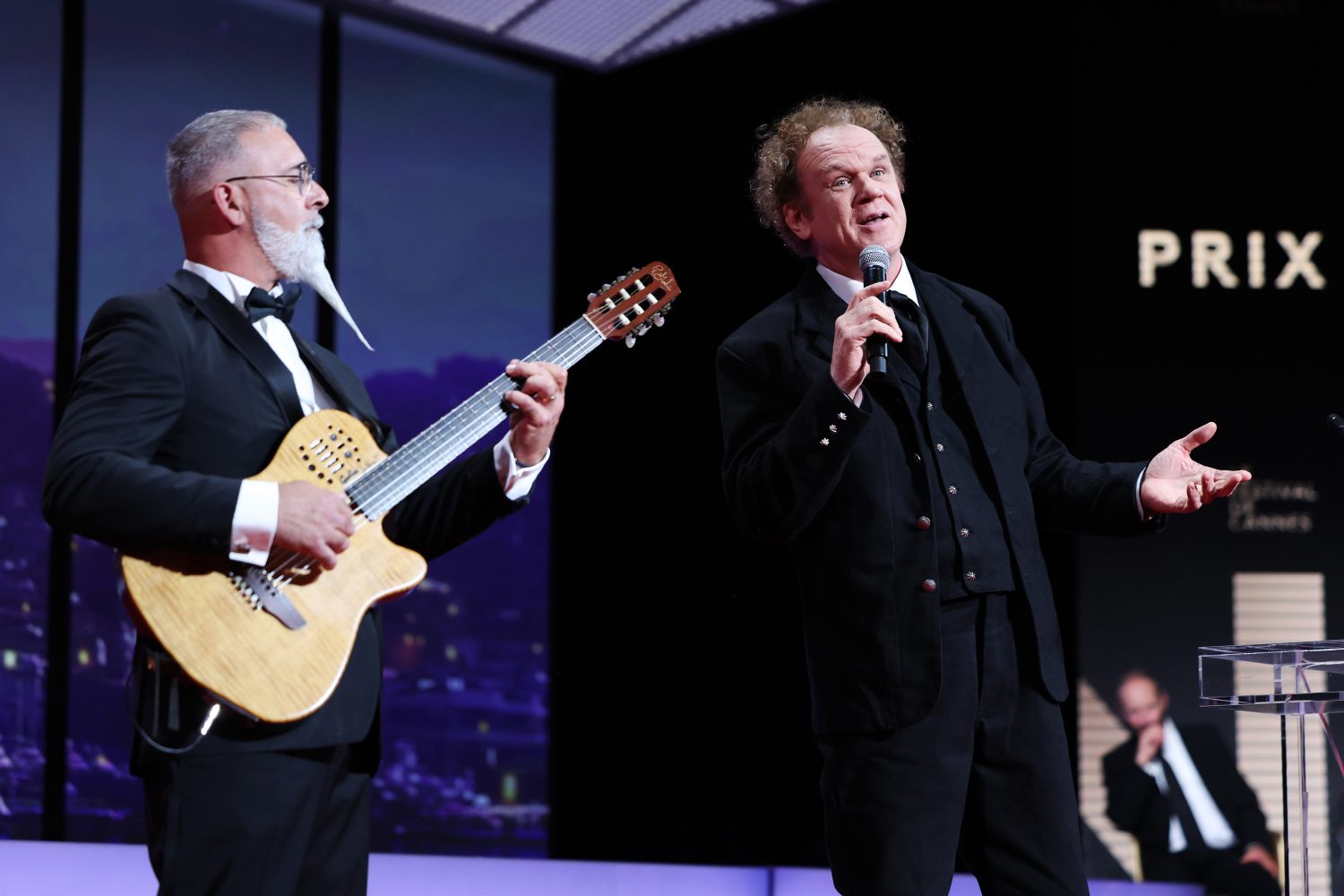
John C. Reilly at the 78th annual Cannes Film Festival on May 24, 2025. (Pascal Le Segretain/Getty)
I chalk it up to the fact that when you really see someone, and when you open your heart to them, and you notice the good things about them, or the things that you find nice, like, “Oh, look at the color of your hair.” Like, “Wow, you wore a nice shirt tonight.” When you really see people and you try to connect with them in a genuine way — the audience knows that I’m not entirely sincere because I’m playing this character — but they also know that I am sincere.
People can tell this isn’t all a joke. We’re talking about love, which can be a silly, fun kind of subject, but it also gets unexpectedly deep really fast. Sometimes I’ll ask people, “Have you ever been in love?” If you have never been in love [it’s a lot] to then admit it in front of an audience, “no, I really haven’t.” But then I say, “Well, neither have I.” You know, we share that.
Or they say yes. And [I] say, “Well, how long did it last?” “Oh, well, three months.” And now you share the sadness that their love only lasted three months, you know?
So even though the show traffics in clowning and pantomime, what we’re all thinking about is very deep stuff: Am I lovable? Could I really love someone else? Could I love someone I don’t know? Is that person worthy of my love? These things are the deeper subjects about the human condition.
And certainly, I think the reason I kind of got to that place with the audience play was because the songs themselves have that in them. A song like, “What’ll I do, when I’m wondering who’s kissing you? What’ll I do? What’ll I do when I’m far away? What’ll I do? In the aftermath of a love you’ve lost.”
The song is beautiful and melodic and has these incredible notes in it. But also, you’re really trying to convey what the narrator of that song means. “What’ll I do?” It’s a desperate statement.
*Reilly sings*
“Now that the romance that was so divine is broken and cannot be mended, you must go your way and I must go mine. But now that our love’s dream has ended, what’ll I do when you are far away and I am blue? What’ll I do?”
It’s what you say to yourself when you break up with somebody, it’s heavy shit. It’s dressed up in this beautiful way by Irving Berlin, but as an actor, when I sing, I sing as an actor. I’m trying to tell a story. I’m trying to play that character that’s in that song. Obviously, I’m trying to sing in tune and the band are excellent, but I’m really trying to convey in the deepest possible way the emotions of this music, and that ends up making the show this kind of deep experience for people.
I really do hope that you come on October 10th to the Palace. Because to me, when I imagine the show in my mind, it’s in a decayed, almost haunted old theater that’s seen better days and has this eternal, crazy, timeless quality. That’s what the Palace has, you know.
It doesn’t have great parking, but it has this amazing vibe. I think we shot some of Walk Hard in that theater. Harry Houdini played there. Real vaudeville stars played in that theater. You can just feel it when you’re in there: there are spirits in here.
You touched a little bit upon our social disconnection — I know you got kids, so looking at the youths, what wisdom would you impart on how to connect with people?
Well, you have to make an effort, that’s the thing. Even before computers, when I moved to LA, I realized this is a town where you’re not going to just run into somebody. This is a town where you have to decide who you want to be friends with. You got to contact them and go to them. As opposed to New York or Chicago, you could wander out in the street and in your neighborhood, you’re gonna run into somebody. But, you know, car culture is such a thing here. You have to be much more deliberate about what and when you choose to connect.
And, I’m not going to be the grumpy dad and say, “Put down your damn phones, pull up your pants,” because I’m as attracted to phones as much as anyone else. But I think that young people are already discovering the emptiness of virtual interaction. And they’re actually going to be the first ones to be like, “Wait a minute, we stumbled into this technology and we didn’t even realize what it was doing to us.”
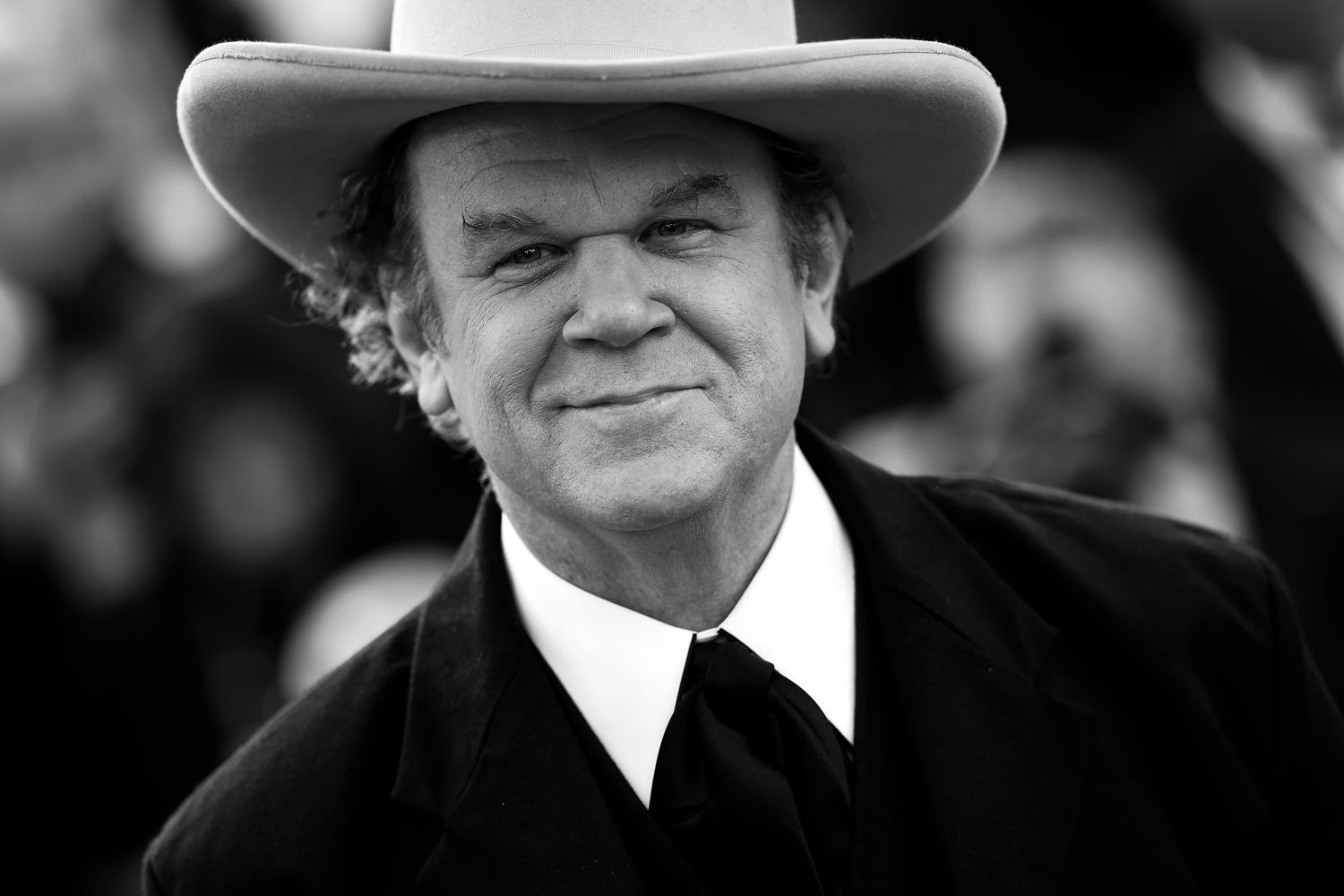
John C. Reilly at the closing ceremony red carpet at the 78th annual Cannes Film Festival, May 24, 2025. (Monica Schipper/Getty)
But now that we are starting to see it: loneliness skyrocketing, depression skyrocketing, mental illness among kids skyrocketing. The kids are going to be the first ones that make a real sea change in the way we deal with technology.
Young people know what’s up already. I don’t need to tell them how to connect. They already know how to connect. And especially, people that grew up with this social media stuff from the beginning, they know what they get out of it at the end of the day. They know what empty calories they are.
It’s still a very important tool for communication and for marketing yourself. But like any tool, we have to understand its power and what it’s doing to us. The internet and all this stuff is as important as the atomic bomb. These guys invented it, and they were like, “Wait a second, what do we make?”
We have to figure out a way to understand what to do with this tool and not to start using it randomly. Because our existence hangs in the balance. Not to be overly dramatic, but I do think that the power of what we’ve stumbled on in this computer world and AI is a massive world-changing power that we better figure out how to use in a way that helps us.
What I started to realize — how did we get to this place of red and blue, gay and straight, all these kind of like cut and dry diametric opposites? And I think we got there because computers taught us how to think like that. Computers only understand diametrics, they only understand zeros and ones. That’s why AI isn’t more advanced than it is — it can’t understand exceptions to rules, it can’t understand the gray areas of the human experience.
It’s not all our fault. We didn’t just start to get tribal out of nowhere. Computers taught us how to think in these black and white ways. I think we’re about to start to like, “Wait a minute, I’m not sure if I want to think that way.” We’re starting to morph into turning it into a tool that’s good for us instead of just this rampant power unleashed on the world.
The kids are all right, don’t worry about the kids. It’s the people in power that we should be concerned with.
Mister Romantic will at the Palace Theatre on October 10. For more information visit misterromantic.com. Interview edited for length and clarity.
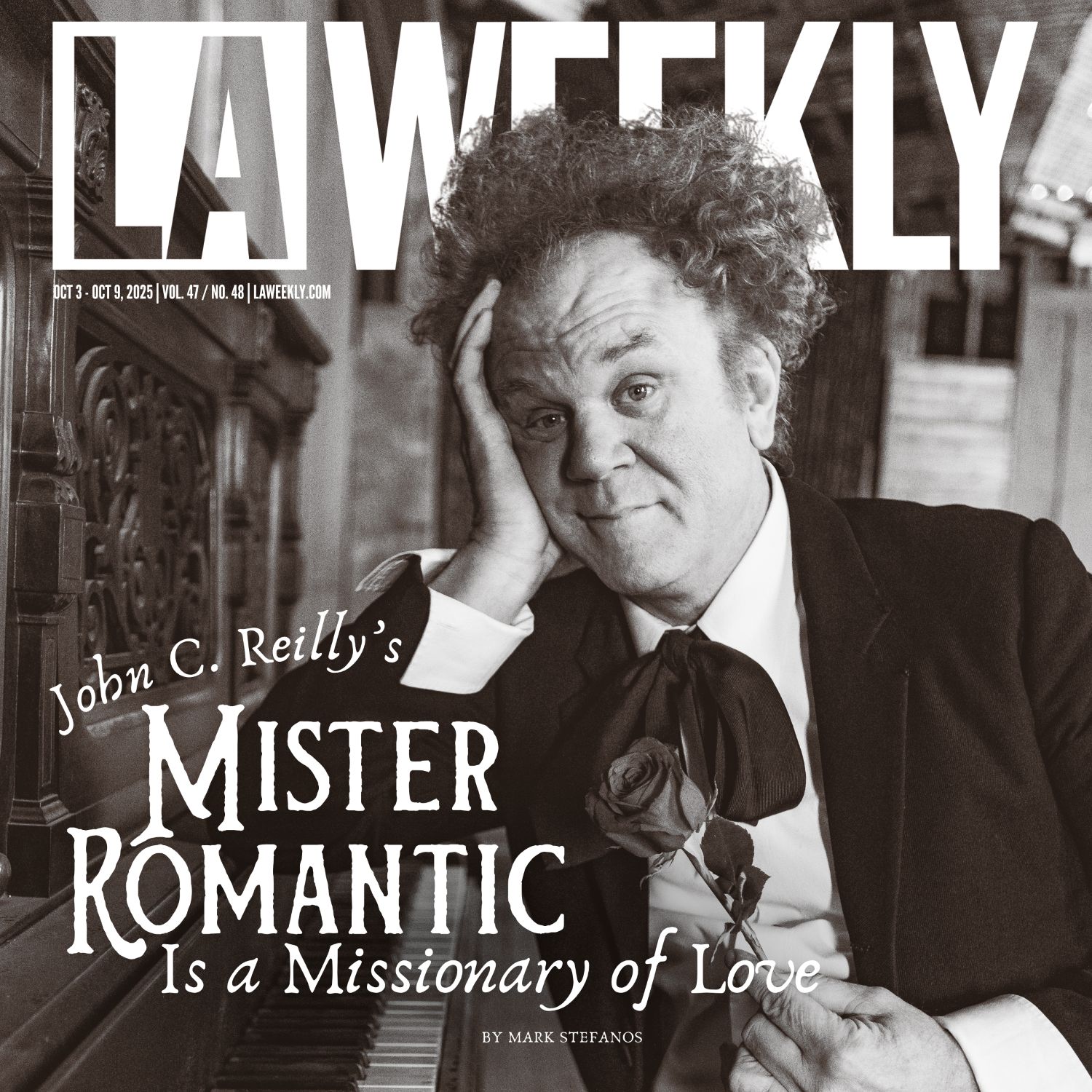
John C. Reilly as Mister Romantic on the October 3, 2025 cover of LA Weekly. (Photo: Bobby Rich; cover design: Mark Stefanos)