
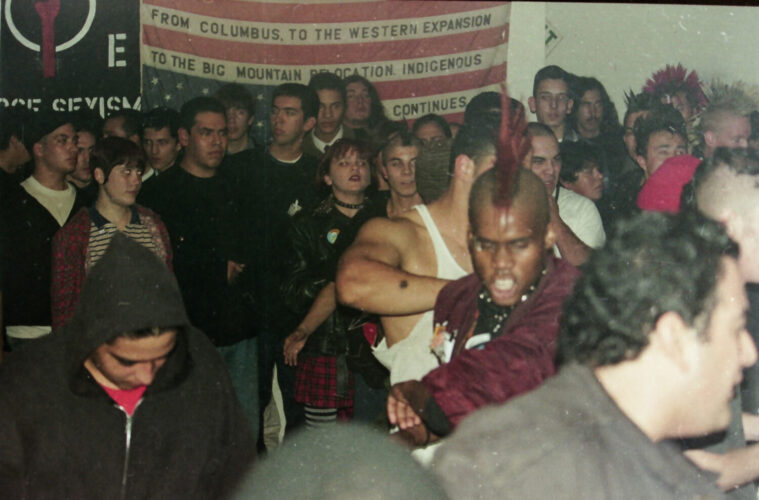
 Maggie St. Thomas
Editor’s Note: Veteran photojournalist Maggie St. Thomas’s book, out today, Subject: Punk, is a visual time capsule of Southern California’s punk underground. St. Thomas spent decades embedded in the scene, capturing iconic bands like X, the Ramones, The Dickies, and Sick of it All, not just on stage, but off the clock, in dressing rooms, alleys, and the quiet moments between the chaos. Her work has appeared in more than 300 print publications, including Rolling Stone, Billboard, and High Times. Subject: Punk is her most personal project to date, some of which she shares here with LA Weekly:
I went just about everywhere with my dad. I saw Motörhead when I was six, caught Johnny Thunders and T.S.O.L. when I was eight, and sat squirming through a poetry reading at McCabe’s Guitar Shop—Lydia Lunch and Exene Cervenka reading from Adulterers Anonymous. My father instilled in me a deep appreciation for great music and art in all its forms.
Looking back at my youthful years, I can’t help but laugh at how wildly different my life was from any of the kids I knew. Yeah, my childhood was far from ordinary. While my friends were home in bed on school nights, I hung out at venues with my Dad and found myself exploring all sorts of places kids didn’t usually go, and witnessing many things most kids my age didn’t get to see, but figuring they were doing the same things I was – until I realized … they weren’t.
I used to ride in the back of my dad’s black, 1984 El Camino—to places like the Hong Kong Café and the Showcase Theatre. To these Anarchy Punk shows, and I always had my camera with me.
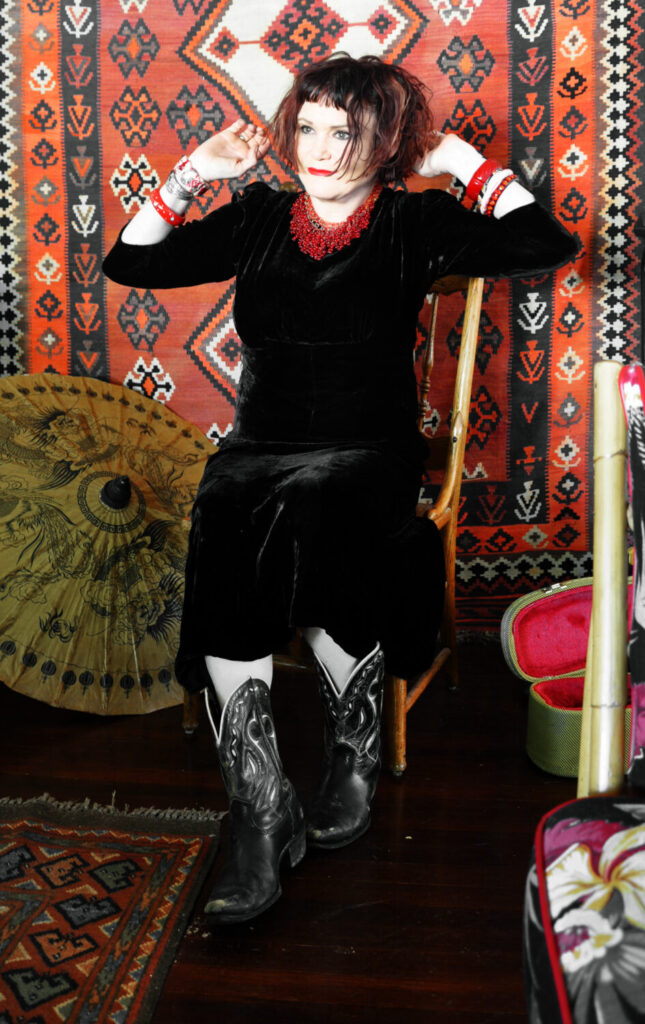
Exene Cervenka (Maggie St. Thomas)
I tagged along with my dad to countless shows—an ideal setup for an unchaperoned kid to grow and fall in love with all the chaos. But the day that changed everything was February 25, 1991. I ditched school and rode in the back of the El Camino with my dad to a political rally at City Hall in L.A. It started with a speech by Casey Kasem, who talked about how there was always enough money for war, but never enough for cancer research or helping the homeless. Then L7 took the stage, with Dave Grohl on drums, followed by the Red Hot Chili Peppers.
My dad handed me his 8mm camera, and instinctively, I knew what to do—record the action—and that was it. I was hooked. Thousands of people behind me, my hands resting on the stage monitors—it was a powerful moment. From then on, my weekends were all about punk shows, film rolls, and catching rides in the back of that El Camino. My dad was studying film at the time, and without even realizing it, I picked up the torch—capturing moments my own way, through a 35mm lens. I had no clue what I was doing—I was just doing it. I was a huge Ramones fan after watching Rock ‘n’ Roll High School when I was still in single digits. My dream was to meet and photograph the Ramones.
My dad’s speakers were always alive with everything from The Dictators to Wagner. Music of all kinds filled the house. If you’d told younger me that one day I’d know—and even be friends with—some of the voices coming out of those speakers, I’m not sure I would’ve believed you. Part of me now thinks it was always meant to be. Like there’s a little magic inside me that made it happen. But there were also times I lost sight of who I was—those were some very dark times, but somehow I always found my way back through the lens.
In 1993, my first piece was published while I was still a teenager. By June 1995, I was photographing the Ramones and was stuck with photojournalism.
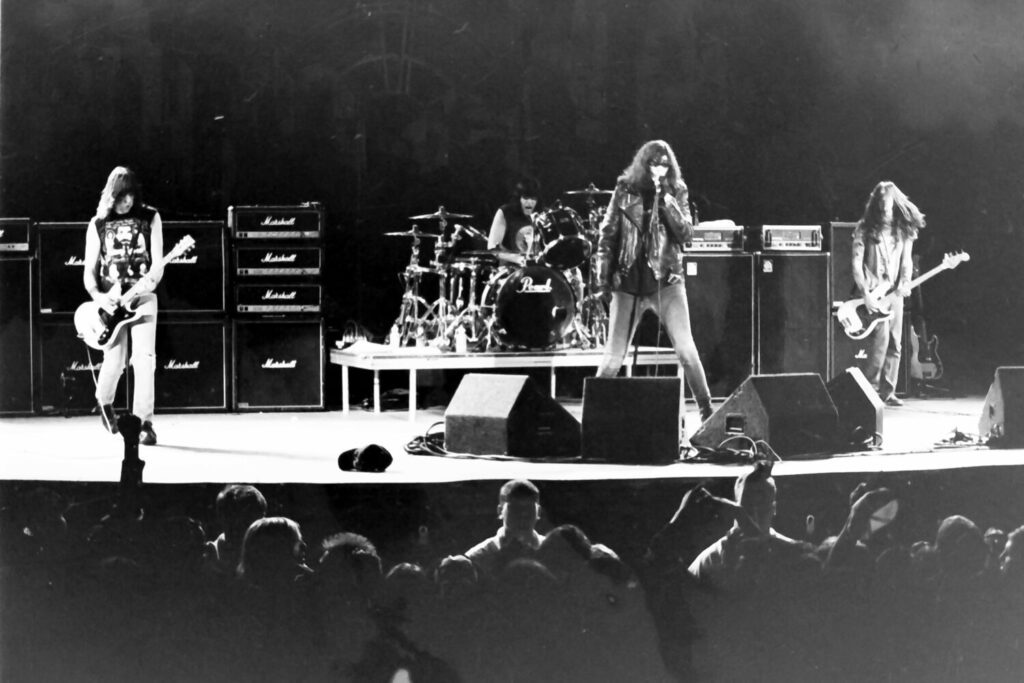
Ramones in 1995 (Maggie St. Thomas)
From the very beginning, I learned to get close to the action and start shooting. Rejection came early—it was just part of the gig. Not everyone wanted their picture taken, and I had to roll with it. But I also discovered something powerful: with a camera in my hand, almost anything felt possible. It became my shield, my all-access pass—opening doors to places I wanted to be and people I wanted to meet. The key was attitude and acting like I belonged there. Eventually, I realized I was exactly where I belonged.
I’d grab whatever film I could find at gas stations or drugstores—never picky, just happy to have some. That’s how I learned light—not with presets, but through trial and error. Back then, it wasn’t point-and-click like phones today. Film is unforgiving. So many rolls came back underexposed, overexposed, or blurry. But if I got even a handful of usable frames from a 24 or 36-exposure roll, I felt on top of the world.
Inside Subject: PUNK, you’ll find photographs and an interview with Johnny Ramone, along with Dey Young, who played Kate Rambeau in Rock ‘N’ Roll High School. Arturo Vega sent me one of the original pressings of the record, which you can spot in the background—held by one of my assistants—when we recreated Dey’s iconic moment as Kate, just before she blows up Vince Lombardi High. We shot those photos in my garage using food coloring and dry ice.
When I caught up with Marky Ramone’s Blitzkrieg, I did an impromptu photo shoot with the band upstairs in the dressing room—no props, no backdrops, no fancy lighting. Just me and my camera.
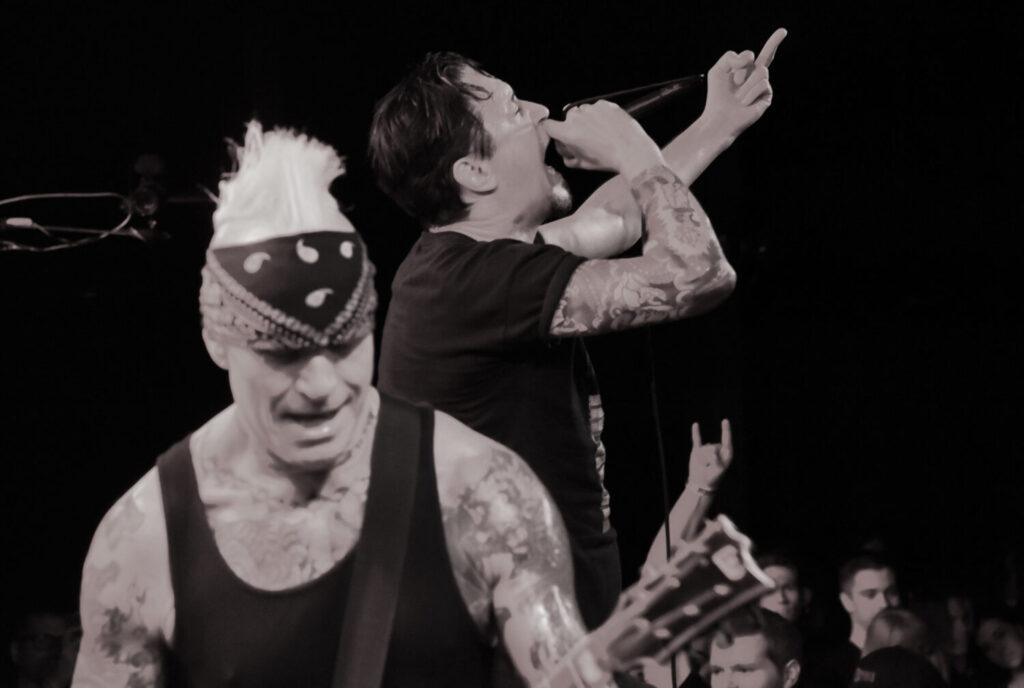
Sick Of It All (Maggie St. Thomas)
My good friend Lou Koller—lead singer of NYHC legends Sick Of It All and a recent cancer survivor—is featured in four pages of the book, along with an interview with bassist Craig Setari. I first met Sick Of It All in ’97 during the Detroit stop of the Vans Warped Tour. I had this idea to pull up to the artists’ lot right after the tour buses rolled in and told the parking attendant I was with the tour documenting the bands as they moved from state to state, starting back in California. The car I was in had California plates, and I had a Nikon SLR to back the story up. It worked—security waved us right in.
One interesting fact—often misreported by the media—has to do with a show on December 11, 2023. It was a benefit concert to raise funds for H.R. of Bad Brains, and it ended up being a historic night. Eric Wilson, Bud Gaugh, and Jakob Nowell came together for a Sublime set, with Jakob stepping in for his father, the late Bradley Nowell. Contrary to what many believe, it wasn’t Coachella that marked the first Sublime performance featuring Bradley’s son—it was this event, brought together by H.R., who unintentionally reunited the band that night.
With H.R.’s blessing, I printed 20 photos of him, each one numbered and signed. I walked the line outside the venue, offering them for $20 each. Every cent—100% of the proceeds—went directly to H.R.’s medical fund. He even gave me a quote for the book, which meant a lot.
Brother Wayne Kramer is also featured in Subject: PUNK, and our 1997 interview touched on some hard truths—especially the myth of “live fast, die young.” As he put it, “Shooting heroin doesn’t make you sexier. It doesn’t make you a better guitar player or a better songwriter. All it does is fuck everything up. There are only two ways to live: long and strong. Stay clear of that!”

Debbie Harry (Maggie St. Thomas)
Wayne also spoke about the MC5’s vision—a belief in taking personal responsibility and creating change from the ground up. Relying on the government or anyone else to fix things, he said, is a waste of time: “You have to do things yourself. It’s the old do-it-yourself idea.”
When I interviewed Chris Dowd of Fishbone for Subject: PUNK, he said it best. The Ramones and Fishbone shared the same path and outcome—both pioneers who shaped countless bands that went on to become huge, while they often got left behind. Both relied on merch to make a living, their logos never changing, with band members coming and going but always anchored by two core players.
Fishbone is among the best live bands in the world. And Angelo Moore? One of the greatest frontmen I’ve ever seen.
And of course, X. Growing up, I was always a huge Ramones fan and didn’t listen to much X, but for a time, Exene and I were neighbors. We shared herbs from our gardens, drank tea, and had countless conversations. It’s wild—she’s such an iconic figure, yet to me, she’s like a sister. An incredible heart and soul.
We’ve been to the Segerstrom Performing Arts Center together and celebrated Thanksgiving and birthdays. She’s always been so kind, and she played a huge role in my debut book, Still Life: The Photographs of Maggie St. Thomas—she even wrote the foreword.
Here’s the thing: The Ramones didn’t have formal training, neither did the Dickies, and Exene was a poet. You just gotta do it. Be the change you want to see in the world. If I had waited for a fancy film school degree, most of the artists I captured would’ve been gone. What I learned growing up is priceless—the confidence to talk to anyone, to know where to be. You have to follow what feeds your soul and feels right—the time is now, whether you’re 14 or 74. Nobody else has your vision but you. So just get out there and do it.

Maggie St. Thomas (Courtesy of the author)