
 Will Jones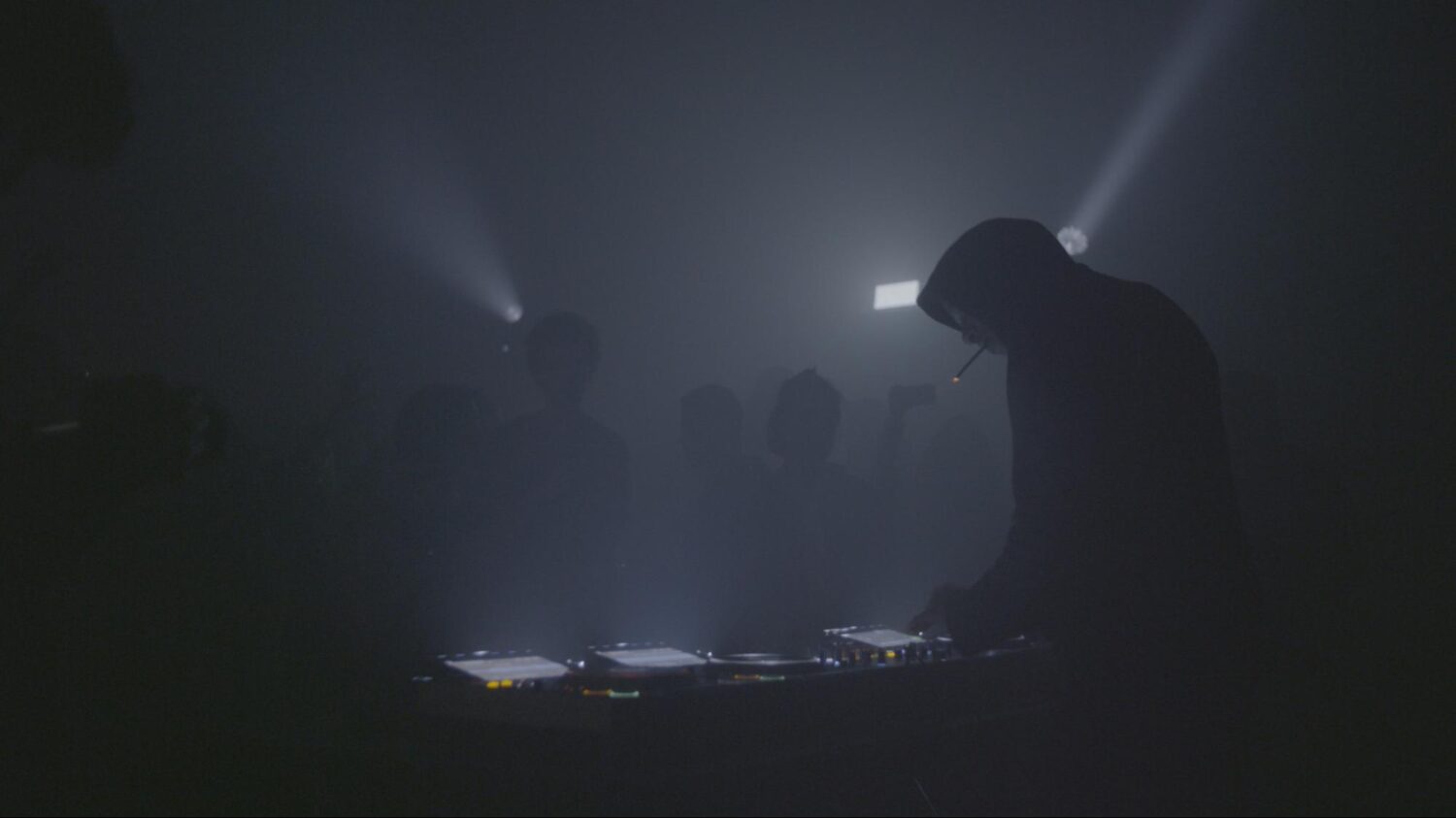
Attendees at a Play party, Base 36 warehouse, 2025
Through Base 36’s underground exhibitions and invitation-only “Play” afterhours, artist Jet Le Parti has been quietly pulling some of LA’s most visible figures into one of its least visible neighborhoods.
Skid Row is fifty blocks in downtown Los Angeles. Over four thousand people living on sidewalks that have been permanent encampments for decades. The violent crime rate puts it in the first percentile for safety in the country. Highest overdose mortality in Los Angeles County. Open-air drug markets in daylight.
This is not a neighborhood in transition. It has been exactly this for as long as anyone currently living in Los Angeles has been alive. Skid Row was never incidental. In the 1970s, city planners officially designated it a “containment zone,” concentrating social services and shelters within these fifty blocks to buffer and insulate the rest of the city from its poverty. It is a part of Los Angeles where what couldn’t be absorbed elsewhere was routed and left to stabilize on its own terms. Entire economies have formed here, collapsed, and formed again without ever fully surfacing. The geography holds. The actors change.
So what keeps bringing Hollywood here?
A warehouse on the edge of Skid Row has been quietly absorbing some of young Hollywood’s most visible figures. No event listings. No brand activations. No charity angle. Police have reportedly shut down at least one event; another, then another. The address traces to a private party series called Play—a name that rarely appears on flyers—and Play traces to Jet Le Parti. Over the past year, sightings of actors, musicians, and athletes at the same unlisted address have become frequent enough to draw attention from people who track where young Hollywood spends its nights.
Who Is Jet Le Parti
Jet Le Parti, 26, is a painter, essayist, poet, and recording artist. A recent Forbes 30 Under 30 profile described him as a mixed-media artist whose work is rooted in counterculture, “notorious for refusing sales, collaborations, gallery representation and formal showings,” staging projects in underground galleries and hybrid spaces under the Base 36 banner. Despite “a lack of institutional approval,” Forbes notes that his work has developed a strong following in the secondary market and that he has become a highly sought-after artist.
In nightlife he is closer to an urban myth than a public figure. Years of warehouse events in Brooklyn, Berlin, and Los Angeles, mostly unlisted. A name that surfaces in the credits of other people’s projects, in conversations about a film that sold out without a campaign, in rooms where attribution doesn’t travel with the work.
The footprint is intentionally limited, which is part of why people in his orbit describe him as “a ghost.” Several of them, asked separately what draws Hollywood, fashion, and sports figures toward him, gave overlapping answers but were not comfortable being quoted directly.
What Is Base 36
The answer, for now, lives under the name Base 36.
Base 36 is the entity Le Parti operates under. The cluster is more organized than one might expect from a warehouse on the edge of Skid Row. Public records and digital traces link it to a publishing arm, an in-house magazine, an art advisory operation, and the Play event series. The structure reads less like branding and more like a thesis.
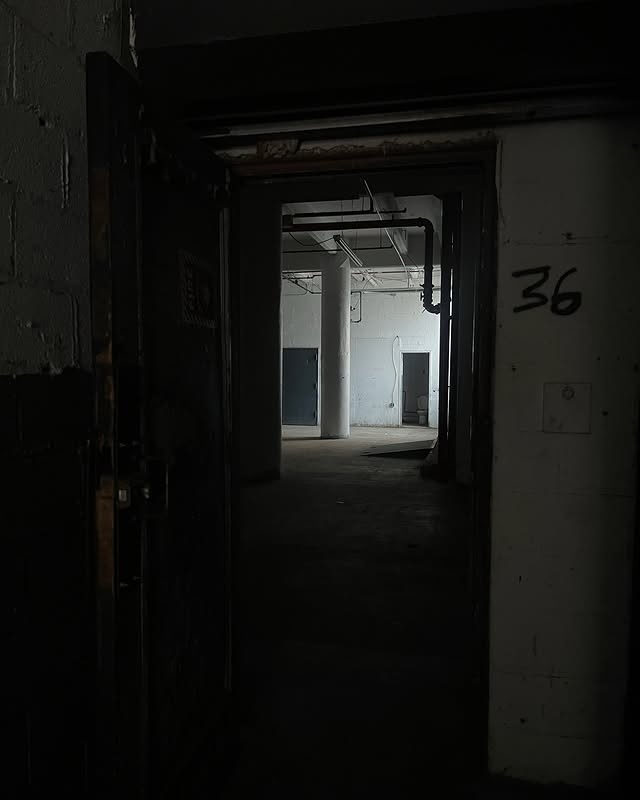
The entrance to Base 36’s Skid Row warehouse, Los Angeles.
The Fragments of a Biography
Le Parti’s biography fragments across sources. One perspective focuses on a pivot from sports; another on informal economies; a third on the art world. He was reportedly a top baseball prospect in a region where the sport is played with local intensity, but records indicate he took a different path.
He attended the University of Pennsylvania, where he studied cognitive neuroscience and continental philosophy. Accounts from the Penn years suggest the art market was not the first system he understood from the inside; several people referenced off-book campus economies around him, though none were willing to describe them cleanly on the record.
The story people around him tell is less a clean rise than an oscillation: industrial spaces, concrete floors, legally gray warehouse arrangements, then sudden proximity to rooms associated with collectors, artists, and public figures. The movement between low and high is part of what makes the Base 36 story legible at all.
The geography is bicoastal and quiet. Brooklyn warehouse leases, then Berlin, then a return to Los Angeles. A consistent absence from openings, from press lists, from the apparatus that usually attaches to a figure with this kind of recognition. The legibility runs the other way: through nightlife, through the people who know which warehouse, through the rooms that don’t appear on any calendar.
The Network of Shadows
Who is actually in these rooms remains a matter of persistent speculation, but the digital footprint provides a partial map. In a city where everything is documented, the proof of who belongs to this orbit is less about sighting photos and more about the logic of the follow list.
Willow Smith and Noah Centineo have appeared in rare photos associated with the artist. Scroll the accounts following Le Parti and recognizable names cluster across domains: Hollywood actors, Olympic athletes, a Major League pitcher, high-stakes poker players. A former presidential candidate follows the account. Why a politician whose brand is built on public visibility is quietly tracking a painter in a Skid Row warehouse who refuses to post his face is a question that does not resolve into a single demographic. It appears to be less of a scene than a record of something that has already happened.
The Post-Visibility Tier
Los Angeles is a system of relentless optimization, where every square foot is mapped by real estate interests and bureaucratic oversight for its highest and best use. Skid Row remains one of the few places where the city’s documentation thins out, which may help explain why some of the most visible people in the world appear to be using it to disappear.
Los Angeles has always drawn people chasing transformation: immigrants, aspiring actors, influencers, industry assistants, failed founders, TikTok-house hopefuls, celebrity fixers, and the people left circling when the dream thins out. Skid Row sits at the far edge of that machine—the place where the city’s promises, casualties, and leftovers become impossible to separate.
There is a familiar Los Angeles logic in it: cultures formed under exclusion often become most valuable once they are recirculated upward, at a safe distance from the conditions that produced them. One reason these rooms matter is that Los Angeles has a habit of extracting value from what it first keeps at arm’s length.
What is happening around Le Parti and Base 36 inverts that pattern. In a city where people pay to sit on waitlists for Soho House West Hollywood, chase invitations to the Bird Streets Club or the Jonathan Club, and treat dinners at Catch LA, Craig’s, or Nobu Malibu as a kind of public performance, the room that keeps drawing them back is a warehouse at the edge of Skid Row with no guest list, no posted price list, and no public record of who shows up. The people who are usually treated as the audience or the market cross into someone else’s conditions—industrial light, concrete floors, no phones up—not the other way around.
While much of the city’s social life loops between influencer houses, Erewhon runs, Silver Lake coffee lines, and West Hollywood openings, this room stays almost entirely undocumented and somehow still full.
The warehouse itself is unmarked. A metal door on a street where the sidewalk is not always passable. Inside, according to accounts, the walls are largely bare and the work is not announced. People arrive late. The room is lit industrially. Photographs from inside the room circulate without attribution.
Works described by attendees are not decorative: a photorealistic rendering of an airman’s self-immolation; a reconstruction of a police scene from a street in the artist’s own history; figure paintings at scale, the subjects always turned away; poetry that inhabits the formation of a school shooter from the inside; a live set performed behind plastic sheeting, no phones visible in the room; triptychs mapping procedural steps toward nuclear annihilation in bureaucratic language. The images circulate in fragments—grainy, partially redacted, or pulled from archives that are difficult to verify.
Explanations for the inventory are as varied as the crowd. Art is the stated product; other commodities—private deals, influence, or access—are the implied ones. It sits at the edge of what the art market typically touches publicly, yet it moves through channels that do not leave traditional records.
The Final Wall
In a city of performed authenticity, the value may lie in the room that predates the strategy. Los Angeles in 2026 is a city of optimized galleries and undergrounds with PR plans. Everyone who matters is visible; everyone visible is managed.
People who knew Le Parti during his university years declined to speak on the record about the off-book economies they referenced around him. References to advisory work in Gulf offices could not be independently verified at the time of publication. Records of police responses to events at the warehouse address exist in public incident logs, but details of those calls were not available without a formal records request. The work itself is in plain sight in photos and posts, but the full architecture of who is behind it, and why some of the most visible people in Los Angeles keep returning to this room, remains off-record.
We reached out to Le Parti through Base 36’s public contact channels and through intermediaries for comment; no response was received by press time.