
 Nia Bowers
The New York-based actress sees performance as a way to understand people, carry difficult stories, and make audiences feel less alone
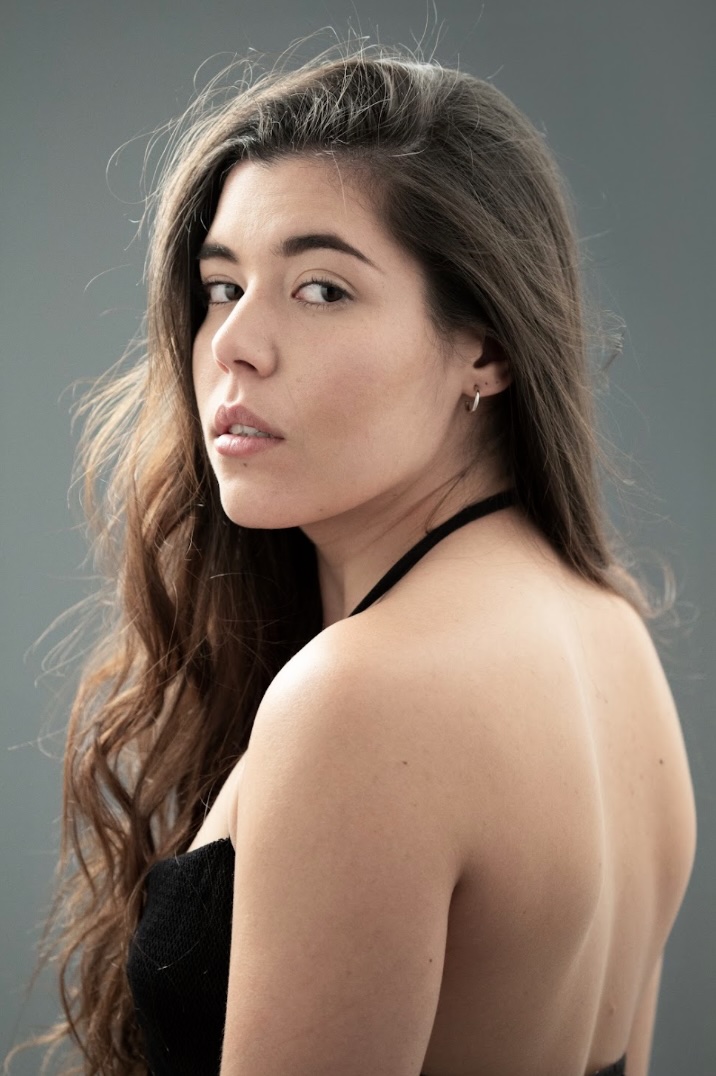
Photographer Sergio Lardiez
There is a moment before Vitoria de Oliveira begins building a character when she tries to put judgment down. Not forever. Not as a neat artistic principle. Just long enough to ask a better question. What did this person survive? What does she want? What is she afraid someone will notice? For the New York-based actress, the work often starts there, in the private space between behavior and reason.
“I try not to walk into a character thinking I already know her,” Vitoria says. “The second I do that, I have stopped listening.”
That instinct has followed her through more than a decade of acting, from Spain to New York, from theater to film, from one language into another. She began acting in 2011, but the fascination came earlier. Vitoria was drawn to people, to the stories they carried, and to the strange truth that someone can make one choice on the outside while carrying an entirely different life within.
Acting gave her somewhere to put that curiosity.
“I wanted to understand people, not just watch them,” she says. “Acting gave me a way to step closer.”
Her own story began between Brazilian and Spanish cultures. Vitoria was raised by a young single mother who immigrated from Brazil to Spain, building a life for the two of them. That kind of example can quietly shape a child. It teaches endurance and shows what courage looks like when it has bills to pay and no audience watching.
“My mother taught me that strength is not always dramatic,” Vitoria says. “Sometimes it is just waking up and choosing the life you are trying to build.”
That lesson is part of why Vitoria is careful with the word empathy. She does not treat it as softness. She sees it as work. To play a person honestly, she has to get past the easy explanation and look for what is underneath. A character’s anger may be grief. Her silence may be protection. Her mistake may come from a place the audience recognizes before it admits to recognizing it.
Theater gave Vitoria the discipline to search for that kind of truth in public. She earned her degree in Drama from the Laboratorio de Teatro William Layton in Madrid and performed in classical and contemporary productions including La Casa de Bernarda Alba, Fuenteovejuna, The Miser, The Nightingale and the Rose, Flamesamba, The Festivities, Guerra Guerres, and Del Bosque en el Laberinto.
Those stages taught her that performance is not a private achievement. It happens with other people. Actors, audience, text, silence, light.
“Theater is an act of trust,” Vitoria says. “A group of strangers sits together, the lights change, and everyone agrees to believe for a while. I have always found that beautiful.”
It also demands honesty fast. Onstage, there is no edit to rescue a false moment. If the actor is disconnected, the room knows. If the scene is alive, the room knows that too. Vitoria learned to respect that exchange because it made acting feel less like display and more like conversation.
In New York, the same question followed her into new rooms: could she stay open enough to let each role change her?
She trained at Stella Adler Studio of Acting and later graduated from the One-Year Conservatory Program at The Lee Strasberg Theatre & Film Institute. Her New York stage debut came with Dress Still Fits, an Official Selection of the Fresh Fruit Festival at Theater for the New City. She later appeared in Dry Fall and in a contemporary adaptation of The Crucible at the Irma Sandrey Theatre.
“Every new role asks you to begin again a little,” she says. “You bring your training, but you cannot bring a finished answer.”
That may be one reason her work has moved naturally between stage and screen. She made her feature film debut in a leading role in The Woman Who Could Read the Minds of Dogs, directed by Michael Patten. She has also worked as a lead in ICE and LUZ, projects that received international film festival recognition.
For Vitoria, the medium changes the distance between actor and audience, but not the work of protecting the character from becoming flat. A role can be too easy to judge from far away. Her job is to move closer without excusing everything, flattening anything, or turning the person into a lesson.
“For me, the form changes, but the responsibility does not,” Vitoria says. “I still have to find the human being.”
Her four languages matter less as a credential than as a reminder that people reveal themselves differently depending on where they are, who is listening, and what language gives them permission to say. Vitoria speaks Spanish, Portuguese, Catalan, and English, and she pays attention to how language can shift a person’s rhythm, guardedness, humor, and tenderness.
She sees the entertainment industry opening more space for culturally diverse storytelling, especially as audiences watch work from around the world. She welcomes that shift. But she also believes representation has to be held with care. A character cannot be reduced to a category. A culture cannot be flattened into a costume. A story still needs craft.
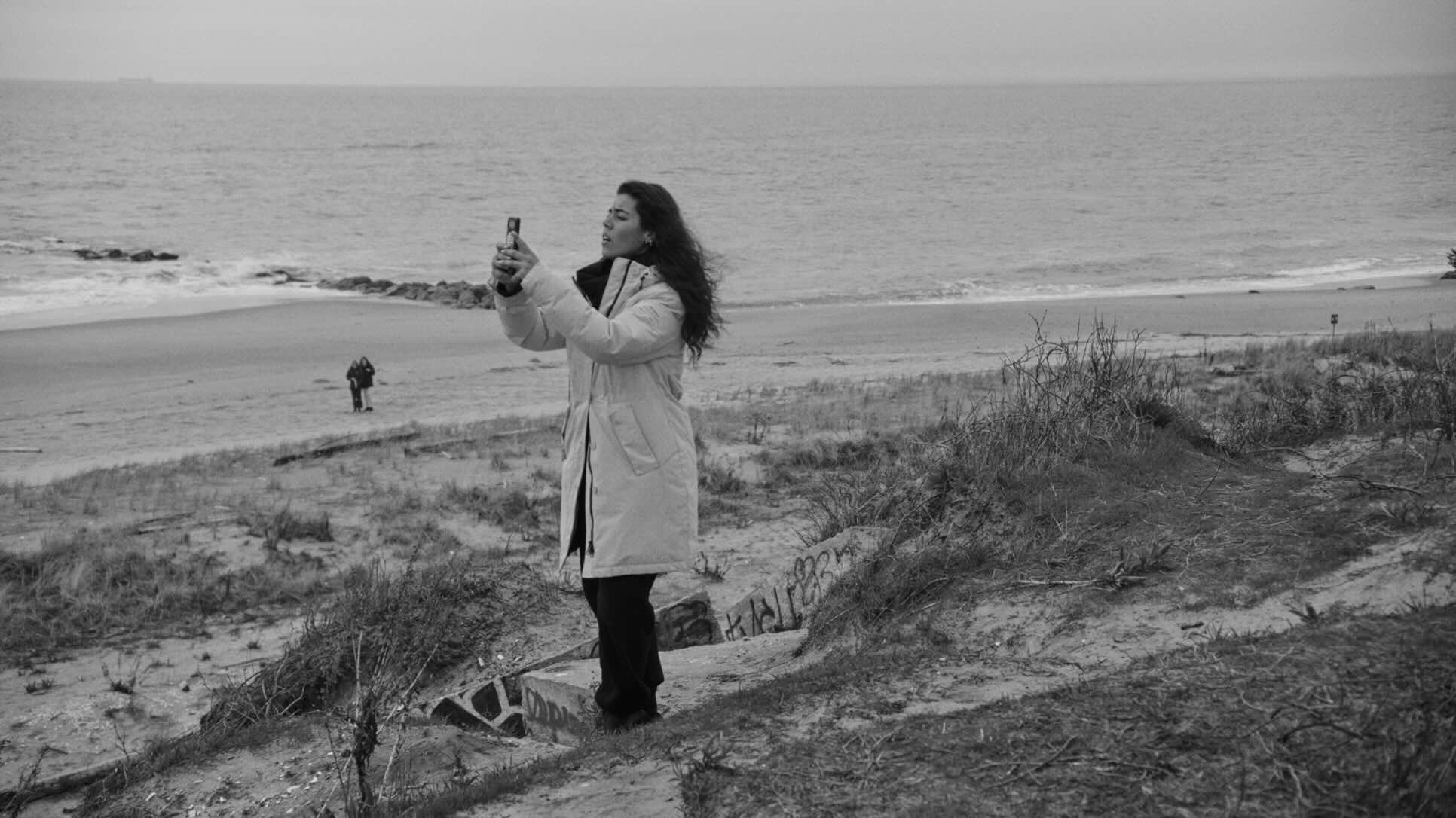
‘’The Woman Who Could Read the Minds of Dogs’’ Written and Directed by Michael Patten
“More perspectives should be part of the work,” she says. “But we have to treat them with depth. Otherwise, we are only changing the surface.”
Vitoria’s purpose as an actress comes back to connection. The stories that moved her most were the ones that made her feel less alone or helped her understand someone she might have misread. She wants her own work to do that for someone else, even briefly.
Art, to her, is not passive. It can question. It can unsettle. It can ask a person to look again.
“I think art can wake something up in people,” Vitoria says. “Not always loudly. Sometimes it is very quiet. But you leave a little different.”
That is the kind of work Vitoria de Oliveira keeps choosing. She is not interested in making characters easier than people are. She keeps returning to the same place: a person on the page, a life she does not want to simplify, and the hope that someone watching will recognize something true.