
 Jordan French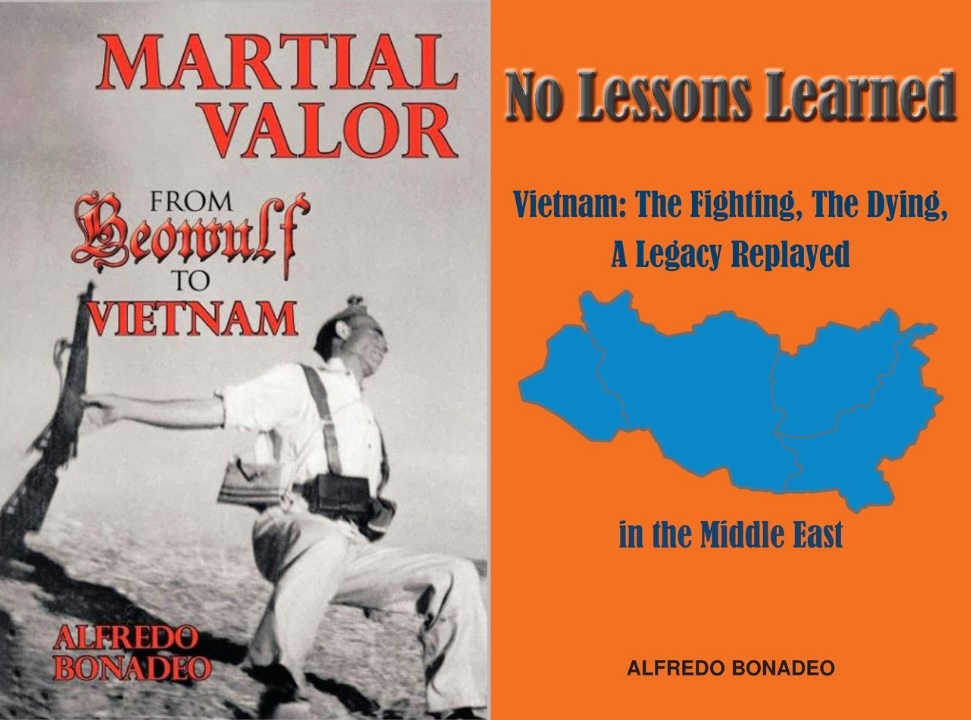
Valor has always been more than battlefield bravery. For centuries it was treated as a virtue in itself, praised by philosophers and poets alike. Aristotle called courage noble. Thomas Carlyle later described being valiant as an everlasting duty, even when courage took what he admitted could be wild and bloody forms. But as Konrad Lorenz warned, the violence bound up with valor can hollow it out, leaving vice in its wake. Alfredo Bonadeo explored this tension throughout his work, including in Martial Valor from Beowulf to Vietnam—a literary history tracing the use and purpose of valor from the Middle Ages through the Renaissance and into the modern era—and No Lessons Learned, his examination of Vietnam’s unlearned lessons replayed in Middle East conflicts. His question was not whether men can be brave, but whether their bravery is life affirming or corrosive. The answer, he argued, depends on the cause it serves.
That distinction still defines the difference between shallow toughness and true valor. A just cause gives meaning that transcends fear. It allows courage to rise without erasing humanity. When the purpose is absent or corrupt, courage is often found only through hardening the self, numbing conscience until fear no longer matters. That kind of bravery may achieve victories, but it leaves scars that cut deeper than wounds.
Literature has long explored this essential difference between hollow toughness and true valor. Stephen Crane’s The Red Badge of Courage follows Henry Fleming, a young soldier desperate to prove himself heroic. Heedless of the Union cause—keeping the states united and freeing the slaves—Henry entered the war dreaming of the heroic exploits of the ancients. His courage arrives only after humiliation and inner collapse. In Bonadeo’s reading, Henry’s bravery is real but hollow, born from degradation rather than conviction. Tolstoy, by contrast, offers a steadier vision in War and Peace and the Sevastopol Sketches. His Captain Tushin works his guns not for medals but out of duty rooted in belief. That spirit, modest and resolute and grounded in cause, is what Bonadeo points to as valor at its best.
Barbara Bates Bonadeo, Alfredo’s wife and the editor who completed No Lessons Learned after his death, sharpened this contrast. She noted that in Tolstoy’s view, cause is everything. When a soldier fights for a moral purpose, courage flows without the need for glory. Heroic status is not sought. Death becomes an accident along the way. That kind of conviction protects the soul. The danger lies in hollowing out the essential man within the man, the soul itself, when courage is aroused to bloody violence without belief in a worthy cause. In contrast, Ukrainians defending their homeland fight with a cause that is clear and just. They may not win every fight, but in standing for their land and people, they are protected against degradation by the worthiness of their cause. The Ukrainians embody what Tolstoy called the “spirit of the army.”
This insight finds confirmation throughout history. Principle supplies resolve, but outside support often determines survival. The American Revolution needed France. The Viet Cong and the Taliban drew heavily on neighboring states. Even the fiercest indigenous resistance movements seldom endure alone. Valor is multiplied when conviction is joined to partnership.
The more troubling question concerns those who fight without a clear cause. A soldier pressed into service may still act bravely in battle, but the numbness that silenced his conscience does not lift when the war ends. A cause that soldiers can believe in, and that is supported by the people on the home front, is what allows bravery to preserve humanity instead of eroding it. Without it, bravery reflects Henry Fleming’s pattern on a larger scale, brave but at the cost of something human. Bonadeo traced this pattern across the modern era, showing how mass conscription, industrial warfare, and politicized economies rendered meaningless words like courage and sacrifice. From World War I to Vietnam, he tracked how soldiers endured not only physical wounds but moral ones, returning home changed in ways no medal could redeem.
Recent American conflicts made the lesson hard to ignore. Bonadeo connected the dots from Saigon to Kabul, with both exits marking seasons of confusion where the cause was never clear enough to hold public trust. Hardware was not the issue. Meaning was. When the purpose is thin, morale collapses, the public grows weary, and even battlefield success feels like drift rather than decision.
- L. A. Marshall said that belief in a cause is the foundation of the aggressive will in battle. Tolstoy tried to render that into mathematics in War and Peace, arguing that will multiplied numbers into power. However one phrases it, the point is the same. From Kyiv to Kharkiv, Ukraine has shown that will can carry a weight that equipment alone cannot bear.
Valor is not confined to the battlefield or the uniform. It is what sustains individuals and communities when crises arrive and choices must be made. Societies that understand why they endure hardships, whether to defend freedom, protect the vulnerable, or preserve justice, find a resilience that training or resources alone cannot provide. When purpose is clear, people rise together with conviction. When purpose blurs into power struggles or cynicism, what looks like courage can harden into something brittle, leaving scars not just on individuals but on the culture itself.
That is why valor still matters. It is not a costume we put on or a headline we salute. It is the measure of meaning in the hardest moments a person or a people can face. Alfredo Bonadeo did not romanticize war. He showed that courage without cause corrodes, while courage rooted in principle preserves. Societies, like soldiers, are defined by whether their toughness is hollow or their valor is true.
For readers who want to explore these themes more deeply, Alfredo Bonadeo’s Martial Valor from Beowulf to Vietnamand No Lessons Learned remain powerful guides to understanding the human spirit in war.