
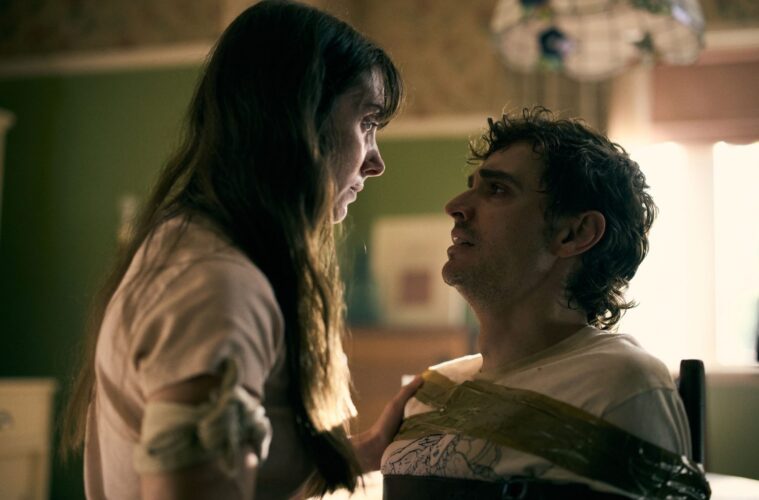
 Kalyn Corrigan
“As soon as I had the premise, I thought, that’s a horror movie,” Michael Shanks tells me about his zany directorial debut, Together. “There’s no other genre that I would be interested in making that premise in. And luckily, I love horror.”
Starring real-life married couple Alison Brie and Dave Franco as fictional onscreen partners Millie and Tim, the film sees the codependent duo slowly becoming literally fused together after a move to the country creates a metaphorical crossroads in their relationship. Teeming with spellbinding images of limbs twisting and interlocking, body parts merging, walls breathing, and feet floating just above the ground, Shanks’s fears of losing himself in another person are on full display in this wildly unabashed examination of monogamy. “I brought a lot of my own personal history into this film,” he admits, “Just thinking, what if a relationship became so intertwined that they started to enmesh — even in a corporeal, fleshy sense?”
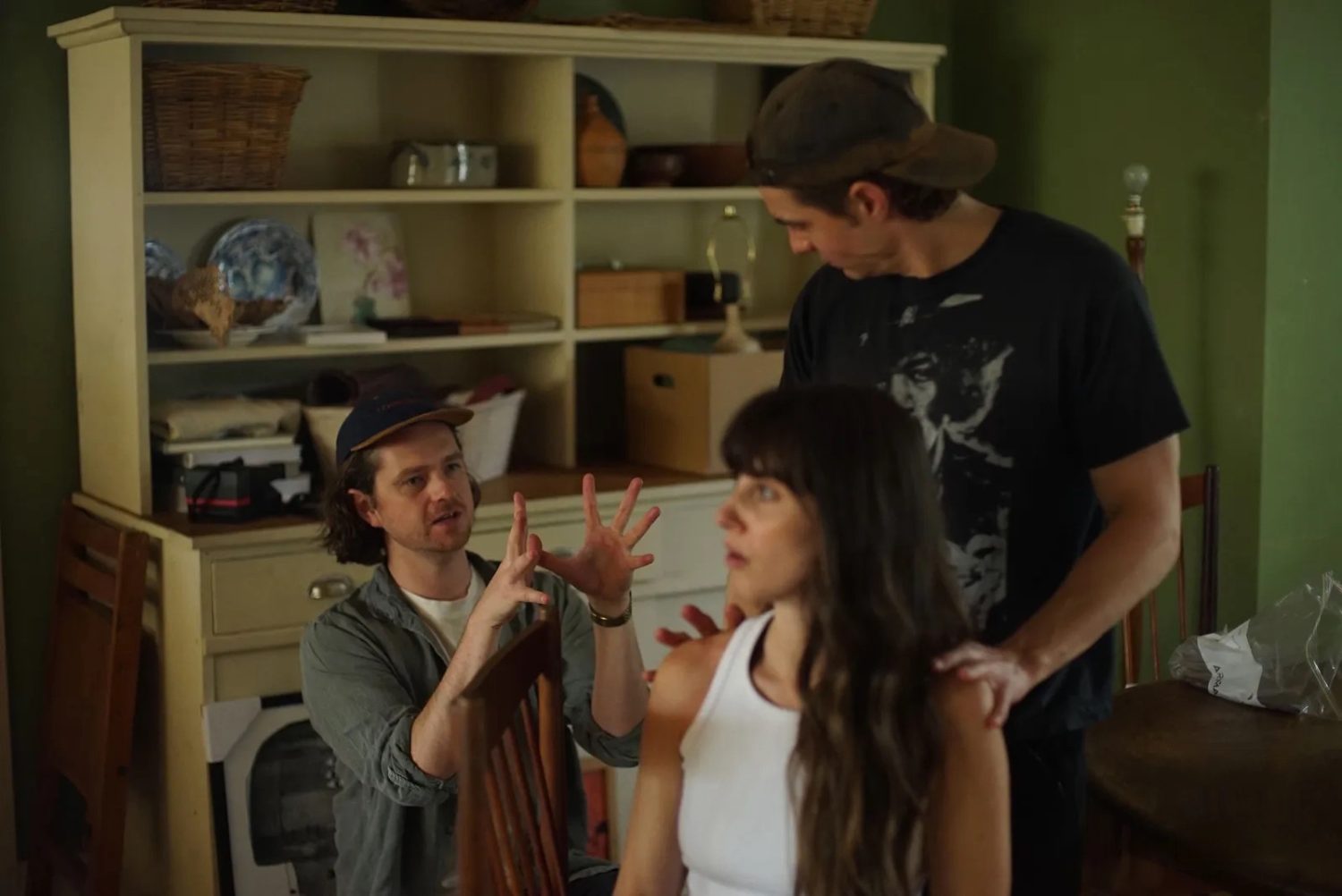
Director Michael Shanks behind the scenes with stars Brie and Franco (Ben King/Courtesy of NEON)
In the movie, Millie’s career is on an upward trajectory as a much-beloved elementary school teacher. In the midst of relocating with her long-term boyfriend to secure her much-deserved promotion, her financial windfall has afforded them an upgrade from an apartment in the city to a house in the country, with plenty of scenery to boot. Tim, on the other hand, is feeling a little lost. Still suffering from a tragedy in the family, Tim has been trudging through life as an out-of-work musician. The big move makes it harder to follow his dreams, and sadly, seeing Millie’s wins only tugs at his insecurities. As the void deepens between them, both parties begin to wonder: are they really meant to be, or has being together for over a decade simply made them complacent?
“Shanks talks about how he was an aspiring musician at one point in his life, and when that didn’t work out, he felt like a failure,” says Franco. “He felt like all of his friends and everyone around him viewed him as a failure. That’s definitely part of my character.” Chiming in, Brie comments, “Yeah, I think Tim is truly a representation of Shanks’s worst nightmare of what he could become, and be to his partner. And certainly, when we came on board, we were like, ‘We could lighten Tim up a little. We can make him a little more like—’” she eyes her partner for help. “Shanks was being a little too hard on himself when he was writing my character,” laughs Franco. “I was like, ‘Shanks, this guy’s a dick. No one is going to be rooting for this guy. We gotta soften the edges a little bit.’”
Just as Tim and Millie might be about to call it quits, the couple sets out on a hike late one afternoon to explore the woods behind their rustic new home. Inadvertently, they stumble into a deserted cave with a mysterious body of water pooling at its center. With darkness fast approaching and no clear way out of the rain, the pair decides to hunker down and spend the night, inevitably drinking the water. The next morning, they awaken to find themselves stuck together like a Siamese twin, their legs conjoined with an unidentifiable adhesive that takes some time and a bit of pain to pry apart. Crazy as it seems, this is only the beginning.

(Ben King/Courtesy of NEON)
“When I read the script, I was just so blown away by all the set pieces,” recalls Franco. “They were so unique. They were like nothing I’ve ever read before. I wanted Alison to be in this with me because we figured our real relationship could really lend itself to the relationship in the film. These characters have been together for over 10 years. Alison and I have been together for 13 and a half years. We figured that onscreen, you can hopefully feel our history in the weight of our relationship.”
Although this is Shanks’s first feature-length production, his previous high-concept short films have earned him much recognition from fans and critics alike. One in particular, aptly named Rebooted, features a Ray Harryhausen-esque skeleton job hunting around Hollywood, desperate for a role that might give him a sense of purpose and reprise his ailing career (there already seems to be a theme happening here within Shanks’s small but mighty repertoire).
In the midst of Franco and Shanks’s ongoing Zoom meetings, ones which Brie admits to eavesdropping on from the other room, Franco sent his wife a copy of the script and the award-winning short, the latter of which secured her confidence in the up-and-comer’s ability to handle challenging effects sequences. “Obviously, that’s a big buy-in as an actor with this — you’re like, ‘And is it all gonna look cool?’” explains Brie, whose experience in the industry rivals that of her husband’s. “I think we both had been craving working in horror, which is a genre we love, and doing something a little weirder and more outside the box, and riskier, and just pushing ourselves in that way. And so reading the script, it was like a dream. All these amazing sequences were ways to push ourselves that we hadn’t tried before.”
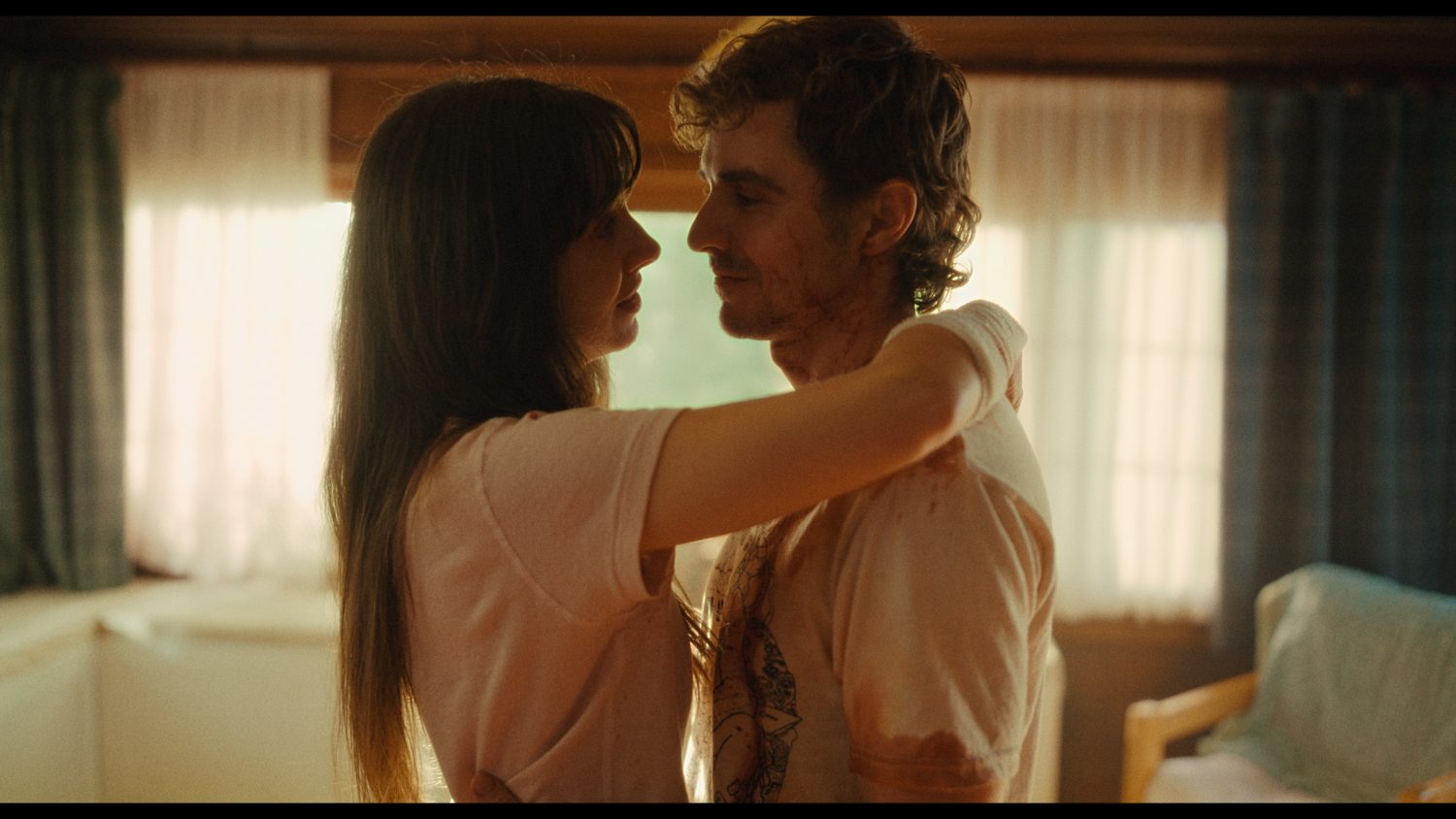
(Germain McMicking/Courtesy of NEON)
A very dark comedy that yields strange fascination, the inspiration behind Together springs from a rather innocent place. “Everything else I’ve made in the past is very comedic, and super, super ironic,” says director Shanks. “This film has so much earnestness, and it’s got some of the darkest moments of my life — just airing it as dirty laundry — but the more I put personal specifics into the script, the better the script got. It’s cliche to say, write what you know, but literally, the more I wrote what I knew, the better the script became.”
Director Shanks himself has been in a monogamous relationship with his partner for over 16 years. As a relatively young person, it occurred to the filmmaker that he had never been an adult without this person in his life, and she had never been one without him. The inability to lead separate lives frightened him. As he describes it, he began to lose track of where he ends and they begin.
“Making [this movie] was very cathartic,” says Shanks. “My partner came up with some of the scenes in the film, and I would go to her at home and be like, ‘Hey, you know that argument we had the other day? What did you call me again?’”
By leaning into what terrifies him the most, Shanks exercises his demons in fervent fashion, taking these considerations to harrowing conclusions.
“Where the horror really comes from is right at the moment when they’re realizing that maybe they’re not meant to be together,” muses Brie. “That is when this scary force comes in that’s going to make them be together forever. So, even in trying to do character work, I found it very difficult to define Millie and talk about her as an individual. I mean, there was a day where I turned to Dave and I was like, ‘I’m trying to dig into Millie, and I’m having trouble defining her outside of her relationship with Tim.’ And Dave was like, ‘That’s what the movie’s about.’”
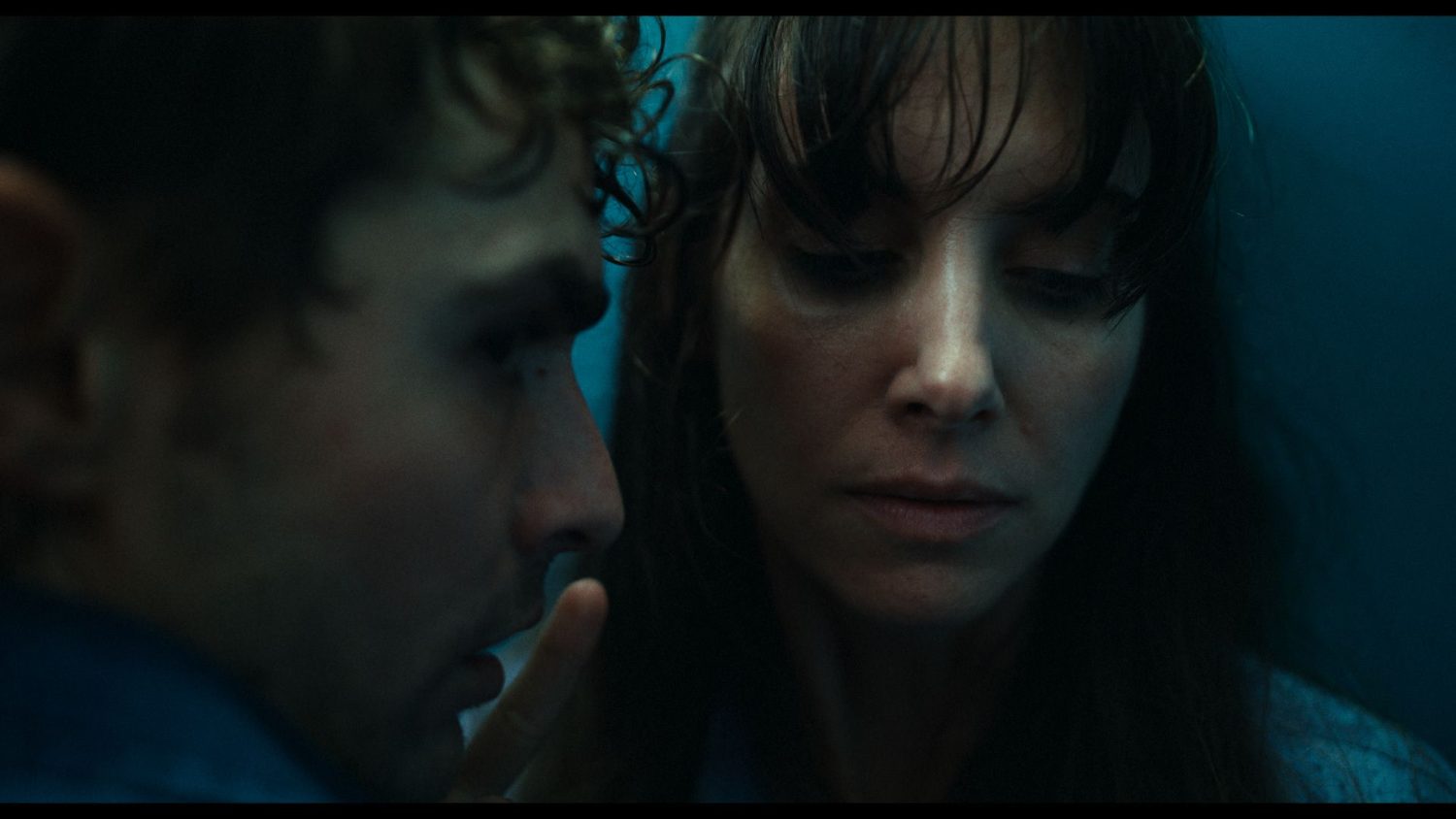
(Germain McMicking/Courtesy of NEON)
What really makes Together stand out against the crowd is writer-director Shanks’s choice to marry what already works as a millennial rom-com with the hyper-specific genre of body horror. The push-pull dynamic of Tim and Millie’s seasoned relationship creates a relatable sense of strife, but it’s the eye-popping effects that elevate this story to an unprecedented tier.
“I’m a very technically driven filmmaker,” says Shanks. “Like, I want to make stories about real people and real emotions, with hopefully, thematic depth, but I also love making a little puppet, making a little visual effect, and The Thing is maybe my favorite movie of all time.” A filmmaker many years in the making, when he was finally given the budget of a feature-length film, he quickly jumped at the chance to invest in proper effects. “I just love body horror, and this was such an excuse to spend tens of thousands of dollars making puppets that do crazy stuff. That was so exciting to me.”
He continues, “I think body horror is sort of an evergreen subgenre, because I have a complicated relationship with my own body. I think we all do. It’s the one thing we kind of can’t run away from. In a slasher film, you can run away from Michael Myers, conceivably, but if the thing that’s killing you and haunting you is in your flesh on a cellular level, that to me, as a constant hypochondriac, is something very, very scary.”
“It’s so smart,” beams Brie. “It’s my favorite thing about horror as a genre, is the way that you can really do a deep dive into certain themes without it getting preachy. You can keep it really exciting, and you can extrapolate those themes to their most insane conclusions. I think it’s a brilliant idea to take this idea of toxic codependency, fear of monogamy, and physicalize it, basically. Make it truly two people trapped together where they can’t separate from each other’s bodies, literally. It’s just a brilliant marriage of concept and form.”
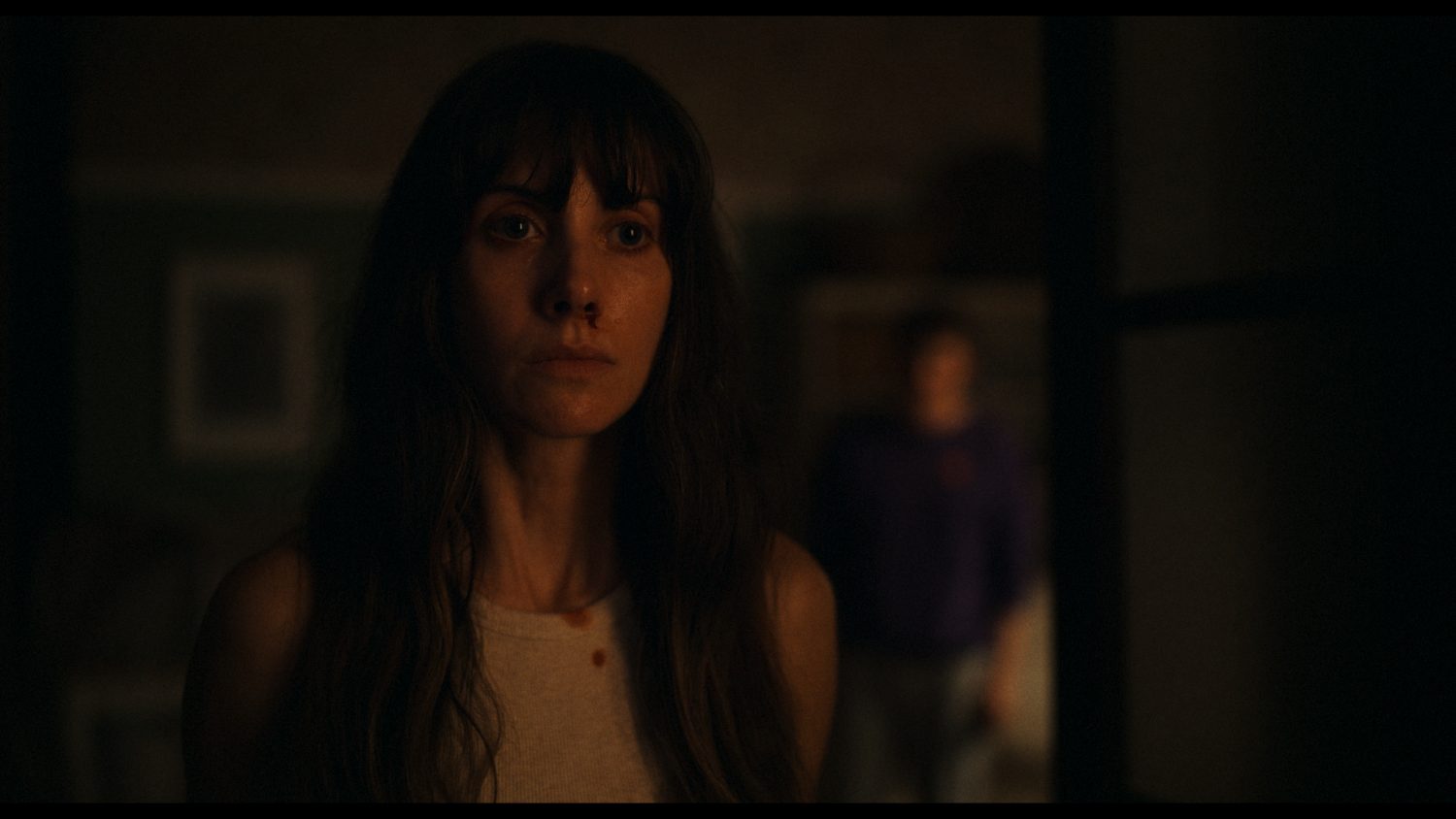
(Germain McMicking/Courtesy of NEON)
She adds, “I mean, if a person is worried about losing themselves into another person, this is truly the physical manifestation of your entire body being absorbed into another body. The metaphor is clear.” As to whether or not she might be game for more roles in the future that require such heavy makeup applications, Brie admits that she has some reservations. “This was my first time really working with prosthetics, and I was like, ‘I don’t know if this is for me, all the time,’” she laughs. “Great for this movie, happy to do it.”
Audiences will gasp at scenes of Brie and Franco made up in ultra convincing prosthetics, their characters made to look like their bodies are painfully melding, their bones squirming under each other’s skin. Together is truly an unparalleled technical achievement.
“There’s so many turns of phrase about being in a relationship, like sticking together, or sharing a life,” says Shanks. “It was just so clear to me that taking that to a visceral, kind of on-the-nose, heightened body horror place was a great horror concept, and a perfect allegory for what it’s like to fully commit to a person. That was really fun to me as a jumping-off point. I mean, the first scene I wrote for the film is a scene that happens in a hallway in the middle of the night, where our characters first really connect and mesh together. And once I wrote that, I thought, ‘Oh, this is fun. Let’s now flesh out a movie around the scene.’”
To get the most out of his effects, Shanks turned to a veteran he knew he could trust: special makeup and effects artist Larry Van Duynhoven. Coming in hot off the set of George Miller’s Furiosa, which happened to have just wrapped filming, Duynhoven read the script for Together and felt inspired to lend a hand.
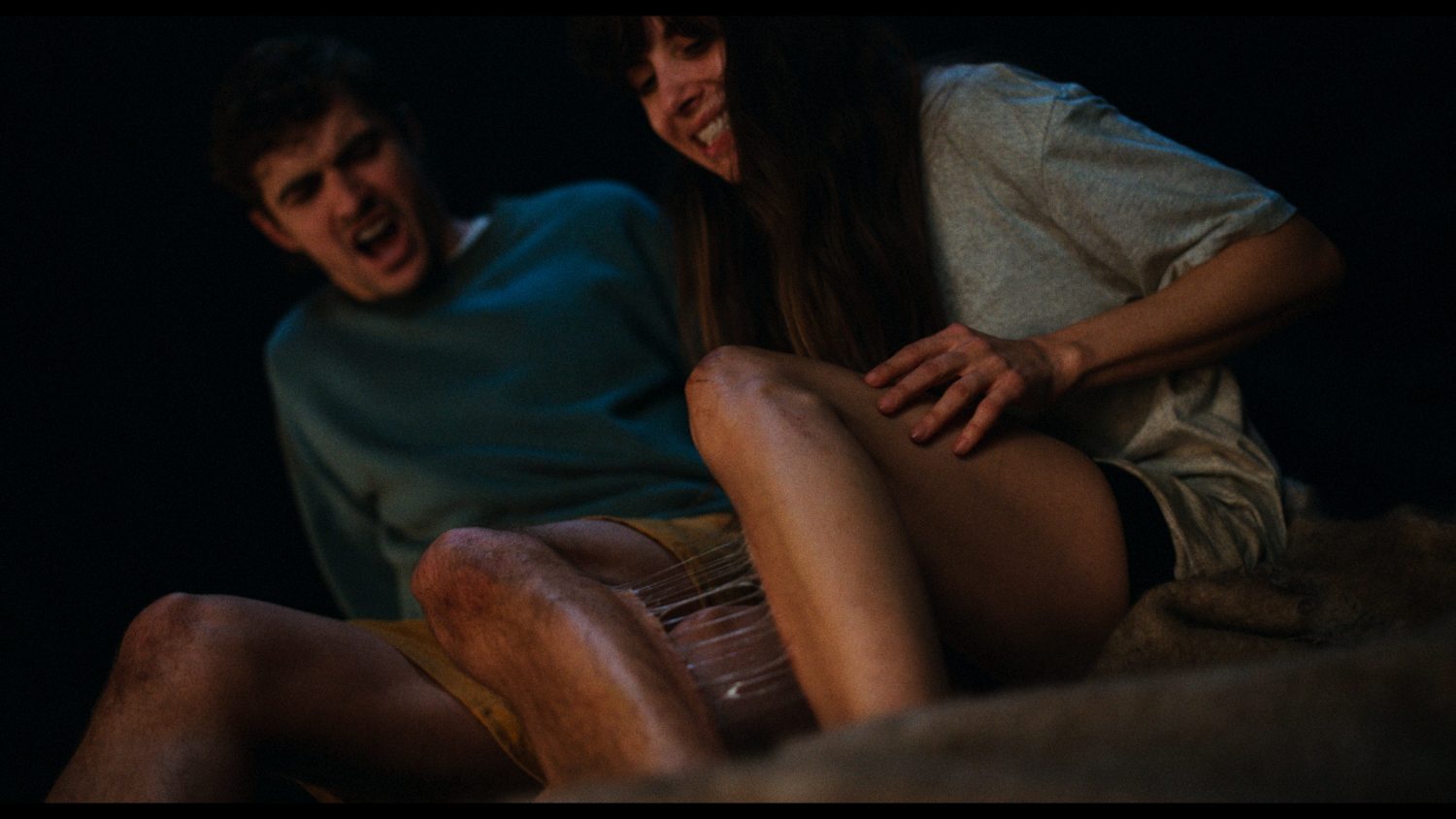
(Germain McMicking/Courtesy of NEON)
“We had this incredible prosthetics artist, Larry,” remembers Franco. “He just really loved Michael Shanks’s script and he was like, ‘I want to be a part of this indie project.’ There were days where Alison and I were literally attached for upwards of 10 hours, and we were both conscious about not trying to drink too much water so that we weren’t taking frequent trips to the bathroom, but inevitably, one of us would have to go, and we would drag the other one with us. In those moments, we looked at each other and said, ‘We could not have made this movie with anyone else.’”
To say that director Shanks is used to working with a skeleton crew is putting it lightly. Like a one-man band, the filmmaker’s previous short-form projects featured him as a writer, director, visual effects artist, composer, and even occasionally, appearing onscreen as a member of the cast. This time, he finally got more hands on deck. Not only did having the assistance of a pro like Duynhoven and the rest of Shanks’s crew create some guidance for the art direction on set, but the sense of camaraderie also allowed Shanks to focus more solely on directing, and still be able to trust that his vision was in good hands.
“It was such a trip, because I have a background in visual effects, and we have a lot of artists in this film that I’m so proud to have worked with,” says Shanks. “The effects supervisor, Genevieve Camilleri, who’s amazing, and Framestore, the visual effects artists that I was a fan of already. But the practical effects, I don’t understand that world, but our crew, the vibe was so strong because it was a really unique filming experience. Every day we might start with a meat and potatoes scene, like a dinner scene or something like that. But by lunchtime, somebody would come in with a Dave Franco puppet, and I’m like, ‘What the hell is going on here?’ Or like a prosthetic penis, or this or that. It just made everybody so excited, because every day we were shooting something weird and specific, and practical, and gooey and yucky.”
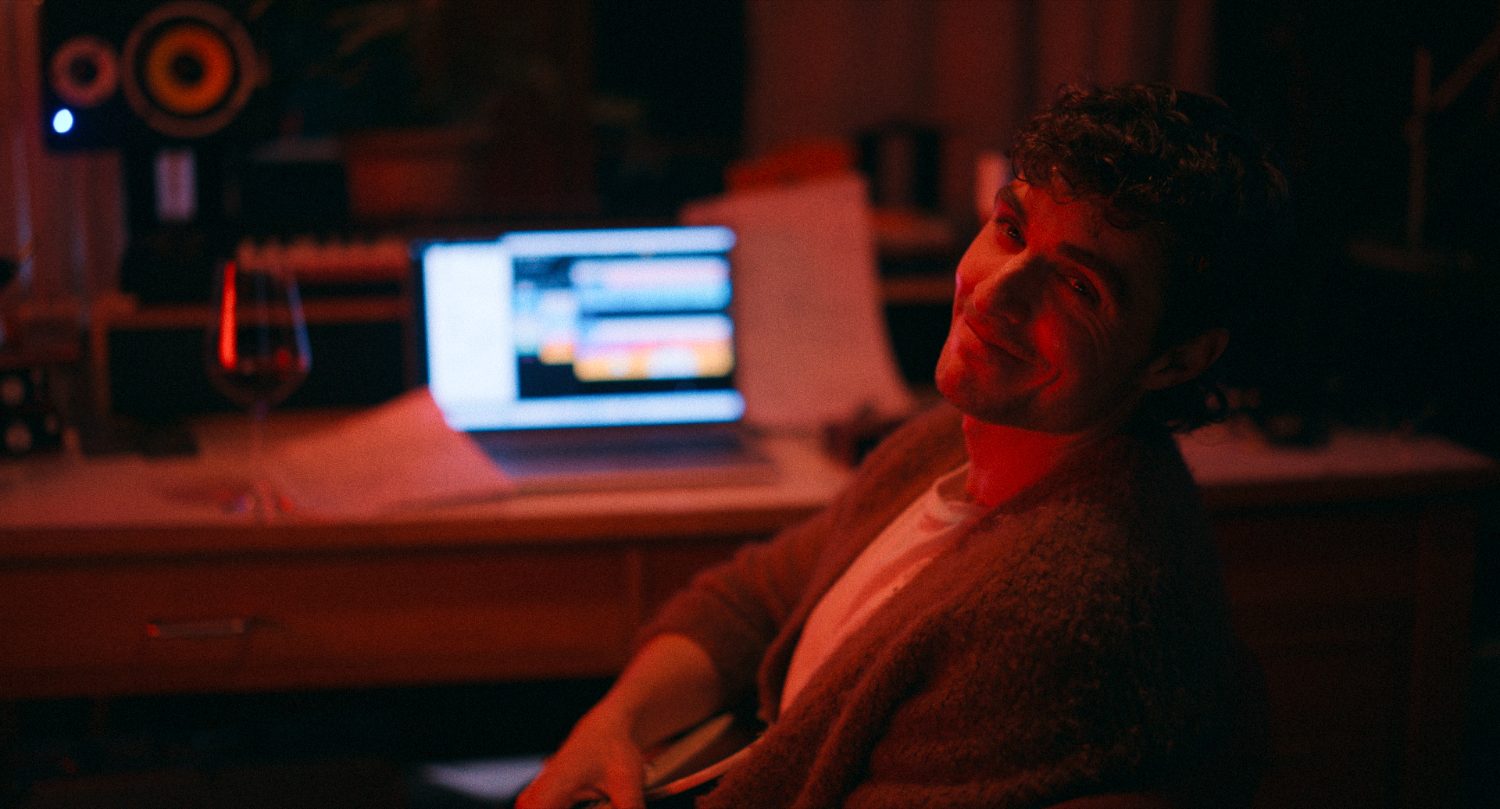
(Germain McMicking/Courtesy of NEON)
A pause, then: “I still have that Dave Franco puppet. I have it screwed into the wall of my home office. It’s really disturbing.”
Finding himself increasingly enthralled with the practical side of the effects world, Shanks decided to dive in headfirst. “I cast myself in the film for a little cameo in a scene that required me to get a prosthetic made of my own head,” the director recalls, “And that was so much fun, going to the studio, having to wear a garbage bag as they encased me in goo for 45 minutes so that they could make my head for this disgusting bloated corpse was such a little dream come true. I felt like I was living in a DVD special feature or something.”
When asked how the filmmaker fared with the lifecast — the process by which makeup artists create an exact replica mold of a human body — Shanks admitted that being housed in form-fitting silicone made him more than a little nervous.
“I started having a panic attack. It’s kind of embarrassing. When I got in there, I was like, ‘I want to shoot behind the scenes of this, I really hope I don’t have to take my shirt off to do this,’ and they’re like, ‘You’re gonna have to take your shirt off.’ I’m like, ‘Oh god,’ and they’re like, ‘But it’s okay, we’ll put you in a garbage bag.’ So I’m sitting there, and they wrapped a garbage bag around my body, and you can’t talk, and I’m in there for like, 35-40 minutes, and about five minutes before the end, I started to get like really hot, and I started to freak out, thinking, ‘What if I’m feeling nauseous? What if I vomit?’ The vomit can’t come out because my mouth is sealed behind two layers of silicone and plaster, so I will suffocate to death.”
In order to create a full head cast with ears, wet silicone is poured over the talent’s entire skull (they typically wear a bald cap to protect their hair). The artists then use popsicle sticks, chip brushes, and other various tools to push the liquid into the face and around the head until it tightly hugs the talent’s skin. This process is repeated with a second layer of silicone. Then, a layer of plaster bandages are added on top of the silicone, adding to the weight. When the subject is covered in the material, their hearing is muffled, they can’t see very well, and it can be a little disconcerting. As the mold sets up and thickens, it also heats up. On a hot day, in a poorly ventilated shop, this material can get very, very warm. Sometimes, it puts the talent to sleep. In less fortunate circumstances, especially regarding those afflicted with claustrophobia, it can cause a person to panic.
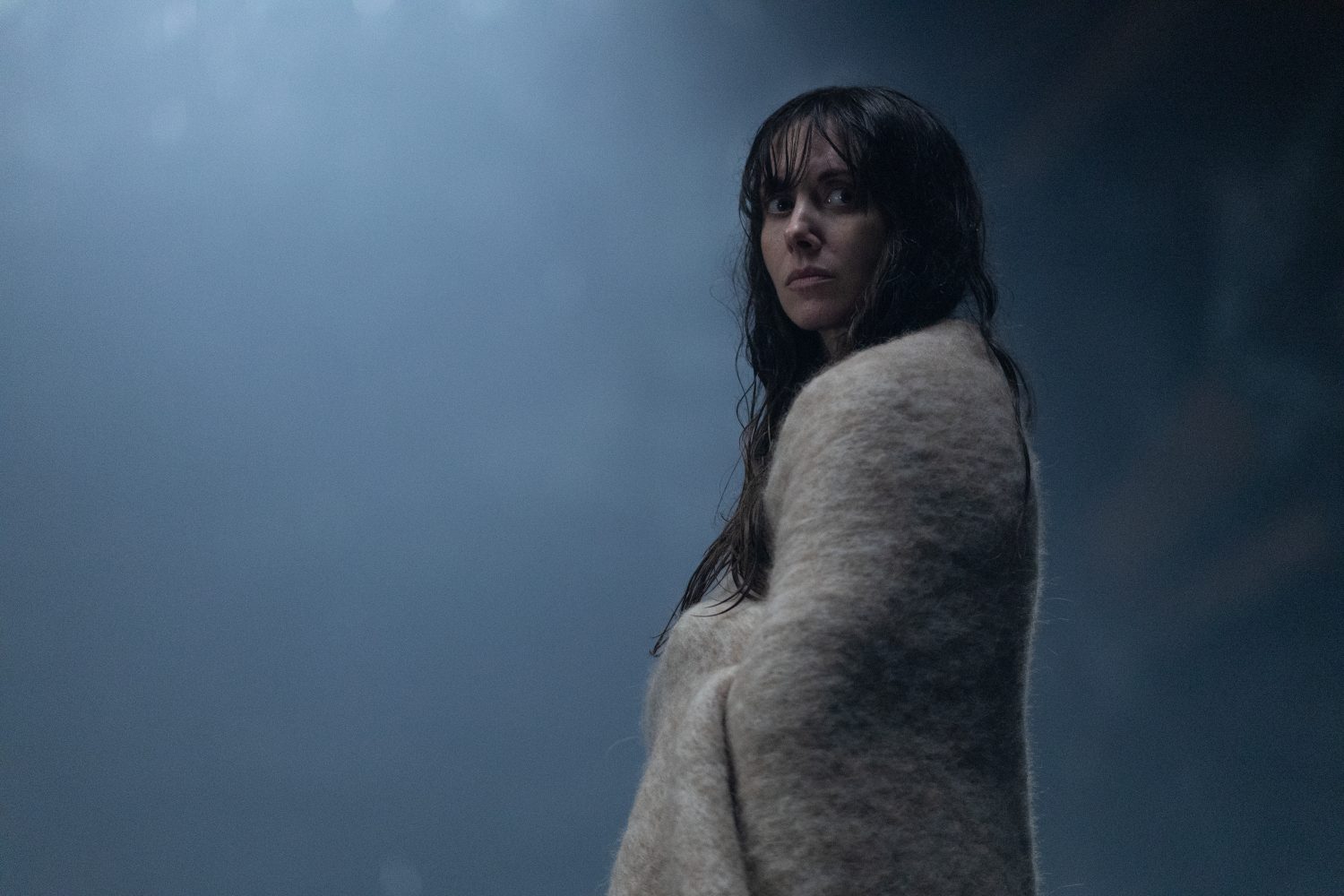
(Ben King/Courtesy of NEON)
“I had a little notepad, and I just wrote, ‘too hot,’” the director says, wide-eyed. “They went, ‘Oh, you’re too hot? That’s fine. We’ll take off the garbage bag,’ and they ripped the garbage bag off. And there’s a guy shooting behind the scenes. I’m sitting there covered in goo with my little belly hanging out, just feeling like this is so humiliating right now. But I’m really glad that I did it. I don’t know that I’d volunteer to do it again.”
Ordinarily, with any given production, whether the working relationship established between two costars happens to elicit more positive or negative associations, at the end of the day, they get to go back to their separate sanctuaries. There is a sense of reprieve, at least for a few hours, between filming. However, with Franco and Brie being a real married couple, they wound up quite literally bringing their work home with them.
“This job can be very vulnerable and emotionally taxing,” says Franco, “And so to be able to go home with Alison at the end of the day, and to have someone who can build me up, and keep me from spinning out, is invaluable.”
His wife, naturally, shares a similar sentiment. “It really was nice to debrief the day together,” she says, also noting how beneficial their proximity became when faced with such a short shooting schedule. “This is an indie movie. We had 21 shoot days. It was so quick. And so at night, we could look over the scenes for the next day, and talk about any sticky stuff — no pun intended — but if there were any sort of relationship things, or just performance things that we wanted to workshop with each other, we could do it the night before, knowing that we would not have the time on set.”
Hearing Brie and Franco recount their experience reminds us that falling in love undoubtedly transforms you. But if we’re lucky, we find someone to grow with us, until we’re collectively shaped into something new.
“Together” is in theaters now.
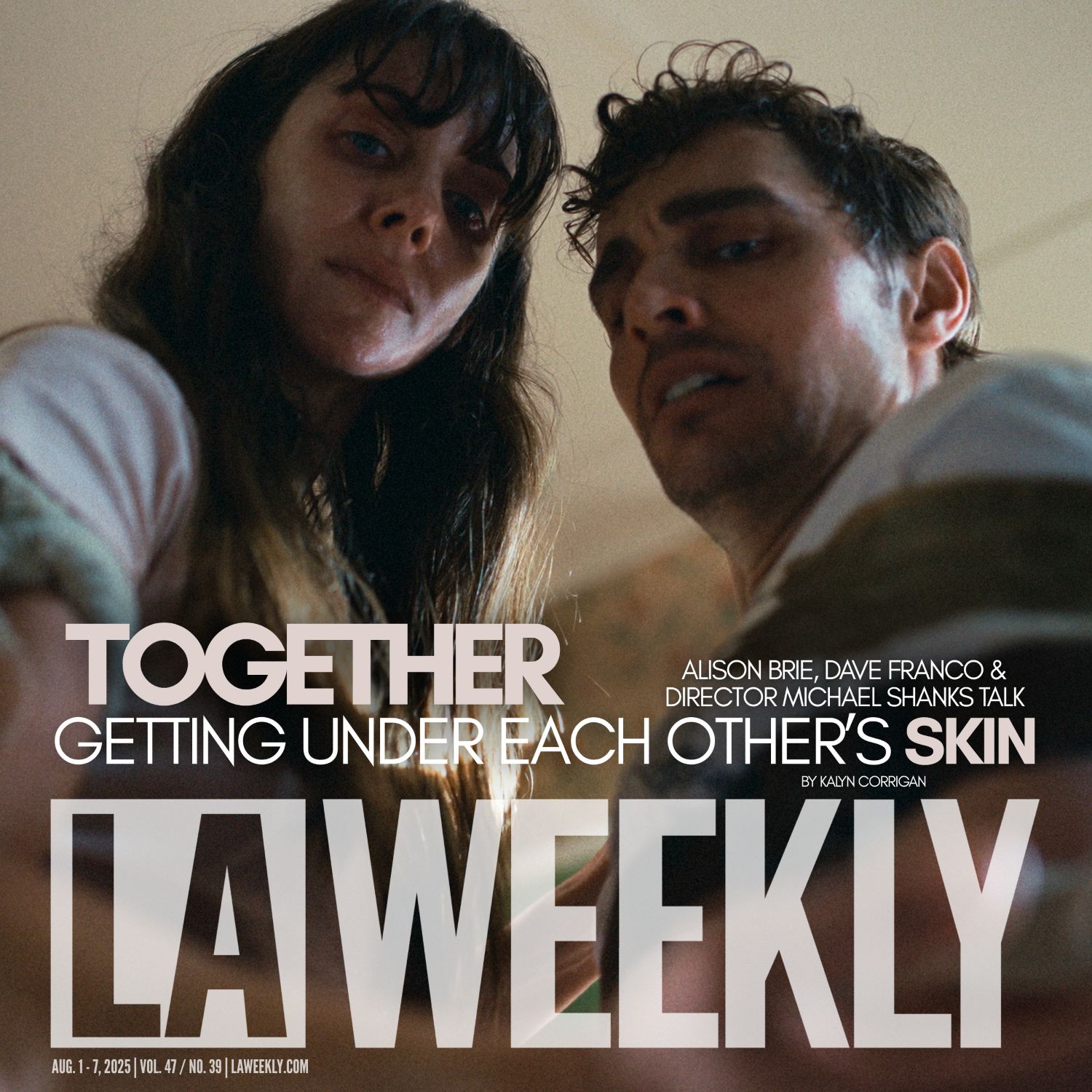
The Aug. 1, 2025 cover of LA Weekly (Film still: Germain McMicking/Courtesy of NEON; Cover design: Mark Stefanos)