
 Nia Bowers
Los Angeles runs on volume.
On any given night, neon spills across the Sunset Strip, kick drums echo through historic walls, and guitar feedback bleeds into the sidewalks outside venues that have launched legends. The stages at Whisky a Go Go, The Viper Room, and others don’t just host performers; they test them. In a city where musicians arrive daily with the same dream, staying power is its own currency.
Some players chase the spotlight; Ting Han Lin built his career underneath it.
Now a familiar presence across Los Angeles stages, from the iconic Strip to high-traffic entertainment hubs like Universal CityWalk, Ting’s journey to the city of lights began thousands of miles away in Taipei, Taiwan.
His early relationship with music was anything but glamorous. Raised in a household where pop and rock were restricted, he didn’t grow up immersed in mainstream sound. That changed the day he bought his own MP3 player and heard Green Day’s American Idiot. The energy was immediate and electric. For a young Ting, it wasn’t just a song, it was a permission.
He gravitated toward the bass guitar, drawn to its pulse and physicality. While many aspiring musicians chase frontman fantasies, Ting found something compelling in the low end, the instrument that doesn’t demand attention, yet determines the entire feel of a room.
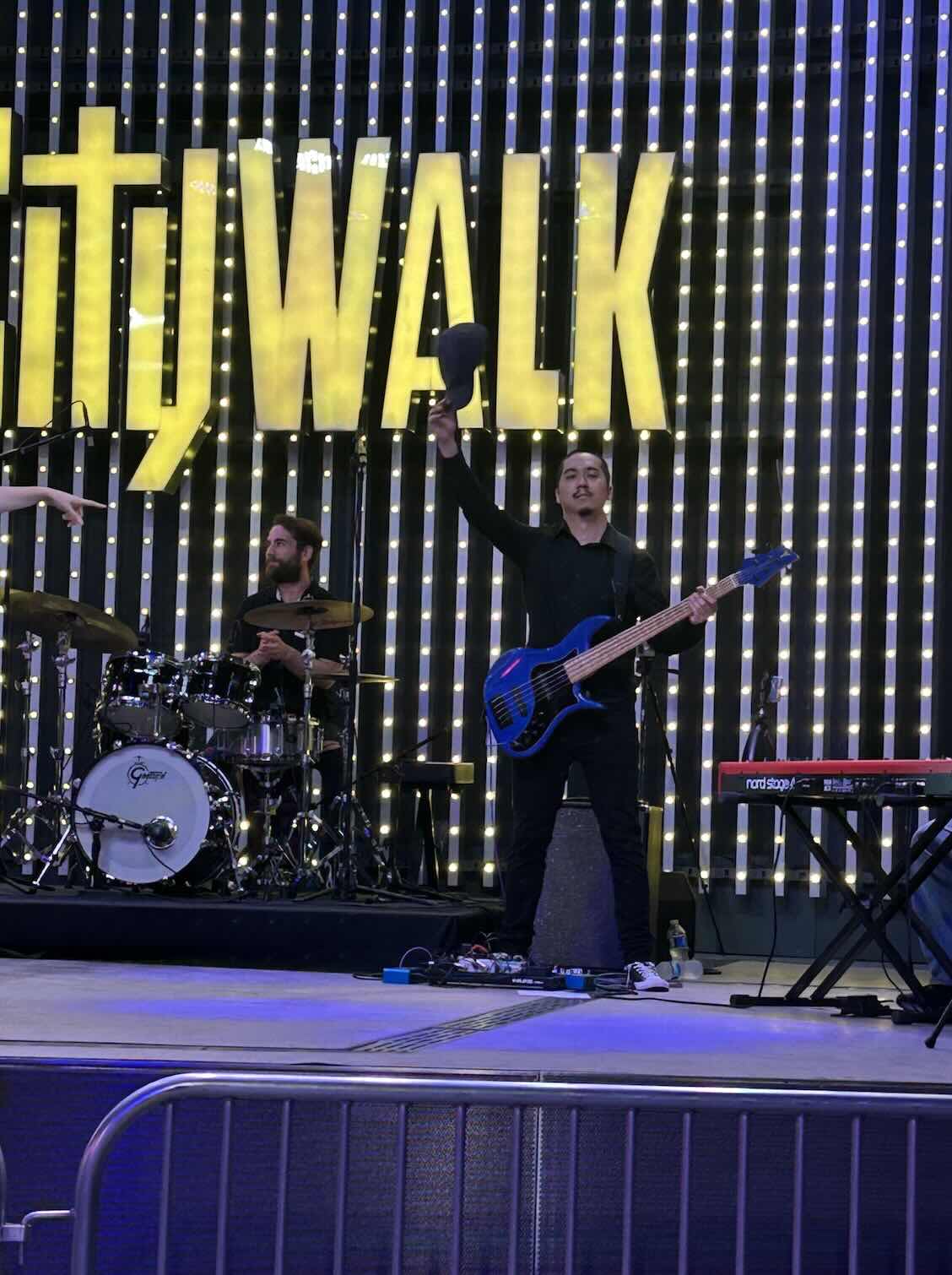
In Taiwan, what began as a personal obsession quickly turned into momentum. He joined bands, toured nationally, and performed at major festivals, sharpening his live instincts in front of demanding crowds. He represented Taiwanese instrument brand Pukanala at the 2019 NAMM Show in Anaheim, a milestone that exposed him to the global music industry at large and put him on the direction of the road which would lead him towards becoming a modern architect of the rhythm section.
But ambition has a way of expanding borders. Near the end of the pandemic, Ting relocated to Los Angeles to attend Musicians Institute, stepping into one of the most competitive music ecosystems in the world. The move wasn’t cushioned by familiarity. Language nuances, cultural differences, and the unspoken codes of the LA scene presented immediate challenges.
His first band in the United States showed promise, until personal tensions fractured it. For Ting, the breakup was more than logistical. It was emotional, destabilizing. In a city that can feel transactional, the collapse forced him to confront a hard truth: music may be technical, but careers are human. Rather than retreat, he recalibrated.
Los Angeles rewards versatility. Ting leaned into it. By grounding himself on his principle, he began navigating multiple lanes at once. From original rock performances at historic Sunset Strip venues to commercial cover gigs at tourist-packed stages and session work across churches and institutions in the Greater LA area, Ting transformed from a newcomer into an essential collaborator, proving that the ‘groove’ is a universal currency.
At the Whisky a Go Go and The Viper Room, he tapped into the raw lineage of West Coast rock. At Universal CityWalk and Hard Rock Cafe, he mastered consistency and crowd engagement, playing for audiences that change nightly. Each room required a different instinct. Each demanded reliability. That reliability became his calling card.
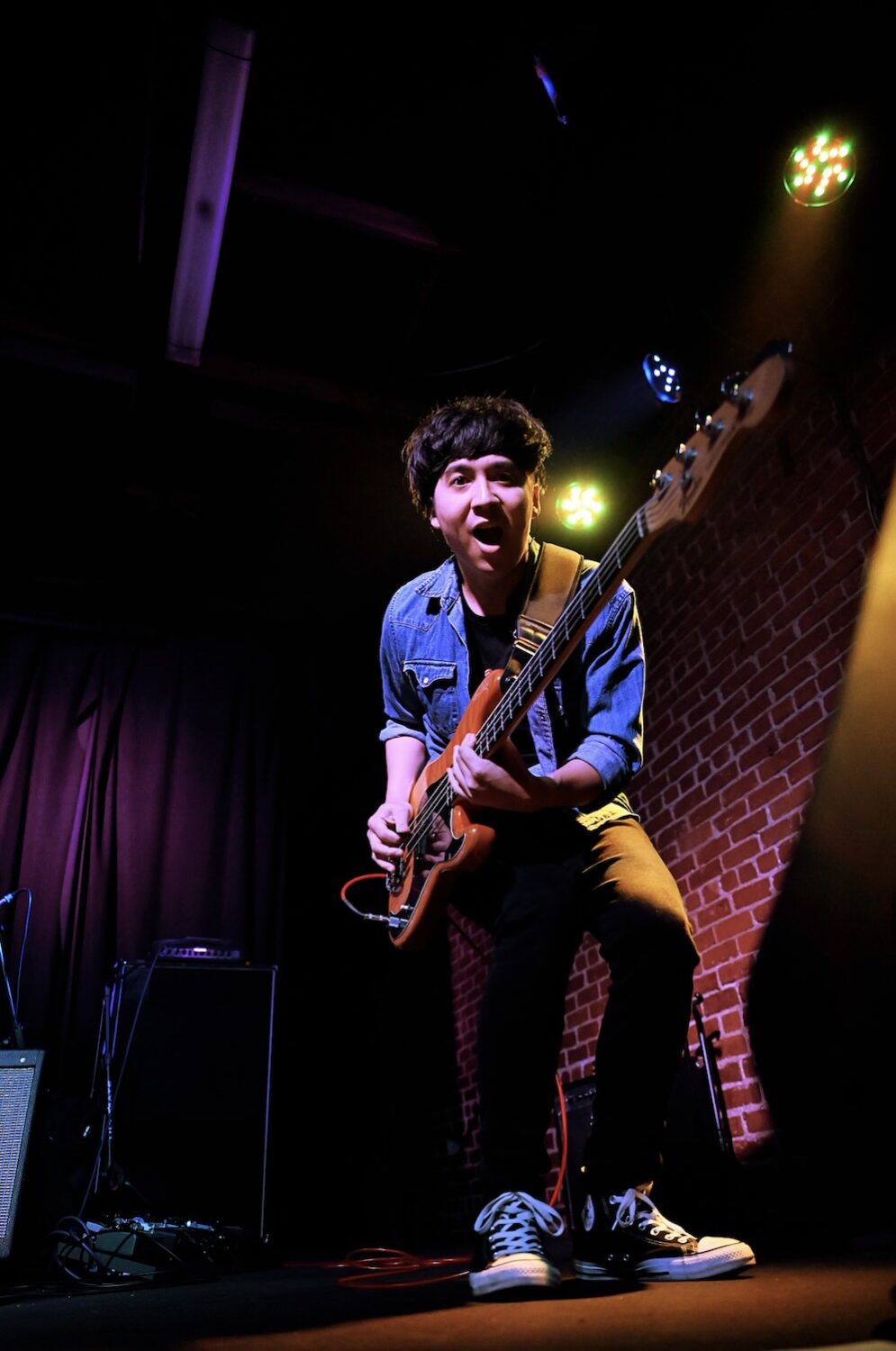
He has collaborated with Grammy-winning engineer and producer Francis Buckley, known for his work with Quincy Jones, and performed alongside celebrated saxophonist Ernie Watts, experiences that refined his ability to listen as intently as he plays. Whether locking into a jazz improvisation or holding steady beneath a high-energy rock set, Ting operates with a preparation-first mentality: over-rehearse, bring backup gear, and ensure the show moves forward without friction. In a city flooded with flash, that steadiness stands out.
Beyond performance, Ting’s identity has evolved into something broader than genre. As a Music Director for “United Voice,” a bilingual worship initiative, he bridges Mandarin and English-speaking communities through intentional arrangement. By weaving traditional Mandarin hymn structures with contemporary Gospel and R&B textures, he addresses a gap that extends beyond music, generational and cultural fragmentation within diasporic communities.
Los Angeles, after all, is a city of intersections. Cultures collide here. Sounds blend here. Reinvention happens here. Ting embodies that convergence. His Taiwanese upbringing instilled discipline and humility; his American training sharpened improvisation and stylistic range. The result is a musician who can shift from jazz phrasing to rock grit to atmospheric worship without losing centre.
He operates with a simple philosophy: “May the low notes groove you.” In a band, the bass is often unnoticed until it disappears. Ting embraces that paradox. He doesn’t chase the front of the stage; he fortifies it. He believes stability is an art form, one that allows others to shine.
Even today, the LA grind hasn’t slowed for Ting Han Lin. His calendar stretches beyond California, with performances in Seattle, Snoqualmie, and Oregon. His phone buzzes regularly with new collaborations. What began as a quiet, almost reckless thought on a metro ride in Taiwan has materialized into a working life defined by motion.
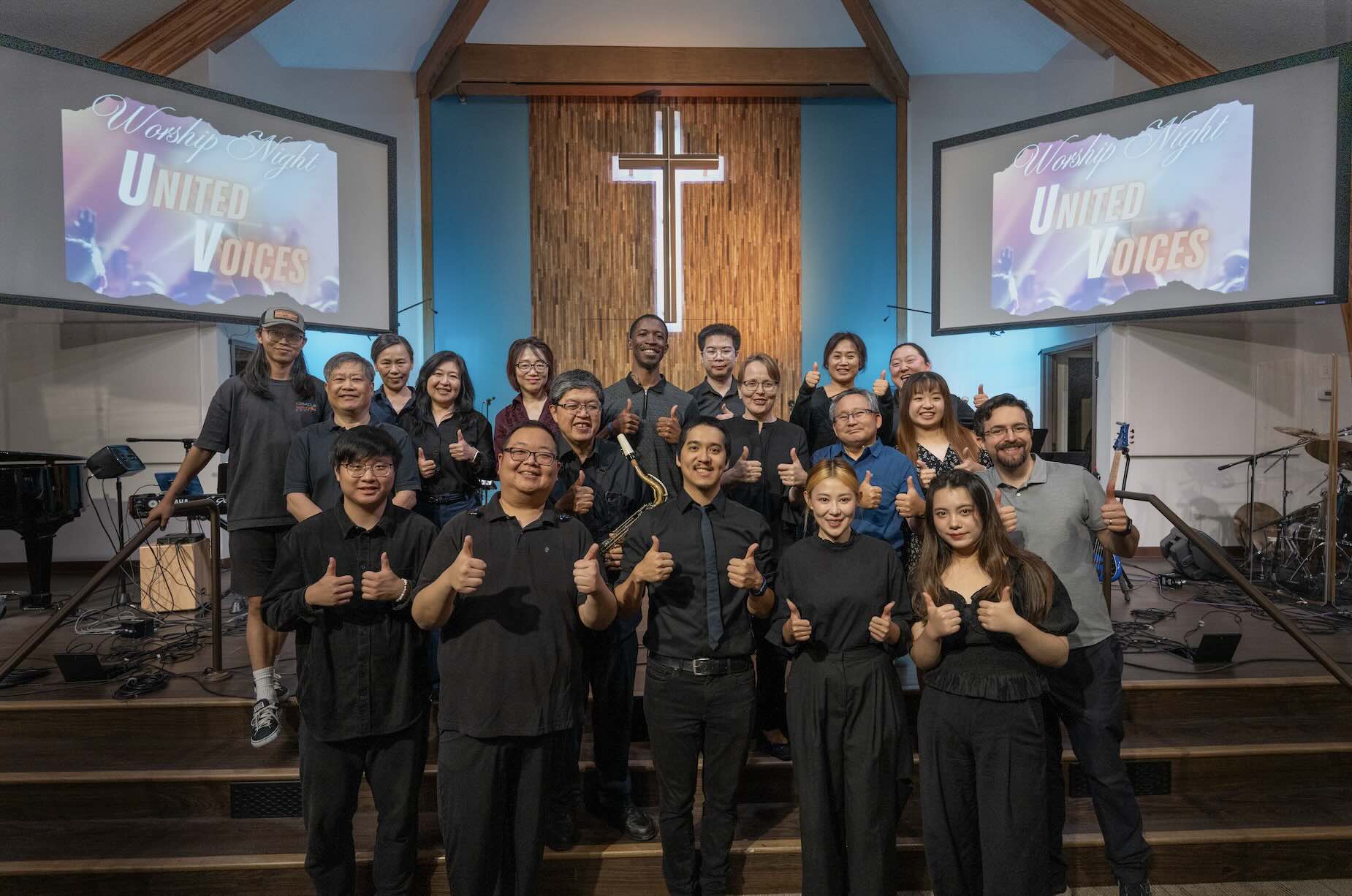
Ting is balancing multiple identities seamlessly. He continues performing on audience-filled stages across Los Angeles, directing large-scale musical events like “United Voice,” and sharing space with respected industry figures. His recent jazz single, “Misty,” recorded in one take, signals a commitment to authenticity in a heavily edited age.
From Taipei’s constrained beginnings to the restless rhythm of Sunset Boulevard, Ting Han Lin’s path hasn’t followed a straight line. It has followed a groove.
In a city that constantly reinvents itself, survival depends on more than talent. It requires adaptability, endurance, and the refusal to fold when plans unravel. Ting calls it a “never retreat” mind-set. Los Angeles simply calls it staying in the game.
The lights here never dim for long. Bands come and go. Sounds evolve. Audiences shift. But the groove, when it’s solid, keeps people moving. And in a city powered by rhythm, the ones who hold it down are the ones who last.
Witness the evolution of the ‘low note’ philosophy first-hand. Follow the journey of Ting Han Lin through his Social media profile, YouTube, Instagram, and Facebook.