
 Jon Stojan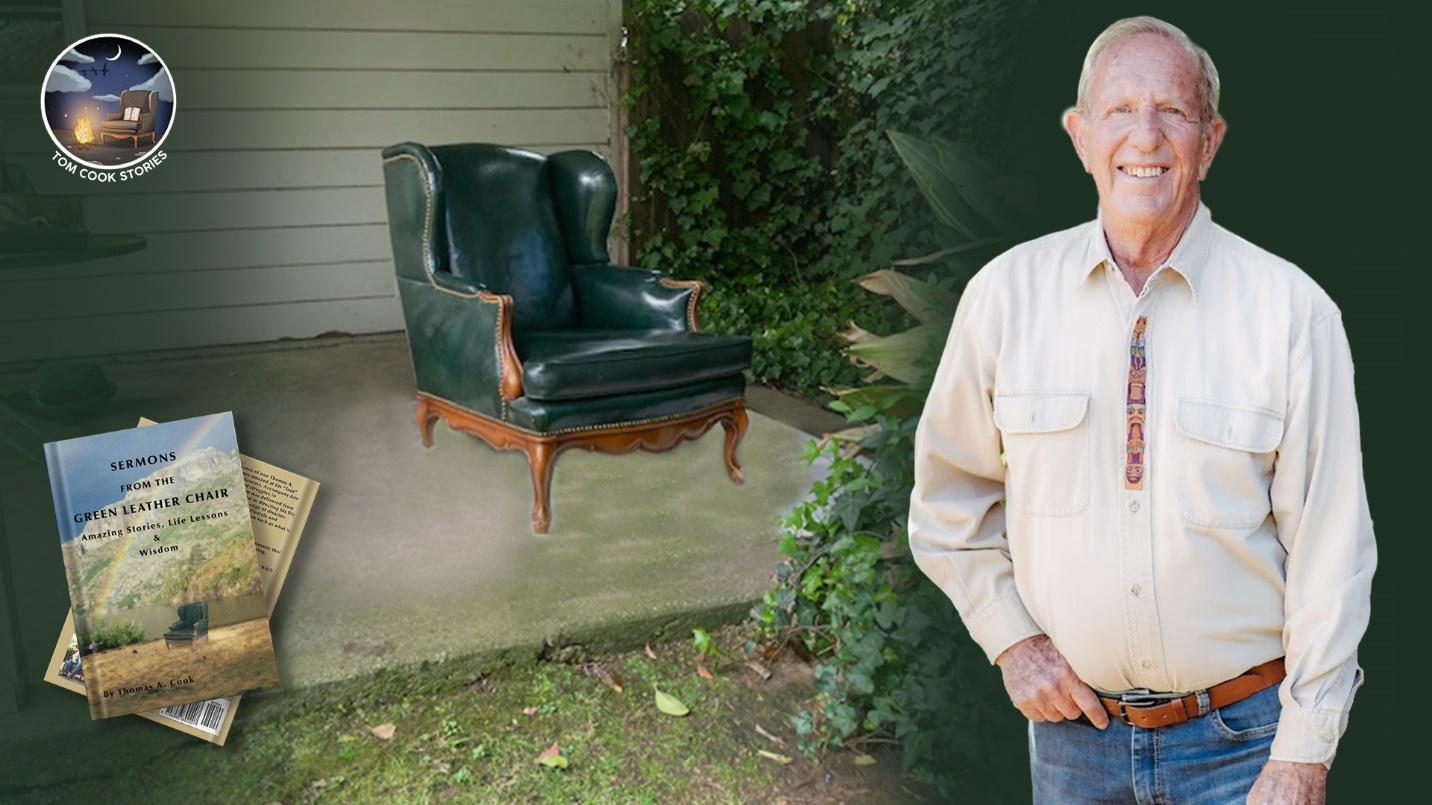
At nearly 70 years old, Thomas A. Cook took a path many consider improbable: becoming an author. What sets Cook apart is not just his age but the compelling journey that led him to pen his memoir, Sermons from the Green Leather Chair. This book is a collection of stories, life lessons, and “quips” Cook learned from his father, offering a unique take on what it means to live a meaningful life.
Thomas A. Cook never imagined himself as an author. Born and raised with a practical mindset, writing was not something he pursued until his late 60s. He had spent his life in various careers, from commercial general contracting to owning and operating businesses. But the idea of writing a book didn’t occur to him until friends urged him to document his life’s experiences and stories.
Cook’s journey into writing was sparked by these persistent nudges from friends and acquaintances who recognized the value in his anecdotes. The decision to write was not a calculated career move but rather a challenge he accepted reluctantly. “I didn’t even think about being an author until I was almost 70 years old,” Cook explained during a recent interview.
The process of crafting Sermons from the Green Leather Chair was both challenging and transformative for Cook. It took him five years to compile his stories and memories, which he recorded by sitting around fires and recounting tales from his life. His wife found an editor who encouraged him to include more personal insights, resulting in a memoir that is as much about life lessons as it is about storytelling.
Cook’s book combines two elements: “The Benson Lake Chronicles,” which are stories about his adventures, and “Sermons from the Green Leather Chair,” which are reflections on his relationship with his father. This duality offers readers a mix of entertaining stories and insightful lessons, providing something for everyone, from the thrill-seeker to the introspective thinker.
A significant part of Cook’s memoir is dedicated to the “quips” he inherited from his father. These are short, memorable sayings that encapsulate practical wisdom and philosophical insights. One such quip is, “Never be classed. Don’t be a rich boy. Don’t be a poor boy. Don’t be a bully. Don’t be a sissy. Make everybody your friend”. Cook believes that these sayings helped shape his life and guided him through various challenges.
The quips are more than just catchy phrases; they are backed up with detailed stories and explanations. Cook uses them to illustrate how certain principles guided his actions and decisions throughout his life. For example, he shares the lesson of making friends with everyone, which he credits as a key to his successful and adventurous life.
Cook’s life is a testament to the idea that age is just a number. Even in his 70s, he remains active, participating in events like primitive skills gatherings and sharing his stories with audiences of all ages. He recalls a particular incident where a 13-year-old girl read his book cover-to-cover while sitting by his campfire, a testament to the broad appeal of his writing.
One of Cook’s most memorable adventures was an airdrop into Benson Lake without a parachute, showcasing his fearless spirit and love for the outdoors. His life is filled with such tales, each one reinforcing the lessons he learned from his father and his experiences.
Central to Cook’s memoir is his relationship with his father, who played a significant role in shaping his values and worldview. Despite the absence of a traditional nurturing relationship, Cook describes their bond as philosophical and business-like.
Cook’s father was an alcoholic who later found sobriety, which influenced Cook’s own struggles and triumphs. The book captures this complex relationship, offering readers a glimpse into how Cook navigated his father’s influence and the life lessons he imparted.
One poignant story Cook shares is about his father’s decision to never get angry again after being diagnosed with cancer. This moment of clarity and acceptance left a lasting impression on Cook and is captured in the book as a testament to the power of attitude and resilience.
For Cook, writing the memoir was a cathartic experience that brought about personal growth and understanding. He reflects on the process as one that provided him with forgiveness, joy, and freedom from past burdens. Through writing, Cook gained a better understanding of himself and the dynamics of his relationships, particularly with his family.
The memoir also explores the theme of struggles and survival, as Cook opens up about difficult periods in his life, including the loss of his brother to suicide. These experiences are woven into the narrative, offering readers an authentic look at life’s challenges and the strength required to overcome them.
Thomas A. Cook’s journey as an author is far from over. He is considering writing a sequel to delve deeper into the life lessons and wisdom shared in his first book. The idea is to separate these insights from the stories, creating a standalone guide for readers seeking practical advice and inspiration.
Cook’s story is a reminder that it’s never too late to pursue a new path or share one’s experiences with the world. His memoir, Sermons from the Green Leather Chair, stands as a testament to a life well-lived and the wisdom gained along the way. As Cook continues to inspire those around him, his message is clear: everyone has a story to tell, and it’s worth writing down.