
 Caroline Chang and Mark Stefanos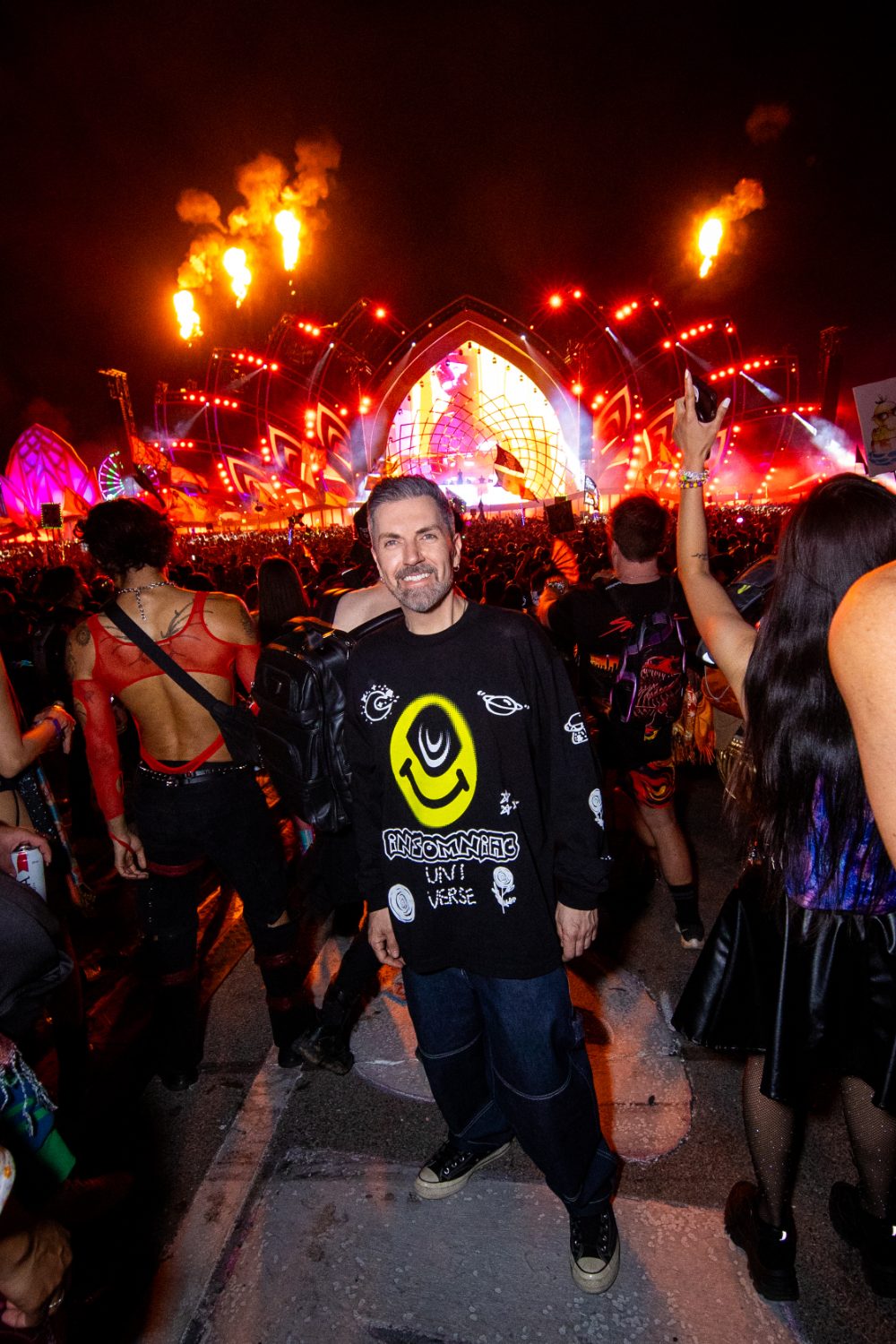
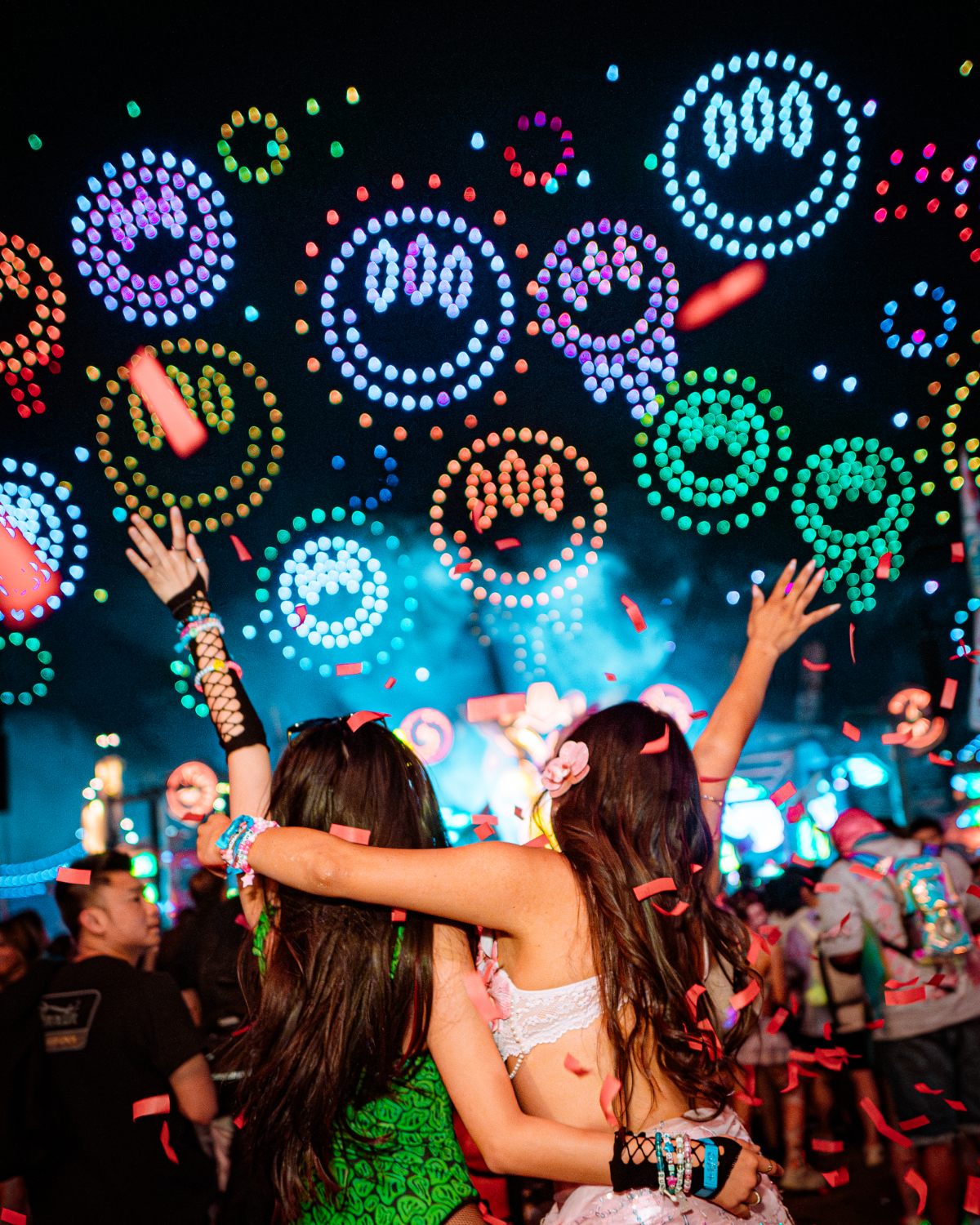
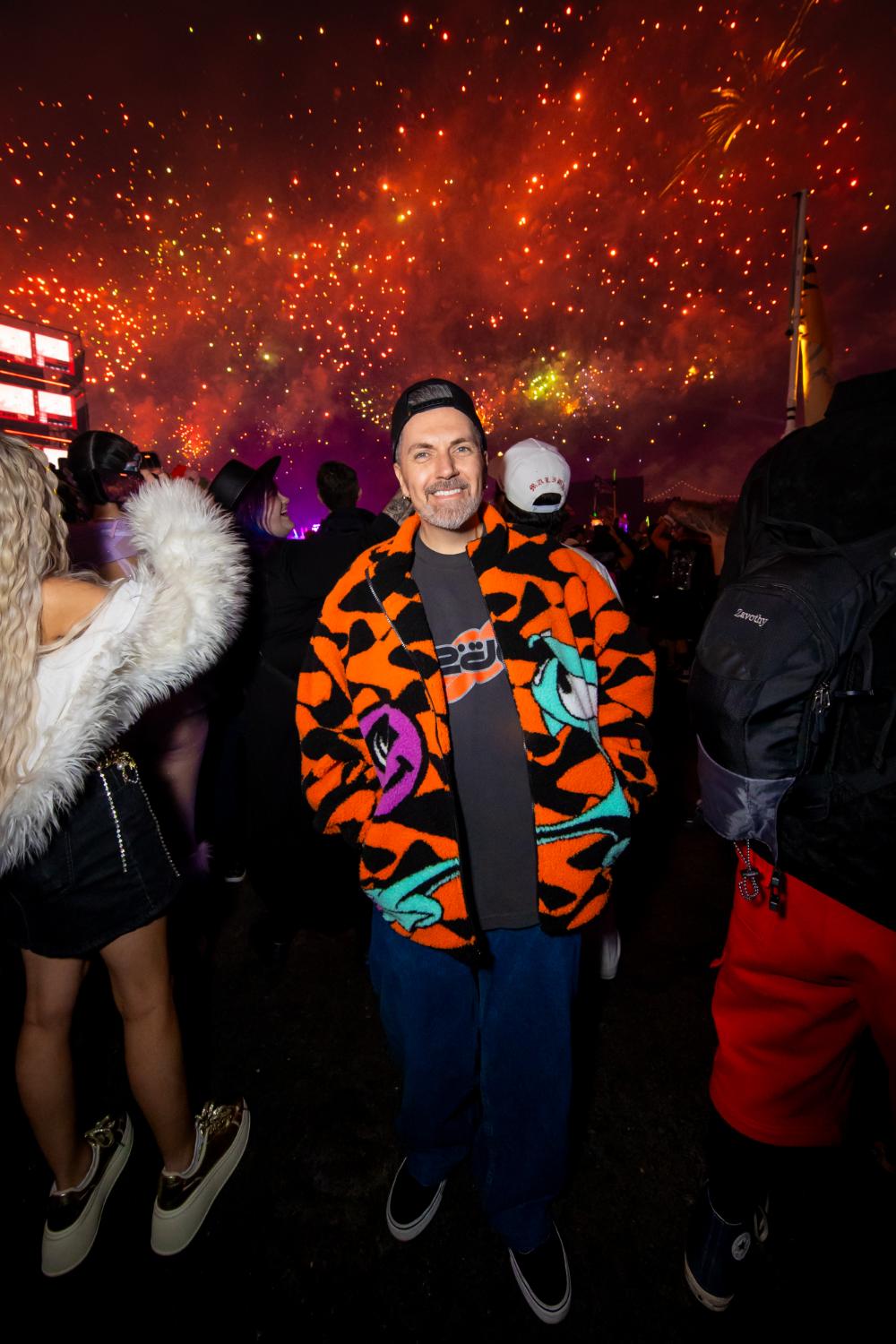
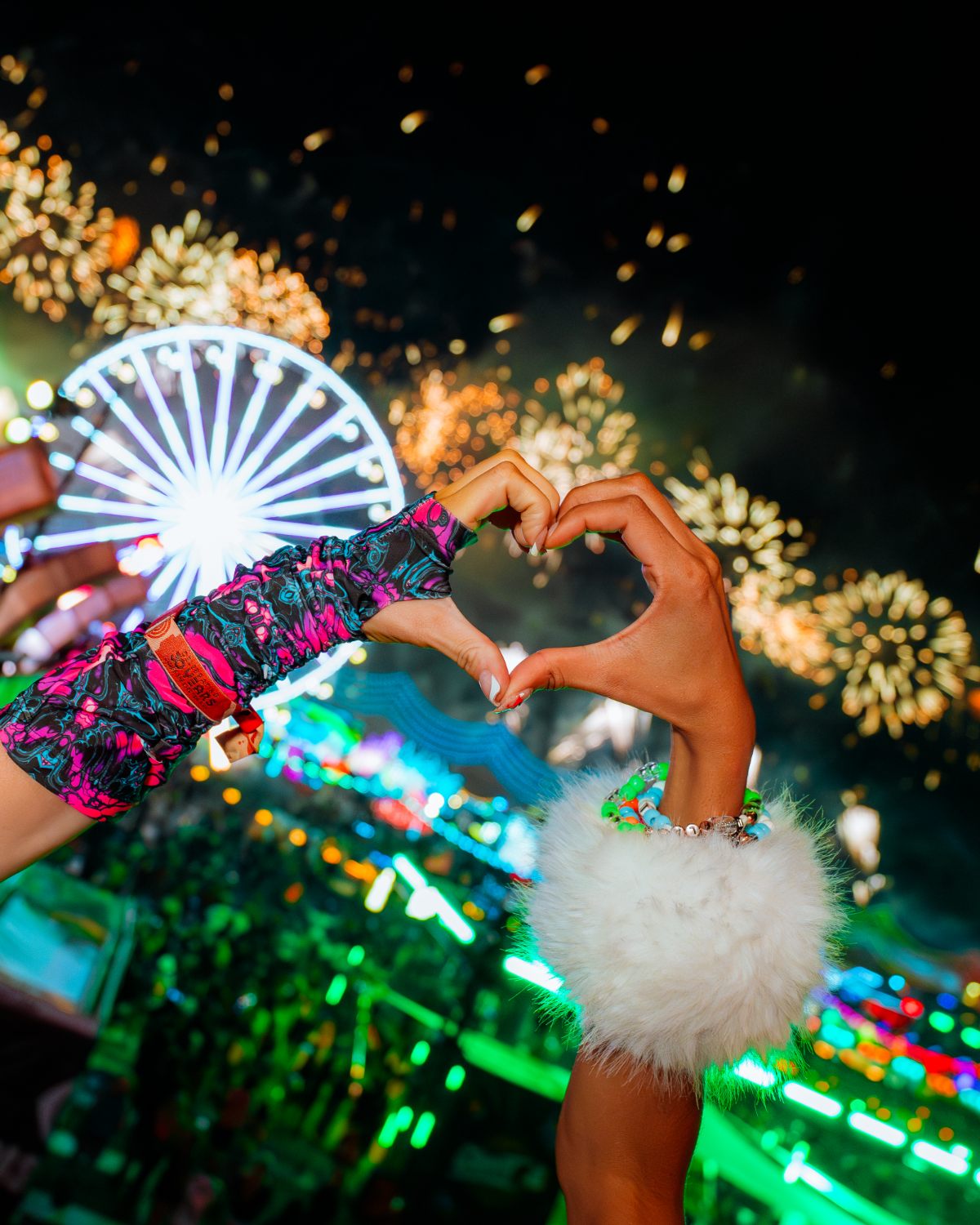
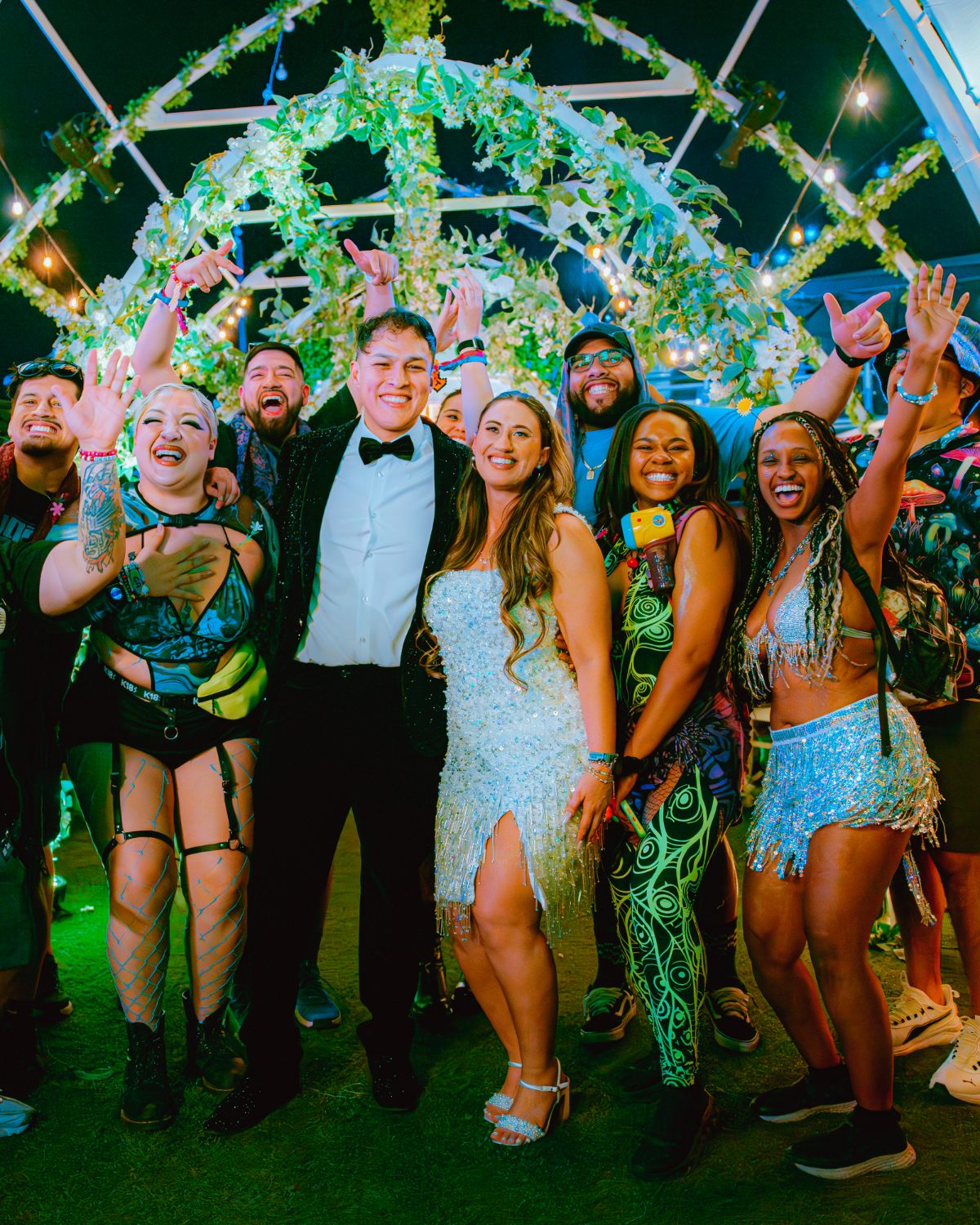
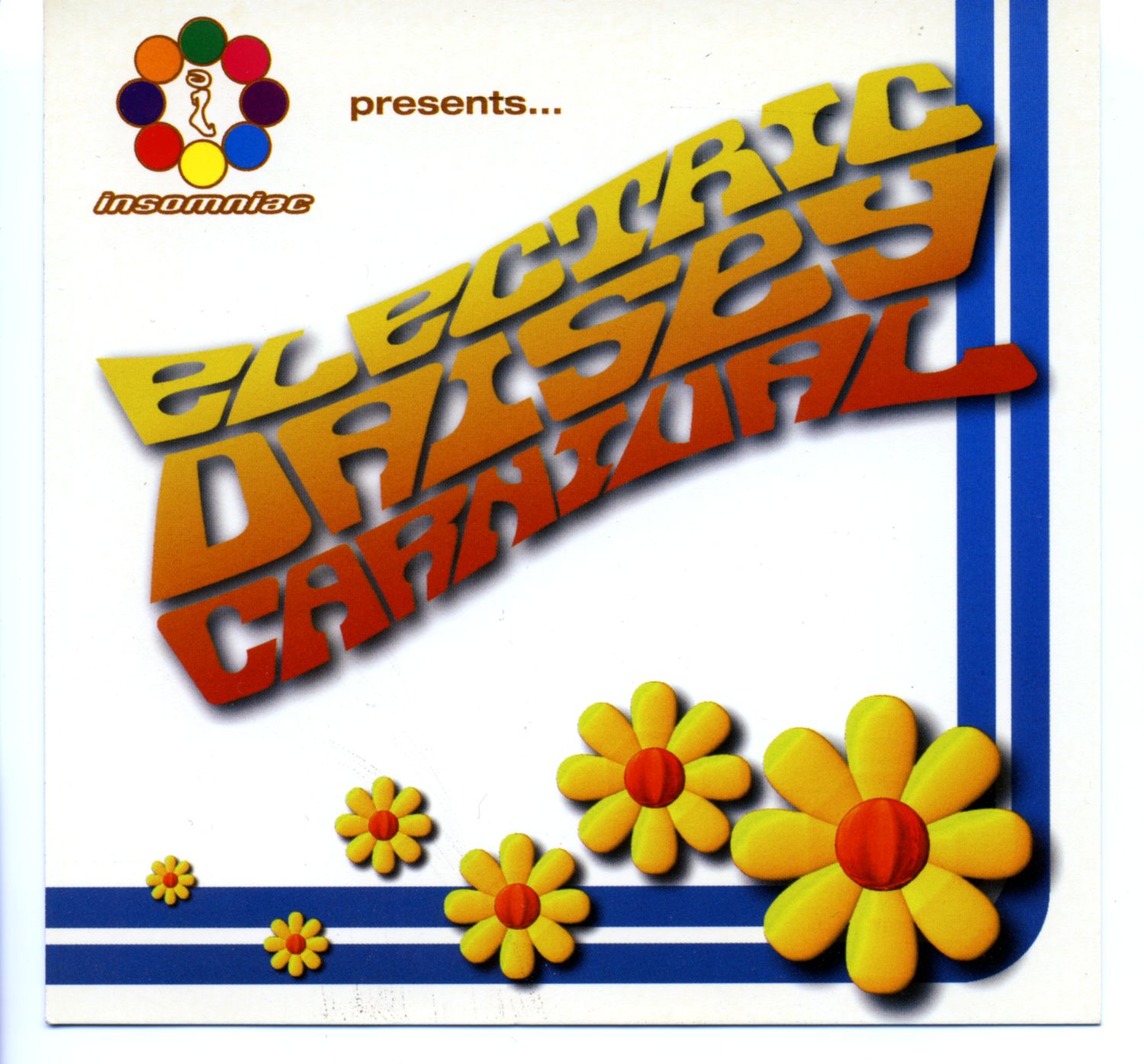
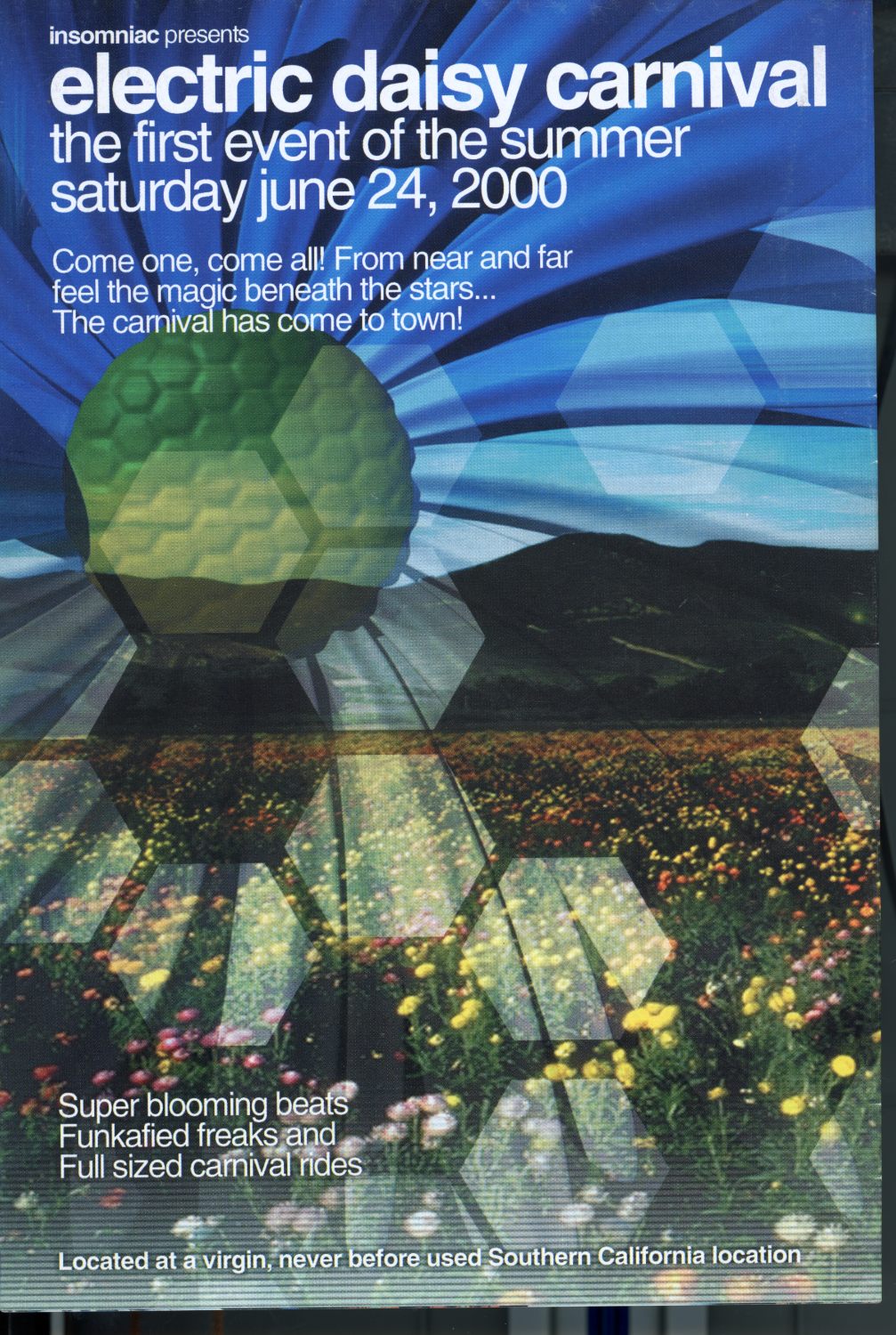
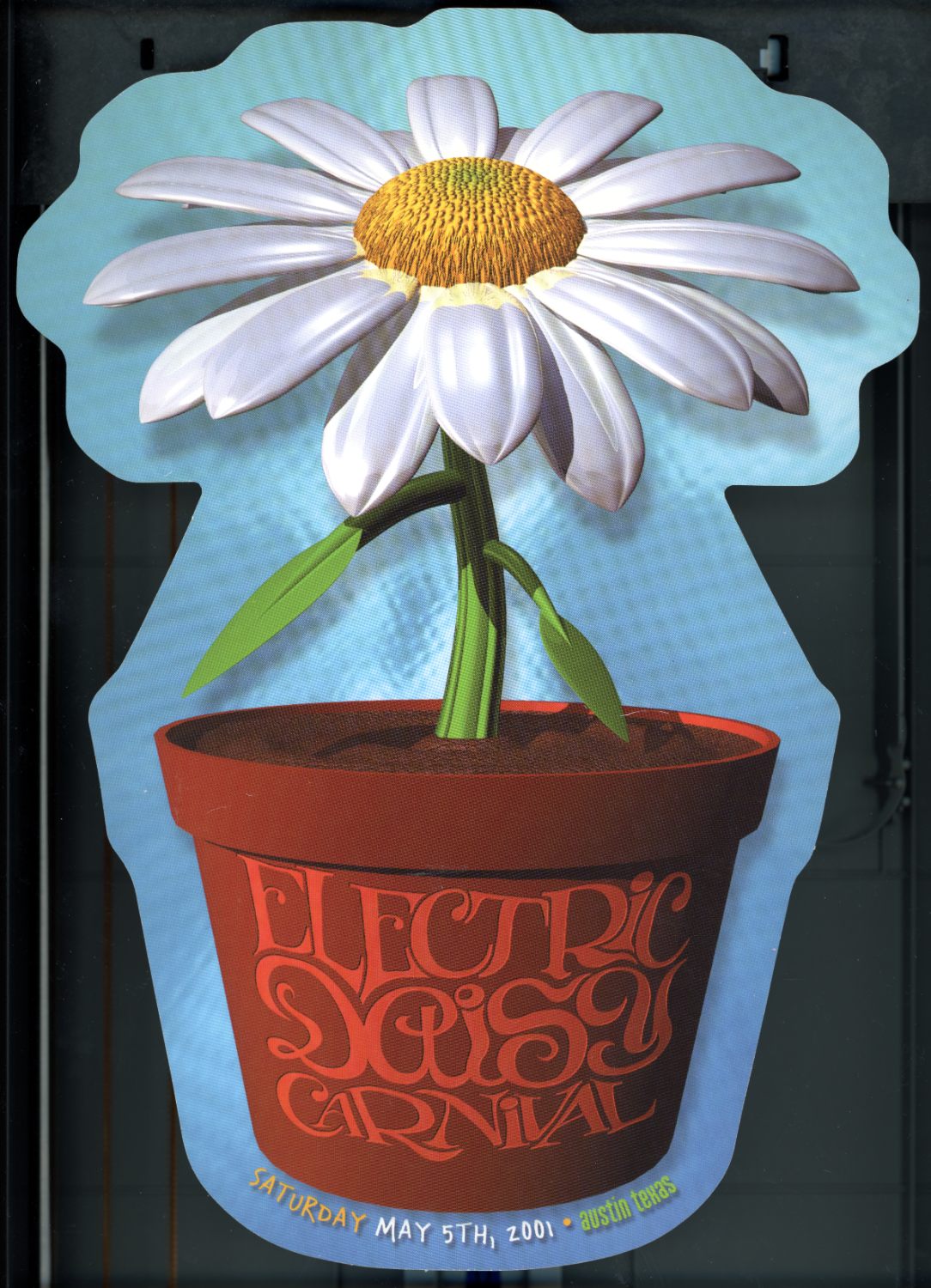
“Happy EDC!”
Strangers have sat next to us and have immediately said hello. They’re the third group in a row to have done that. It’s a friendliness that’s almost jarring for Angelenos who have become blackpilled on humanity by the often anti-social, too-coolness that permeates LA.
“Uh, hi!” we say uncomfortably like cyborgs learning to act like people again. It’s the evening of Friday, May 15, EDC Day 1, just as the festivities are really starting to ramp up.
The two strangers are friends, one from LA, one originally from Europe who lives in Colorado. They now travel the world together hitting up festivals everywhere. But EDC is always the year’s main event and they’ve been going for forever. Now in their early 40s, they’re no longer the youngest attendees but they’re certainly not the oldest. We ask one what his opinion is of Pasquale Rotella, the CEO of EDC producer Insomniac Events. “Oh, ‘Pasqual-ey’? — He’s a good dude. I mean, look at all this.”

EDC 30 (Jamal Eid for EDC Las Vegas)
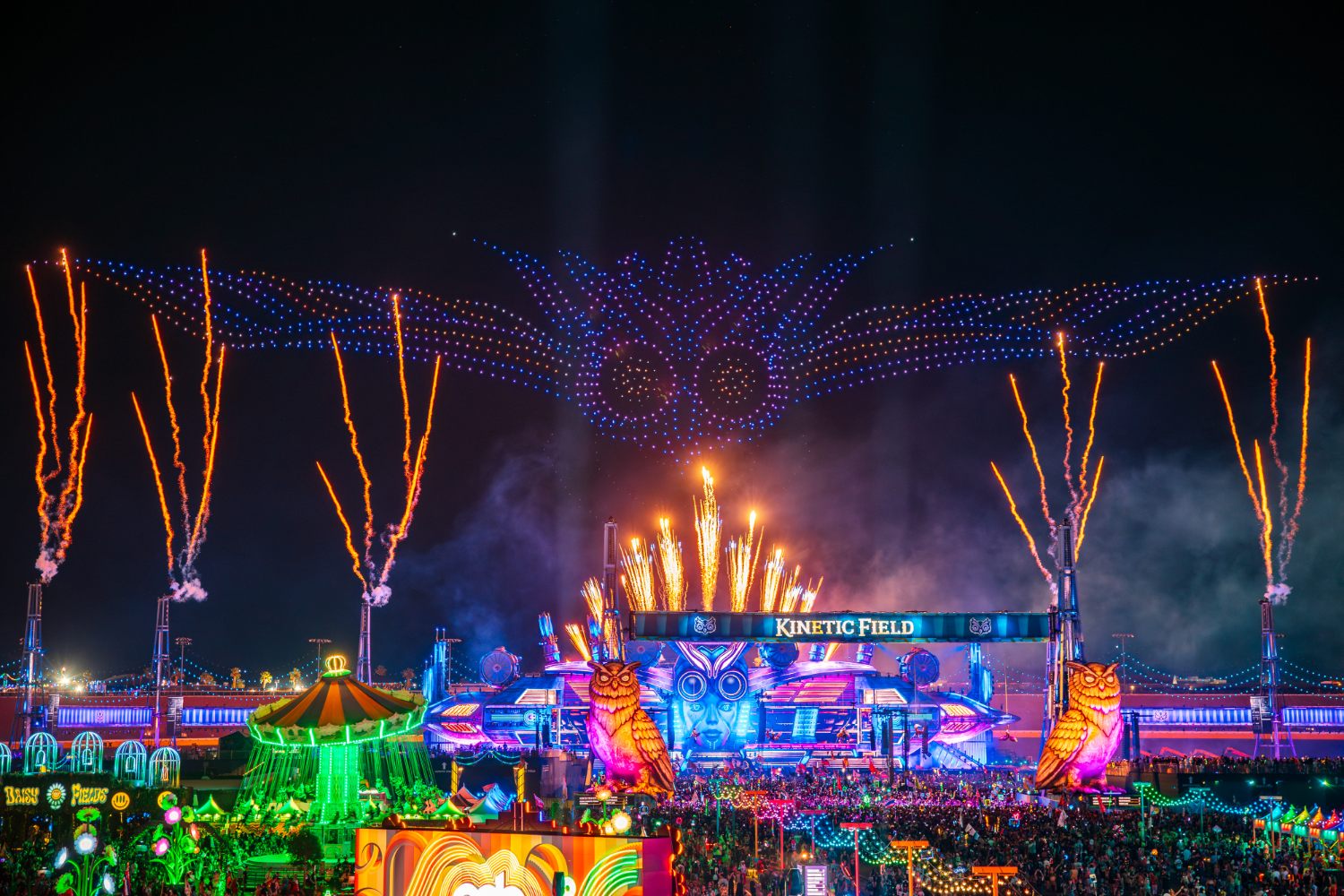
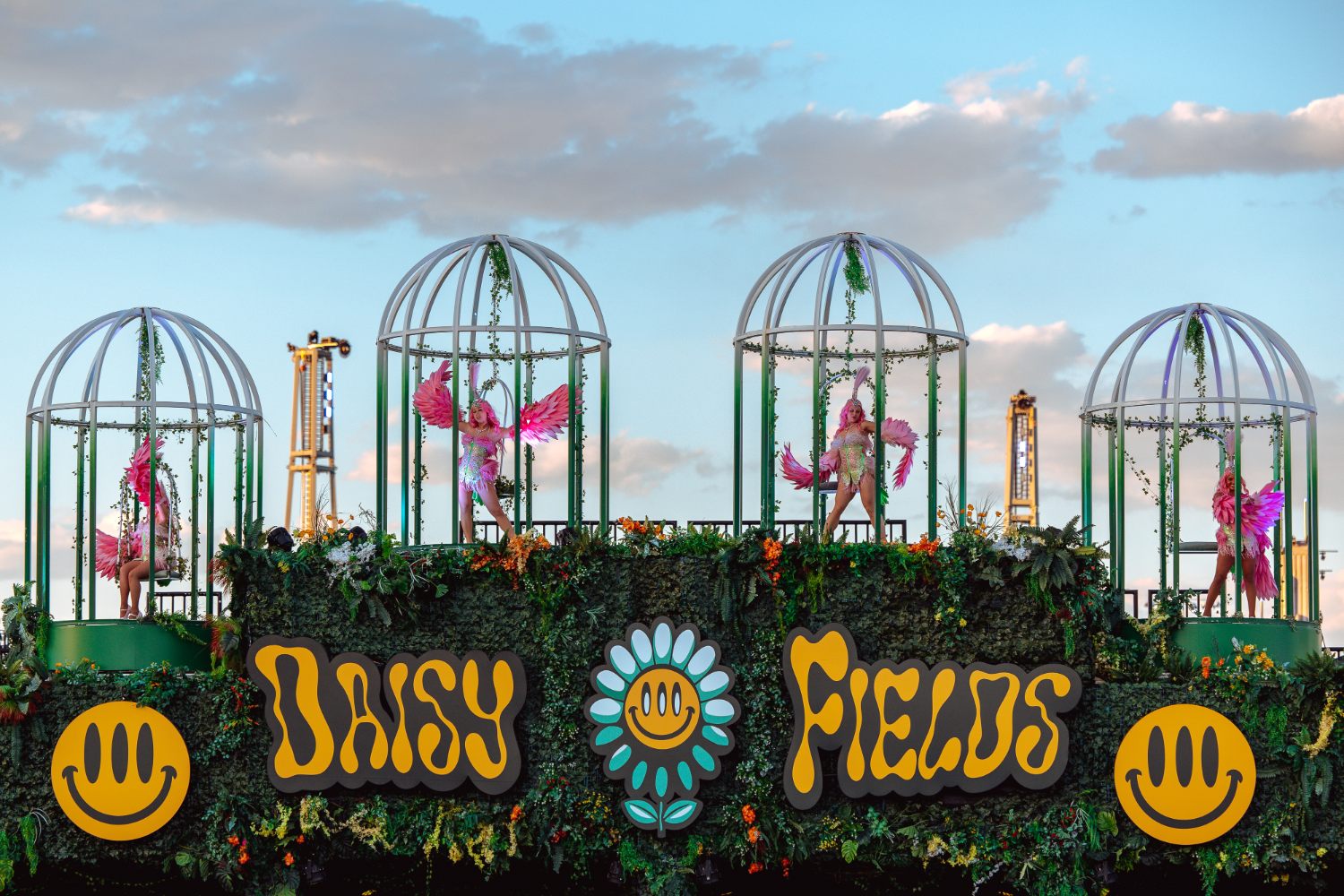
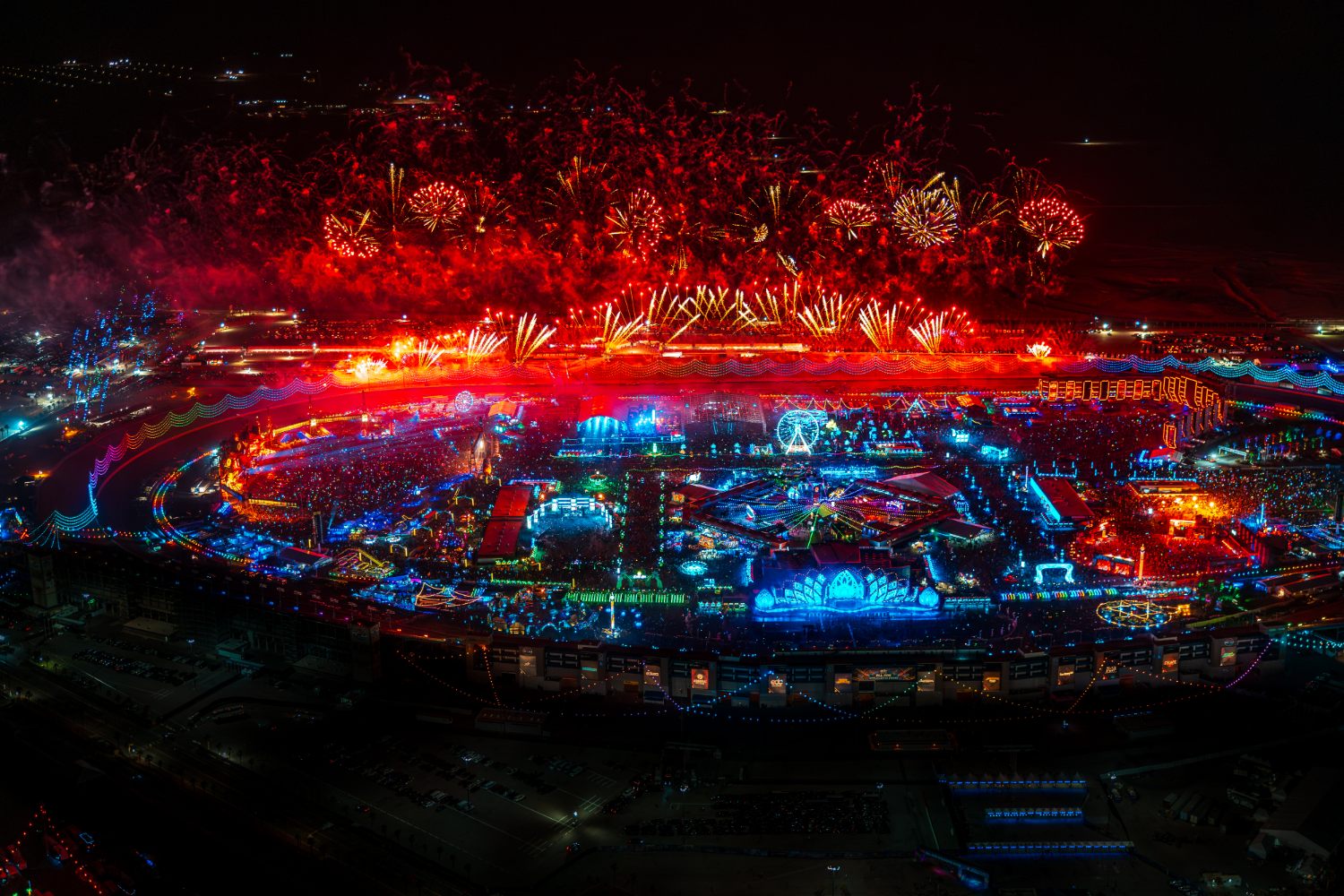
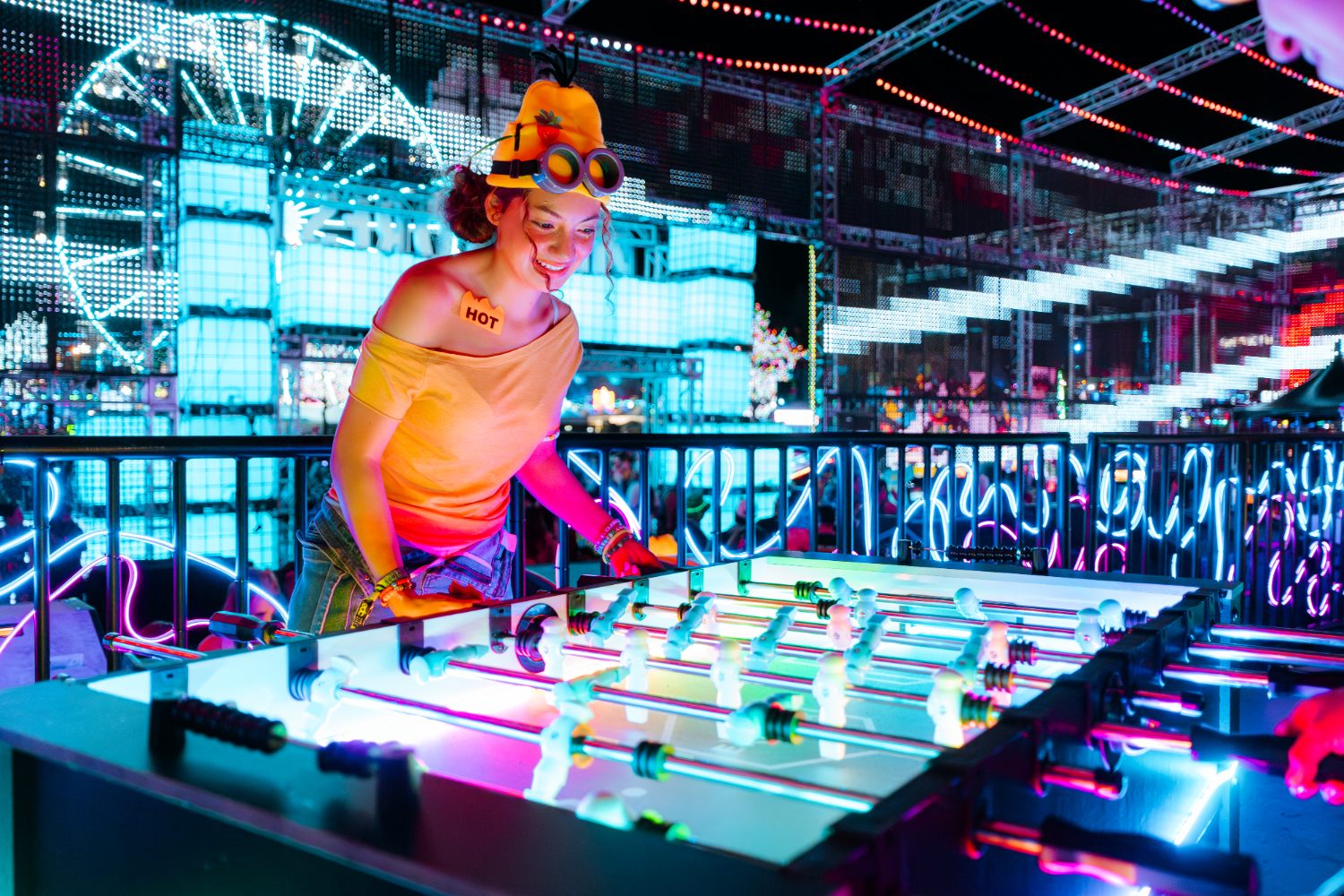
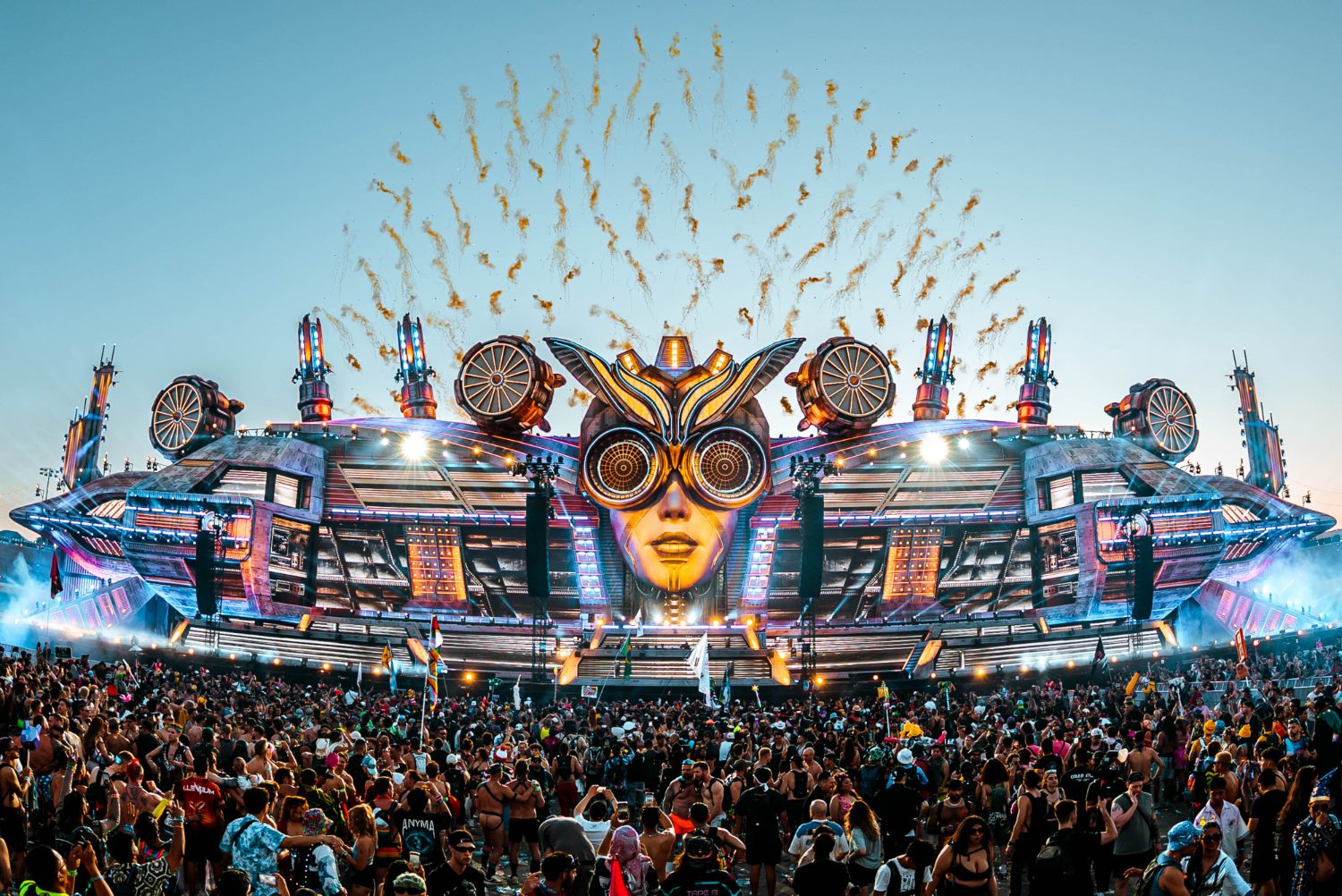
Indeed, it was a good moment to look. It was golden hour and from the bleachers we could see the entire circumference of EDC: a giant playground with ten stages boasting some of the biggest DJs in dance, carnival rides and endless nooks and crannies, all with a hippie, Smurph-like aesthetic. It takes up the entire basin of the Motor Speedway on the northeast tip of inhabited Las Vegas, dramatically cast against the barren desert, like if Mad Max was rewritten as a family film.
“Pasquale did that,” he says.
Pasquale Rotella launched Insomniac in 1993 and has taken it from a company that produces beautiful, illegal underground parties, to legitimacy, to becoming the global leader in dance music production. He sold half his stake in the company to Live Nation in 2013, but Rotella still runs the show out of Insomniac’s new office in Calabasas, where he’s intricately involved in the day-to-day of throwing some of the biggest parties in the world.
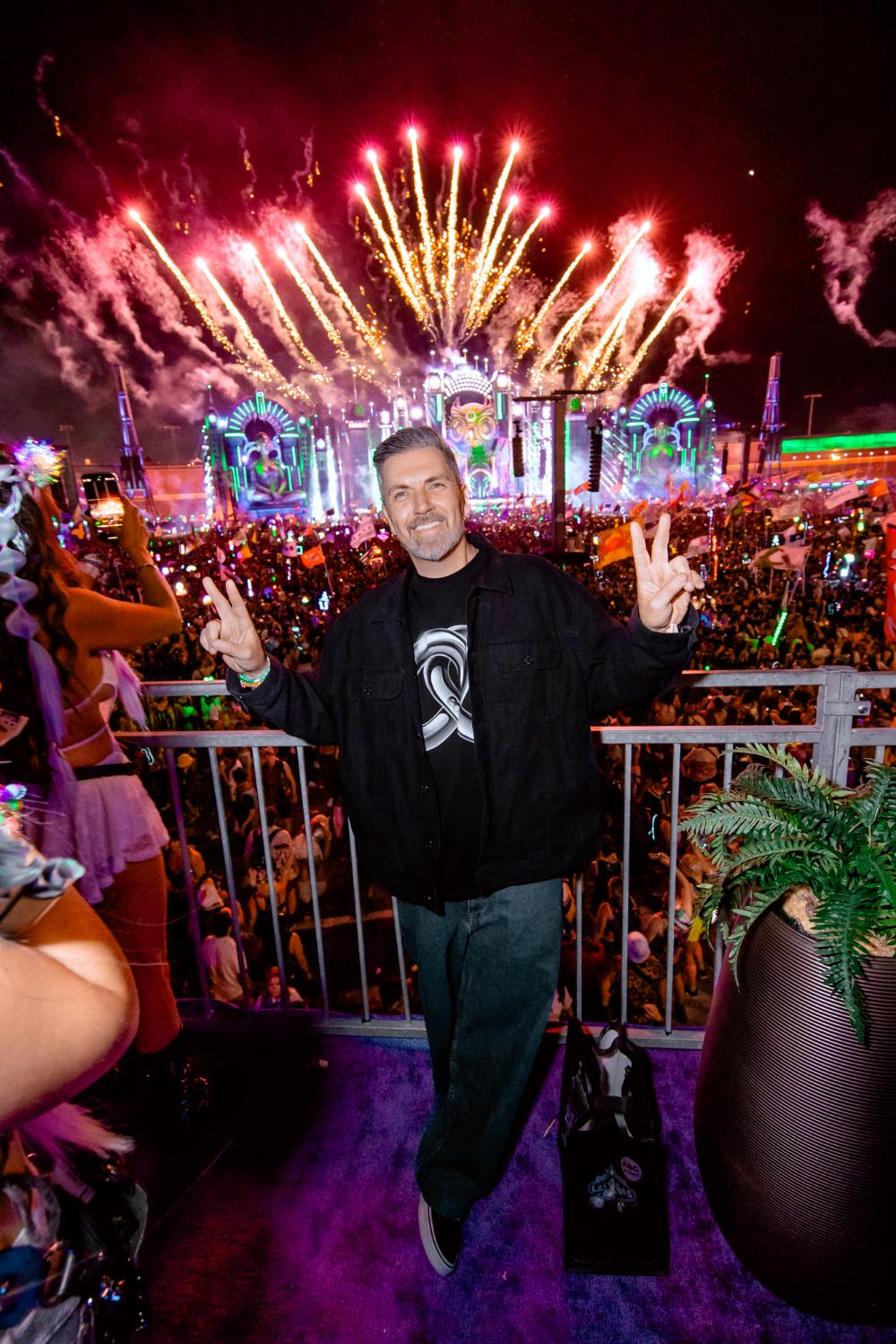
Pasquale Rotella (Photo: Shane O’Neal)
The story of EDC, Insomniac, and Rotella is, in a lot of ways, the story of dance music at large. After all, it’s the music genre that’s most directly tied to in-person activity — “dancing” is the genre’s greatest descriptor. Every year, over 600 million people attend electronic music events globally. The growth of popularity of dance music events is the growth of the music genre. They’re fully, symbiotically intertwined.
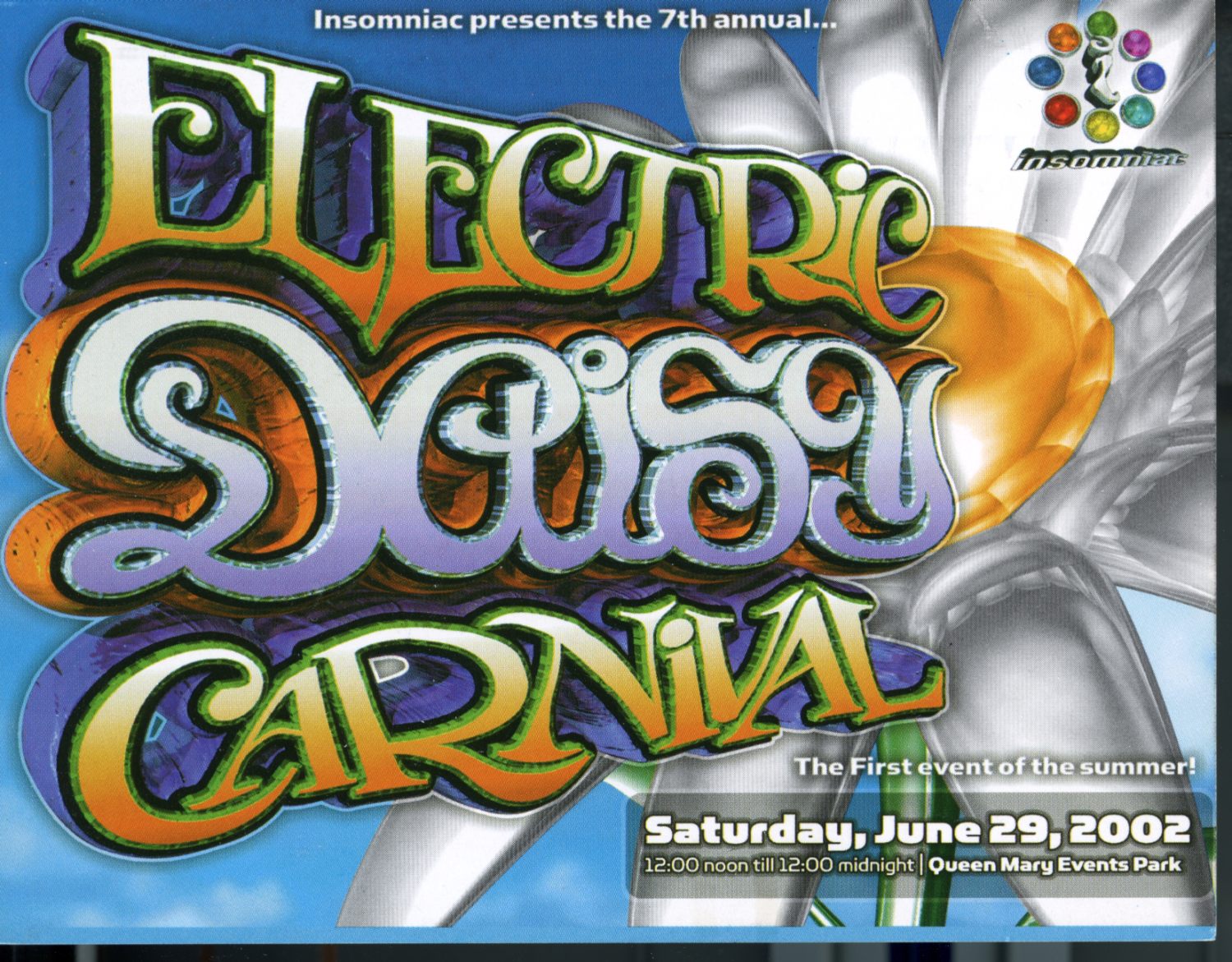
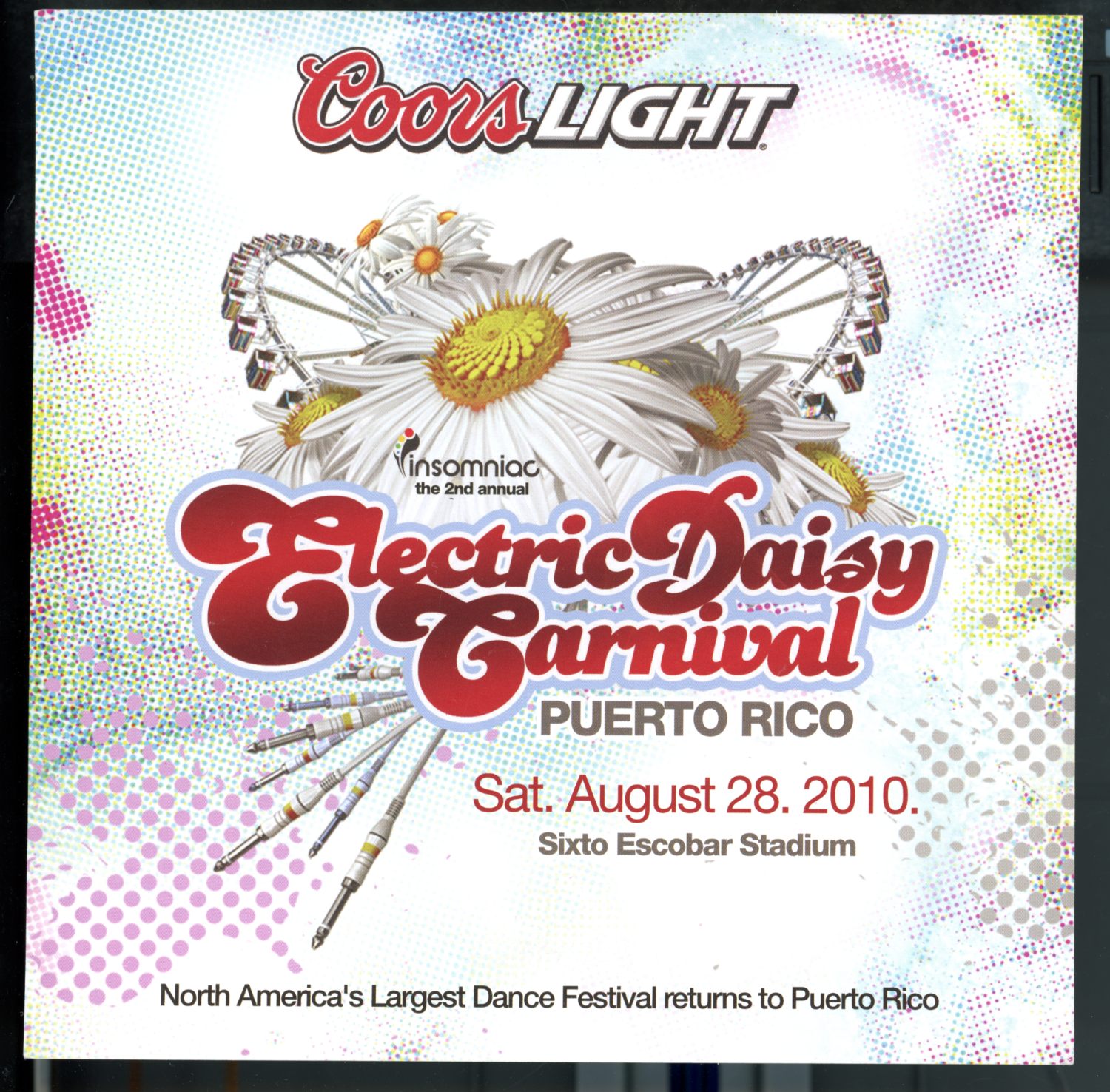
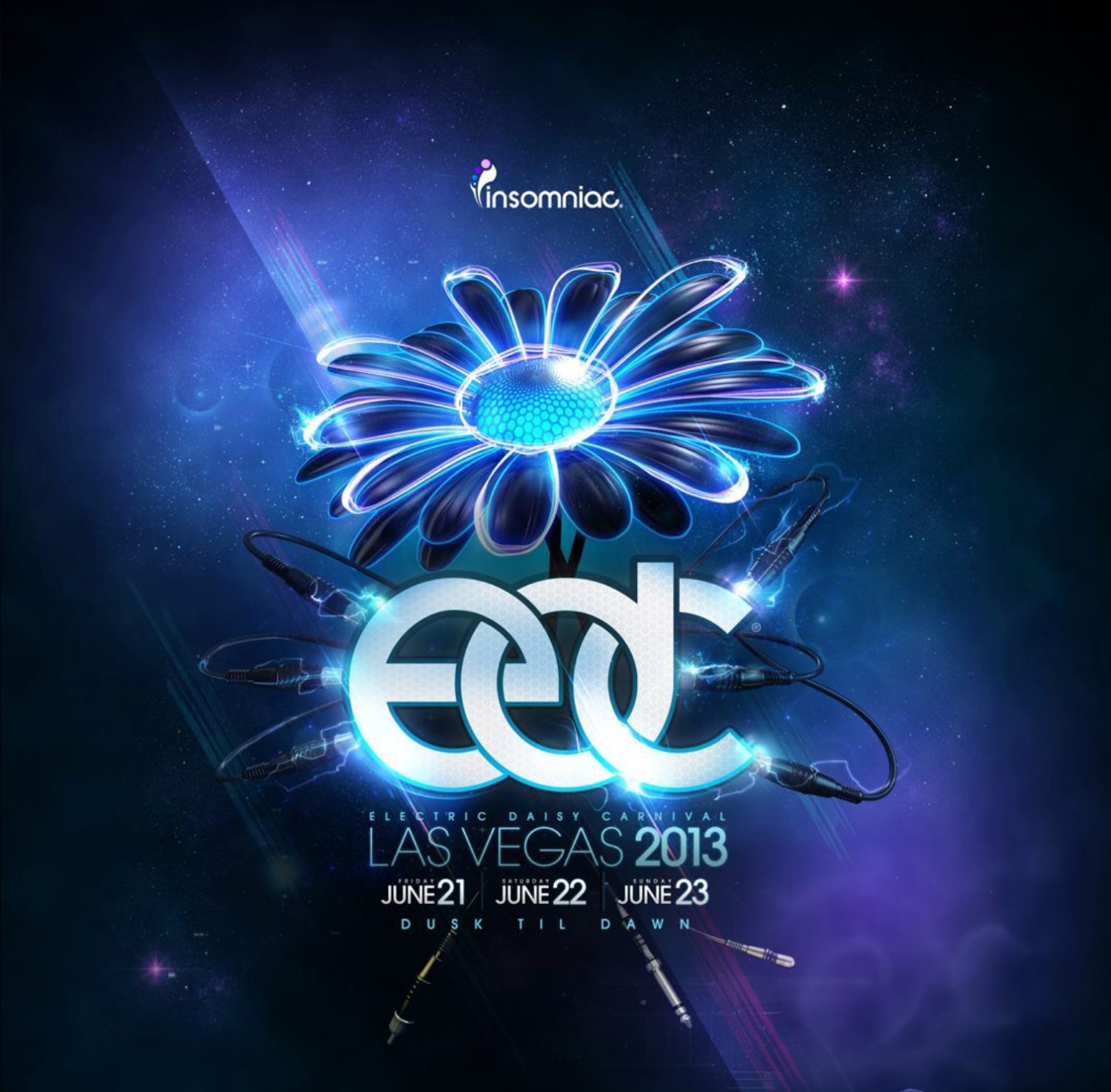
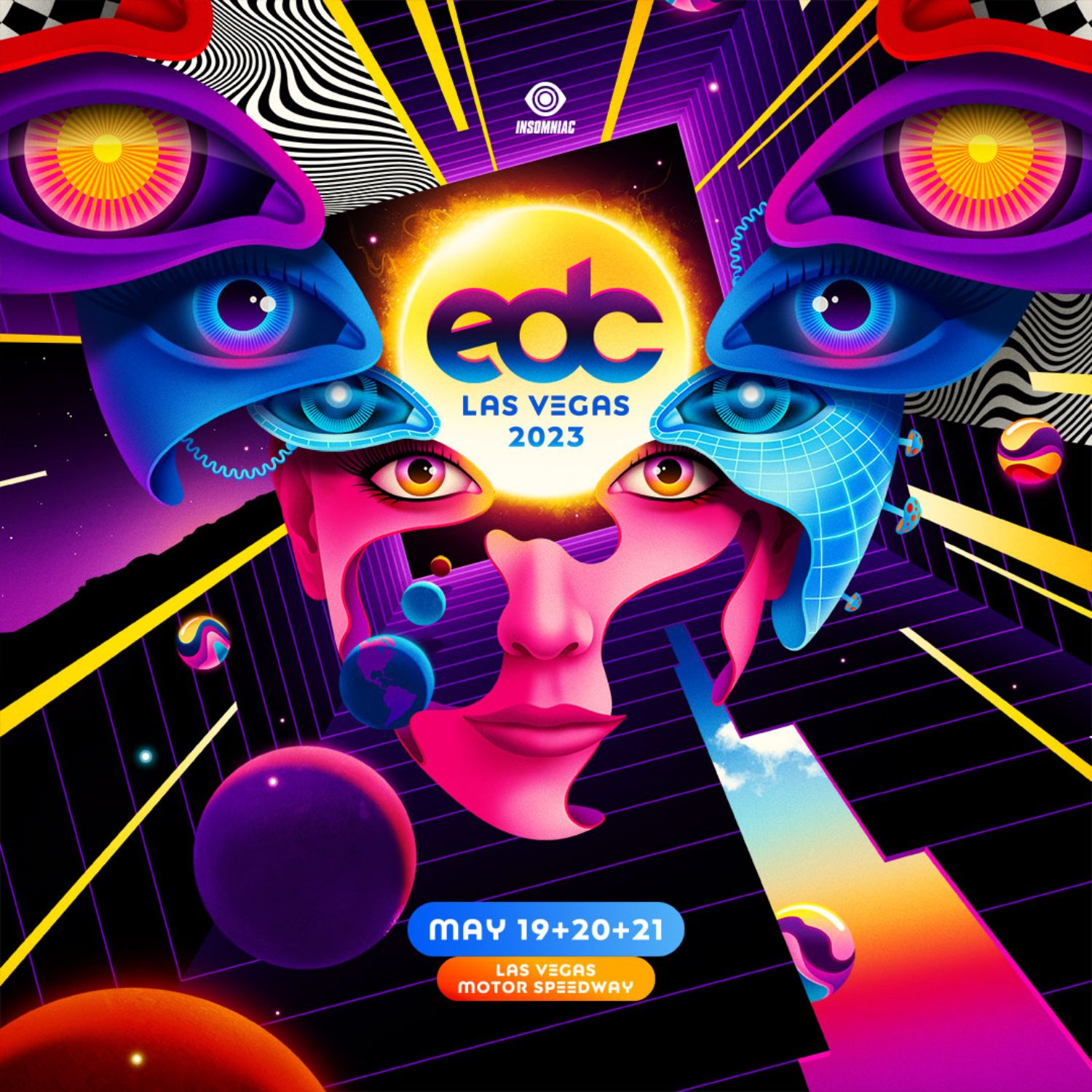
This year marked the milestone 30th anniversary of Electric Daisy Carnival under Rotella’s Insomniac. Early versions took place in the 80s and early 90s, but it was in 1997 that the first Insomniac version was launched at the Shrine Expo Hall. Following several location moves throughout Southern California (and the overdose death of a 15-year-old at EDC in 2010) EDC landed in Las Vegas in 2011 and has remained ever since. There are now satellite EDCs thrown across the globe, including seven planned for 2026. At the flagship Las Vegas version, over 170,000 attend per day, making the three-day attendance well over 500,000.
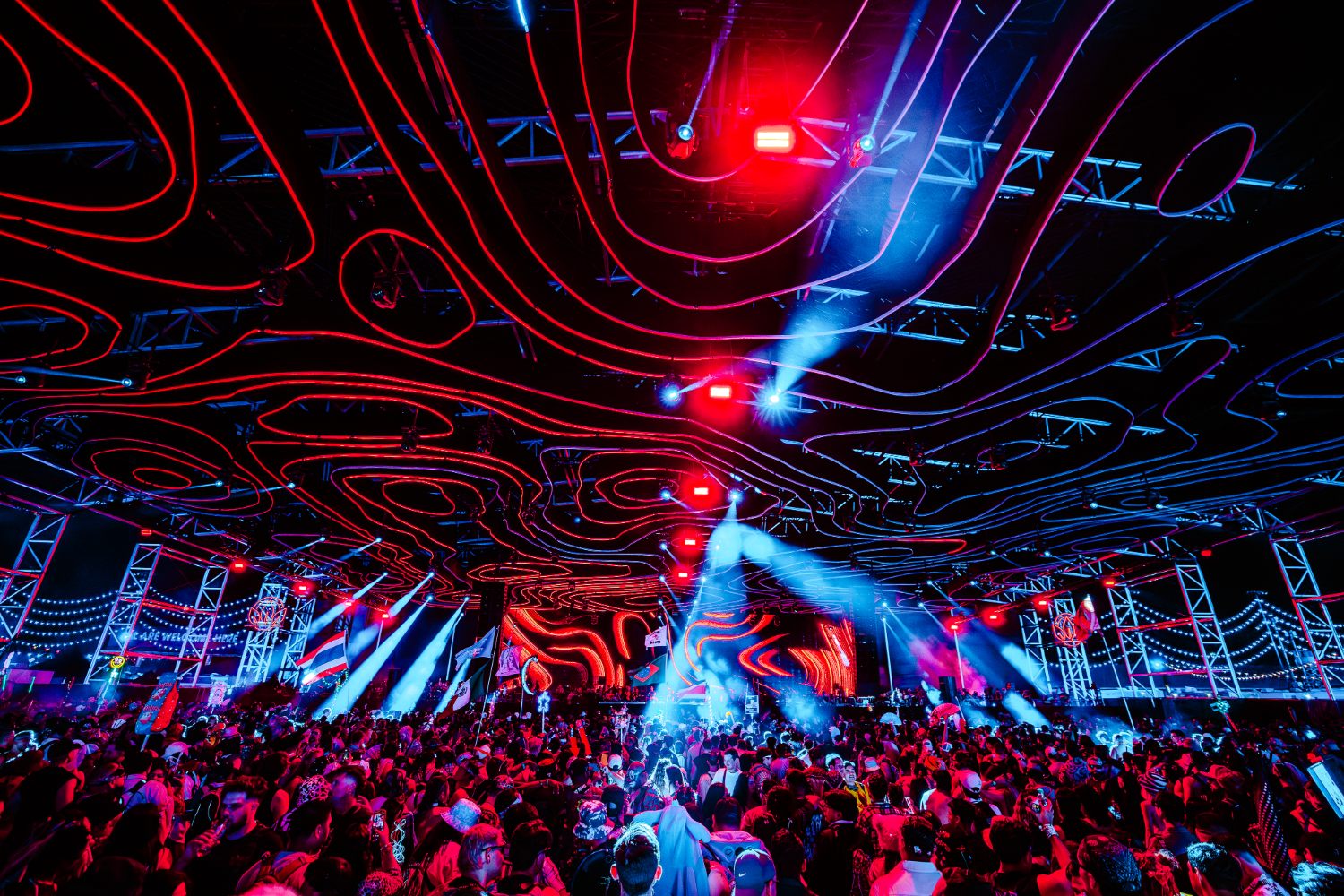
For their 30th, Insomniac went all out with their most elaborate EDC ever. “I’m really excited about our new bassPOD, kineticFIELD, and circuitGROUNDS stages,” Rotella told LA Weekly when we sat down with him at his office before the fest.
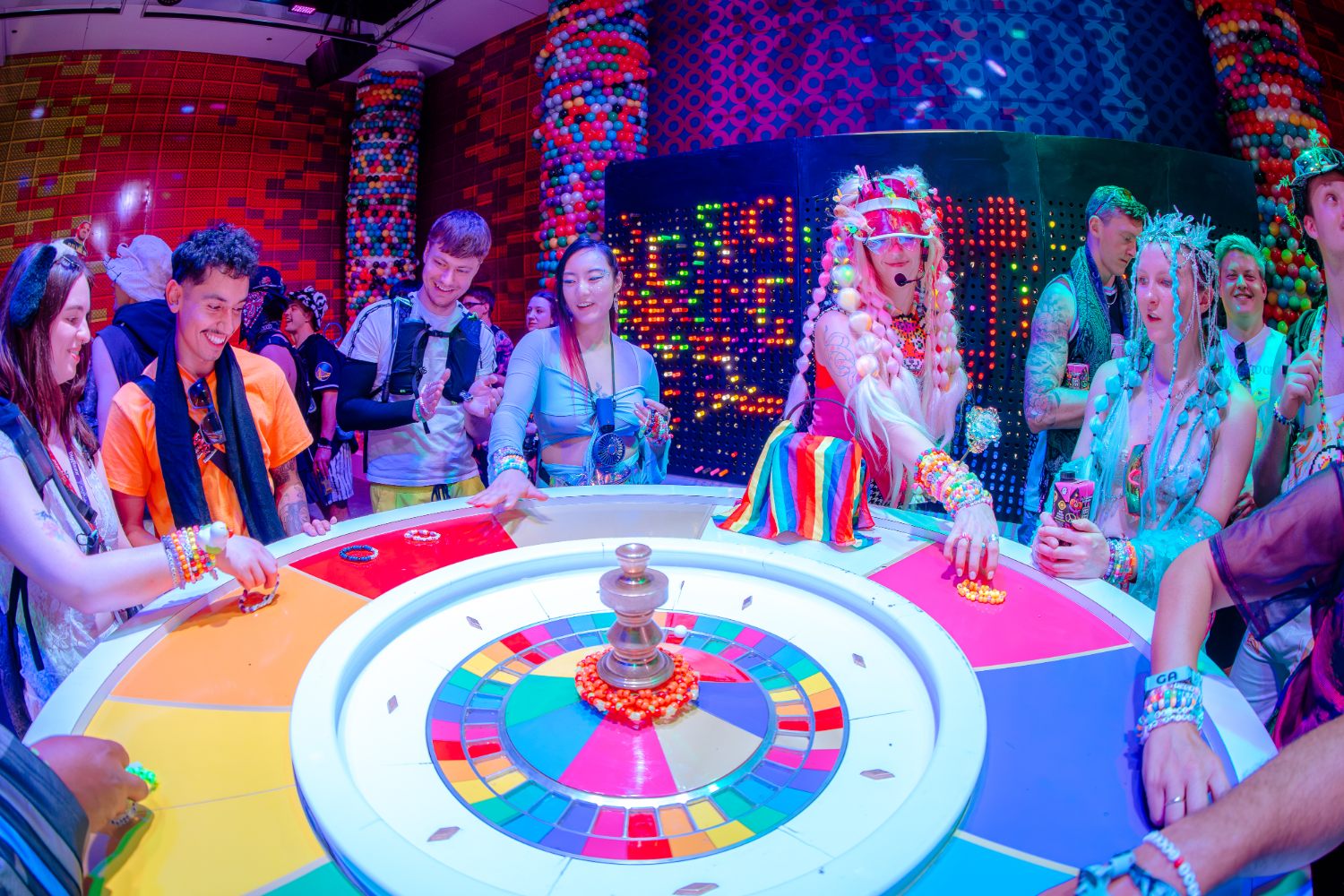
The 30th also introduced the Insomniac Fridays Stage, a throwback to one of the earliest parties Rotella threw. The indoor, warehouse-like stage during the weekend was packed with legends behind the decks and on the wild floor. “I meant for it to be an add-on for the 30th anniversary but the response has been so positive that I want to continue bringing Insomniac Fridays back every year,” says Rotella.
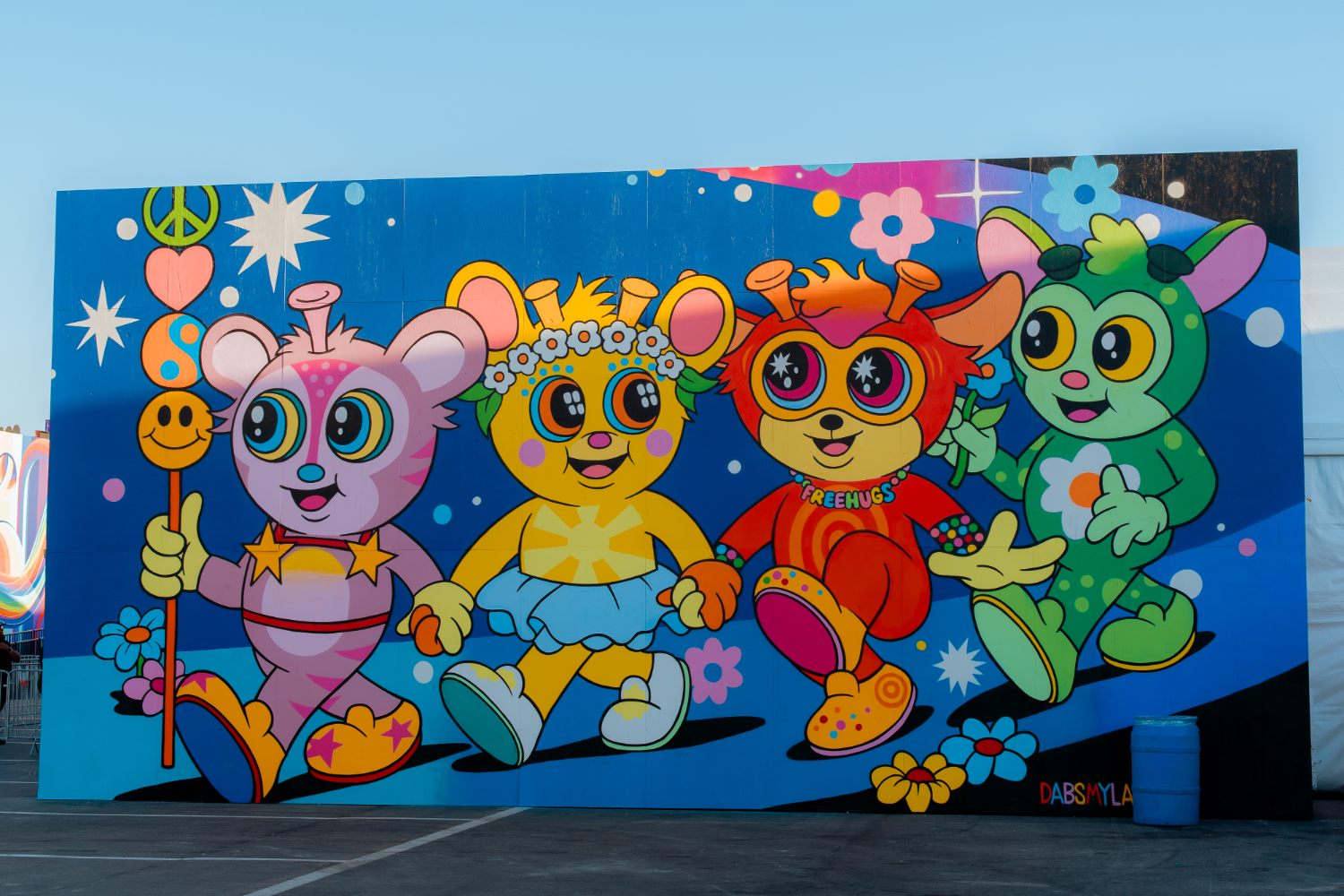
He also detailed production advancements, like burying power lines for Daisy Lane and Electric Avenue underground to avoid cable ramps, and a clothing drop with visual artists DABSMYLA.
And on Day 0 of EDC this year, Thursday, May 14, Insomniac hosted the World Party Parade, a giant free parade that took place on the Las Vegas strip. Inspired by the Berlin Love Parade, Rotella said the parade was a long-time dream of his.
On Tuesday, earlier this week, Rotella announced that next year’s EDC would be two weekends, with the first weekend called EDC DUSK, and the second, EDC DAWN. This brings it in line with Tomorrowland, the annual dance festival held in Boom, Belgium, the last two weekends of July, and Coachella.
He noted in the announcement that extending to two weekends means each weekend will have a reduced capacity, so a less packed Speedway and less congested roadways, travel and accommodations. They’ll also be cutting the starting price for a ticket per weekend to around $400, down from $500 for 2026. They’re offering an option to do both weekends starting at around $600, and are planning programming for the weekdays in between for those who want to make it a marathon 12-day affair.
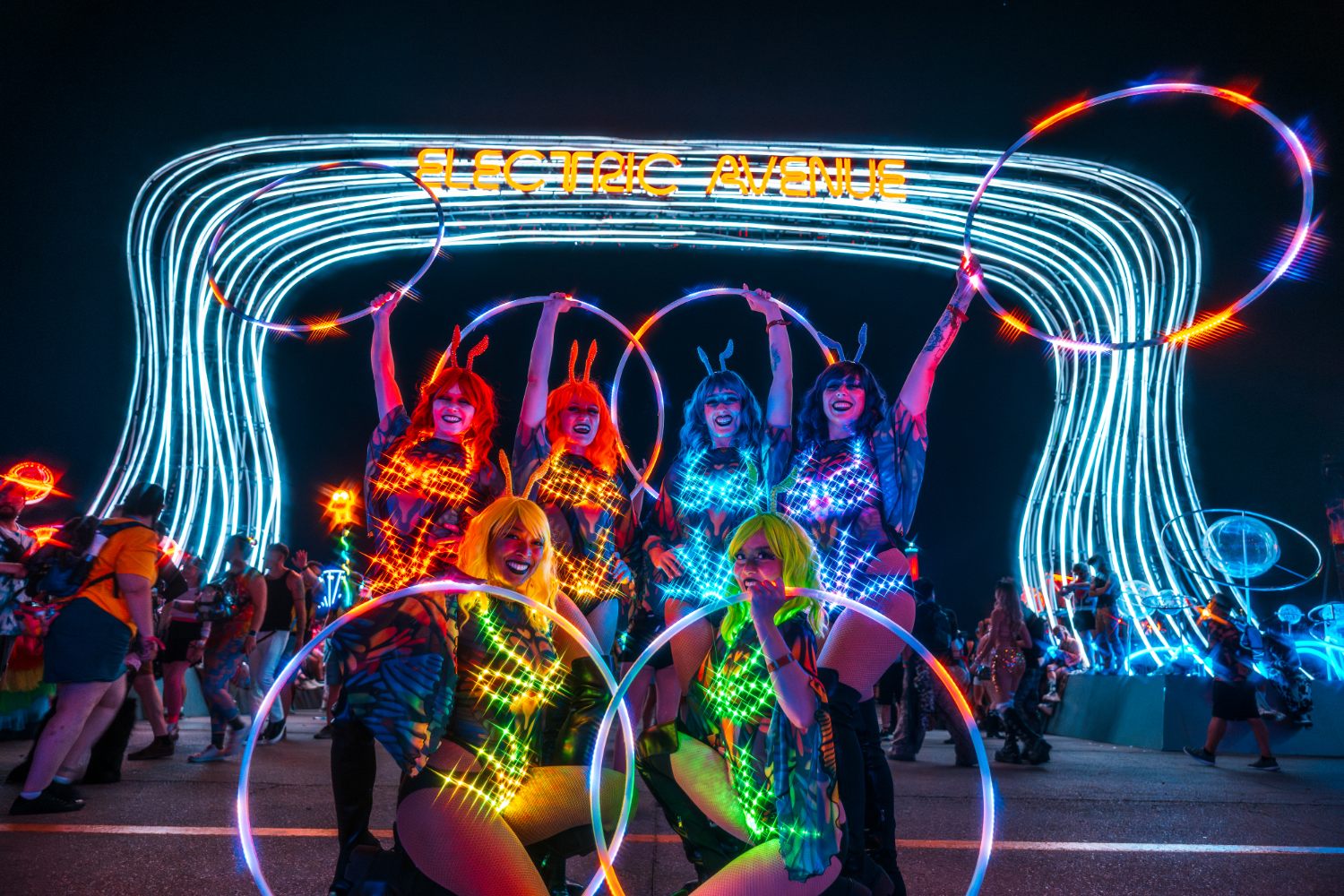
EDC 30 (Jake West for EDC Las Vegas)
Rotella told us that two weekends will give attendees more time to enjoy everything EDC at a comfortable pace, and that the idea came from “being a hardcore raver, getting the ‘EDC Blues’ after EDC every year, and listening to our community while continuously asking ourselves how we can continue evolving in meaningful ways.” He was also inspired by other long events, like Burning Man at nine days, and Ibiza’s dance music season, which lasts about six months.
Rotella is bursting with concepts for the in-between weekdays. “One idea is reintroducing and reimagining ‘EDM Biz,’ a music conference we produced during EDC Week back in 2011,” he says. “At the time, we realized the industry was still in its formative years, and it wasn’t the right moment to build the conference on the level we envisioned. Now feels very different.”
They’re also contemplating an award show to celebrate achievements in dance, a pop-up art gallery featuring artists in the rave community, giving space to artists who have ideas for their own activations, and of course, raging parties. “It’s going to take some time, blood, sweat and tears to bring everything together, so not all of these ideas may happen in the first year, but we’re fully committed to building them over time.”
Tickets for the EDC 2027 went on sale today, May 22, at noon at lasvegas.electricdaisycarnival.com.
If you were to go back in time a hundred years ago, or to Woodstock 1969, or even to the early 90s when Rotella was a teenager throwing events, and asked them to imagine the future — sure, there would be no flying cars, but there would be EDC.
How big will it be? Gigantic. It will be safe and go all night. There will be so many acts they’ll have to print the set times with a phonebook font to fit all the artists on one page. You can drink and do other things, but a remarkable number of attendees will be happily sober. For those that go overboard, there will be staff that will trip-sit you and get you back on your feet. They’ll carry Narcan, a drug that can reverse an opioid overdose. The bathrooms will be, well, fine, and existent. You’d be able to camp nearby or stay at a nice hotel on the Las Vegas strip. Traffic will be tough but manageable.
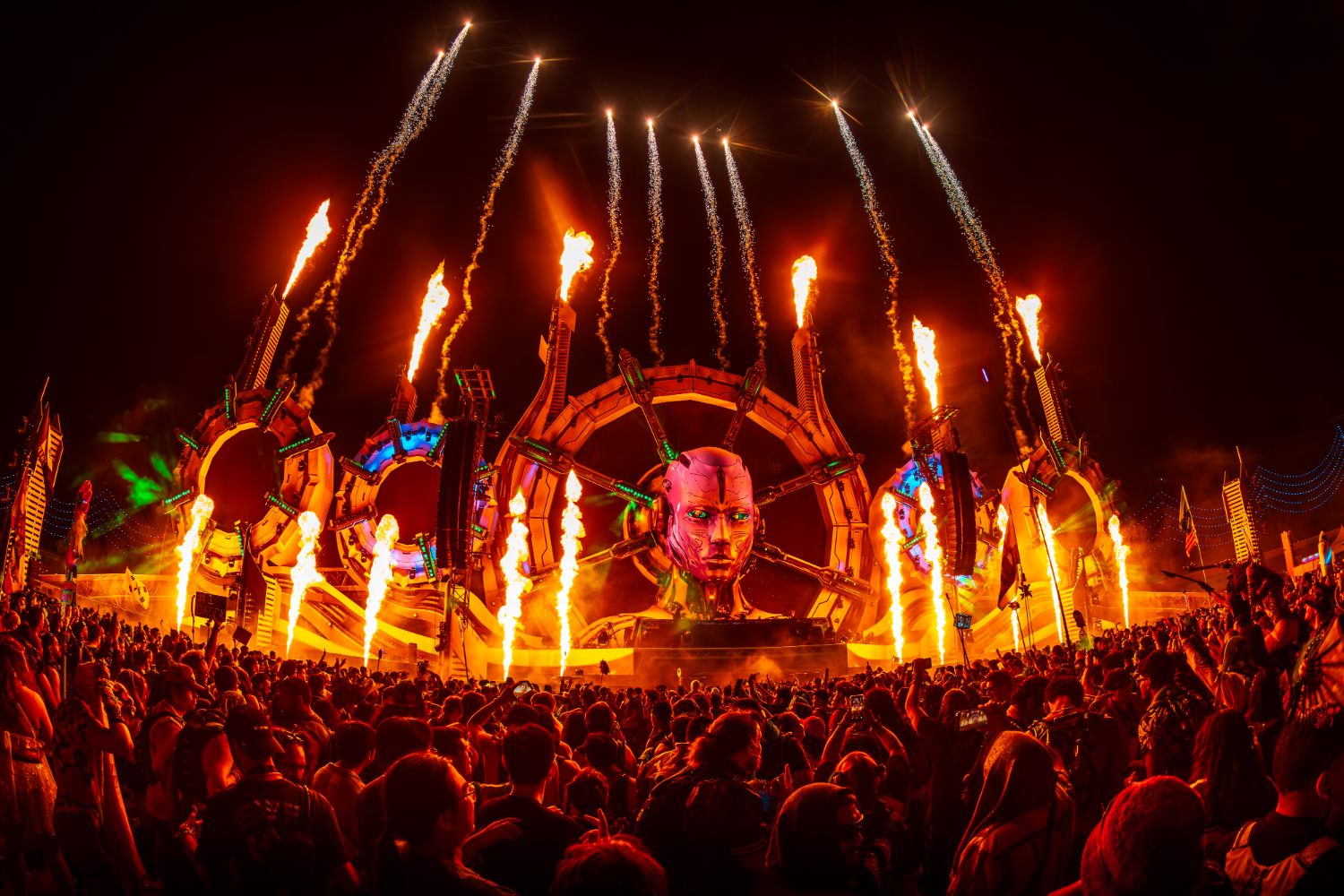
EDC 30 (Jake West for EDC Las Vegas)
It will be expensive if you’re comparing it to doing nothing, considering dinner and a movie now cost more than a hundred bucks. But the per-day cost of the ticket will be the same as going to a theme park and the number of artists you’ll be able to see will make it a great bargain. There will be premium areas and VIPs stages, but the vast majority — the core of the event — will be General Admission. Most of the crowd will be blue-collar.
Most importantly, anyone can go. A woman in her 50s can wear a shirt with 80 colors and walk around with a sprout growing out of her Titleist visor. Dudes can cuddle-puddle with their boys without the threat of immature sneers. People of all shapes and sizes can wear whatever they want. You can let your freak flag fly, or you can be a total normie, like you’re squeezing it into your life between your 9-5.
Now imagine that Insomniac didn’t exist. It’s easy to say, well, another company or collective would have come in to fill the void. That’s what Rotella himself said when we asked: “There are so many passionate people who love the rave scene. I started Insomniac because there wasn’t much happening at the time. I believe there were others who shared that desire for the scene to exist, and if I hadn’t stepped up, someone else surely would have.”
It’s a nice thought, and LA is a beautiful place, brimming with creativity and endless possibilities. But it’s also a graveyard of subcultures, events, and scenes that have risen then dissolved due to mismanagement, infighting, or plummeting demand. Just think of all the music festivals that used to happen in LA that no longer exist.
Dance music and events are so ubiquitous that it’s hard to imagine a world without them, but in the scheme of things, it’s still a nascent genre. If you’re relatively new to it, you may take for granted the fights, slogs, organization and determination that needed for it to get here. No future is promised, it’s all tenuous at best.
1997 EDC (Courtesy of Insomniac Events)
“Our greatest milestone is simply still being here after 33 years,” Rotella says. “Given the challenges of the rave industry, each year feels like an achievement.”
In order for a cultural movement to survive, you need people at the top who can be at once passionate artists and business hustlers who can make things happen — and most importantly, keep things happening. They need to strike the balance of keeping the movement alive without losing sight of the magic.
Rotella insists the reason he’s been in the game this long is because of his passion, and that he wouldn’t have made it this far if he didn’t have that. He outlined that for most of his first 20 years, dance music was a money-losing proposition.
“If you weren’t a raver, it didn’t make any financial sense,” he recalls. “And you can also go to jail at certain points. You could work the entire year to be in debt. It wasn’t even about not making money — it was about actually working to be in debt, which most promoters did.”
He bet on his passion through massive hurdles, indictments, ups and downs of the industry, and it has paid off. Yes, today he’s certainly reaped the rewards, but it was because of that effort that he’s one of the people most responsible for the thriving state of electronic music today.
He hosted the first legal party in 1997 and pioneered raves at large-scale venues like the LA Sports Arena and Coliseum, a move that was significant in breaking down the negative stigma surrounding the community at that time. Insomniac also pushed the movement globally, launching the first international EDC in the UK in 2013. During the COVID lockdown, they created connecting experiences for their audience like Rave-A-Thons, Electric Mile, and various drive-in events.
Rotella said he’s most proud of building the Insomniac team that he’s still actively developing. “It’s been a challenging journey, but we’ve created a diverse range of raves, festivals and events in our portfolio, each uniquely designed to cater to different communities within rave culture.”
Born in LA, Rotella came into his own on the Venice boardwalk where his parents ran a deli, and he got into hip-hop and breakdancing. Like many of us, he was brought to his first electronic music party by a friend, not sure of what to expect, but was instantly captivated. “When I went to my first parties, it was like, I’m home.”
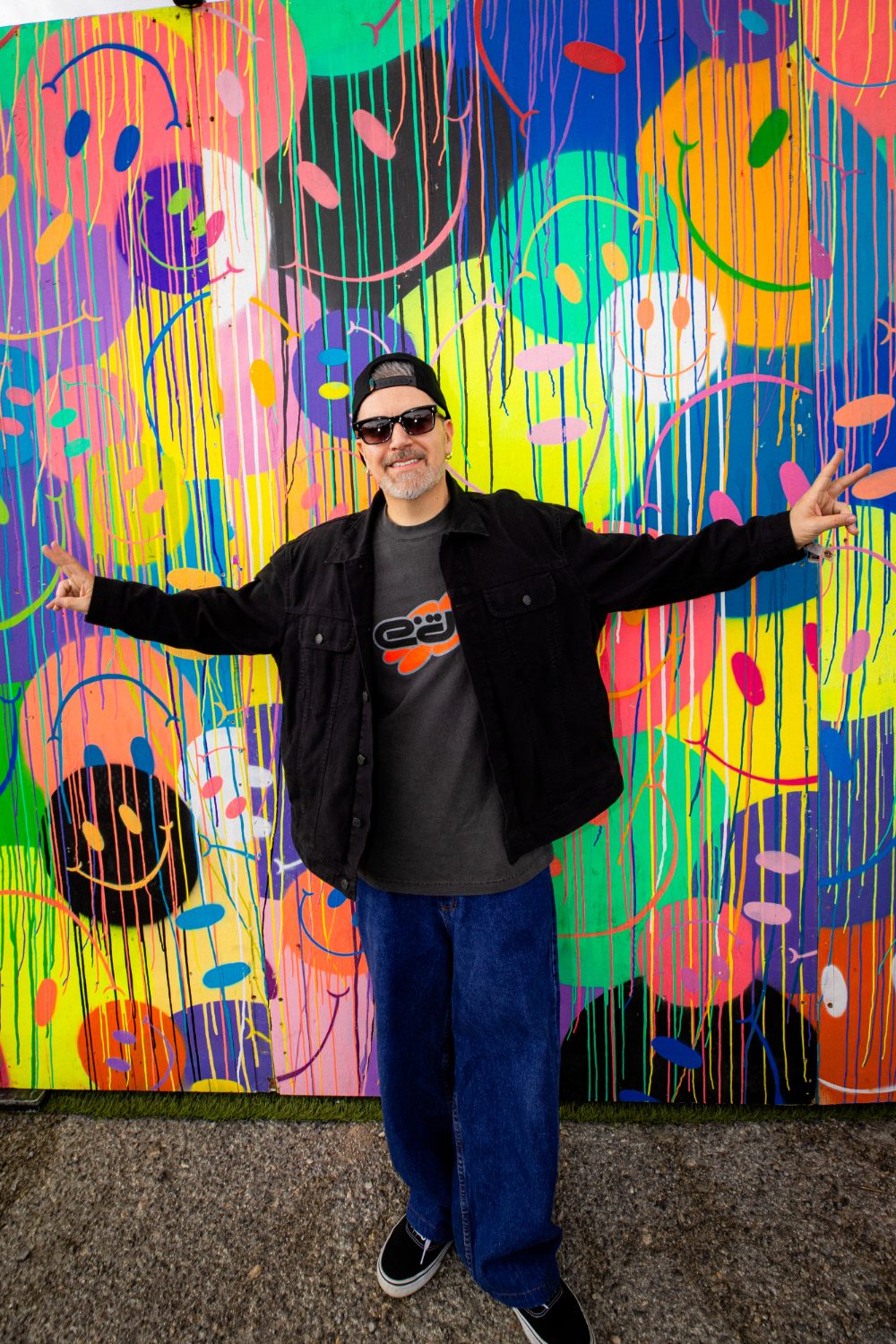
Pasquale Rotella (Photo: Shane O’Neal)
The sound was familiar to the music he would breakdance to, and the rave scene felt a lot like Venice. “It was kind of the same thing in the sense that there’s so many different kinds of people. It was a melting pot of diversity,” he recalls. “People dancing in circles and expressing themselves, dressing all crazy. Very much like Venice.” Except, he says, the vibrations were even higher at the raves. “At the party, everyone was their best selves and I loved that.”
Rotella says that he has guided Insomniac with the ethos from his underground rave days, insisting that the headliners at raves aren’t the big-name artists, it’s YOU, the attendee.
Unlike the first-row/large-font headliner on the other festival flyers, the artists at EDC are listed in alphabetical order, all equal-sized. Rotella has made extensive efforts to make raves a holistic experience, not just a series of DJ sets. The focus is more about the collective experience everyone is sharing. This ethos, coupled with the consistent execution, has made EDC a ritual for ravers. General Admission for this year’s EDC LV sold out within a day, just like it has most of this decade.
We talked to many of the “headliners” last weekend, most of them thrilled to be there and upholding the rave value of PLUR — Peace, Love, Unity and Respect.
We also talked to cabbies, casino staff, and Vegas locals. While some complained about the crowded roads the rave brings, they all agreed that EDC also brings a vital influx of cash. Rotella says that EDC LV generates an estimated economic impact of around $500 million annually. That goes a long way for a town that’s had an especially rough last few years.
It’s also a big boon for the artists that get to play there, and this year’s EDC featured over 240 of them. We talked to some regulars and some who were playing for the first time, and that hammered home how prolific Insomniac is as a patron of this art. We’re sure you’re aware that artists make almost no money selling copies of their music these days, all the revenue comes from events. In the world of DJs, there are some celebrities at the top with million-dollar residencies, but there are mostly tons of working-class DJs in the middle who survive gig-to-gig, with each payday funding their dream.
EDC can be a critical payday, but it’s also a platform for exposure. If you’re a DJ from a small market, getting to play EDC can be a badge of honor, and enough of an endorsement to be parlayed into a regular gig in your hometown or on the road. That can be the needed push to keep going, and can make the difference between staying in the game or hanging up your hat and enrolling in HR graduate school (a true story we heard). The consensus from the DJs we spoke to was an immense gratitude for Insomniac.
“For me, personally, I cannot think of anyone who has changed my life more than Pasquale,” says Scott Land of LA-based DJ duo Slander. He said EDC was the first festival he ever attended back when it was in LA, and when he eventually met Rotella, he found him to be a committed practitioner of PLUR. “He truly understands how interconnected all aspects of music and culture are, and this perspective gives so many other people the platform to share their art, creativity, and inspiration with each other in all forms.”
Of course, there’s a selection bias in speaking with the attendees, workers and DJs who chose to be in Vegas last weekend, who mostly shared their glowing reviews.
And Insomniac hasn’t reached its heights without gaining criticisms, plenty fair, plenty overblown, and a good amount of the old curmudgeonly Golden-Ager refrain of “it ain’t as good as it used to be” — it’s “gone corporate,” lost its edge, or lost its soul.
If you follow raver chats online, you’ll hear complaints that some Insomniac events are oversold, too expensive, or not PLUR. Some say Insomniac has gotten so big, it squishes other promoters and the underground.
Rotella hates being misunderstood, and went through painstaking detail when we pressed him on these criticisms. His phone never stopped buzzing when we were talking to him in busy days ahead of EDC, but to his credit, he insisted on answering any and all questions. He reiterated that he, along with his team, make great efforts to listen to the community, and base their plans on what they hear.
In response to the complaints that his events feel overcrowded, he tells us Insomniac has never oversold an event, and instead, that feeling is the result of a crowd flow issue. “This problem didn’t exist in the early days because no one drew crowds. DJs didn’t draw anyone … People would just go and flow and explore and listen to great music.”
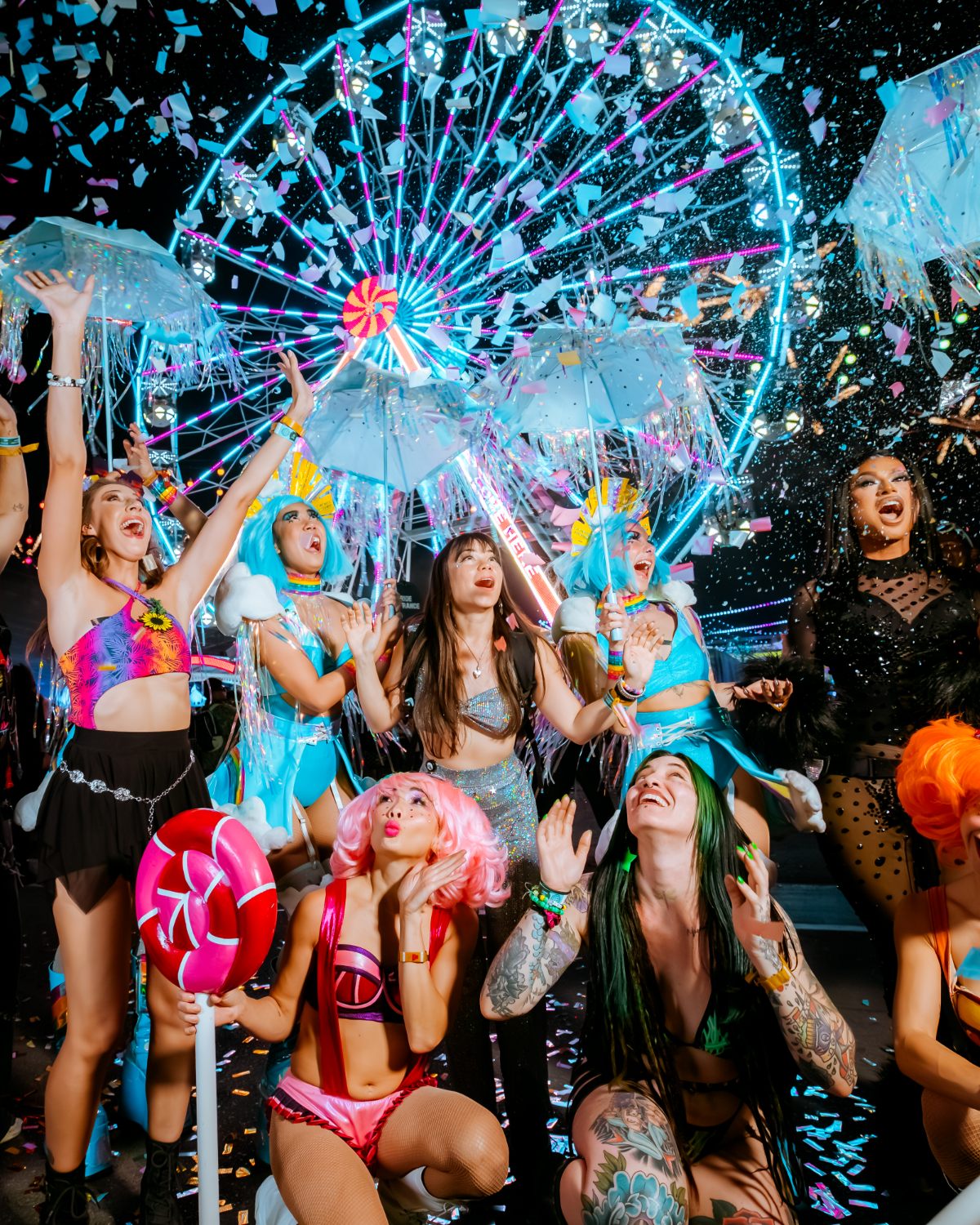
EDC 30 (Anmarie Smith for EDC Las Vegas)
These days, he says, you can’t predict the growth pattern of an artist a year in advance when they’re booked. A small artist might blow up in that time, and all of a sudden they’re at a smaller stage with too big of a crowd. “Let’s just say you only sold 30,000 tickets in a 50,000-cap venue. But [a newly popular artist] is playing on the 10,000-person stage. But 15,000 people show up, even though the whole festival’s at 50 cap. What’s going to happen? It’s going to feel really crowded,” he explains.
Rotella ran through several scenarios detailing how the Insomniac team balances costs, venues, ticket sales, logistics, and egos. “Every event faces struggles at some point — one year you might thrive, and the next, attendance drops or you get logistical curve balls,” he says.
At times, he says, they operate festivals at a loss. “When Nocturnal Wonderland was financially successful, it would keep EDC afloat, but now the roles are reversed,” he says. “Beyond Wonderland and other events currently support Forbidden Kingdom as well as other events we lose on. It’s a complex ecosystem where we continuously reinvest into our events to grow and develop them.”
He says booking the artists they want for reasonable fees “is always a complex negotiation.” Money is fronted to pay artists and for production in a massive financial commitment, with revenue not recouped till much later. “Promoters should expect to operate at a loss for the first few years as fans get to know, trust, and embrace the event,” he said. “It often takes several more years to recoup the initial investment.”
Rotella noted that costs have gone up significantly since COVID, and in some cases, more than doubled. “While we spend a similar amount on talent as other festivals with comparable lineups, we invest heavily in production, art, and the overall immersive experience,” he says. “There is also a major investment behind the scenes to ensure the festival is safe and runs smoothly. Thousands of dedicated professionals contribute to the event, including medical staff, ground control, traffic and parking teams, stage crews, sanitation crews, and law enforcement, to name a few.”
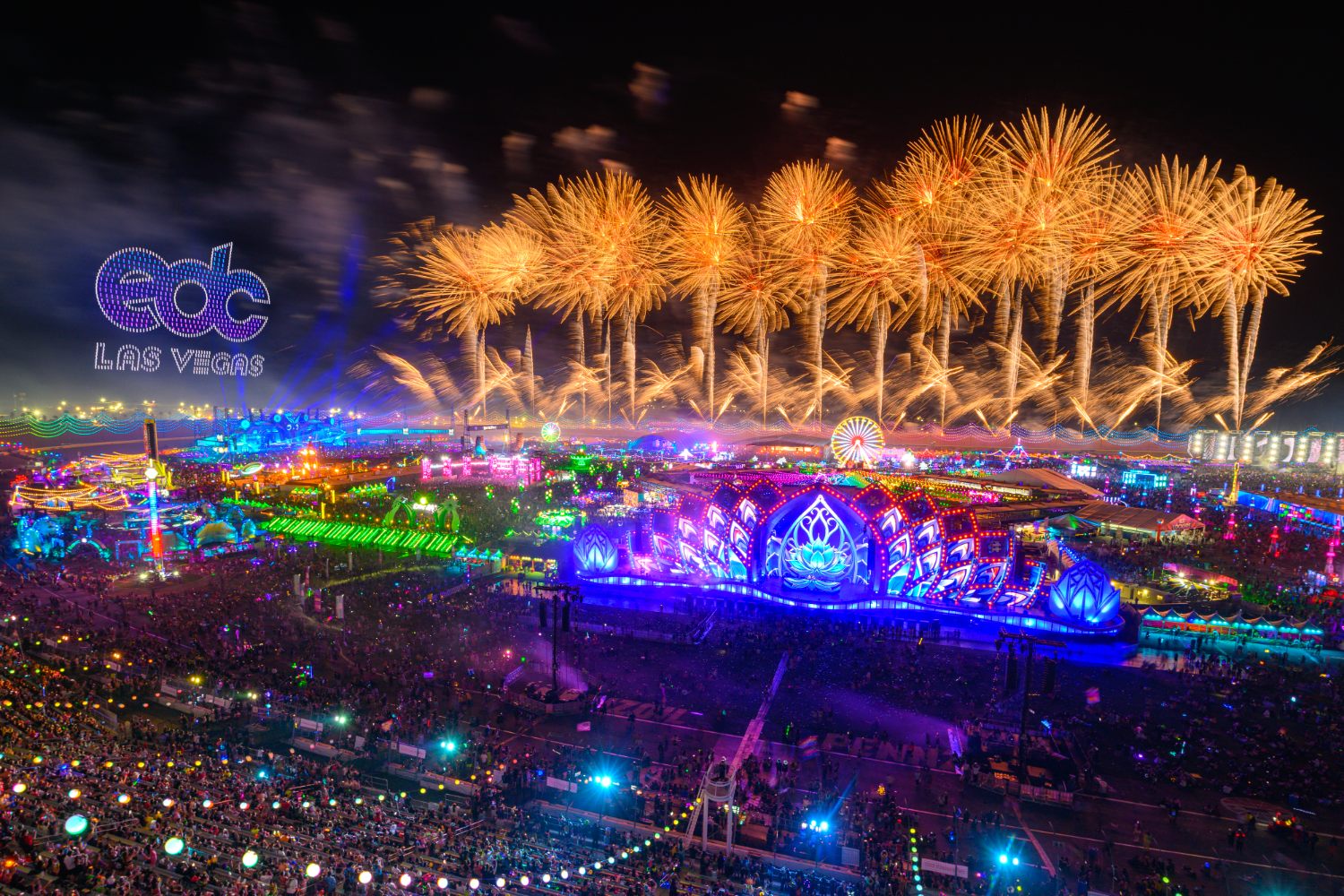
EDC 30 (Skyler Greene for EDC Las Vegas)
EDC is the largest event that happens in Vegas, the “entertainment capital of the world,” with attendance that’s the equivalent of four Disneylands per day. But they do it once a year, off the strip, and have to build most of the infrastructure from scratch. Undoubtedly, that can lead to hiccups. They also have to prepare for unknowns: “For example, rain can significantly increase production costs through added labor and rain mitigation measures, and it may also discourage some fans from attending,” says Rotella. “That alone can shift an event from being successful to losing millions of dollars.”
This year, big winds on Sunday forced stage closures and interrupted the flow of the festival. The Insomniac team, Rotella says, has extensive safety protocols, emergency procedures, and best practices for all areas of the venue to deal with sometimes vicious desert weather.
“All stages are engineered with established wind thresholds that determine when certain elements, such as speaker arrays, lighting rigs, and video walls, must be lowered or shut down,” he says. ”This year, those thresholds were reached at Circuit Grounds and Quantum Valley, which triggered the temporary closure of the stages while conditions were evaluated.”
They have a team that monitors weather, and when they saw winds were coming Sunday, they began implementing mitigation measures Saturday morning, like reinforcing structures and taking down fence screens to reduce wind resistance. To keep artists from missing their sets, some performances were temporarily moved to front-of-house. When winds died down, the team conducted safety inspections then opened to full capacity again.
When it comes to complaints about scale, some people say that Insomniac is so big that it squeezes others out. But from what we can see in front of us, dance music events are not a zero-sum game where there’s only one winner. On the flip, you can easily make the case that as Insomniac has grown, so has the entire ecosystem. New fans demand more events year-round, and the LA event scene is thriving. We see more parties, venues, shows and promoters these days (and tons we love) than in our decades of memory, with many lanes promoters and partiers can take where Insomniac doesn’t ride.
And when Insomniac has stepped in, they’ve done a commendable job, especially recently. This year’s Skyline Fest, promoted by Insomniac’s underground imprint Factory 93, was a standout. Besides being an all-around crowd-pleasing festival at Ace*Mission Studios — a great venue downtown bordering the Arts District — Insomniac dedicated the Arts District Stage to showcasing local LA DJs who throw some of our best parties. The DJs we spoke to said it meant a lot to them.
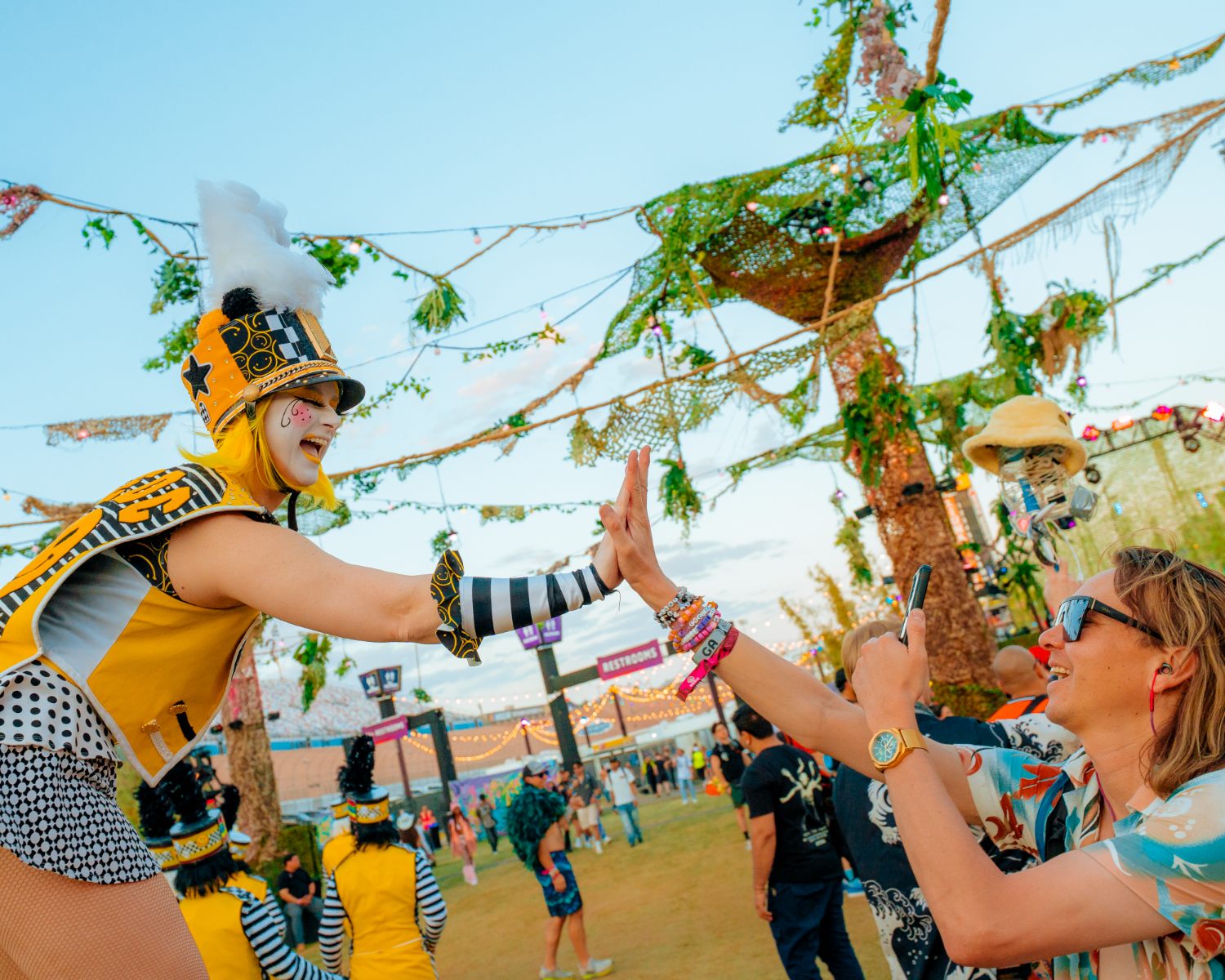
EDC 30 (Susan Gomez for EDC Las Vegas)
And finally, there are those that say that some Insomniac events aren’t PLUR. From our extensive talks with Rotella, PLUR was baked into Insomniac’s cake from the jump. But what we’ve learned from being caring, forward thinkers about these spaces is that it’s not the job of the promoter to police the attendees anyway. Their job is just to throw a great event in a safe environment, welcome everybody, and set a positive tone. They’re four-for-four there: the message from the top of Insomniac has always been acceptance, “Peace, Love & Light.”
The onus to protect the scene is on us — to lead with love, but also to stand up and take ownership when something isn’t right, like if your friends are pushing their way to front of crowds or starting trouble. We’re big proponents of “PLURR”: that’s PLUR plus Responsibility. If we take responsibility for ourselves and others, then there will never be an issue with rave vibes. We see that the vast majority of Insomniac attendees are indeed PLUR, but if you ever feel that they’re not, maybe you need to step up and find a loving way to address that.
Full disclosure: the two writers of this piece are dance music enthusiasts who fittingly met at a dance event years ago. We are advocates of the scene because of how important it is to us and many, and we don’t take it lightly.
We’ve experienced plenty of music events that suck — bad music or production, or bad vibes where you’re treated like cattle, or made to feel like you’re outside the clique, or looked at as poor or unworthy by pretentious promoters or obnoxious crowds. We also mostly party on our own dime in the often sketchy underground [Mark: and I’m on a journalist’s salary and a general cheapskate], so we’re very conscious about cost and safety.
We also recognize the importance of the dance scene because both of us, at times, were deprived of it. Dance events are where you can be yourself, or if you come from an environment where that’s been stifled, they can be the first place where you figure out what that means.
Here, Caro Chang shares her personal EDC experience:
2026 was my sixth EDC Las Vegas. Growing up in a small midwestern town, dance music culture was the tracks my high school friends shared on SoundCloud, raves were Ultra sets on YouTube, and EDC Las Vegas was a bullet point on my bucket list.
I decided to take it head-on in 2018 when I was 19 years old. I didn’t have any friends who wanted to fly out to Vegas from Indiana with me so I booked my travel alone. I stayed at the Luxor with three random girls who were also attending alone, but I trusted this idea of “PLUR” that I was yet to experience. And much like Pasquale said about his first raves, it changed my life.
As a relatively shy and sheltered kid, the strangers turned to friends I met at EDC taught me that my voice is worth sharing and that people want to listen, the characters that regularly attend EDC in their flamboyant, often handmade costumes taught me confidence, and the dancefloors taught me a level of embodied expression I had never felt before in my life.
And clearly, I kept coming back. I spent year over year exploring the everything possibilities that EDC presents. It always filled my cup, but the next year there was always space for more. I came back with friends I met at the festival the previous year, I camped with those strangers-turned-to-friends at Camp EDC, I hitched rides with fellow ravers from the hotel lobby to the Las Vegas Walmart for supplies, I even stayed with some friends I met at Basspod on Monday night after the festival when my flight was delayed.
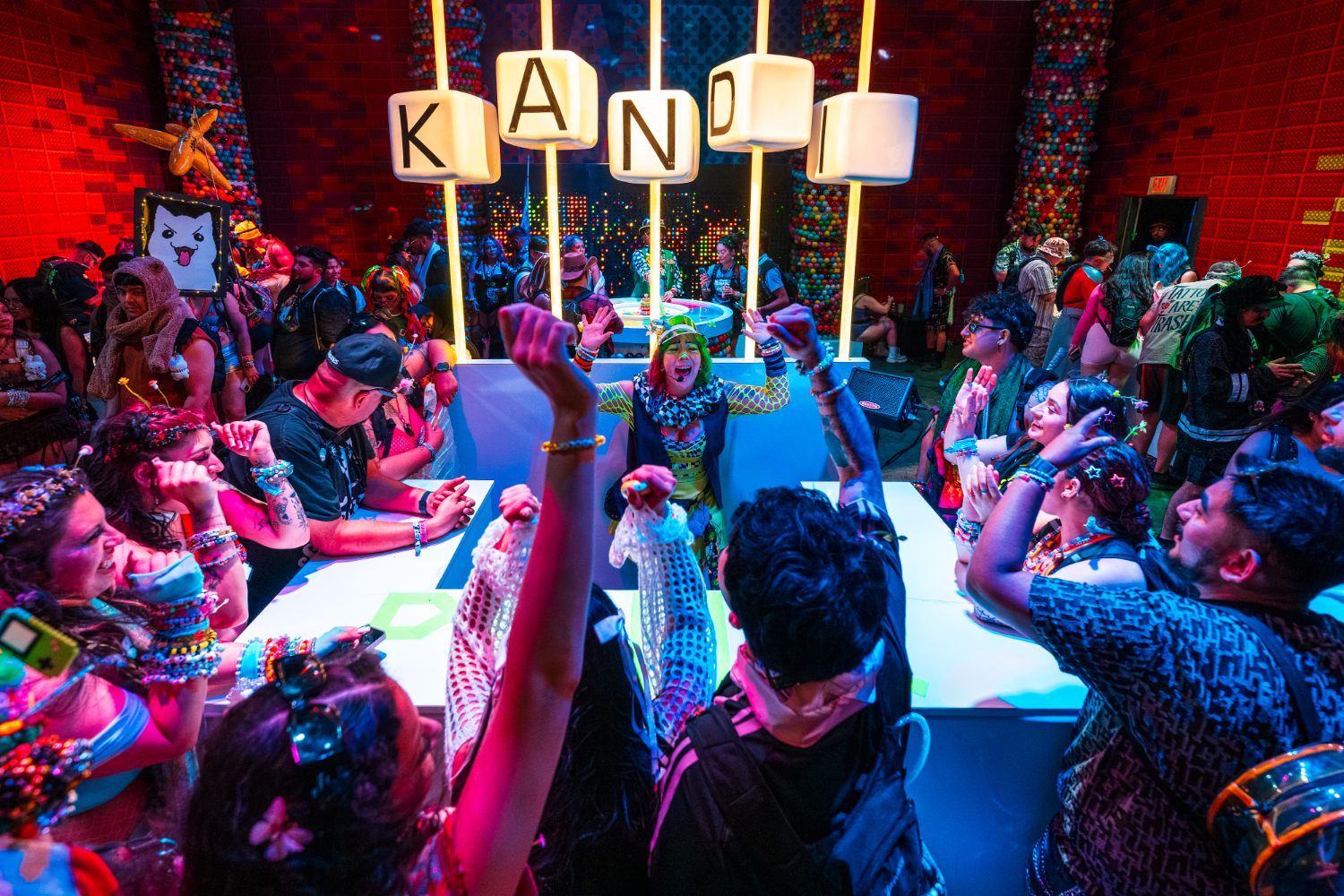
EDC 30 (Taylor Regulski for EDC Las Vegas)
I did anything to drag myself back out there — slept on floors, saved up for months at part-time jobs, scoured every corner of the internet for the cheapest resale tickets I could find. I’ve shared water, gum, trinkets, moments with people whose names I will never know but whose smiles I recall warmly. And when we ran into a girl who had lost her friends and her ride home on Day 1 of this year, we invited her into our car back to the Strip and returned the favor.
People can say that rave culture is washed, that it’s been decades since raving felt like the open-ended oasis it once was, but I think if you asked any EDC headliner, they’d say the culture at this event still very much lives on. It’s clear — from the EDC bumper stickers dotting the thousands of cars stuck in traffic, from the handmade kandi adorned wrists, and pockets full of trinket gifts from random strangers that you’ll leave with — how much these three days inside the racetrack mean to the people that fill it.
I candidly think that given the size that EDC and Insomniac have scaled to, it’s actually remarkable how strong the ethos lives on … and I think if you had asked me even a few weeks ago I wouldn’t have said that. But being back at EDC after a three-year hiatus, and talking to Pasquale about what he thinks the core of this event is, it’s clear to me the effort, intentionality, and impact.
Given their expertise and connections, Insomniac now leverages its infrastructure to help execute other festivals. “A new vision I had for Insomniac, which I introduced about five years ago, was to serve as a resource for independent promoters with creativity and integrity that I believed in,” says Rotella. “I understand the challenges of lacking resources, mentorship, and financial backing when trying to create an event. I aspire to be the person I wish I had met when I was starting out.” He says he also gets FOMO and this lets him take part as a fan.
Last year, Insomniac helped bring back the Vans Warped Tour so they could celebrate its 30th anniversary. “Insomniac is built on culture and community, and it took about 10 minutes for Pasquale and myself to realize our values aligned and it was off to the races,” says Kevin Lyman, who created Warped Tour in 1995. By partnering with Insomniac, he was able to use their seasoned production machine to execute his dream event, while keeping hold of the reins and their vision. “Having the long-term vision that Pasquale has is rare in this business.”
Insomniac will play that same role next year with Time Warp, the beloved German techno and house festival. Like Skyline, Factory 93 will help execute its LA debut of the prestigious festival and deliver its impressive pedigree of sound and visual production at Ace*Mission Studios.
Rotella says that the Time Warp team will be leading their show. “Those are the guys. We just come in to support them and make it possible for them to continue and execute their vision and grow.”
Despite their flagship event being in Las Vegas, Insomniac is still heavily focused on programming for Los Angeles. Rotella says he’s committed to staying in LA, despite the rough business environment and bureaucratic hurdles. We asked why: “Cause I’m an Angeleno,” he responds. “I’m born and raised here in LA and I’ll never leave. I feel like I would be abandoning the people that enjoy what we do here … LA has been the epicenter of the rave scene for all of America. I mean, LA has been the spot.”
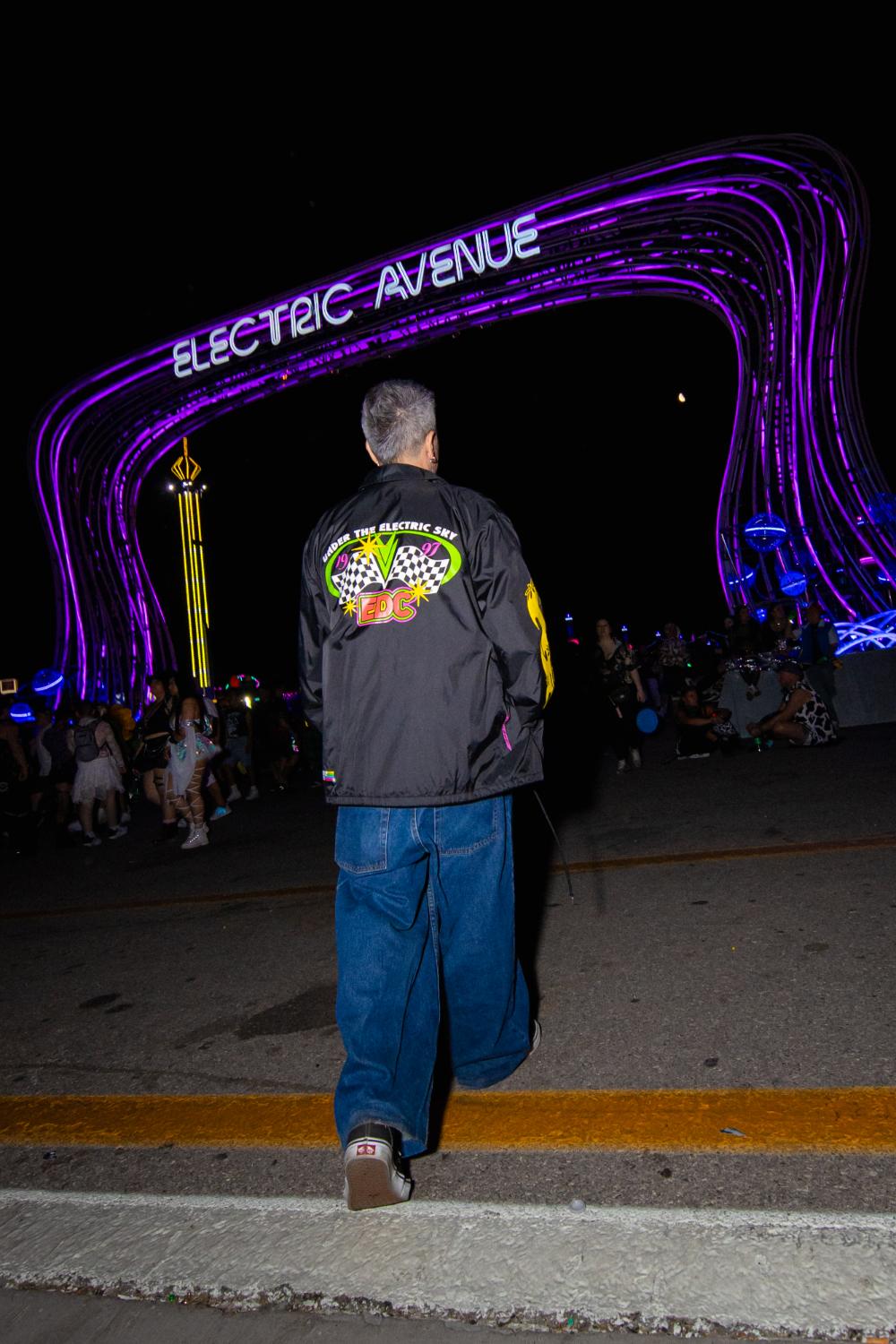
Pasquale Rotella (Photo: Shane O’Neal)
Rotella has two kids, Rainbow Aurora, age 13, and Forest Leonardo Antonio, age 9, and he says Insomniac is special because it’s a family business.
“For me, throwing raves is like creating playgrounds for adults, and my kids inspire me every day. They often give me ideas and even participate in my planning.” He says he hopes they work for Insomniac for real one day, if they choose. “Rainbow has the potential to be a costume designer for performers and stages, and Forest, I’m scared of ‘cause if he works hard enough for the role he’s been talking about, I’ll be out of a job.”
At 51, Rotella isn’t ready to slow down or forfeit his desk. “I have countless goals ahead of me,” he says. “I’m excited to finally get started on them.”
The well of ambition remains filled for the self-described “hardcore raver” who would show up to the raves back in his day with a backpack filled with lollipops. “I would be the one who would rally everyone up to meet at my house and caravan to the parties. I was the one that would get tickets somehow for people that couldn’t afford it, including myself.”
“I will not stop doing this,” he says when we ask when he’s going to quit. “Even if electronic music becomes unpopular, I’m fine with doing smaller parties. I will always do this.”
As we were leaving on the last night of EDC, we met a group of friends in matching vests and hats, all connected through a couple in their mid-30s from Washington state with kids ages 10 to 2. This weekend, all four kids were dropped off with a sister. How often do they get to do that this year? “This is it. This is our one time.”
Rotella says that he never wanted the rave to be an escape. “I know that there are people that use it as an escape, but I wanted it to be a reset for people,” he says. “It’s way healthier and way more meaningful when people can go and find themselves and reconnect with themselves and have a reset button.
“I’m still a kid that loves all this. And things get complicated as you get older. People get angrier and grumpier, but this is supposed to reset you to connect with that kid that’s in you — and life is better when you push the reset button. And that’s really the goal.”
The byproduct of being into dance music, and having an ecosystem of being able to go often — with a lot of people eventually making it “their thing” — is that, just like anything else, you do it enough and it starts to rub off on you. Even those who can’t make it out as much as they used to start incorporating the ethos into their everyday life. You start listening to rave music in the car or at the gym. What was once music you only partied to becomes music you fall asleep to. You might wear more colorful clothes to work or just be a gentler, happier person. In a lot of ways, Pasquale did that. And for that, we thank him.
Towards the end of Saturday night, we took a moment to soak in the dance floor around us, realizing there was a girl behind us dancing her ass off, eyes closed, giant smile, bumping in and out of the dance circles of the crowd surrounding her, going full-Lee Ann Womack.
We make eye contact and start hyping her up as she goes off. Turns out she’s stone cold sober and just high off the vibe. We tell her that it’s hard to stand with your back to someone when they’re radiating such an amazing positive energy right behind you. She gives a sincere thank you, grabbing her heart, then a hug.
“Don’t forget, dude,” she says, “the dancefloor is everywhere.”
Follow Pasquale Rotella on Instagram @pasqualerotella, Insomniac @insomniacevents and EDC @edc_lasvegas. Tickets for EDC 2027 are on sale today, May 22, at lasvegas.electricdaisycarnival.com.
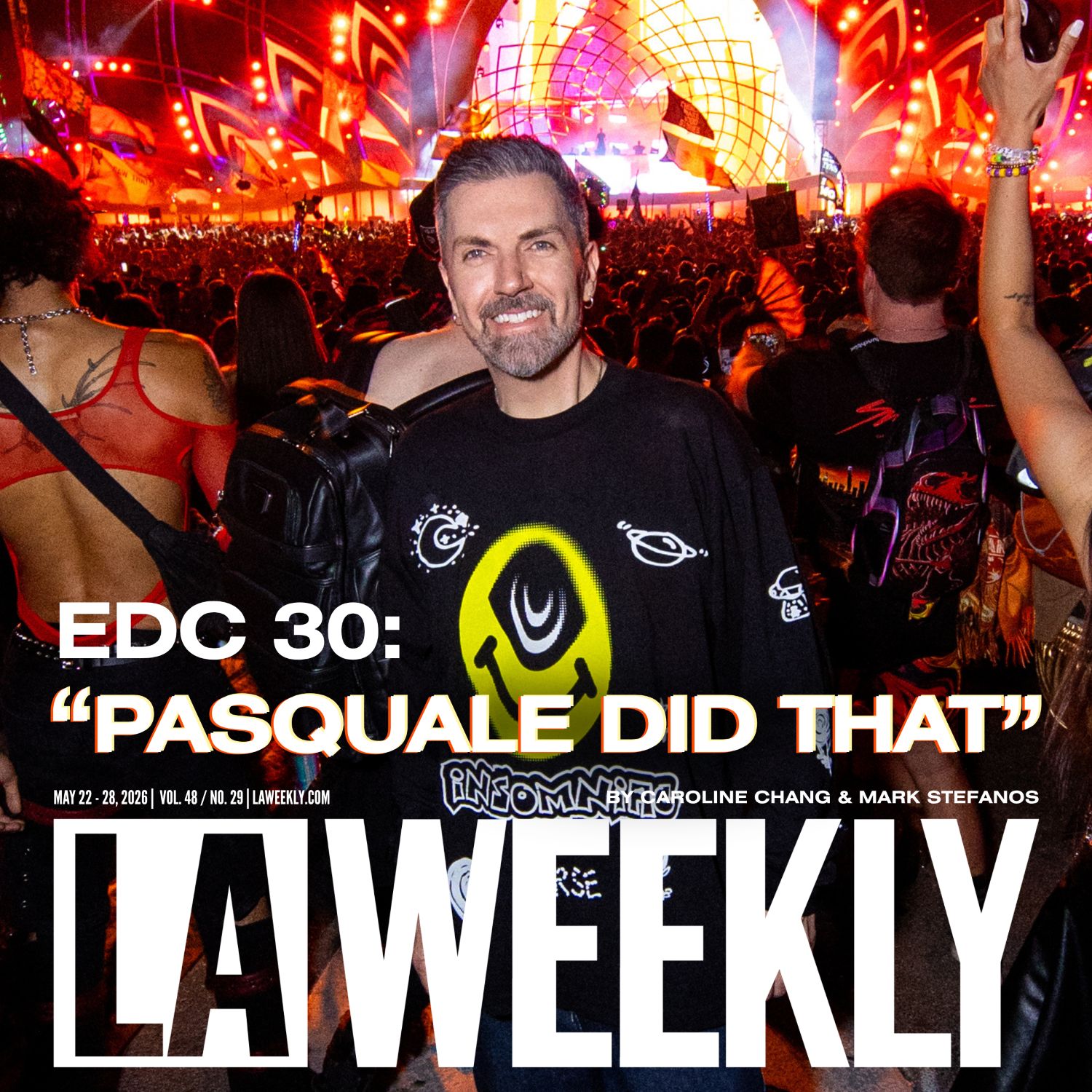
Pasquale Rotella on the May 22, 2026, cover of LA Weekly (Photo: Shane O’Neal; cover design: Mark Stefanos)