
 Will Jones
From Coachella stages to Paramount soundstages, Jean-Christophe Harel has spent a career building bridges between French culture and the creative capital of the American West
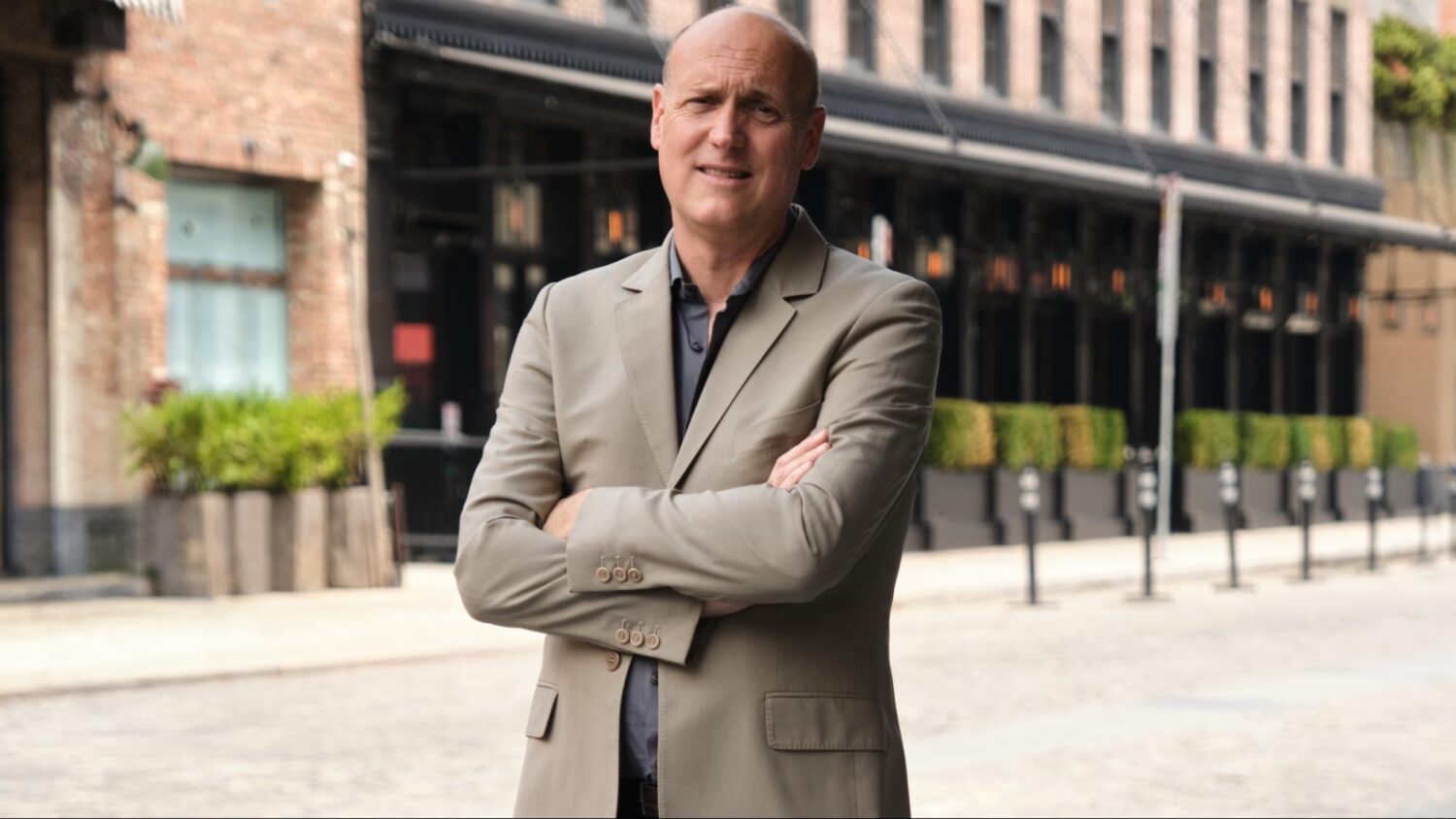
There is a certain kind of figure who never seeks the spotlight yet somehow ends up standing near it at every important moment. In Los Angeles, a city that runs on visibility, Jean-Christophe Harel built his reputation doing the opposite. For years he has been the connective tissue between two creative worlds, the person galleries call before an opening and the name that surfaces when a French institution wants to land in California without embarrassing itself.
His resume reads like a map of the city’s cultural infrastructure. Twelve years at Universal Music as International Head of Marketing for Island Records, Def Jam, and Mercury Records, working with artists from Elton John and Mariah Carey to the Killers and Jay-Z. Work with Lionel Richie and Fall Out Boy. A collaboration with Goldenvoice, the promoter behind Coachella, that produced OohLaLA, a music festival celebrating French sound for American audiences. A stint as cultural attaché in Los Angeles, the official channel through which France speaks to Southern California. And a role in bringing Paris Photo to Paramount Studios, an experiment that turned one of Hollywood’s most guarded backlots into an open art experience.
The Attaché Years: Diplomacy in a City That Distrusts Formality
Cultural diplomacy in Los Angeles is a strange assignment. The city has no patience for protocol and little reverence for institutions that arrive expecting deference. Harel understood this early. Rather than importing French culture as a finished product, he treated it as raw material for collaboration, something to be remixed with local energy rather than displayed behind glass.
That instinct explains why his projects kept landing. The OohLaLA festival worked because it partnered with Goldenvoice, an organization that knows exactly how Angelenos consume live music, instead of trying to build an audience from scratch. It was French programming delivered through a distinctly LA machine, and the pairing gave both sides something they could not have produced alone.
Turning Paramount Into a Gallery
The clearest expression of Harel’s method came with Paris Photo at Paramount Studios. The idea sounded improbable on paper. Take the most prestigious photography fair in the world, born in the Grand Palais, and transplant it onto a working film lot in Hollywood.
Harel co-founded the Los Angeles edition and shaped that transformation, the first time Paramount had ever been converted into an art experience. It became a statement about the city itself. Los Angeles manufactures images for the entire planet, and here was the international photography establishment acknowledging that fact on Hollywood’s own ground. For the local art scene, long treated as a satellite of New York, the symbolism mattered.
Inside the Gallery Ecosystem
Beyond the marquee events, Harel spent years working the quieter rooms of the LA art world. His collaborations span the galleries that define the city’s market presence, Gagosian, Blum & Poe, and Regen Projects among them, along with the museums that anchor its institutional life: LACMA, MOCA, and the Hammer Museum. During a San Francisco chapter he worked with Fraenkel, the gallery whose program helped legitimize photography as fine art on the West Coast.
That range is unusual. It extends into the auction world too: at Christie’s, Harel served as Senior Vice President and Global Marketing Director of the Post-War & Contemporary Art department. The commercial gallery circuit and the museum world run on different incentives and different definitions of success. Moving fluidly between them requires credibility of the sort built by delivering projects rather than announcing them.
The Craft Turn: Why Aubusson Comes Next
Harel’s newest chapter points back to France, though the through line is unmistakable. He has taken on a role with Pinton, the storied Aubusson house founded in 1867, whose workshops in Felletin have woven for Calder, Le Corbusier, Picasso, and generations of artists who saw tapestry as an extension of their practice. Aubusson weaving itself is inscribed on UNESCO’s list of Intangible Cultural Heritage, and Pinton remains one of its living custodians, producing limited edition art tapestries alongside contemporary collaborations.
For a man who spent decades translating French creativity for American audiences, the fit is obvious. Pinton represents the deepest layer of the culture he has always championed, craftsmanship measured in centuries rather than seasons. And Los Angeles, with its appetite for design, its collector base, and its architecture hungry for singular objects, is precisely the market where that story resonates.
What His Career Says About LA
It is tempting to frame Harel as an outsider who cracked Los Angeles. The truth is closer to the reverse. His career demonstrates something the city rarely admits about itself: that LA is porous, generous to those who arrive with real ideas, and far more curious about the world than its critics allow. The festivals, the fairs, the gallery projects, none of it was imposed on the city. All of it was built with the city, through its promoters, its studios, its institutions.
That is the quiet legacy of Jean-Christophe Harel’s Los Angeles years. Not a monument, but a network. Not French culture displayed in California, but French and Californian culture made to need each other. In a town obsessed with credits, his name appears in the margins of a remarkable number of stories. The margins, as anyone in publishing knows, are where the real notes get written.