
 Jon Stojan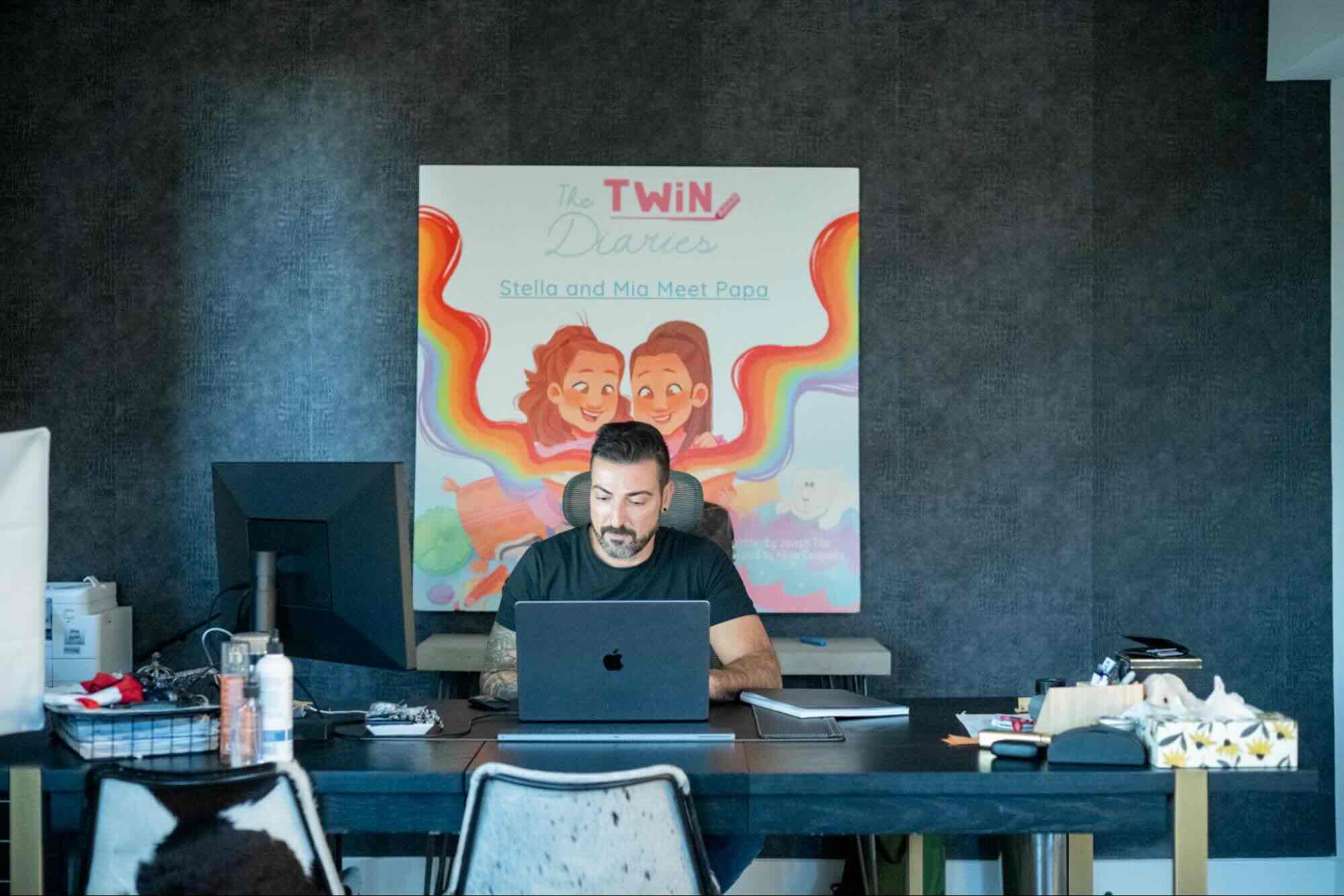
Image credit: Joseph Tito
The word “family” has never been more widely used—or more narrowly defined. Each June, celebrations of Father’s Day and Pride Month offer vivid reminders of how far society has come, yet how persistently traditional expectations still shape our understanding of parenthood. Father’s Day advertisements often portray families through a conventional lens—two opposite-sex parents, married, with clearly defined roles. Meanwhile, Pride celebrations highlight vibrant LGBTQ+ communities but rarely dive into the nuanced experiences of queer parents navigating daily life.
Despite the increased visibility that Pride Month offers, queer fathers frequently find themselves navigating subtle erasure—not through open denial, but through small, consistent omissions. When Father’s Day rolls around, society tends to imagine dads within traditional, heterosexual family structures, unintentionally sidelining LGBTQ+ fathers whose experiences challenge longstanding cultural norms. This subtle marginalization can appear in ways as simple as brochures and commercials that fail to include same-sex parents, playground conversations that assume the presence of a mom at home, or hesitant moments when an LGBTQ+ dad must decide whether to correct mistaken assumptions about his family.
Joseph Tito, a gay father and author of Random Thoughts: The Shit We Don’t Talk About, understands these contradictions intimately. His deeply personal journey, documented candidly in his writing, not only illuminates societal challenges but underscores why Father’s Day and Pride Month should be opportunities to expand and celebrate a broader, more inclusive definition of fatherhood.
The Bias in “Family-Friendly” Spaces
Take a walk through any neighborhood park, attend a school fair, or visit a child-focused venue, and an implicit script emerges: “family-friendly” still largely means heterosexual couples with children. Activities such as Mommy-and-Me groups or Daddy-Daughter dances continually reinforce a conventional family mold.
In Random Thoughts, Tito describes his personal experience navigating these scenarios. Filling out school forms, he regularly encounters fields marked strictly as “Mother” and “Father,” prompting him to cross out those labels in favor of simply “Parent.” Each parent-teacher conference brings subtle moments of surprise when people realize there is no mother. These encounters, detailed in Tito’s book, exemplify institutional biases that persistently overlook nontraditional families.
These small but recurring incidents reveal how our societal structures, often unintentionally, perpetuate a limited understanding of what makes a family. Each such interaction sends a subtle message: Families outside the expected norm face extra hurdles, reminding them continually of their “otherness.”
Yet Tito, like many LGBTQ+ parents, continues to claim these spaces. Each presence at a playground, school event, or community gathering quietly resists erasure, slowly broadening the societal definition of family simply by existing.
Family Rejection and Cultural Stigma
For many LGBTQ+ individuals, the first experience of erasure occurs at home, within their families of origin. Religious or cultural expectations often lead to rejection or silence around LGBTQ+ identities, casting a shadow over the legitimacy of families these individuals later build.
Tito captures this vividly in Random Thoughts. Despite describing his upbringing as moderately religious, he highlights how religion and tradition can still become weapons against LGBTQ+ individuals. He recalls a particularly painful moment when a relative informed him bluntly that, according to their interpretation of faith, his daughters were illegitimate. Such painful exchanges illustrate how deeply ingrained cultural and religious biases continue to undermine the legitimacy and acceptance of LGBTQ+ families.
Through sharing these personal and difficult interactions, Tito provides a stark reminder of the real human cost of cultural stigma. His book serves as a testament to how deeply harmful such prejudices remain, even within seemingly supportive family structures.
The “Mother and Father” Assumption
Beneath those everyday biases lies a stubborn belief: that a “real” family means having both a mother and a father. This assumption has been used to question the legitimacy of single parents, same-sex parents, and any family that deviates from the nuclear norm.
Joseph Tito has confronted this bias head-on in Random Thoughts, where he recounts strangers—and even acquaintances—unabashedly asking, “Don’t they need a mom?” as if a mother’s absence might doom his children. The notion that families must look like a 1950s sitcom still lingers in the public imagination.
Research and expert consensus make it clear: children do not categorically “need” one parent of each gender—they need caregivers who are devoted, supportive, and safe. The success of children raised by two mothers or two fathers, or by a single parent, has been documented in study after study. Yet the myth persists, rooted in nostalgia and a narrow reading of gender roles.
It manifests in comments like the ones Tito hears, and even in policy debates where critics of LGBTQ+ parenting invoke the supposed absence of either a “maternal” or “paternal” influence. By raising well-adjusted twins in a two-dad household, Tito quietly seeks to disprove those assumptions. In Random Thoughts, his reflections aim not to persuade but to simply reveal the reality he lives—one grounded in love, structure, and unwavering care.
Challenging the mother-father myth isn’t just about defending LGBTQ+ families; it’s about affirming that families come in many forms and that no one formula has a monopoly on healthy child-rearing.
To explore more of Joseph Tito’s candid reflections pre-order your copy.