
 Will Jones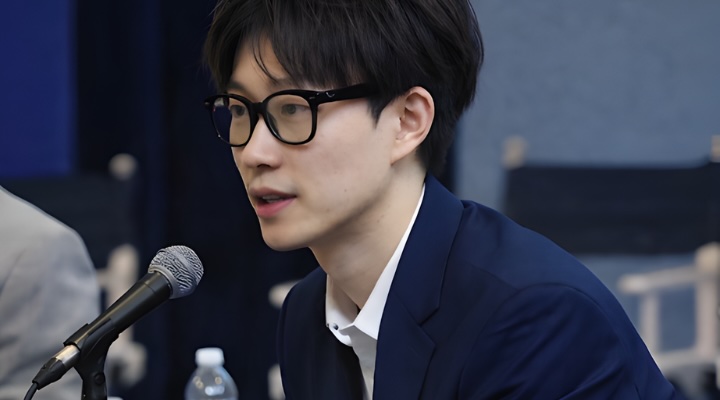
Photo Courtesy of Chuyu Duan
The race to dominate artificial intelligence is often viewed through the lens of processing power and scale. However, a more complex challenge is unfolding in the realm of long-term interaction: how to make a machine truly remember. While industry giants such as ChatGPT, Gemini and Claude focus on general-purpose assistants, Chuyu Duan, the Chief Technology Officer and co-founder of PowerYou AI, is pioneering a foundational shift in how AI architectures handle personal context.
At the center of Duan’s work is the Personal Memory Graph, a novel departure from the standard “amnesiac” nature of Large Language Models (LLMs). Most current AI systems rely on basic retrieval-augmented generation (RAG) or simple vector databases that treat every interaction as an isolated data point. Duan’s innovation moves beyond this by creating a structured, semantic map of a user’s emotional and personal history.
Solving the “Amnesia” Problem
In the current landscape, most AI products suffer from a form of digital amnesia. They rely on basic retrieval-augmented generation (RAG) that treats personal history as a series of isolated data points. This is useful for lookup, but poorly suited for the complexity of human healing, identity, and change.
Duan’s work marks a clear departure from that standard. As the architect of PowerYou’s Personal Memory Graph, he designed a structured semantic memory system that captures not just what a user said, but what matters across time: emotional themes, recurring patterns, unresolved struggles, and long-term aspirations.
In his white paper, Teaching AI to Remember What Matters: Inside PowerYou’s Personal Memory Graph, Duan argues that for AI to be truly useful in human healing and growth, it must move beyond transactional replies.
“Emotional support isn’t transactional. It’s contextual, relational, and deeply personal. If you tell Kris today that you’re struggling with boundaries in your relationships, you shouldn’t have to explain the entire backstory tomorrow. If you open up about burnout, grief, insecurity, or the patterns you’re trying to break, Kris should be able to hold that with you – without making you repeat your pain.”
Duan argues that meaningful emotional support requires more than accurate response generation; it requires continuity, discernment, and relational memory. The system therefore prioritizes selective, evolving remembrance over verbatim storage, allowing Kris to hold context in a way that feels more human–remembering the person, not just the transcript.
This is what makes it possible for the AI to support users without forcing them to repeatedly reconstruct their pain, and why the Personal Memory Graph stands as a foundational innovation in emotionally intelligent AI.
A Technical Leap in “Response Conditioning”
Beyond mere memory, Duan’s contributions to the field include a novel approach to Response Conditioning. This safety layer ensures that as the AI becomes more personal, it remains grounded and safe. While traditional chatbots can often “hallucinate” or lose track of a user’s emotional state, Duan’s system identifies “emotional milestones” and “context nodes.”
This allows the AI to recognize recurring patterns–such as long-term professional stress or specific cycles of grief–and adapt its tone accordingly. By optimizing how a system queries a user’s historical graph, Duan has developed a way to maintain deep emotional continuity without the massive computational overhead typically required for long-context processing.
The Future of the Field
Whether the broader AI market can adopt these emotional layers responsibly remains the definitive challenge for the next decade of Silicon Valley. However, Chuyu Duan’s work suggests that the solution is not more data, but more sophisticated architecture. By engineering the specific safety engines and memory retrieval layers that allow for stable, context-aware interaction, Duan is effectively breaking the “utility bottleneck” that has previously relegated AI companions to mere novelties.
As the industry moves away from generic, amnesiac models and toward deeply personalized, persistent interfaces, the methodologies pioneered by Duan are positioned as a new industry standard. Through the Personal Memory Graph, Duan is proving that the most critical advancement in artificial intelligence isn’t just a machine’s ability to think–it is its capacity to remember, reflect, and respect the continuity of the human experience. His work doesn’t just represent a new product; it marks a significant evolution in the field’s technical and moral boundaries.