
 Wyles Daniel
New York Prophet is a testament to resilience — but its reach exceeds its grasp
There is a particular kind of courage in deciding that your life story deserves to be told — that the streets you walked, the bullets that found you, and the God you believe in all add up to something worth putting on paper. Jerry Fields Jr., a 35-year-old first-time author from New York, possesses that courage in abundance. His debut memoir, New York Prophet, is a deeply personal account of a life lived at the margins — in Harlem, the Bronx, Baltimore, and Queens — shaped by poverty, gang life, incarceration, and an unshakeable belief that God has been guiding his every step. It is a flawed book. It is also an honest one.
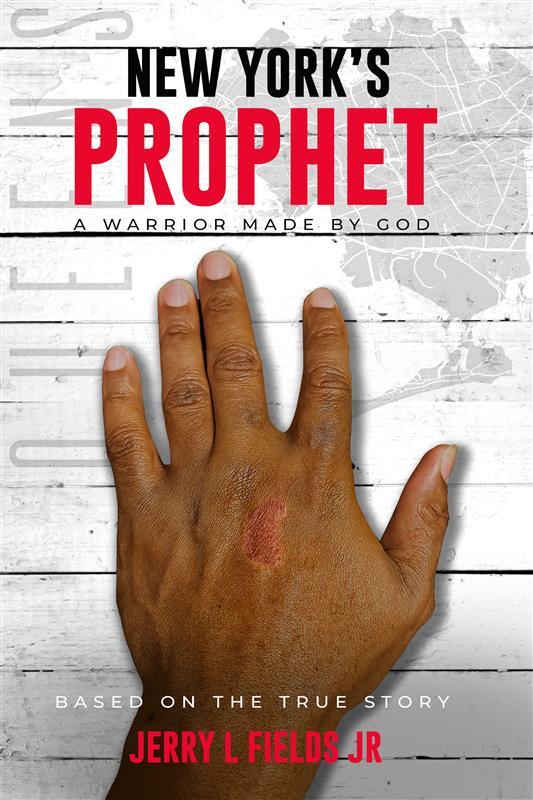
Fields traces his origins from birth at St. Luke’s Hospital in Morningside, Manhattan, where he entered the world already carrying what he considers a divine mark: a red birthmark on his hand. From early childhood through his mid-thirties, the memoir charts a landscape of near-constant upheaval. His oldest brother accidentally shot a friend dead in the family apartment. Another brother lost an eye to street violence. Fields himself fired a gun in front of a police precinct, served time on Rikers Island, accidentally shot himself, and spent six years in a psychiatric facility. Through all of it, he returns again and again to a single conviction: that his life is connected to something larger than circumstance.
The book’s greatest strength is its unflinching specificity. Fields does not soften the violence or romanticize the streets. He describes selling crack until he saw a mother with children trying to buy, and stopping. He recounts carrying guns at thirteen, stealing a chain from a stranger’s neck, and the quiet arithmetic of gang loyalty and betrayal. These passages have the texture of lived experience — unglamorous, morally complicated, and alive. When Fields writes about carrying his wounded friend into a building after a shooting, or holding his newborn niece in a wheelchair from a hospital bed the day after his own surgery, the memoir earns its emotional weight.
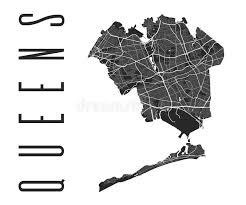 Equally telling is a quieter moment of self-mythology: Fields describes looking up the outline of New York City, seeing Queens shaped like an axe, and arriving at a single word — warrior. It is the kind of private revelation that runs through the book, a man reading the world around him as a map of his own destiny.
Where the book struggles is in its architecture and its spiritual ambitions. Fields is candid in his interview that he felt he could have gone into more detail, that time constraints shaped the final manuscript. That incompleteness shows. Episodes arrive and vanish without resolution; characters enter the narrative only to disappear. The prose, while authentic in voice, often moves too quickly through moments that deserve to breathe. A memoir about this much loss — a godbrother killed by a car, close friends dead from overdose and murder, a father gone — needs room to grieve, and the book rarely grants itself that space.
The spiritual framework Fields builds around his life is the memoir’s most provocative — and most uneven — element. He positions himself not merely as a man of faith, but as a prophetic figure on the order of Jesus, Moses, and Muhammad: a divine source, he argues, rather than simply a messenger. He interprets a red birthmark, a hurricane, a rainbow-coloured Facebook post, and a strange physical sensation as signs of his divine appointment. These claims will challenge many readers, but Fields himself, to his credit, expresses certainty about his belief. “I know 100%,” he says in conversation. “I don’t sell lies.” That intellectual honesty keeps the spiritual narrative from tipping fully into grandiosity, but it also leaves the theological heart of the book unresolved — more assertion than exploration.
What saves New York Prophet from collapsing under the weight of its own claims is the simplicity and sincerity of its core message. Fields wants readers to believe that God is present in life, not only in death — that the divine walks alongside human beings through the mess and violence and grief of ordinary existence. It is a message born not from theology but from survival, and in that sense it carries a conviction that no argument can quite manufacture. Whether or not one shares his faith, there is something genuinely moving in a man who has been shot, incarcerated, and stripped of nearly everyone he loved, and still insists that grace is real.
Fields has spoken about wanting to pursue music and other ventures; this book, he says, is just the beginning. As an opening chapter, New York Prophet is rough-edged and unfinished in ways its author seems to know. But it is also genuinely his — a street-level testament to the stubborn human need to make meaning out of chaos. In a literary landscape crowded with polished trauma narratives, there is something to be said for a voice this unmediated, this willing to be seen.