
 Michele Stueven
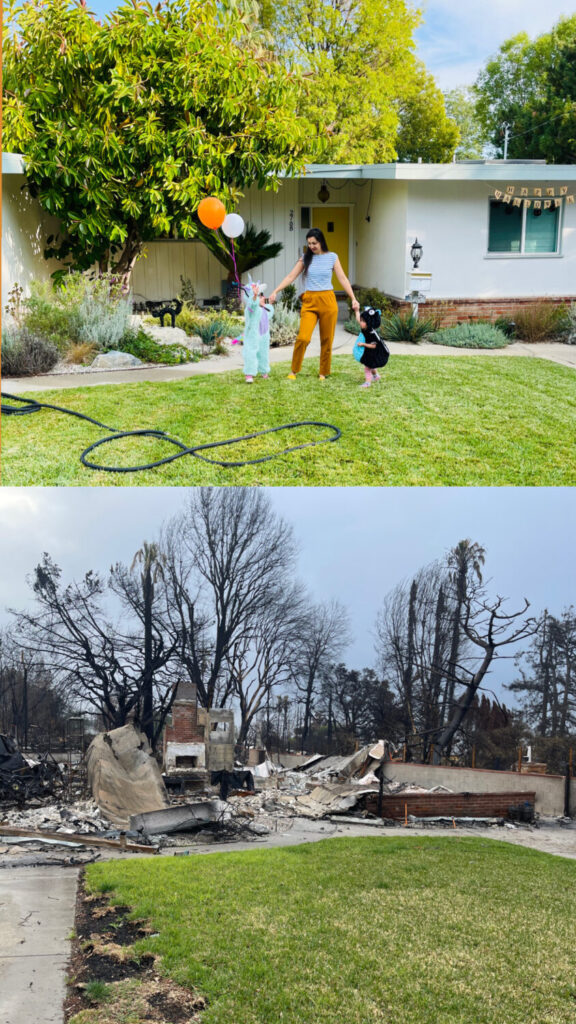
It’s been six months since the devastating LA County Wildfires. In what was once the ashes of Soli Cooksey’s kids’ bedrooms in Altadena, a patch of sunflowers and fire followers grows.
Cooksey is the founder of Joonbird, a vintage-inspired children’s clothing brand known for its cheery prints and bright colors. She and her family lost everything, including her entire business, which was run out of her home garage, during the Eaton fire. She’s now in the midst of a courageous rebuild.
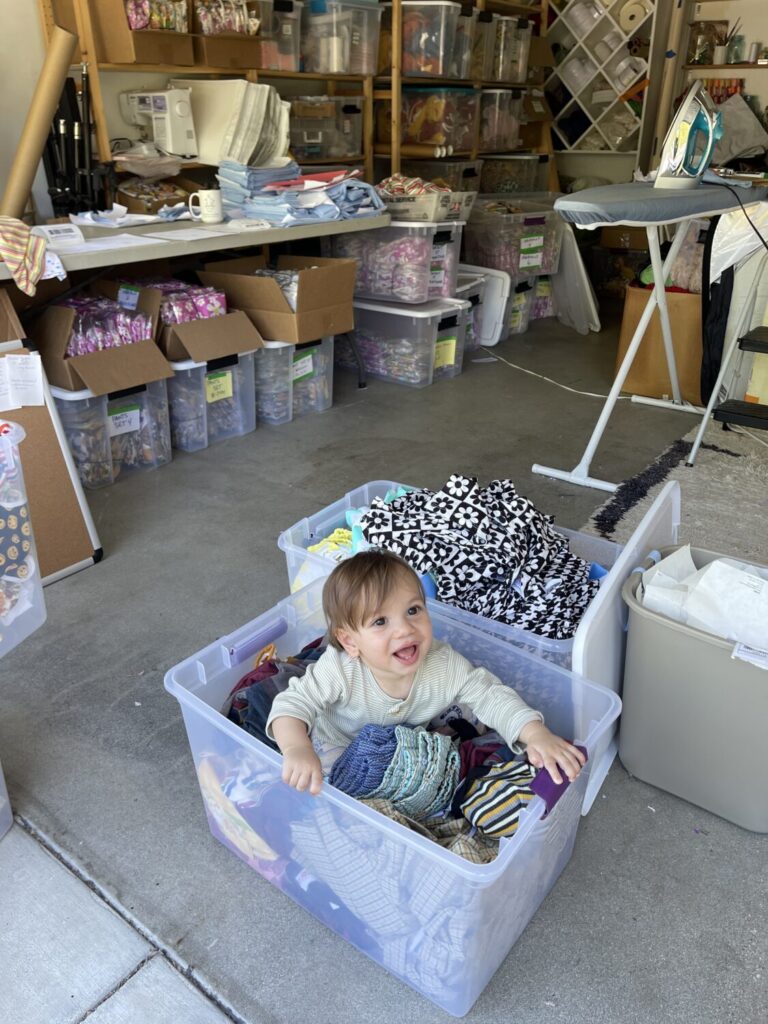
The garage was full from floor to ceiling. There were times when new shipments of fabric would come in, and she and one full-time employee had to create a tunnel to get through it all. On busy days of packing, they would set up a little pop-up that extended out to the driveway.
Courtesy Soli Cooksey/Joonbird
“My business is so material heavy, Cooksey tells LA Weekly from the charred concrete slab that used to be her studio. “I had hundreds of thousands of dollars worth of inventory, fabrics that I had custom printed, packing supplies, and pattern supplies. To start again, out of pocket, was extremely stressful and daunting. It’s going to take a lot to get back to where I was .”
“We had been here about five years,” she says. “I had never connected with the community like after the fires. The one thing about Altadena is that everybody who is from here never shuts up about the city. You have such a diverse group of people. It’s progressive, but not up its own ass. It was very harmonious. Everybody is artsy and a little kooky in the best ways possible. We all became very close to our neighbors more than ever. I can’t imagine living anywhere else.”
The young mother and her husband discussed all the scenarios. Nervous about the toxicity of the land, should they rebuild? Move?
“If we get up and move somewhere else, it’s a huge financial loss,” she says, “because insurance only pays you if you rebuild. So if you have whatever you have left on your mortgage and then sell your lot, you’re really just breaking even, and then you need the money to go buy somewhere else. Where do you get that money? If you want all the funds from your insurance, you’re forced to rebuild. “
So they decided to rebuild and will get a permit to break ground in a couple of weeks. The entrepreneur’s mother bought the lot next door and will make it her home. And while the family is excited about the rebuilding process, the toxins in the neighborhood are a concern.
“In the beginning, we were worried that it was going to take years to rebuild and that we would run out of our Additional Living Expenses money, which is what the insurance company gives you to rent for a couple of years. We were still paying our mortgage, and we didn’t want to be renting and paying our mortgage and building; that’s such a financial loss. But what if we build too fast? If we’re first and everybody else starts building, and we pick up all that dust? There’s so much unknown and variables you’re damned if you do and damned if you don’t. We have the mindset that if it’s done fast and we’re in the house within two years, we’re going to stay inside with the air purifiers on day and night. It feels like COVID all over again.”
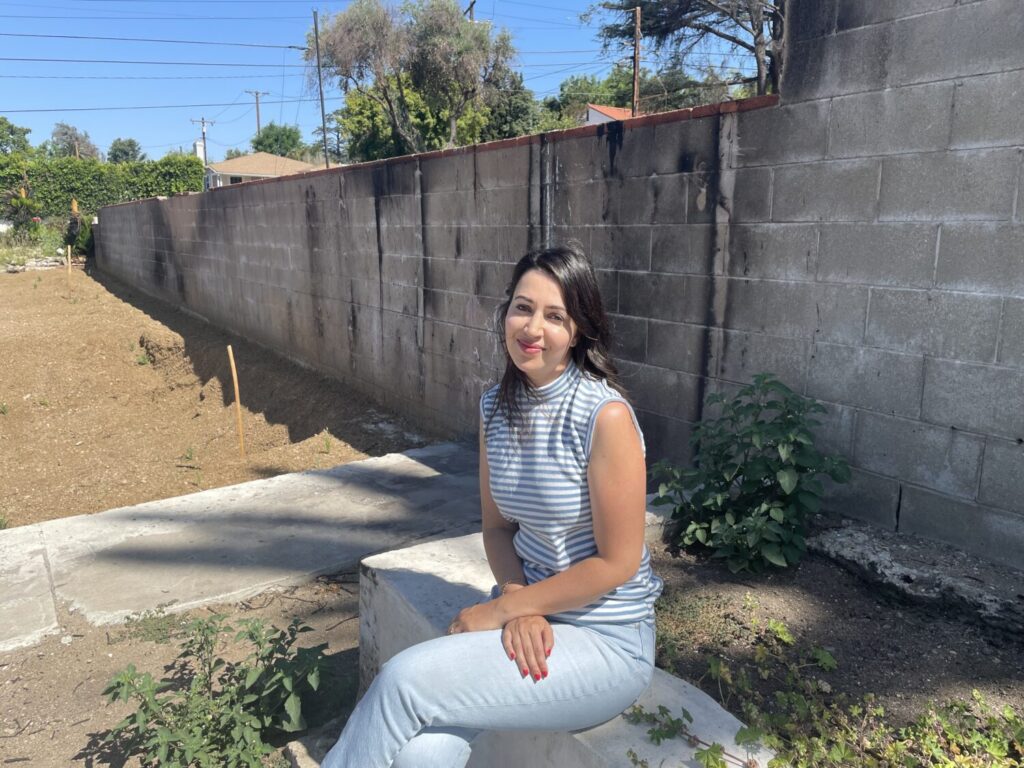
Soli Cooksey in her Altadena garden (Michele Stueven)
After scraping the lot, the Army Corps of Engineers took an additional six inches of soil from the actual burn footprint. The lawn and concrete areas still need to be cleaned at the Cookseys’ expense. And while they do their part, when the neighbors start construction on the nearby blocks and the wind kicks up, it will end up on their property. Cooksey says that about half the lots in the area have been sold to developers.
“As far as clearing the lots, they are way ahead of the game,” she says. “Dealing with the Army Corps of Engineers was the fastest and easiest part of the process. Not only were they quick and easy to deal with, but they were also super respectful and sensitive. It took them less than two days to clear our lot, when we thought it would take a year.”
But rebuilding her seven-year-old Altadena business is more complicated. Cooksey applied for business grants to help recover. She received two small grants out of the 50 she applied for. Despite being a woman-owned business and a mom whose house and business both burned down 100%, she was told she didn’t qualify. She’s starting from scratch in the kitchen of their rental home in Sierra Madre.
Before the Eaton Fire (Courtesy Soli Cooksey/Joonbird)
“I feel like I’ve gone 20 steps backward in life,” she says. “I’m working from the kitchen table again, and it’s driving me nuts because my work is very material-heavy. There are patterns, fabrics, embroidery machines, and so much physical stuff that comes with the business. We’re already bursting at the seams.”
But despite the challenges, even before the fires, Cooksey had made a bold choice to source everything – from snaps and buttons, to elastic and fabric – locally to create a supply chain immune to international tariffs, shipping delays, and price volatility.
“My factory is local and I print my own fabrics on deadstock fabric,” she says. “The fashion industry and the large clothing brands create a lot of excess, known as deadstock. When they go to print something for a shirt, they’ll buy many tens of thousands of yards and print whatever they want on it. The excess blank fabric ends up in landfills. Many times, they even burn it because there’s nowhere to put it. When the clothes for the giant fashion brands are out of season and they’ve already put the items on sale and don’t want to put them on further sale, they will incinerate them. With the huge luxury brands, rather than discount their items because they don’t want to cheapen their brand image, they’ll burn the excess stock rather than give it away or sell it for cheaper.
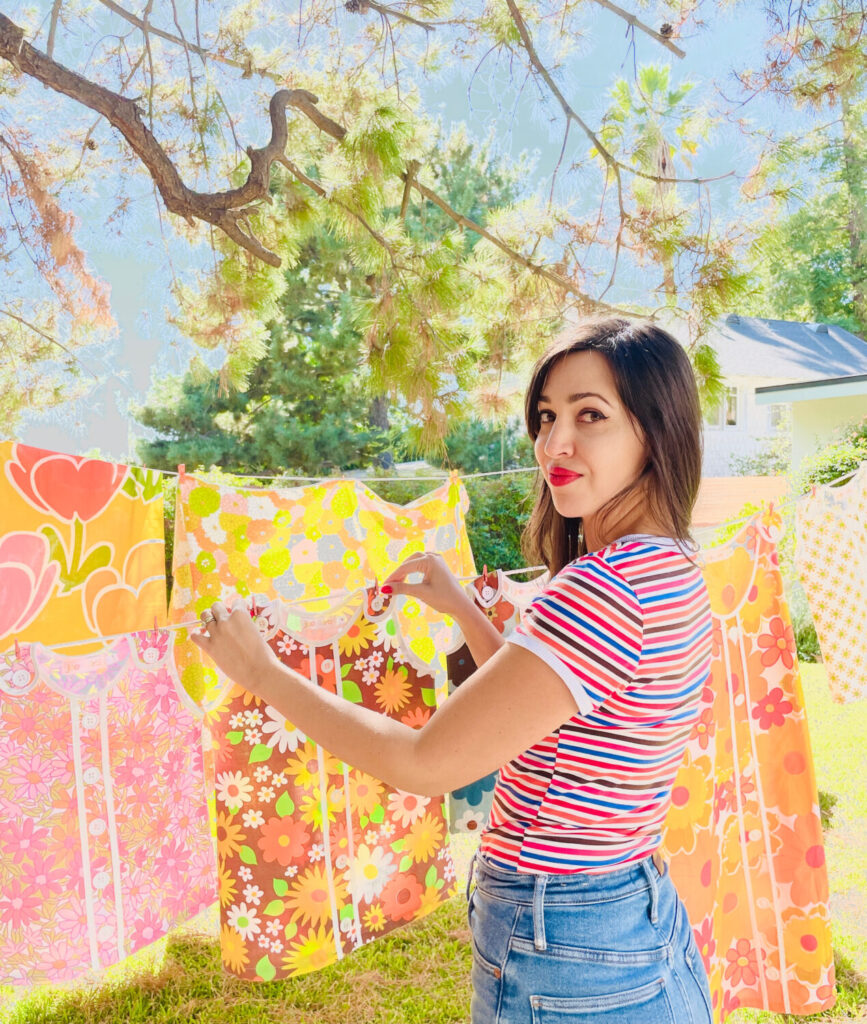
Courtesy Soli Cooksey/Joonbird
“The amount of waste in this industry is shocking,” says the designer. “So there’s a plethora of deadstock fabric that isn’t of lower quality; it was just excess. I often buy the blank deadstock and print my own designs on it. I also use a lot of vintage fabrics. My business originally took off when I started using vintage bedsheets and tablecloths from the 1960s and 70s because there was a lot of it. It blew up, and I just couldn’t keep the items in stock.”
“I hand-drew a lot of my own vintage designs, with the trim, the buttons, and elastic coming from deadstock. Downtown Los Angeles is an amazing playground if you’re in this industry. Behind every door, there is an enormous warehouse that specializes in something.”
She had no fashion background; she just ventured downtown and knocked on doors. One person would refer her to the next, and now she has a fat Rolodex of printers, mills, and even an old school trim factory that’s been there 60 years.
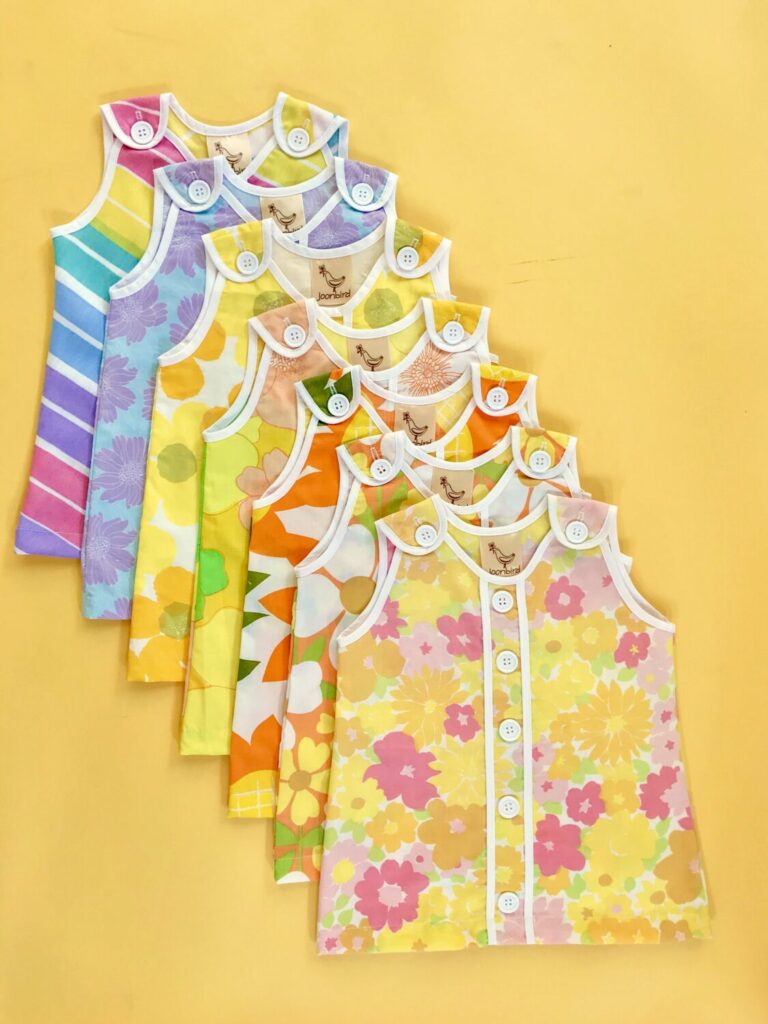
Courtesy Soli Cooksey/Joonbird
“When you go in there, there are 30 of these big, beautiful machines that make vintage trims and elastic, but only one machine will be working because nobody uses these places anymore. Everybody gets everything done overseas. I’m happy to support the local economy, and it makes me feel proud of the craftsmanship behind my items. This isn’t fast fashion. My hand is involved in every aspect of the business, down to getting the trim made and finding vintage buttons.”
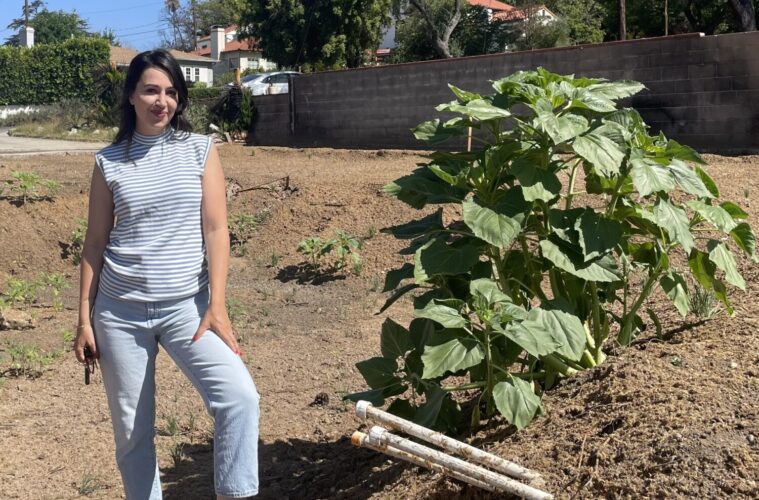
Known in the neighborhood as the crazy Sunflower lady, Cooksey finds joy wherever she can. She planted sunflowers on her naked property, and hundreds of fire follower sprouts have popped up. The dahlias are back in her raised garden bed, and a tomato plant is throwing off blossoms.
“There’s no water, so I have to come out here once a week in my car with the milk jugs I filled up at home and water them by hand,” she says. “I planted the sunflowers because it gave me something mentally. If they can bloom, so can I one day.”
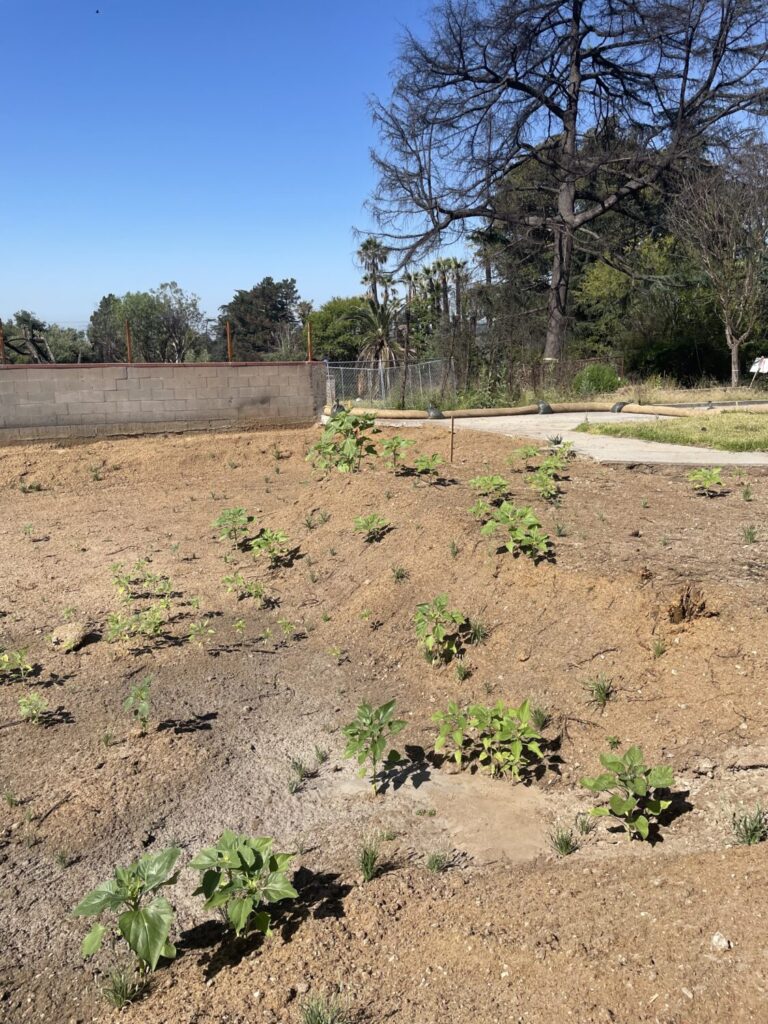
Cooksey sunflower patch (Michele Stueven)