

 Asher Luberto
 For those of you who know the difference between The French New Wave and a croissant, Nouvelle Vague is the movie for you. A rapturous homage to Breathless, an early pioneer of the French New Wave era of cinema, that’ll leave you breathless. Entranced by a whimsical, playful, elegantly wistful style that evokes Breathless with almost impossible aplomb, Nouvelle Vague is made for those who spend countless hours on the Criterion Channel, who see movies as more than just entertainment but as an art form, an intersection between cinema, theater, painting, music and architecture, where every edit is a choice and every image is an extension of the director’s vision. In other words, Richard Linklater’s wonderful movie is a glowing tribute to the art of arthouse cinema.
Of course, this might all sound nerdy. Who really wants to watch a cinematic essay on what went into the making of a movie — especially a movie shot in black and white, made in a different language, from a massively different era? Nouvelle Vague isn’t for everyone, but those who are enchanted by its subject matter are bound to find themselves lingering in its atmosphere, like pillows of smoke stuck to the walls of a French cafe, soaking up every factoid and glorious recreation on screen.
(©Jean Louis Fernandez)
A tragic love story between a gun-toting, cigarette-smoking gangster and his illustrious blonde femme fatale, whose eyes paint more contradictions than Mona Lisa’s, Breathless is considered the first modern film — the movie that invented the jump-cut and the entire language of modern cinematic editing. But how was it created? Richard Linklater dives into the details the way a scientist giddily explains quantum physics. When we meet Jean-Luc Godard (Guillaume Marbeck), he’s lagging behind his fellow film critics at Cahiers du Cinéma, who have already made bona fide classics.
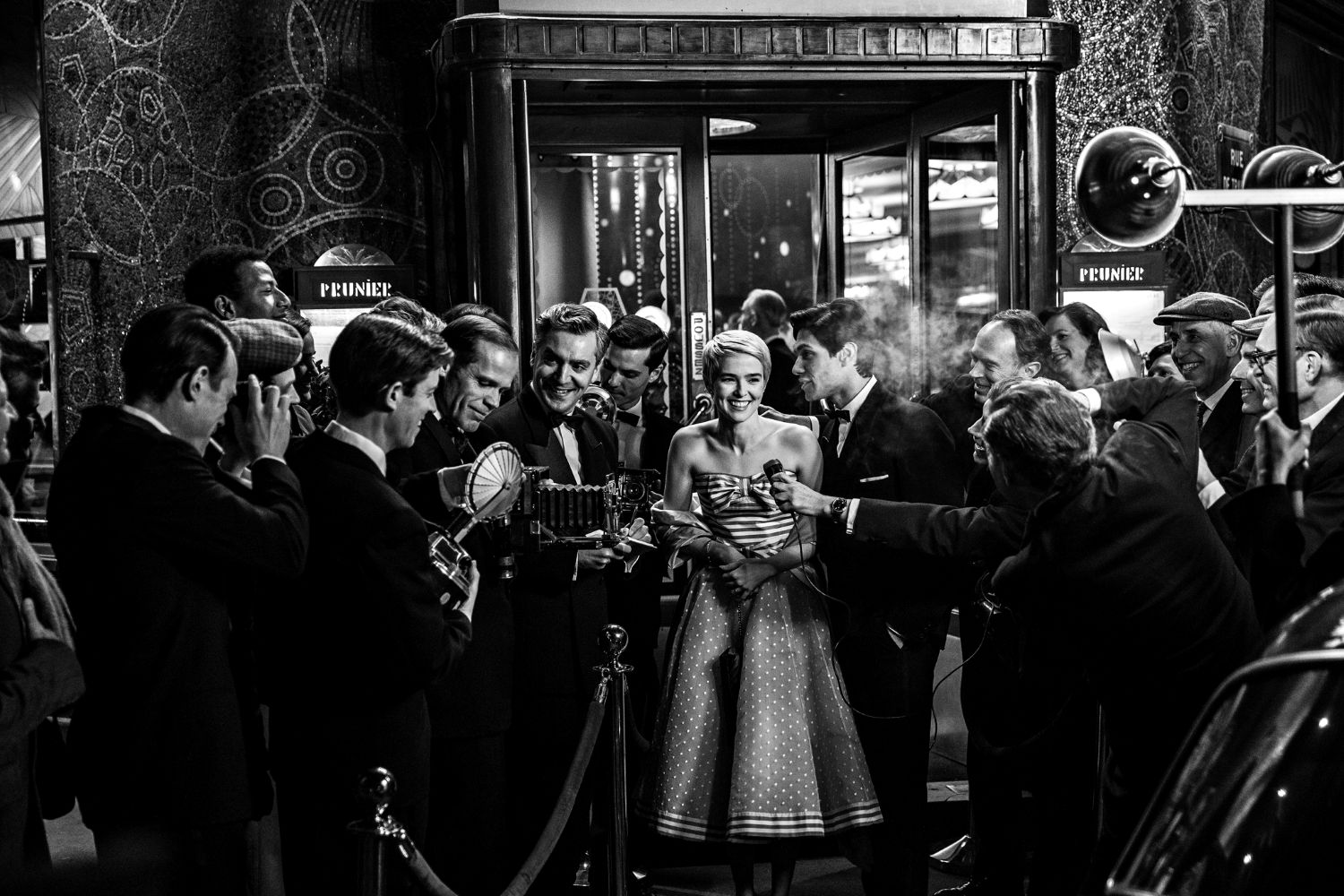
His best friend François Truffaut has just released The 400 Blows, a cool, crackling autobiographical feature about a young boy in Paris that valiantly went against the cinematic tropes of its era, leaving Godard in envy. The goal of French New Wave filmmakers was to upend convention, to create a gritty, jazzy, spontaneous slice of life that reflects real experience instead of artificial melodrama, which is why Truffaut’s based-on-a-true-story script made a perfect fit for Godard’s first feature. After getting funding, he puts together a cast of soon-to-be legendary actors, including his friend Jean-Paul Belmondo (Aubry Dullin) and the already somewhat known Jean Seberg (Zoey Deutch), who is hesitant to join until Godard convinces her husband otherwise.
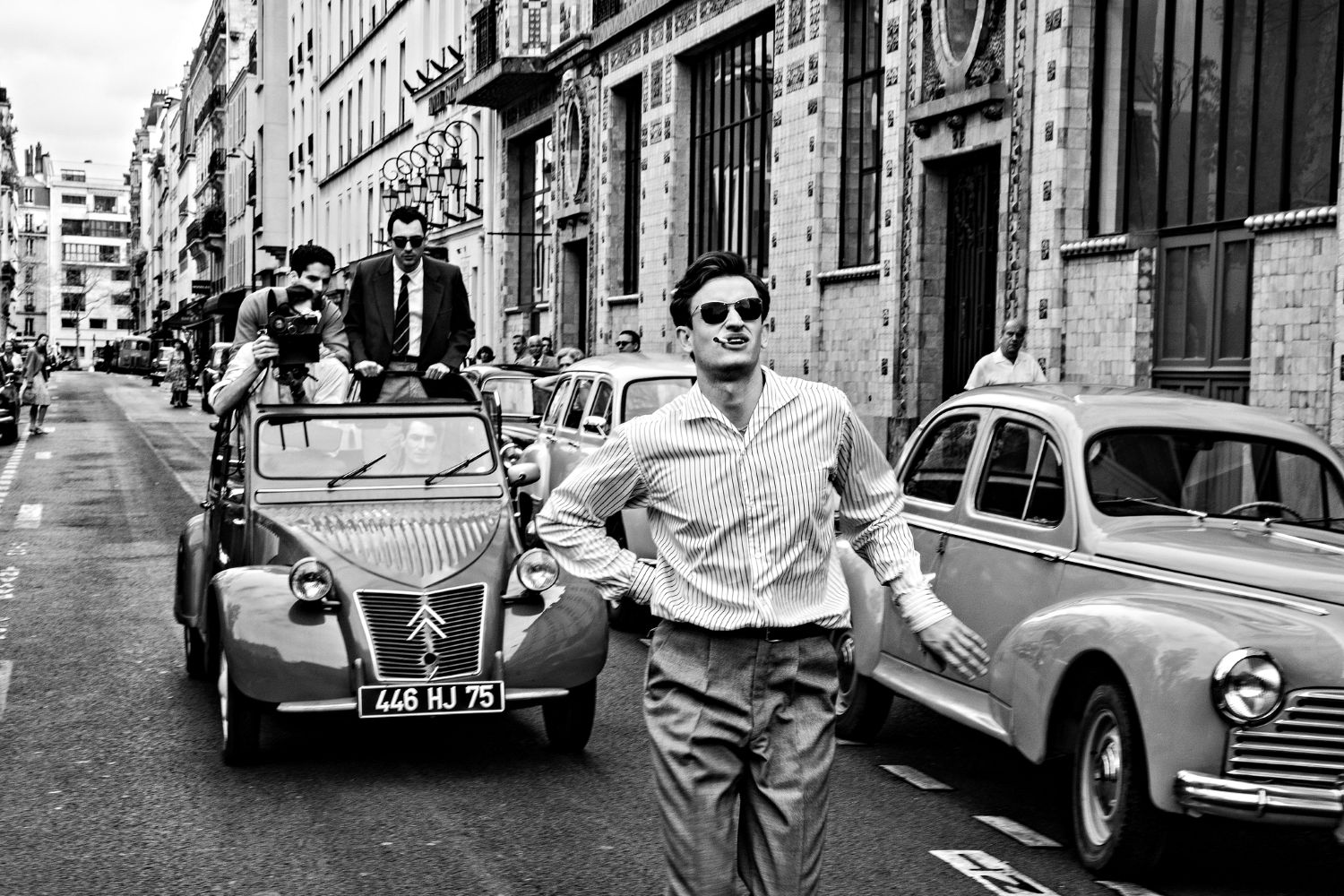
Soon, this cast of characters takes to the streets to create a movie, not knowing how to do so, making it up as they go along. Godard starts each day with fresh ideas — when he runs out of them, he storms off set stammering intellectual drivel like “art is never finished, only abandoned.” With only 20 days to create the movie, there’s a sense of tension lingering in the Parisian smog, but Linklater cleverly trades conflict for playful homages, evoking Godard’s style with handheld cameras, unsynced sound, choppy editing and monochrome color, which gives Nouvelle Vague the texture of a genuine Nouvelle Vague picture.
(©Jean Louis Fernandez)
It’s a treat to watch these characters put together the film, which most can agree is a monumental production. There’s a shared sense of reverence for the characters on screen, as well as the act of making and enjoying movies, that really shines through here. Godard himself would have scoffed at this starry-eyed tribute, its lack of invention in particular (he was a notorious cynic, inventor and boundary-pusher, which Marbeck reenacts spectacularly behind ink-tinted shades), but for those of us watching from our couches, it’s constantly enjoyable to see millions of details come together to create a grand cinematic tapestry. To see how Godard emulated guerrila-style filmmaking, using a postal cart and cramming his cinematographer inside to hide the camera, is particularly fun to discover.
Obviously, not everyone is going to be as interested in these details, and many viewers are going to glaze over the specifics the way many film students pull out their phones whenever film history is mentioned. But Linklater is a master at making art accessible. He made Rohmer-esque conversations mainstream in Before Sunrise, a strangers-on-a-foreign-train romance that served as a brief encounter to arthouse cinema for many young moviegoers, as well as experimental cinema sparkle with his 10-year-in-the-making picture Boyhood.
Nouvelle Vague is an energetically exciting, endearingly evocative ode to artistic creativity. Regardless of whether you audibly cheer when arthouse auteurs like Robert Bresson and Jean-Pierre Melville are trotted on screen like Marvel cameos or whether you have to Google “who the heck is Robert Bresson,” you’ll likely end up being swept up by Linklater’s breathless charm.
“Nouvelle Vague” is in select theaters today, October 31, and will be available for streaming on Netflix November 14.