
 Michele Stueven
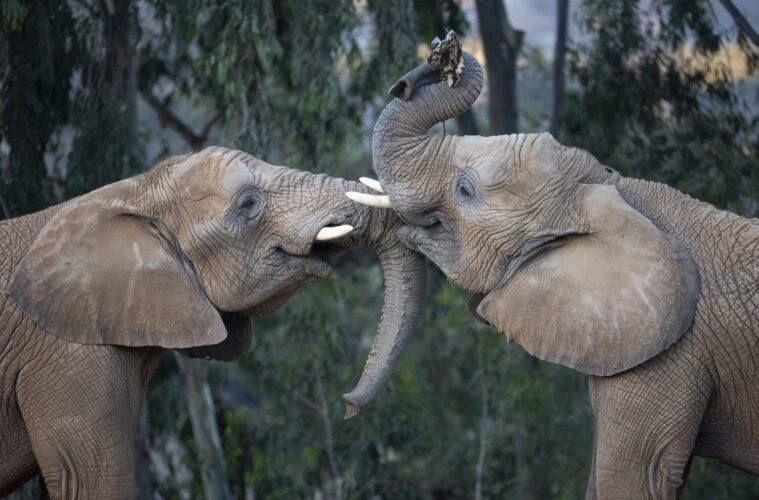
In 2003, an orphaned group of elephants was rescued from slaughter in Eswatini (formerly Swaziland) due to a severe drought and lack of food by a group of zoos. Four of them were brought back to the San Diego Zoo by the San Diego Zoo Wildlife Alliance. Since then, they have become a viral sensation.
Just before the magnitude 5.2 earthquake shook near Julian in April of 2025, the elephants at the San Diego Zoo Safari Park instinctively formed an alert circle to protect the younger members of the herd.
They started trumpeting and putting the babies in the middle of a circle before the ground even started shaking. They already felt the rumble through the pads of their feet. Zuli, the seven-year-old male, kept trying to get out of the middle to become part of the circle to help protect the herd, which has now grown to eight.
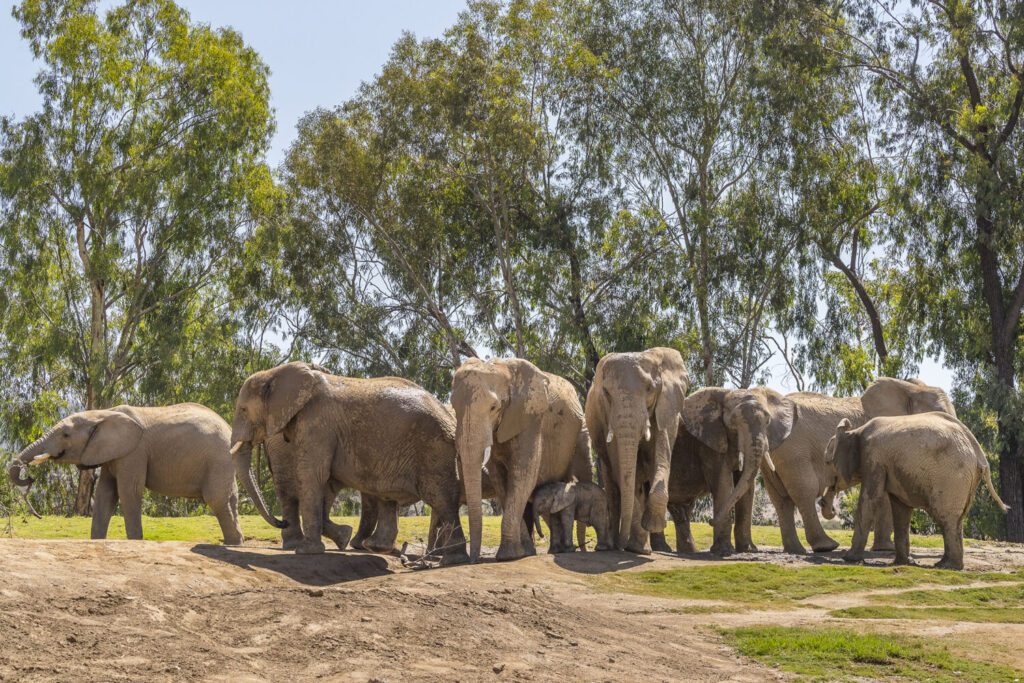
Elephant Valley (Courtesy San Diego Zoo Wildlife Alliance)
The pack consists of eight elephants: Swazi (female, 36), Umngani (female, 36), Ndlulamitis “Ndlula” (female, 36), Khosi (female, 19), Phakamile “Kami” (female, 18), Qinisa (female, 13), Umzula “Zuli” (male, 7), and Mkhaya (female, 7). Khosi, Kami, Qinisa, Zuli, and Mkhaya were all born in the park.
They calmly resumed normal behavior shortly after the quake, but stayed close together, all of which was randomly captured on the park’s security cameras.
The all-new Denny Sanford Elephant Valley at the San Diego Zoo Safari Park is their new home and will officially open to visitors on Thursday, March 5, as the largest and most transformative project in the San Diego Zoo Wildlife Alliance’s 109-year history. Elephant Valley was meticulously designed to foster empathy, understanding, and a lasting appreciation for elephants in a natural setting familiar to them.
The enclosure was built around the herd during the pandemic, and the experience shines a spotlight on San Diego Zoo Wildlife Alliance’s global conservation partners and celebrates the cultures and local communities in Kenya where humans and elephants coexist, reflecting the seasonal variations of the African savanna year-round.
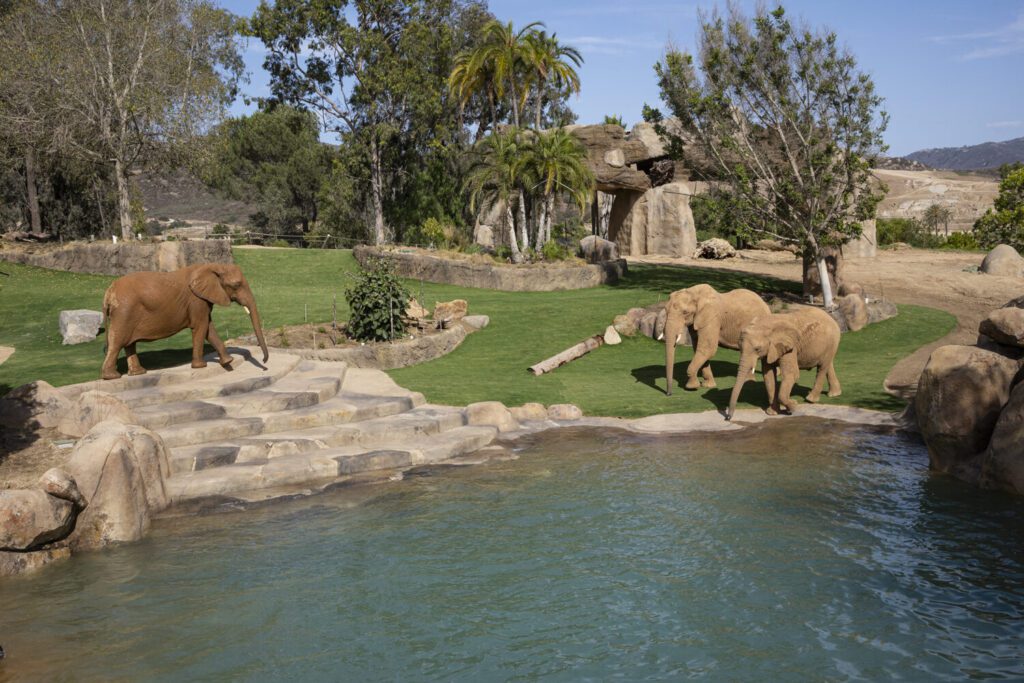
Elephant Valley (Courtesy San Diego Zoo Wildlife Alliance)
The immersive space is thoughtfully designed with this concept in mind. Hills, valleys, and hiding spots encourage behavioral enrichment, employing techniques like hiding food, using puzzle feeders, and simulating natural foraging to prevent boredom and stress.
And speaking of feeding, at the heart of the valley overlooking the lagoon is Mkutano House, a new two-story restaurant with three different dining destinations, Mkutano, Ona Lounge, and Tu Grill, that all overlook the exact spot where the historic alert circle took place.
Mkutano comes from Swahili, meaning “gathering with purpose,” and the sprawling indoor/outdoor space is elegant and romantic with floor-to-ceiling windows in an authentic safari lodge setting with detailed design elements and menus inspired by culinary traditions across Africa’s diverse regions.
The Safari Park in the rolling hills of San Pasqual Valley in Northern San Diego opened in 1972. It spans 1,800 acres in Escondido and is home to no less than 3,100 animals from more than 340 species. Elephant Valley is included with Safari Park admission.
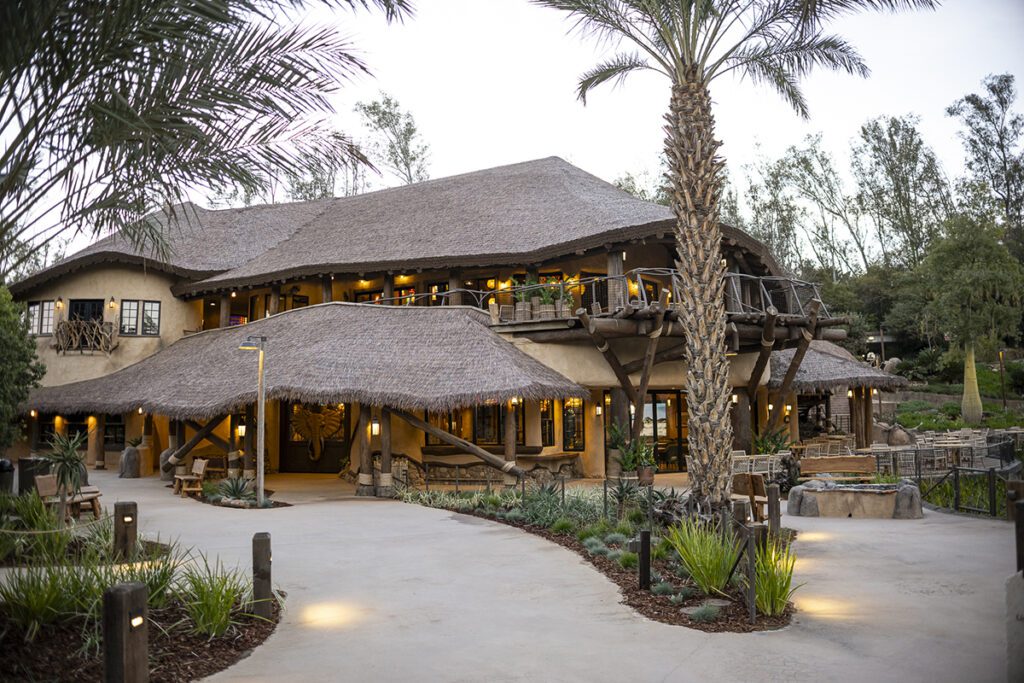
Mkutano House (Courtesy San Diego Zoo Wildlife Alliance)
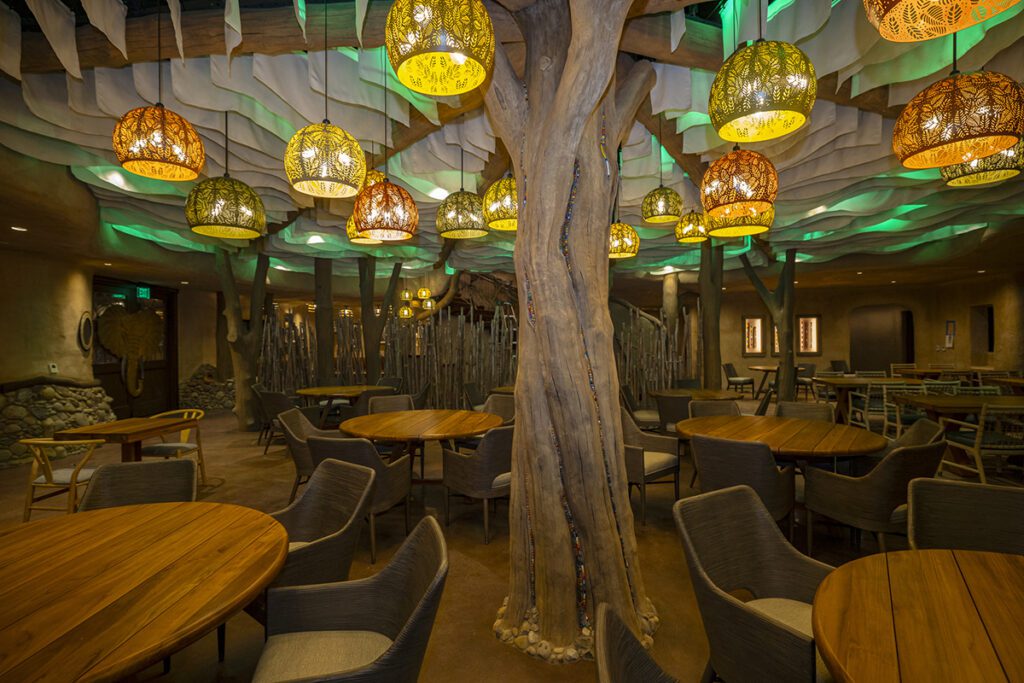
Beadworks Tree (Courtesy San Diego Zoo Wildlife Alliance)
Make it a Weekend: Roar And Snore
For the full savannah experience, check into the Roar and Snore glampsite overlooking Elephant Valley. The sleepover experience includes camp activities, an after-hours look at the wildlife, guided walks, s’mores around the campfire, dinner, an evening snack, and breakfast the following morning, all overlooking the vast expanse of the savannah dotted with giraffes, rhinos, and dozens of other species interacting in their natural setting.
Choose from several age-appropriate sleepover categories with their own themes, like adults only and school and youth nights. With the safari package, you’ll begin your evening by soaring into camp on a 2/3 mile Flightline Safari zip line. At night, take a nocturnal safari to view the wildlife of Africa and Asia through night vision binoculars.
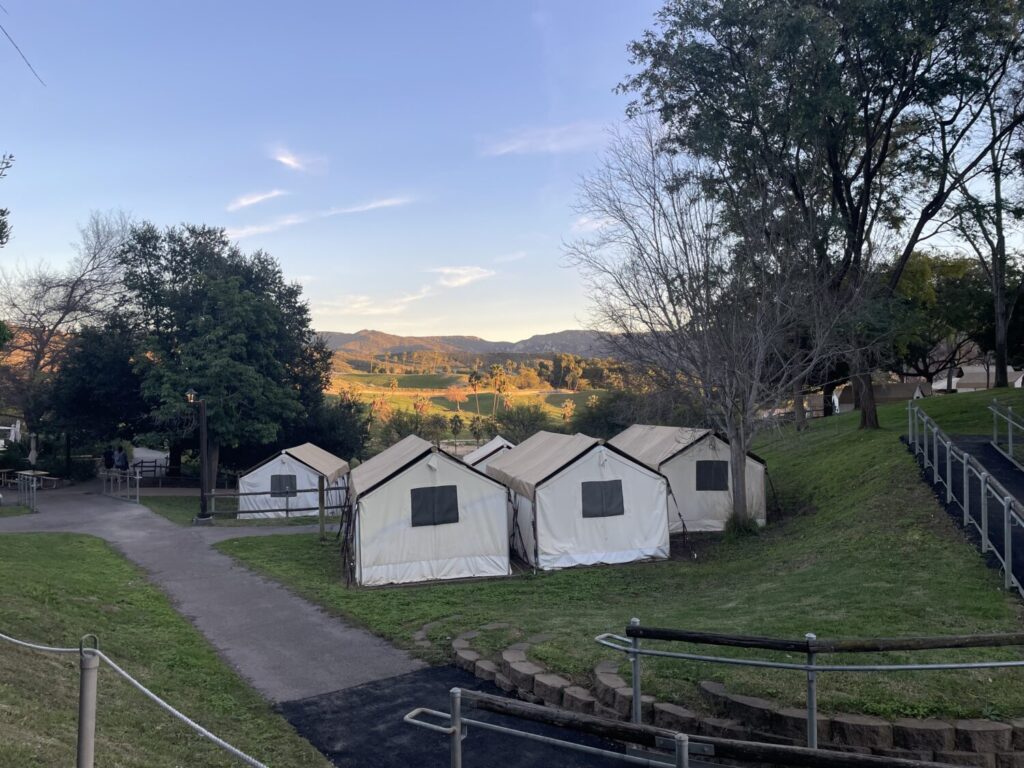
Roar and Snore (Michele Stueven)
After breakfast, as the elephants begin to stir, there is reserved up close viewing and encounters with some of the park’s inhabitants in the amphitheater. Finally, the overnight experience ends with a wildlife safari into the expansive savanna habitats in the back of a covered, open-air safari truck for an up- close view of the varied wildlife, including turkey vultures, lions, and cheetahs.
There are various tent options on the hillside grove, which feels like a family campout, that include queen-size and bunk beds. Linens and sleeping bags for the bunks are only available in the premium tents, so be sure to bring those along to be on the safe side. You might not get as lucky as we did, with neighbors like KABC’s Marc Cota-Robles, wife Jasmine Viel, and sons there to lend us one out, as trustworthy and reliable as their newscasts. And sorry, no showers.
