
 Michele Stueven
It’s been 32 years since Disney introduced The Lion King to the world with the famous film, musical, and franchise that captured generations of hearts. Jon Favreau directed the live-action remake, and now, together with National Geographic and BBC Natural History Unit’s Mike Gunton, he has ventured back into the royal feline pool with the documentary TV series Lion, which follows a young cub’s journey through survival, family conflict, and identity in the wild.
But this time, the animals wrote the script.
Filmed over four years, this sweeping saga of family, hope, and courage follows Kio as he grows from a vulnerable cub into a powerful leader. Along the way, he faces loss, exile, and fierce rivals in a fight to survive. Combining cinematic storytelling with groundbreaking natural history filmmaking, this series of four chapters captures the complete coming-of-age story of a lion — and the emotional and harrowing making of a king.
With the use of state-of-the-art long lenses, drones, and a custom-tailored stabilized GSS camera system to capture intimate behaviors and family dynamics, the result is a character-driven natural history saga, paired with a powerful score from Hans Zimmer.
Narrated by O.J. Lynch, the story is a great marriage of Favreau’s dramatic storytelling and the expertise of the filmmaking and research crew, giving the feeling that you’re sitting around a campfire, with a sober voice taking you along on a journey from the pride’s point of view.
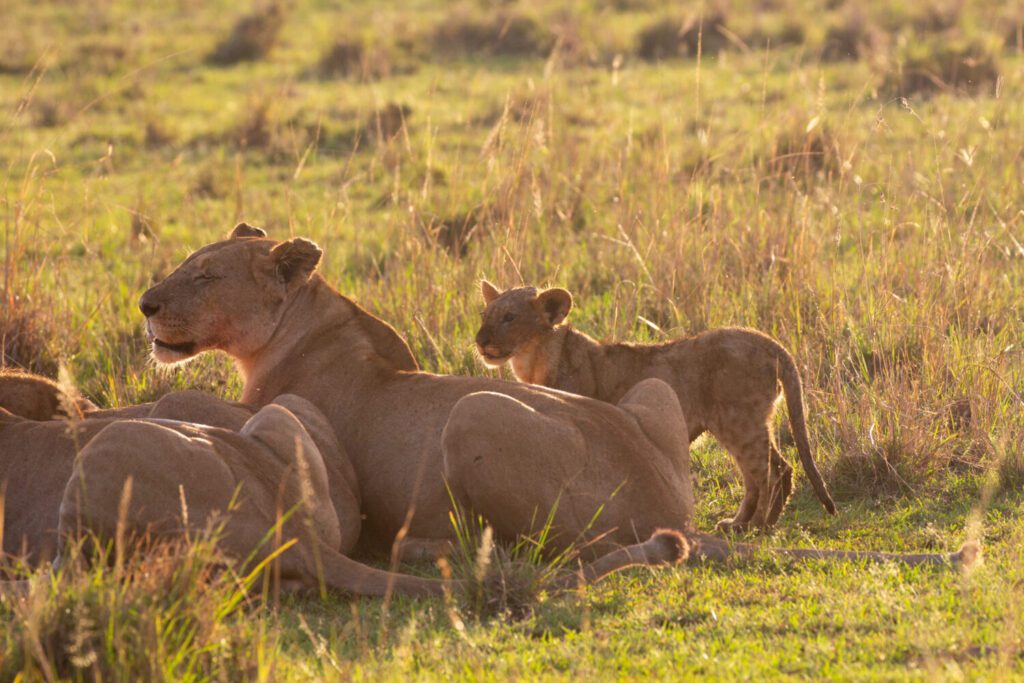
Chapter One: A Prince is Born. Kio stands behind Summer, who rests beside other members of the pride. (National Geographic/Jane Atkins)
“The animals write the story,” BAFTA Award-winning Director of Photography Sophie Darlington tells LA Weekly in the lobby of the Conrad Hotel Los Angeles before this week’s premiere. “ We’re there, the whole crew of producers, directors, cinematographers, researchers. We’re ready for when that moment happens and go from catatonic to supersonic when the lions actually do something. They are living their lives and their story, and we’re just there to record it. It could have gone horrendously wrong.”
Filming as close as 50 yards away from the pride in Maasai Mara, Kenya, the animals are familiar with humans.
“This is a true story; it all happened, says Darlington, who has been a wildlife cinematographer for 30 years. “The luxury of having four years to let a story unfold with a beginning, middle, and end is humbling. You’re just not going to get that in a month. You can force a narrative, but this is the lions producing and directing.
When we met Kio the first day after following a lioness back to the pride, he was the size of a loaf of bread, a little dittery doughtery kind of thing. All of his brothers and cousins are at least a year older. Each time we went back, we wondered if he was going to make it. Only half of them make it through the first year, and even worse than that, male lions have it even harder. If you’re a male lion, you can’t stay in your natal pride; you have to leave for obvious reasons. It’s a family story, and the beautiful thing is that it ends well, which we would never have seen when we started.”
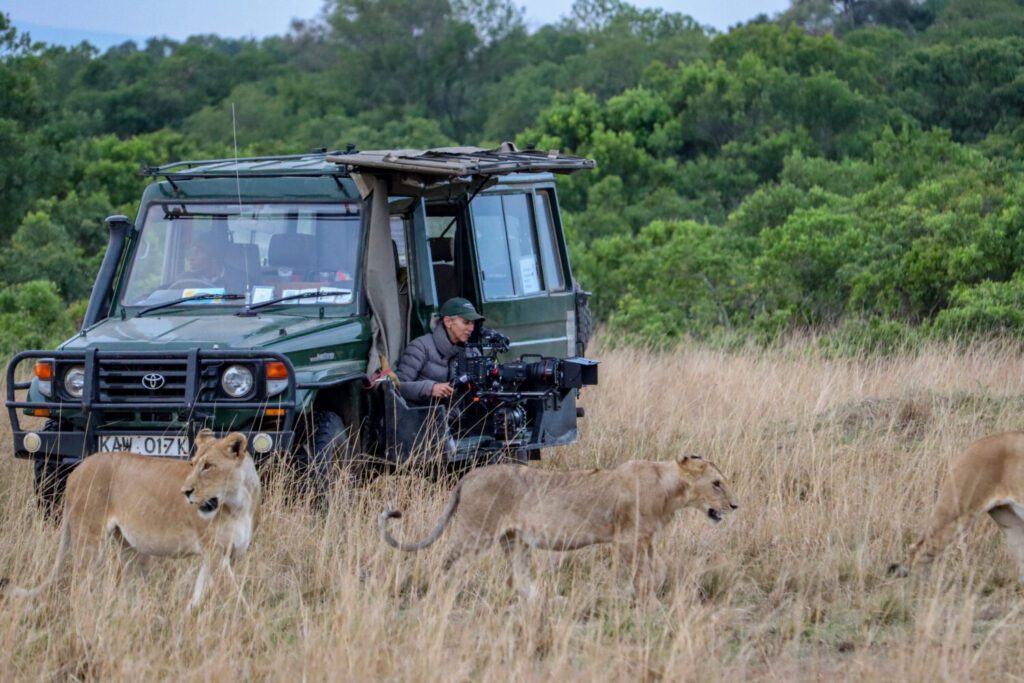
Sophie Darlington films as Summer’s Pride walks past the vehicle. (National Geographic/Alice Owen)
The series involved 52 shoots over the years with 13 on the cinematography team, two drones, and one night specialist. Darlington did 19 shoots out of the 52, usually a month at a time. The elegant drone footage from aerial cinematographer Anthony Njuguna alone of oxpeckers tipping off water buffalo to the lions’ presence across the savannah is stunning.
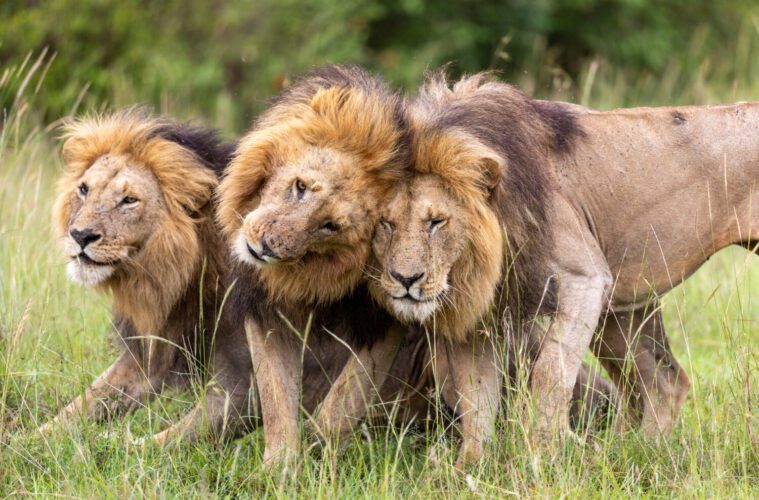
Whether it’s a shot of the male lions looking for food, posing like a boy band, or Mexican cinematographer Tanya Escobar capturing a lion falling out of a tree, the animals tell the story.
“It can be a tough watch, but there is joy and funny bits as well,” says Darlington, who is one of the few but growing group of women cinematographers. “Like any good family story, there has to be drama. In the first two chapters we didn’t know if Kio was going to make it; we were in the lions’ hands. We had no way of knowing where this was going to go; we just started shooting. There were no guarantees. In the first two years, you’re sussing out the characters, and you’re looking at Kio going, is he going to make it?”
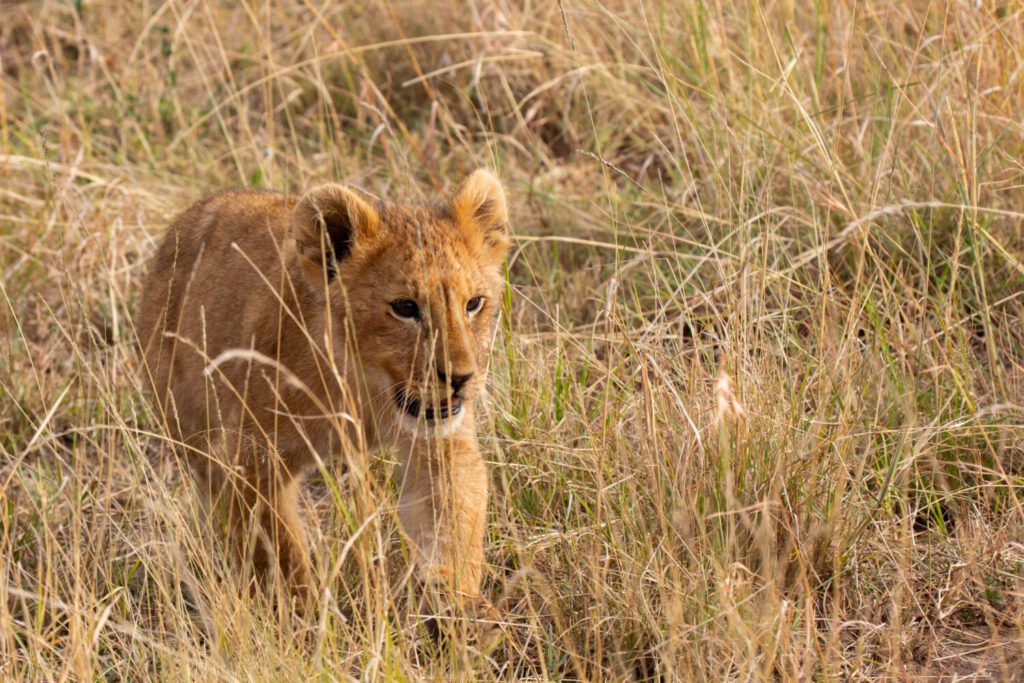
Kio walks through the long, dry grass. (National Geographic/Jane Atkins)
The film is shot from the lion’s perspective, geared towards you being in their world. Nothing is hyper-stylized or hyper slow motion, including the kill, which is not what the story is about. It’s about the natural feeling of experiencing it as part of the pride from a low angle where nothing moves too quickly.
With female lions, sisterhood is everything, as is brotherhood for the males. The females are incredible hunters, and the young males often survive on scavenging. Eventually they learn to survive from their mothers and are a powerful force as a team.
“In those four years I was reminded how important it is to live in the moment as the lions do,” says Darlington. “When something hard happens, they just get on with it, and I’m trying to incorporate that into my life. Just get on with it.”
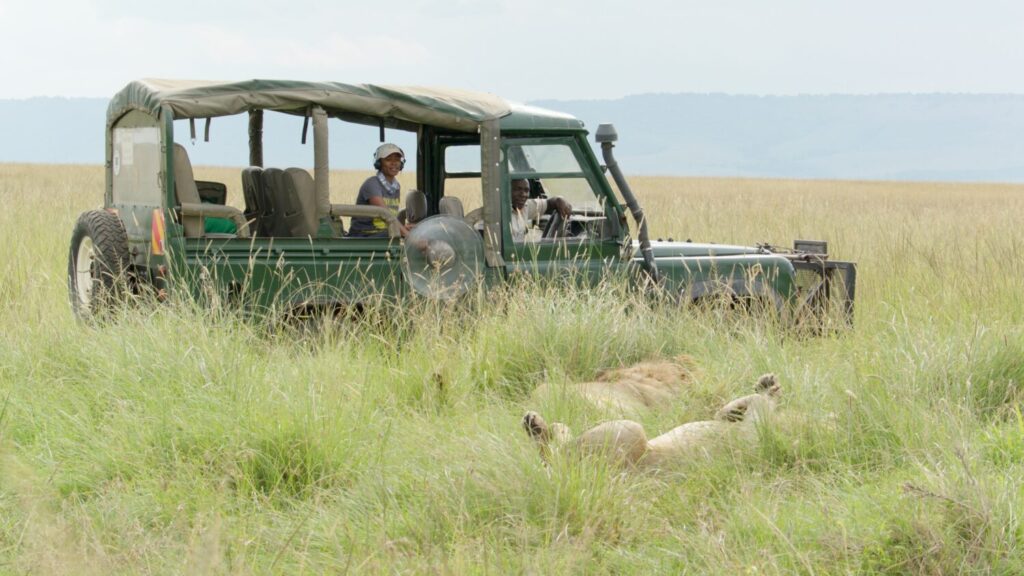
Alice Owen records the sounds of sleeping lions from inside a vehicle, capturing the subtle ambiance of the pride at rest. (National Geographic/John Aitchison)