

 Michele Stueven
The Los Angeles County Museum of Art will present two exhibitions exploring design as an agent of social, political, and economic transformation in modern domestic life, beginning Sept. 27 through March 14, 2027, in the Resnick Pavilion, Home of the Future, 1925 –1985: Designing Domestic Utopias and The Kitchen and Its Discontents.
Home of the Future, 1925–1985: Designing Domestic Utopias traces six decades of domestic visions through architectural models, drawings, photographs, films, and objects, from self-cleaning kitchens and plastic houses to desktop computers.
Presented concurrently with Home of the Future, The Kitchen and Its Discontents brings two influential kitchens together with related artworks to explore the significance of a site historically associated with women’s labor.
Kyu Lee of Hamilton Goody Architects Monsanto House of the Future presentation rendering 1956 (Courtesy LACMA)
Over the course of the 20th century, Americans were offered a wide variety of domestic tomorrows: self-cleaning kitchens, plastic houses assembled in a day, push-button appliances, and desktop computers, all shaping visions of how to live.
With more than 260 architectural models, drawings, photographs, films, paintings, furniture, and objects ranging from sinks to televisions, Home of the Future explores the American home of tomorrow according to a LACMA press release.
The Kitchen and Its Discontents is a standalone exhibition embedded within Home of the Future. This presentation puts Margarete Schütte-Lihotzky’s Frankfurt Kitchen (c.1926–30) and Charlotte Perriand’s kitchen for Le Corbusier’s l’Unité d’habitation (c.1946–52) in conversation with other works from LACMA’s collection, highlighting the complex cultural and psychological significance of the kitchen space.
Between 1925 and 1985, single-family homes in the U.S. became a testing ground where scientific innovation, corporate ambition, government policy, and experimental design converged. Companies not only manufactured new products but also helped shape how the future was conceived and sold. World’s fairs, museum exhibitions, model homes, department stores, and mass media made new technologies, materials, and ways of living seem both compelling and inevitable.
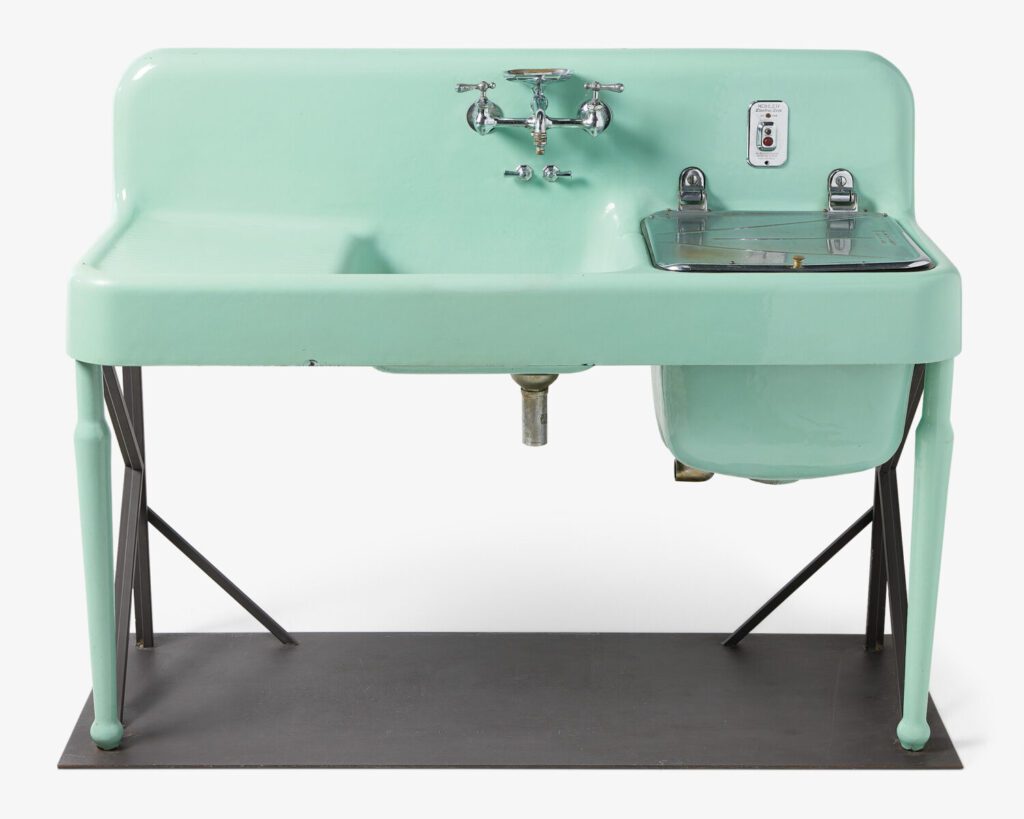
Frank G. Brotz for Kohler Co., Electric Sink, introduced 1926; this example 1928 (Courtesy LACMA)
Everything from plastics and push buttons to prefabrication, the exhibit illustrates how, after World War II, military innovations in plastics, plywood, and metals were applied to furniture, textiles, and architecture. Made almost entirely of plastic and replete with push-button appliances, Disneyland’s Monsanto House of the Future in Tomorrowland.
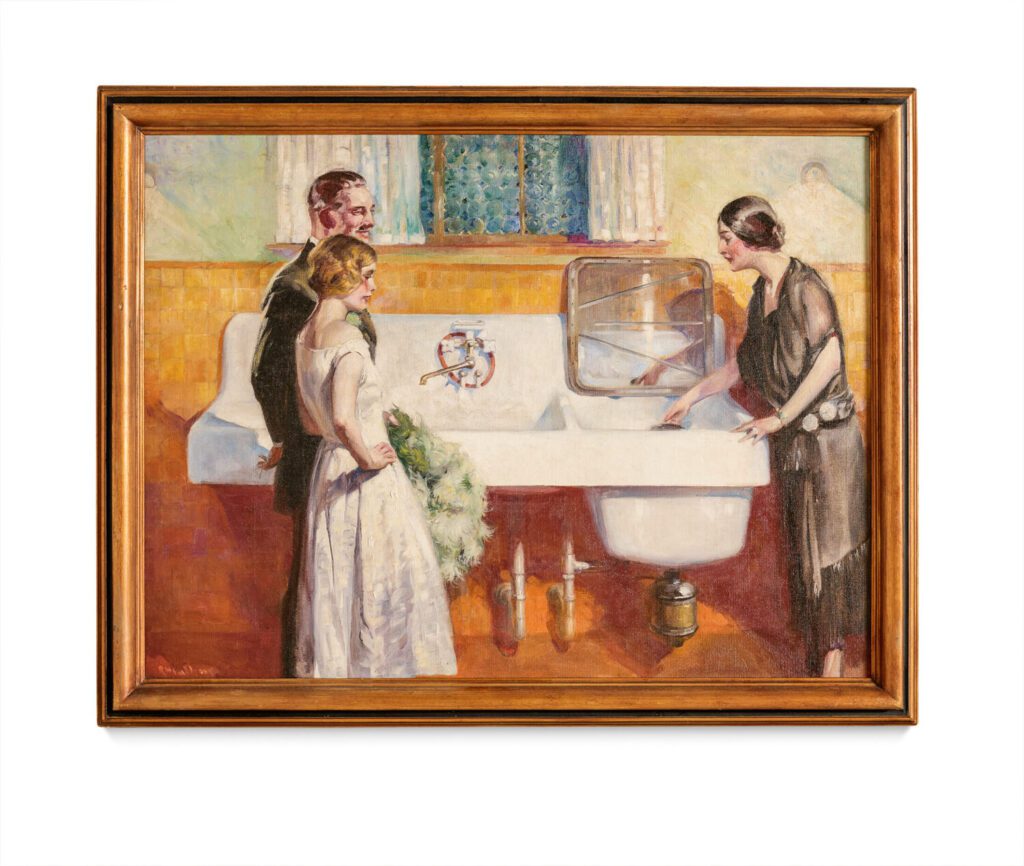
Historically a site of women’s labor, the kitchen has also been researched and critiqued by women. Two groundbreaking 20th-century designers, Schütte-Lihotzky and Perriand, applied modern principles of efficiency and modularity to the home to improve users’ lives.
Documentary photographs like Marion Post Wolcott’s One of the Wilkins Family Making Biscuits, Near Tallyho, Granville County, North Carolina (1939) capture the pragmatic and sometimes improvisational realities of ordinary kitchens, while advertising and architectural images by commercial photographer Ralph Bartholomew, Jr., promote idealized visions of comfort, convenience, and domestic fulfillment.
The exhibition also highlights works by artists and activists addressing the kitchen’s longstanding association with women’s identity and labor, including Martha Rosler’s Semiotics of the Kitchen (1975), Laurie Simmons’s New Kitchen/Aerial View (1979), and Kelli Connell’s Kitchen Tension (2002)
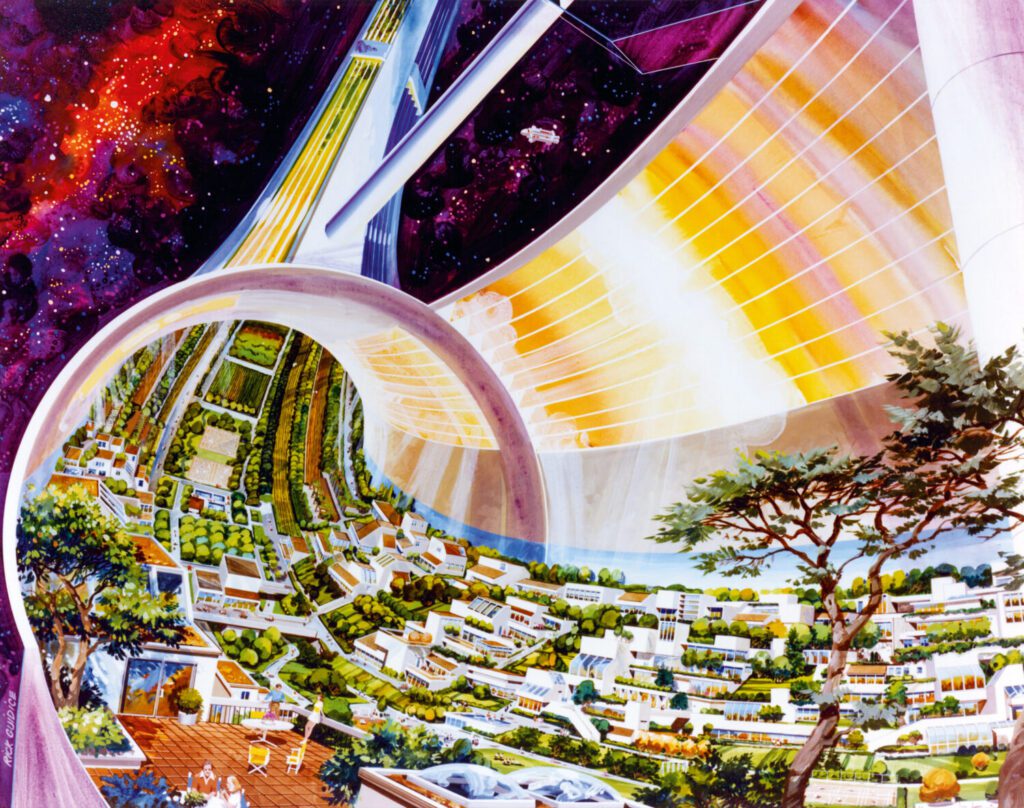
Rick Guidice for NASA, Cutaway of Torus Wheel Habitat, 1975 (Courtesy LACMA)