
 Will Jones
The established movement artist has turned competition wins, creative range, and community leadership into a body of work that reflects the depth, discipline, and authority of Western Sydney dance culture
Western Sydney has been producing serious creative talent for years. The issue is not whether the work is there. The issue is how often the wider culture is slow to give that work its full weight. Piere Tamargo stands as one of the clearest examples of what the region has been building all along. He is an established movement artist whose career already includes national crew titles, major live performance credits, choreography, directing, facilitation, and interdisciplinary projects that move across stage, screen, and exhibition spaces. He does not represent potential waiting to be noticed. He represents a standard that has already been set.
That standard was not built through a polished pipeline. Tamargo moved from the Philippines to Australia at 10 with his single mother and sister and had to adjust quickly to a new country and a different cultural landscape. He did not grow up with easy access to formal arts training, even though he was already drawn to creative work. Instead of waiting for ideal conditions, he built from what was available. He learned by observing, repeating, and staying hungry enough to keep going.
“I did not come through the clean route,” Tamargo says. “I had to build with what I had and trust that the work would add up.”
That mentality matters in Western Sydney, where creative development often happens through community and self-direction rather than conventional pathways. Before entering crew culture, Tamargo built his early movement vocabulary through whatever dance material he could access, taking in choreography, musicality, and performance texture from the artists and styles that were shaping dance culture online. He studied broadly, but that early phase is best understood as preparation, not arrival. The real training ground came later.
That training ground was Blacktown. Tamargo came across the crew scene there during a youth event and was invited into a training session. What he found was not a substitute for formal education. It was its own education. Young dancers without the money for regular classes were building language, discipline, and choreography in real time, learning from the street and club styles, moving through the Sydney battle scene, and sharpening one another through repetition.
“That scene teaches you fast,” he says. “You learn to work, adapt, and hold your own.”
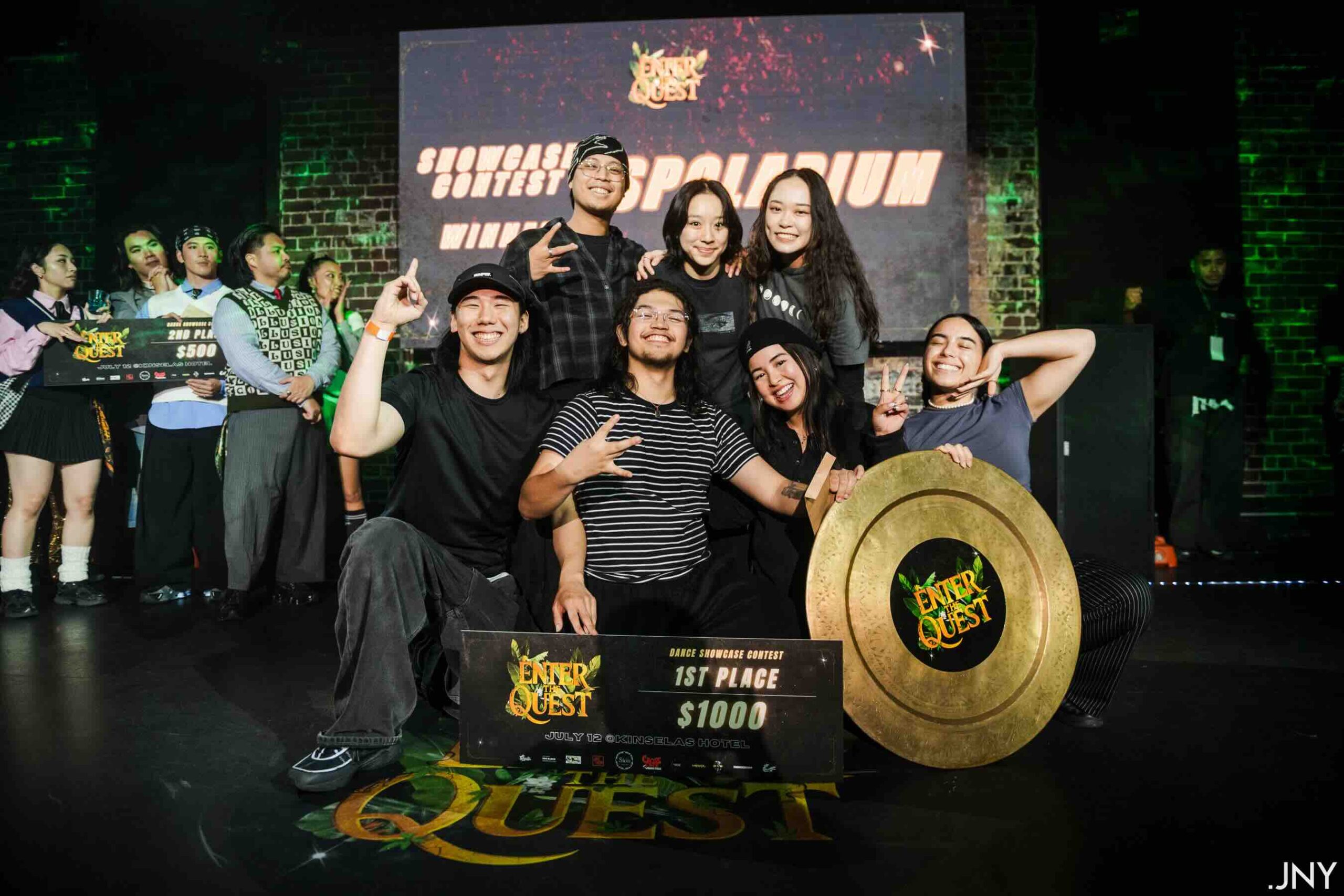
That environment shaped his standards as much as his style. It demanded consistency. It demanded presence. It demanded that dancers do more than copy movement well. They had to contribute, respond, and compete. Tamargo credits that world with helping build the artist he became, and the results speak for themselves. He won first place in two HHI divisions in one year and won first place in every national crew competition with Delinquents dance crew for a year, including HHI. He also represented Australia overseas several times with KCC and Delinquents, building a competition record that gave him standing in one of the toughest proving grounds available to a dancer.
That credibility did not stay contained inside crew culture. Tamargo carried it into a wider professional life that now reaches across performance, teaching, choreography, and direction. He trained under Diana Matos in MOTUS the Company and received a scholarship to TakeFlight in Ireland. He danced for Alden Richards live in concert and for Powerhouse Museum Parramatta. He has also worked in music videos, dance films, and live exhibitions, extending his practice well beyond one lane of the industry.
“Competition gave me a base,” he says. “After that, I wanted to see how far I could take the work into other rooms.”
He draws from hip hop, house, contemporary, commercial, and other forms, not to show range for its own sake, but to create a voice that can move freely between freestyle, choreography, stage performance, film, and direction.
“I was never interested in fitting one mould,” he says. “I wanted to build something with a wider language.”
That wider language also shows up in how he works with other dancers. Tamargo served as a choreographer and facilitator at KCC for four of the seven years he was a member. He also facilitated at Brent Street, IMI Entertainment, Movement Nation, and Village Nation, helping train dancers across multiple spaces in Sydney. Those roles matter because they place him inside the ongoing development of the scene, not just as a performer passing through it, but as someone helping shape its next generation.
He has also used that position to create opportunities where they are often limited. Tamargo notes that performance opportunities outside the competition world can be scarce for the community, which is one reason he has put time and energy into choreographing and directing music videos and live exhibitions. That choice reflects a broader sense of responsibility.
“Once you know how difficult access can be, you think differently about creating platforms for other people,” he says.
His own projects carry that same expansive thinking. Tamargo’s work often takes an interdisciplinary form, bringing movement together with film and live exhibition while drawing from his background across multiple art forms. The result is a practice that moves across forms without losing its movement foundation. He describes his art as dramatic, loud, playful, unapologetic, raw, and ambitious, and those qualities read less like branding than like a clear creative position.
He is now looking ahead to more stage and screen performances, along with the long-term goal of choreographing and directing his own shows. That future feels like a continuation of what he has already built. Piere Tamargo is not waiting to be introduced. He already stands as part of the proof that Western Sydney has been shaping the culture for a long time.
For information on Piere Tamargo, visit his Instagram.