
 Will Jones
The Nezz founder is focused on the financial friction companies learn to work around, from idle capital to high-value transactions that still depend on outdated coordination.

Every industry has a process people complain about in private and then keep using anyway. For Oluwalopeye “Lopsii” Olagoke, that pattern became impossible to ignore in financial operations. He had seen enough billing, payouts, compliance, and transaction workflows to understand that some of the most expensive problems in business do not always look dramatic. They look familiar.
A delay becomes normal. A manual check becomes part of the routine. A lack of visibility becomes something teams plan around. Money waits, people follow up, documents move through disconnected steps, and everyone accepts that this is simply how large transactions work.
Olagoke is building Nezz around a different belief.
“Some problems survive because people get used to them,” Olagoke says. “After a while, the friction stops looking like a problem and starts looking like the process.”
That idea sits at the center of his work as a fintech entrepreneur. Before Nezz, Olagoke founded and scaled Attendify, a billing and compliance company that enabled more than $90 million in billing and payouts. The company gave him a close look at how money moves through real operations, and at how much work can sit between agreement and settlement.
From the outside, a transaction can look simple. One party pays. Another party receives. The system records the movement. Inside the business, the story can be very different. There are approvals, compliance steps, status updates, timing questions, account details, trust concerns, and people trying to understand what has already happened and what still needs to happen next.
“The payment itself is often only one part of the job,” Olagoke says. “The harder part is coordinating everything around it so the people involved know where the transaction stands.”
That observation led him to the problem Nezz is now taking on: the way capital sits idle inside escrow and other high-value transaction processes while businesses rely on fragmented workflows to move deals forward. In many cases, the money is there. The parties are known. The transaction has a path. What slows it down is the coordination layer around the funds.
Olagoke does not see this as a small operational inconvenience. He sees it as a major blind spot in modern financial infrastructure.
The industry has spent years talking about real-time payments, stablecoins, embedded finance, programmable money, and settlement modernization. Olagoke believes those developments matter, but he also thinks the conversation often stops too early. Faster rails can help money move. They do not automatically fix the workflow that decides when, why, and under what conditions that money should move.
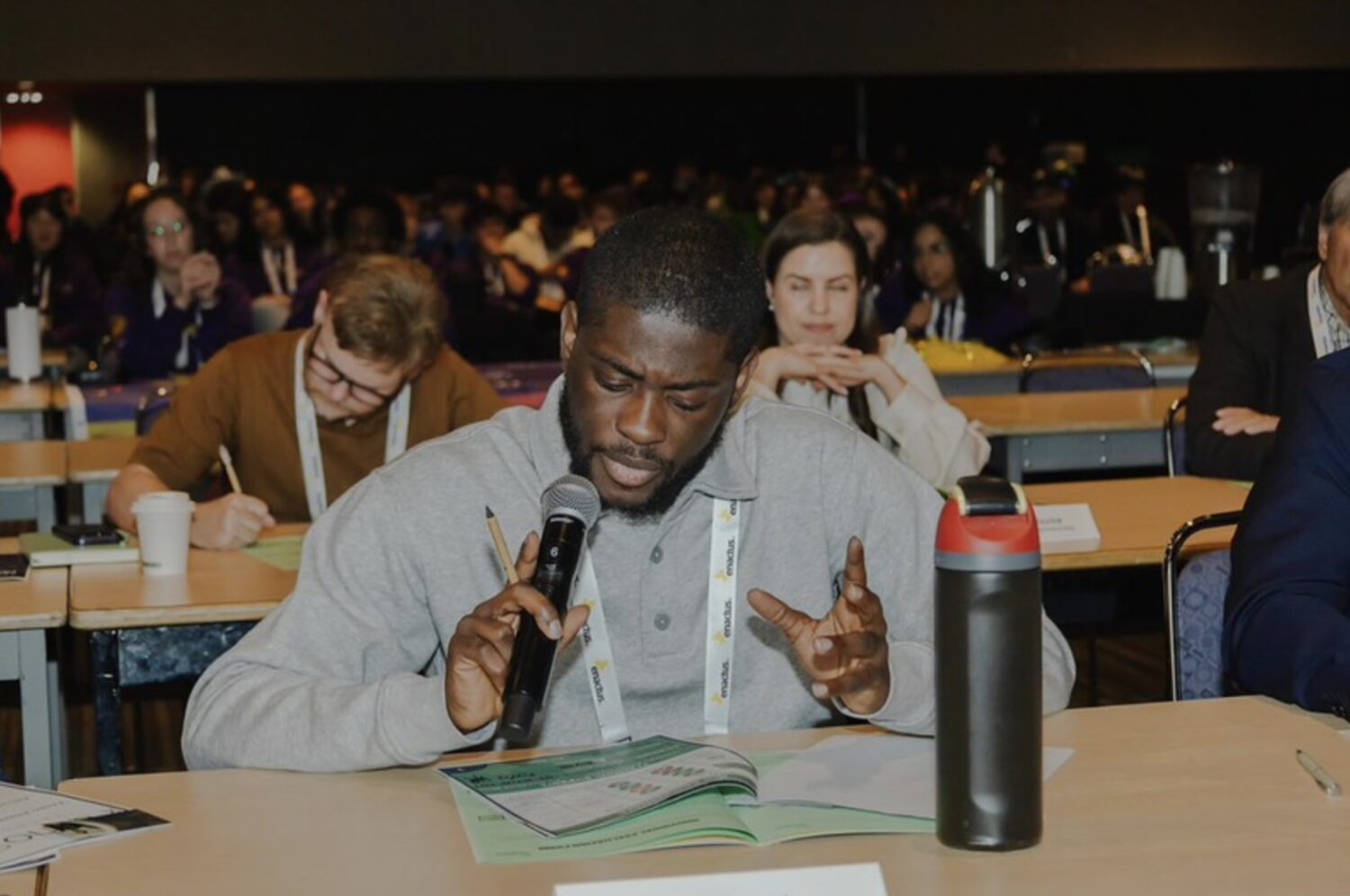
“People focus on the rails because speed is easy to understand,” he says. “But a transaction can still be slow, unclear, or expensive to manage even if the payment method is fast.”
That distinction has shaped Nezz. The company is building infrastructure for escrow, milestone payments, and high-value transactions, with a focus on reducing friction, improving visibility, and keeping capital more productive. Olagoke and his team have spent time speaking with title companies, manufacturers, enterprises, and financial infrastructure providers to understand how these workflows are handled today.
The people closest to the process often have the clearest view of what is broken. They know where updates get lost. They know which steps depend on manual follow-up. They know which parts of the workflow feel opaque because no one has given them a better way to see through it.
“You learn more by sitting with the people who manage the transaction than by guessing from the outside,” Olagoke says. “They can tell you where the system actually breaks.”
Nezz is still preparing to bring its first deployments into production, but the company has already developed an early transaction pipeline representing approximately $300 million in potential transaction volume. It has received a letter of intent from a manufacturing company and is engaged in pilot and infrastructure partnership discussions across multiple industries. The company has also established banking infrastructure through Wells Fargo via Priority.
The founding team brings experience from RBC, Interac, Deloitte, CIBC, Haventree Bank, and global payments infrastructure. Olagoke also points to investors from leaders at Harvard and MIT innovation labs, AstraZeneca, BMO, Circulant, and Corpay.
Those details are important because trust is not optional in the category Nezz is entering. Businesses do not change how they manage large transactions casually. Escrow and high-value payments involve meaningful capital, regulated requirements, and stakeholders who need confidence that the system respects the risk they already carry.
Olagoke understands that caution.
“You cannot walk into this space acting like every old process is foolish,” he says. “Some of these workflows exist because people are trying to protect money and manage risk. The question is whether the infrastructure can do that with more clarity and less wasted time.”
That is where his practitioner-first approach becomes important. Olagoke does not frame himself as someone commenting on fintech from a distance. His authority comes from building systems, moving money at scale, and discovering how financial workflows operate when they are no longer theoretical.
He has also learned that opacity is often built into the system. In some cases, people do not fully see what is happening because the process was never designed to give them that visibility. In others, the people managing the transaction have created informal workarounds so they can keep moving despite the gaps.
That can make the problem harder to sell and harder to solve. A visibly broken system creates urgency. A tolerated system creates habits.
“Businesses can become very good at managing around a bad process,” Olagoke says. “That does not mean the process is working. It means the people around it have learned how to absorb the pain.”
The long-term goal for Nezz is to help create a future where moving money through a transaction becomes as seamless, transparent, and efficient as sending information online. That does not mean removing the seriousness from major financial transactions. It means making the path clearer for the businesses responsible for completing them.
For Olagoke, the opportunity is in the part of finance most people do not see unless they have had to manage it. The waiting. The follow-ups. The unclear status. The capital sitting still. The coordination that lives between agreement and completion.
That is where he thinks meaningful change can happen.
“The biggest problems are not always the ones people are loudly debating,” Olagoke says. “Sometimes they are the ones businesses have quietly accepted for years.”