
 Kaitlyn Gomez
Why forgetting history makes it easier to repeat it
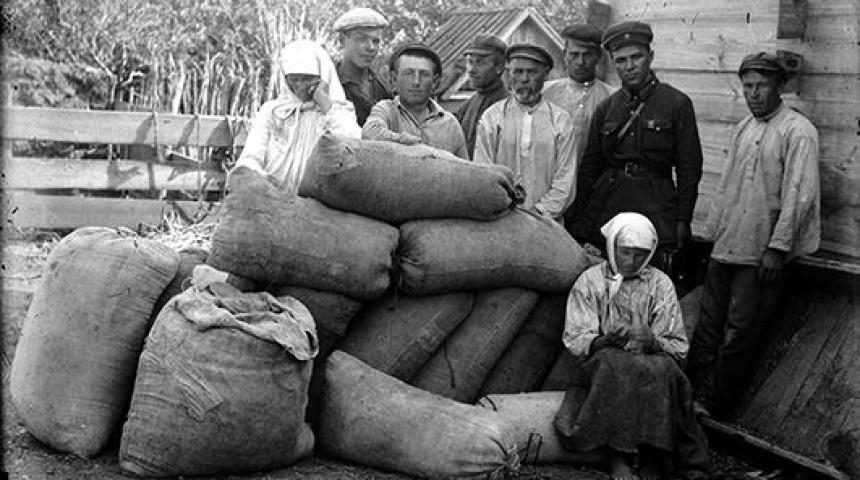
History doesn’t disappear all at once. It fades quietly. Facts soften, consequences blur, and stories once rooted in human suffering are gradually reduced to theory. Over time, the weight of lived experience gives way to abstraction, making it easier to revisit old ideas without confronting what they once cost.
In recent years, political conversations have revived ideologies long believed to be confined to history books. These ideas often reappear cleansed of consequence, discussed as intellectual exercises rather than lived realities. What gets lost in the process is memory, not just dates or numbers, but people.
For historian William Johnson, this fading of memory is not accidental. It is cultural. And it is precisely the silence surrounding that loss which inspired his latest book.
Remembering What History Tries to Forget
William Johnson is not interested in theoretical debates about Marxism. He is interested in outcomes. In his new book, Murderous Marxism, Johnson challenges readers to examine what happened when communist ideology moved from philosophy into power, and why that history is so frequently minimized today.
Rather than arguing abstract principles, Johnson asks a simpler, more uncomfortable question: Why do we treat some political catastrophes as moral warnings, while others are explained away as misunderstandings?
He refers to this selective memory as a black hole in historical memory, a place where the atrocities of the past are palliated, repackaged, or simply forgotten.
A Question That Followed Him
Johnson’s interest in the subject is not purely academic. During his graduate studies, he encountered narratives that surprised him, not because debate existed, but because the scale of violence under communist regimes was often dismissed or rationalized.
What struck him most was not disagreement, but omission. Death tolls were debated down. Policies were rebranded as well-intentioned. Responsibility dissolved into language.
That discomfort lingered. Years later, it became the foundation of Murderous Marxism, a book written not for specialists, but for general readers willing to confront history without ideological filters.
When Ideology Becomes Governance
At the center of Johnson’s work is a pattern. He begins with the Soviet Union, tracing how Marxist doctrine evolved into a system of state control marked by surveillance, repression, famine, and mass execution. From there, he expands outward, to Eastern Europe, China, North Korea, Cambodia, Africa, and Latin America.
Across regions and cultures, Johnson argues, the same structural ideas produced strikingly similar outcomes.
Policies rooted in the elimination of “class enemies,” the abolition of private property, and the suppression of religious and family structures consistently resulted in terror as governance. These outcomes, Johnson emphasizes, were not historical accidents. They were logical extensions of ideology enforced by state power.
Drawing on sources such as The Black Book of Communism and other historical studies, Johnson cites estimates of approximately 100 million deaths attributed to communist regimes over the past century.
Cambodia and the Cost of Purity
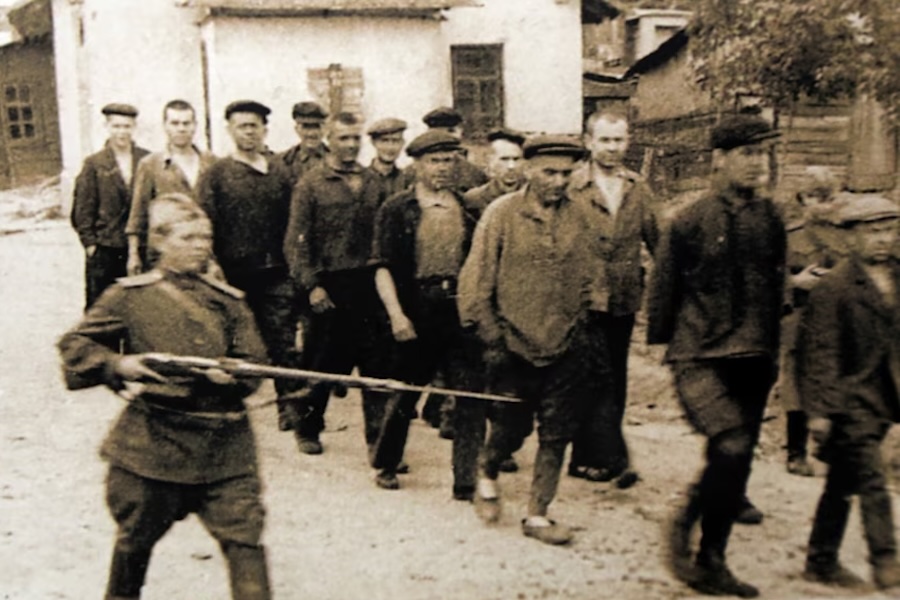
One of the book’s most harrowing examples is Cambodia under the Khmer Rouge. In the pursuit of ideological purity, normal human bonds were dismantled. Families were separated. Communities erased. Entire populations were restructured, or eliminated, in the name of an ideal society.
Johnson stresses that the violence was not chaotic. It was organized. Deliberate. Ideologically justified.
For him, Cambodia serves as a stark reminder of what happens when theory overrides humanity, and when moral accountability is deferred to the promise of a future utopia.
Patterns That Refuse to Be Coincidental
Johnson connects Cambodia’s devastation to earlier Soviet practices under Lenin and Stalin, forced collectivization, secret police, show trials, and famine. These methods, he argues, became templates rather than anomalies.
North Korea and Communist China, in Johnson’s analysis, represent further iterations of the same system. Despite cultural differences, the political structure produced labor camps, purges, and mass starvation with chilling consistency.
The repetition, Johnson suggests, should make dismissal impossible.
What the Book Asks of Readers
Murderous Marxism does not demand political allegiance. Instead, it asks for historical honesty.
Why are those totalitarian crimes that are well articulated in a society, whereas other totalitarian crimes are shrouded in hesitation? Why should some ideologies always be given the luxury of reinterpretation despite the fact that they have been demonstrated to have cost human lives in a vast number?
Johnson wants the readers to see communism as not a promise yet to be fulfilled, but a history, a history that has been recorded in the disrupted and lost lives.
The Responsibility of Memory
The reason why history does not repeat is because it is not the case that people forget facts. It repeats because societies choose which facts matter.
That choice, Johnson argues, shapes how power is understood, how justice is framed, and how future ideas are evaluated. Remembering is not about reliving the past, it is about recognizing patterns before they return under new names.
Murderous Marxism by William Johnson is Amazon, Barnes & Noble and other major publishing platforms. For readers seeking a clear, evidence-based examination of communism’s historical record, grounded in outcomes rather than abstraction, it offers a sobering place to begin.
Published and Edited by Hemingway Publishers