
 Daniela LaFave
Michigan lawmakers are considering a recently introduced bill that would make all online pornography illegal. Debates over the proposed bill show that there’s escalating tension between free speech, morality, and government regulation. House Bill 4938 (known as the Anticorruption of Public Morals Act) was introduced in Lansing earlier this month, and has already sparked sharp reactions from supporters and critics alike. In short, the bill would criminalize a wide range of sexual content online, raising questions about how such a law could be reasonably enforced, and whether it’s constitutional in the first place.
HB 4938 calls for strict prohibitions on producing, distributing, or creating access to any online material that depicts or describes sexual activity. The activity could be live footage captured on camera, written explicit content, or even audio that is sexual in nature. The proposed legislation goes further than pre-existing obscenity laws by directly banning “erotic ASMR,” moaning, or voice recordings that could be considered sensual. Another clause that has critics concerned prohibits depictions of what the bill refers to as “disconnection between biology and gender.” Critics argue this language would directly and negatively affect transgender and non-binary people. Should it pass, citizens caught violating the law would face felony penalties, including up to 20 years in prison (25 years if more than 100 pieces of banned material are found), and fines up to $100,000. The bill also places responsibility on online platforms to implement 24/7 scanning and immediate takedown tools to ensure that banned content is fully blocked in Michigan.
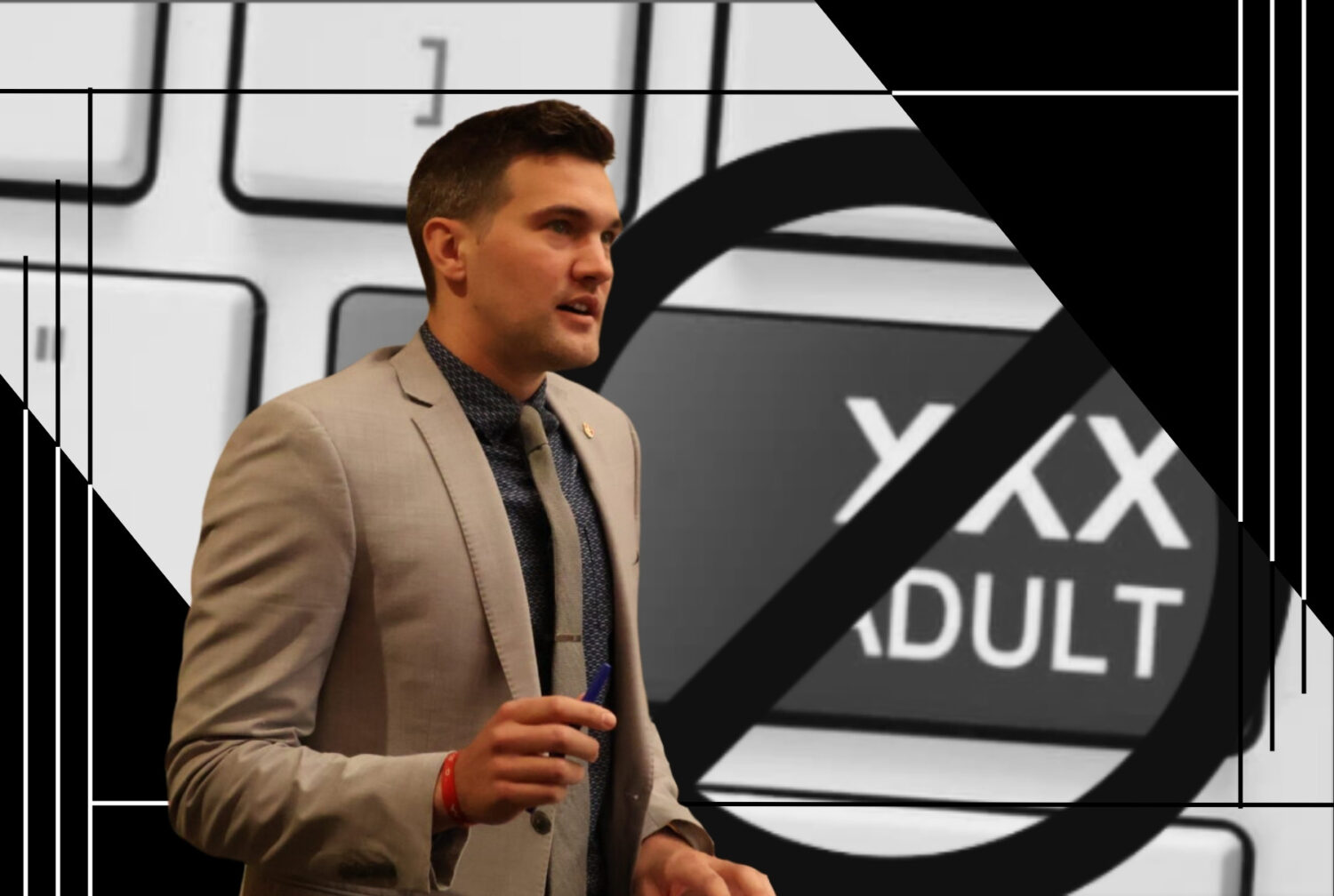
HB 4938 was introduced by Rep. Josh Schriver, a Republican who represents Michigan’s 66th House District. Schriver was first elected to the Michigan legislature in 2022, and has positioned himself as a hardline conservative on most social issues. His record in the statehouse shows support for measures that limit gender-affirming care and restrict what he refers to as “indoctrination” in schools. His sponsorship of HB 4938 is seen by many as a continuation of his broader cultural agenda. When introducing the bill, Schriver argued that existing obscenity laws are outdated, telling constituents, “Don’t make it, don’t share it, don’t view it.”
Should the bill pass and become law, it could transform how internet providers, social media platforms, and adult content creators operate in Michigan. Supporters argue it would give parents and schools more power to keep vulnerable children safe online. Enforcing the bill, however, would be highly difficult. Platforms would be tasked with constantly scanning enormous amounts of digital content in real time, raising not only privacy concerns but also questions about cost and feasibility. The bill’s language around gender presentation also has the potential to create far-reaching consequences for LGBTQIA+ content creators, artists, and educators, all of whom could find their work criminalized under the law’s definition of explicit content. Legal scholars believe that if the bill passes, it would face immediate First Amendment challenges. Historically, the courts have struck down sweeping bans on expressive content.
Civil liberties groups are on alert and warn that the bill’s definitions are overly broad. The language could mean that legitimate works of art, literature, and educational resources are in danger of being deemed illegal. Free speech advocates argue that banning written descriptions or audio recordings of sexual activity is inconsistent with decades of Supreme Court precedent. LGBTQIA+ organizations have raised alarms over the section addressing “disconnection between biology and gender,” saying it essentially criminalizes transgender identity and expression. Critics have also pointed out that the financial burden on tech companies would be significant, since building 24/7 surveillance systems and filters capable of effectively removing prohibited material is not affordable for most platforms. Should the bill advance beyond committee, opponents predict years of costly legal battles.
Currently, HB 4938 sits before the House Judiciary Committee, and its future is unknown. Supporters frame the bill as a long-overdue protection of public morals, while opponents see it as an attack on freedom of expression and LGBTQIA+ rights. Regardless of whether it advances or fades into obscurity, the fact that it was proposed at all shows there is still an ongoing national debate over how — or even if — states can regulate adult content in the digital age.