
 Nia Bowers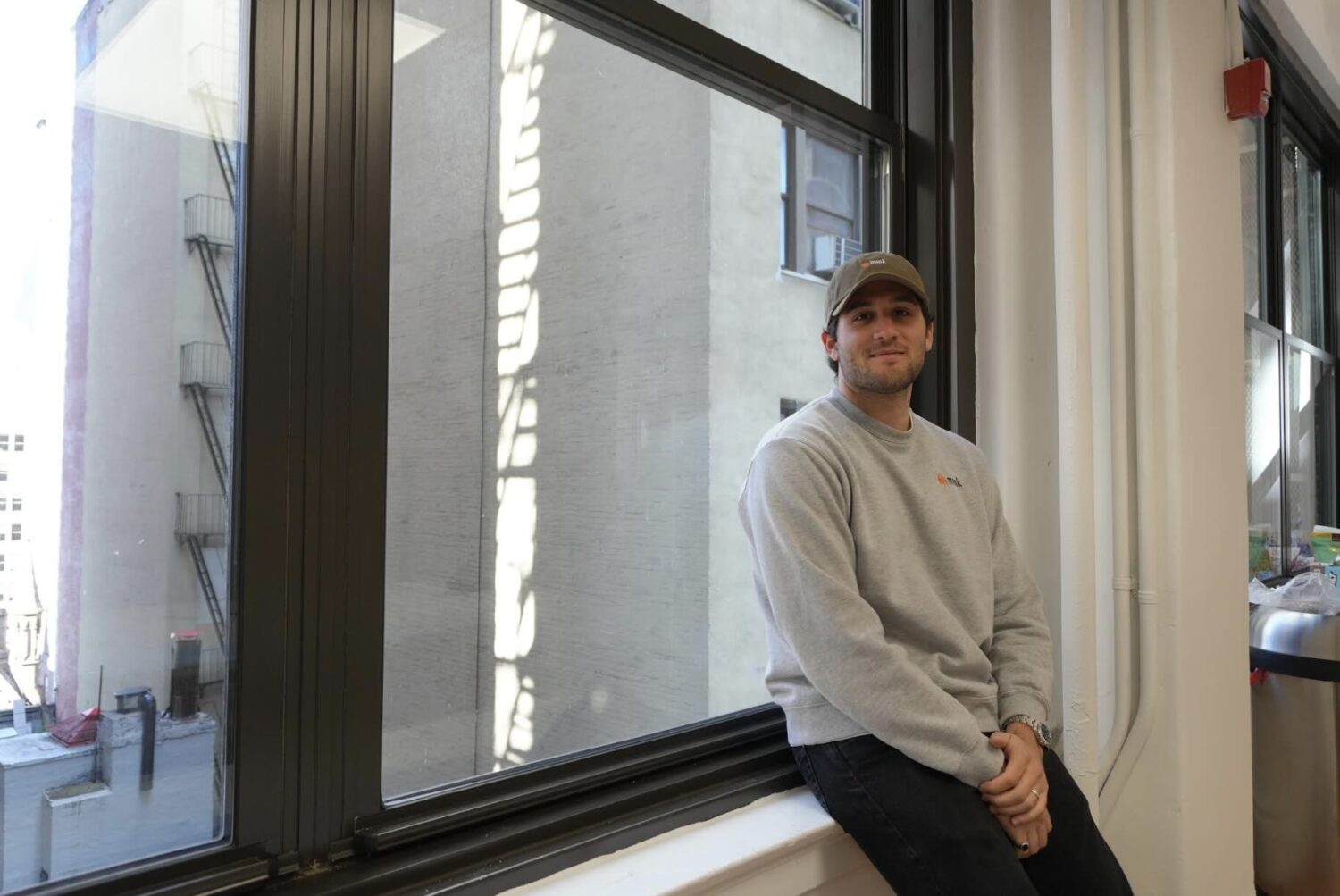
Late B2B payments are one of the quieter drags on the U.S. economy. When invoices go unpaid for 30, 60, or 90 days past terms, the businesses owed that money carry the cost in tighter working capital, slower hiring, and missed reinvestment. US small businesses with outstanding invoices are owed more than $17,000 each on average, with 56% reporting unpaid invoices and 47% saying invoices are more than 30 days overdue. The work of collecting that money has historically fallen to people making awkward phone calls and sending polite reminders. That work is slow, inconsistent, and expensive to scale.
Francesco Coacci is building the software meant to change that. As a Full Stack Software Engineer at Monk, a New York company building AI agents for accounts receivable automation, Coacci owns the collections side of the product: the system that decides how, when, and in what tone a growing roster of American businesses asks to get paid.
His thesis is straightforward. Done carefully, with the right constraints, autonomous software can make business-to-business payments more reliable, and free up capital that would otherwise sit idle on balance sheets across the country.
From a teenage game to autonomous agents
Coacci grew up in Genoa, on Italy’s northwestern coast, and came to engineering the long way around. He was a competitive sailor first, drawn to the sport because it was hard. “Since I was a kid, even my sport wasn’t an easy one,” he says. “I was a professional sailor before becoming an engineer. I was always looking for the hardest thing to do.”
His entry to technology came through his older brother, a physics student who, one weekend, floated the idea of building a video game together. Coacci took the design role because he couldn’t yet code. The division of labor stung enough that he taught himself the language so he could build too. By 15 the brothers had shipped a working game. At 16 he was freelancing for local companies, building websites and small partnerships. The work taught him less about any single tool and more about how a business runs from the inside.
That curiosity became the throughline. He earned a computer science degree, tried and wound down an early venture, and in 2023 moved to New York for a master’s at NYU in Computing, Entrepreneurship and Innovation, pairing computer science at the Courant Institute with strategy coursework at Stern. “I always liked all sides of a business,” he says. “I didn’t only like the engineering side and the computer science; I liked every step of the process.”
At NYU he and his brother built a consumer data marketplace, raised venture funding, and tested it with roughly 300 early users before he moved on, hooked, by his account, on understanding a company end to end.

Why the collections problem is hard
Collections is an unusually demanding place to put AI to work. The agent communicates directly with a customer’s customer about money owed, which means the cost of a wrong move is high: a hallucinated fact, a misjudged tone, or an escalation sent at the wrong moment can damage a real commercial relationship. Coacci’s central engineering challenge is keeping autonomous agents both effective and tightly bounded.
The harder half isn’t avoiding mistakes, though. A collections message only works if it persuades someone to pay, and getting an automated email to read like a person wrote it takes a great deal of data behind every send.
“A lot of the job now is system design,” he says. “I have to understand exactly how the agent behaves before I can review what it produces.” Rather than building one feature at a time, he now directs several agents at once and designs the constraints that keep them safe: the escalation logic, the guardrails against inventing facts, and the rules for when a human should step in.
One of those constraints is tone. A client can set how the agent comes across: patient and friendly with a customer who is genuinely struggling with cash flow or worth keeping on good terms, firmer with a habitual non-payer.
At Monk, engineers work in short cycles, each owning a defined slice of the product and accountable for what they ship in that window. Coacci owns collections while maintaining a working knowledge of the broader codebase, and monitors the collections agent daily to confirm it is sending the right messages and staying within its limits.
The larger stakes
The instinct that keeps Coacci building collections agents at Monk is the same one that pushed a teenager in Genoa to teach himself to code: find the hardest available problem and learn exactly how it works. The difference now is the stakes. The software Coacci builds sits at the point where American businesses establish and control their cash flow. At scale, that is the difference between capital that moves through the U.S. economy and capital that stalls.
For an engineer who has always wanted to understand businesses from the inside out, he sees it as a problem worth solving.