
 Nia Bowers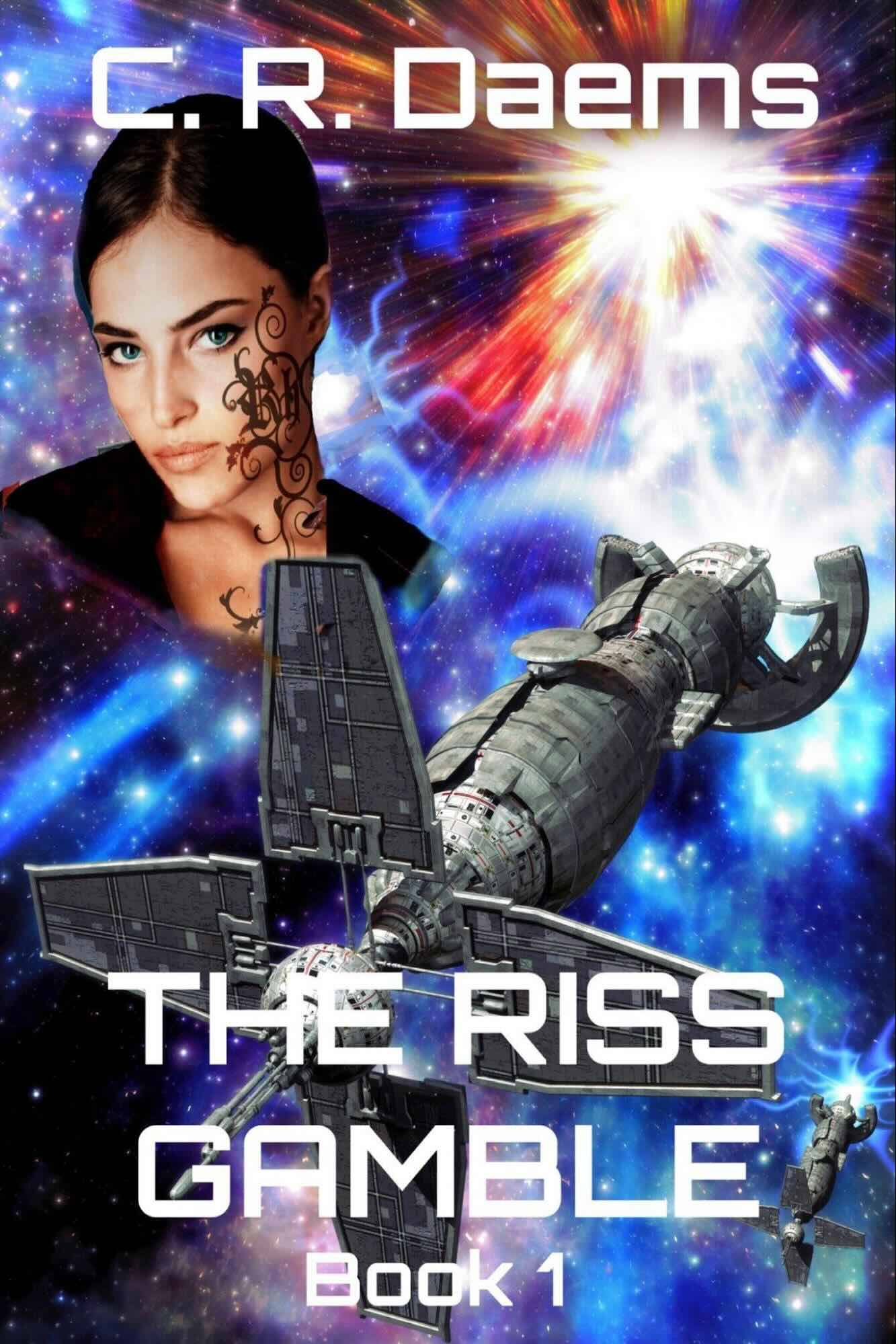
At 70, most retirees might settle into quiet routines. C.R. Daems, a former U.S. Air Force veteran with 22 years of service, followed by a career as a software engineer, decided instead to chase a spark that had never quite ignited in his earlier decades: storytelling. What emerged is a sprawling military science fiction universe anchored by The Riss Gamble, the 2011 (later reissued) opener to the six-book Riss series. Now boasting 38 published titles, Daems has carved a niche with loyal readers who praise his fast-paced plots, strong female protagonists, and a symbiotic alien concept that feels both intimate and expansive.
The Riss Gamble introduces Nadya Reese, a young woman from the mining colony Corona in the Sadr Alliance of Stars (SAS). Nadya dreams of escaping her gray, grounded life to see the stars. Her ticket arrives via the Riss Project: a radical initiative pairing select humans with telepathic Riss parasites, jellyfish-like aliens that attach to the host’s nervous system, granting enhanced abilities in exchange for a lifelong bond. Acceptance brings a naval commission, academy education, and the tattooed “Rh” mark that brands her as something alien.
Daems wastes little time on exposition. Nadya’s journey begins with her selection into the Riss Project and the anticipation of eventually bonding with a Riss partner. Their potential relationship, one of shared thoughts and mutual awareness, is introduced as both fascinating and deeply unsettling. This evolving concept hints at a future partnership that moves beyond fear toward understanding. The idea of sensing another presence within one’s own mind introduces a unique emotional dimension to the narrative.
The novel’s core strength lies in its central symbiosis. Unlike many alien-contact stories that emphasize conflict or wonder from afar, Daems places the alien within the human experience itself. Nadya is forced to confront what it means to share her body and identity with another consciousness, creating a dynamic that is equal parts co-pilot and companion. This concept introduces moments of curiosity and tension while also raising questions about control, trust, and individuality. As one reviewer noted, the series delivers “strong female characters and the military aspects” with a brisk pace that keeps pages turning.
Daems’ background informs the realism of the military setting. The SAS Navy functions as both defender and aid provider to far-flung colonies, delivering medical equipment, training, and transport. The structure and operations feel grounded, reflecting a system built on discipline and service rather than spectacle. Yet the story never glorifies war; it underscores its human cost. Prejudice against the tattooed Riss-humans adds a sharp social layer echoing real-world bias without overt preaching. Nadya’s uncertainty and persistence highlight quiet resilience over dramatic heroism.
Daems reflected on his unconventional path. “I never wanted to be a writer,” he admitted. Degrees in mathematics and computer science, plus a law credential, left little room for fiction until retirement. An avid reader of science fiction, particularly David Weber’s Honor Harrington series, he woke one day with a “pretty good idea” that felt unique amid a crowded field: two minds, one body, collaborating as driver and co-pilot. He approached writing like a “mind dump,” ignoring formal rules initially, then refining. The result is a first-person style that feels immediate and unadorned, avoiding lengthy room descriptions in favor of momentum.
Building the Sadr Alliance universe was evolutionary rather than meticulously planned. Daems started with the core concept of dual nervous systems and let the character drive the plot across colonies, naval academies, and training environments. “I actually don’t know what’s going to happen,” he said of his process. “I just write and go through different situations.” This organic approach helps the series avoid repetition across its six volumes (The Riss Proposal, Survival, Accession, Challenge, and Enemies follow), though Daems acknowledges the challenge of keeping long-running arcs fresh.
What resonates most with readers, he believes, is the symbiotic partnership and its subtle commentary on prejudice. The visible Rh tattoo turns Nadya into an outsider, forcing her to prove her worth repeatedly. “It’s really a great example of judging people for what they are rather than what you’ve heard about them,” Daems noted. The Riss, patient philosophers with thousand-year memories, contrast with human impulsiveness, yet both species must learn equality. Themes of late-life reinvention also echo Daems’ own journey: “You’re never too late to start over… finding a new profession or hobby and getting really serious over it is good therapy.”
As the series progresses, Nadya’s journey expands into more intense challenges, including military conflicts, personal trials, and the evolving reality of living with a Riss partner. These later developments build on the foundation established in The Riss Gamble, deepening both the character and the stakes over time.
The Riss Gamble has earned solid acclaim, roughly 4.5 stars across more than 1,000 reviews on major platforms, with praise for its engaging characters, military detail, and thoughtful concept. Some readers note uneven prose or pacing quirks typical of self-taught voices, yet many return for multiple reads, citing its escapist pull and emotional core. The series has grown primarily through word-of-mouth and Amazon’s ecosystem rather than heavy marketing, a point Daems hopes to change with greater visibility.
At its heart, The Riss Gamble is a gamble on the connection between human and alien, individual and institution, dreamer and reality. Nadya’s arc from a quiet colony technician to a candidate on the edge of transformation reflects a broader question of whether humanity can partner with the truly other without losing itself. Daems delivers the story with grounded detail and a focus on internal conflict, proving that some of the best stories come from authors who begin late but arrive fully formed.
For fans of character-driven military science fiction with a speculative twist, the Riss series offers a rewarding ride. Daems may have started at 70, but his universe feels built for the long haul. As Nadya’s journey suggests, the real challenge is not just reaching the stars, but deciding what you are willing to become once you get there.
Follow the author’s journey, explore the history behind the novel, and order your copy through the links below.
Amazon: https://tinyurl.com/yw2h6vx5
Facebook: https://tinyurl.com/yb4767ej