
 Michele Stueven
A barber shop, a historic LGBTQ+ disco club, and the home of LA’s first Black mayor are among six buildings that have received Historic-Cultural Monument status as part of a Black Heritage project led by Getty and the City of Los Angeles’ Office of Historic Resources.
The designations, announced in a press release today, are the result of the ongoing work of African American Historic Places, Los Angeles, launched by the city and Getty in 2022 to identify, protect, and celebrate the city’s Black heritage. Each site represents a unique piece of Los Angeles’ Black history.
Designated sites include St. Elmo Village, the Tom and Ethel Bradley Residence, Jewel’s Catch One, StylesVille Barbershop & Beauty Salon, the California Eagle offices, and New Bethel Baptist Church. Historic plaques were installed at some of the sites over the past few months, with celebrations to be held on Thursday, Aug. 14, at the Tom and Ethel Bradley Residence, St. Elmo Village, and Jewel’s Catch One. A celebration for StylesVille Barbershop & Beauty Salon will be announced at a later date.
To honor the Historic-Cultural Monuments and help the public identify and celebrate them, a bronze plaque will be placed on the properties, identifying key information about the sites and allowing the public to interact with a piece of history they may not have previously known.
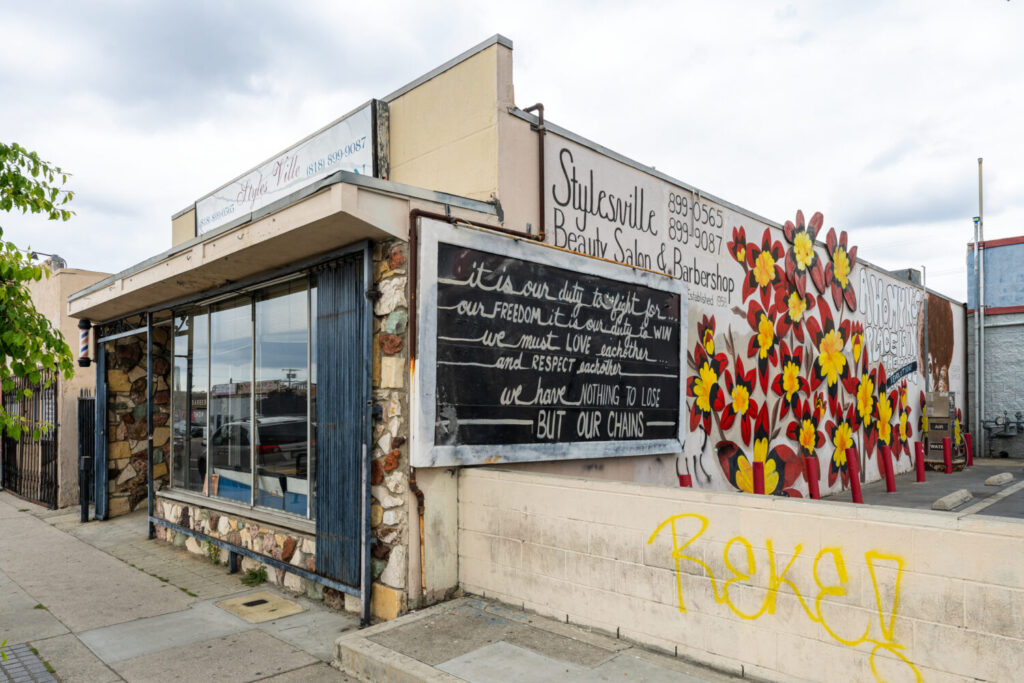
Stylesville (Courtesy Getty)
The Designated HCM buildings are:
StylesVille Barbershop & Beauty Salon
13161 Van Nuys Blvd, Pacoima, CA 91331
Council District 7
The San Fernando Valley rapidly developed in the 1940s, but its suburban communities were largely off-limits to people of color, aside from Pacoima, which was racially diverse. Fred and Ollie Carter were among Pacoima’s modest but growing African American community during this era. Well-respected community leaders, the Carters opened StylesVille Barbershop & Beauty Salon in 1958 and, in 1977, moved the business directly across the street to its current location. It is the oldest Black-owned business in the San Fernando Valley and is currently operated by third-generation owner, Gregory Faucett.
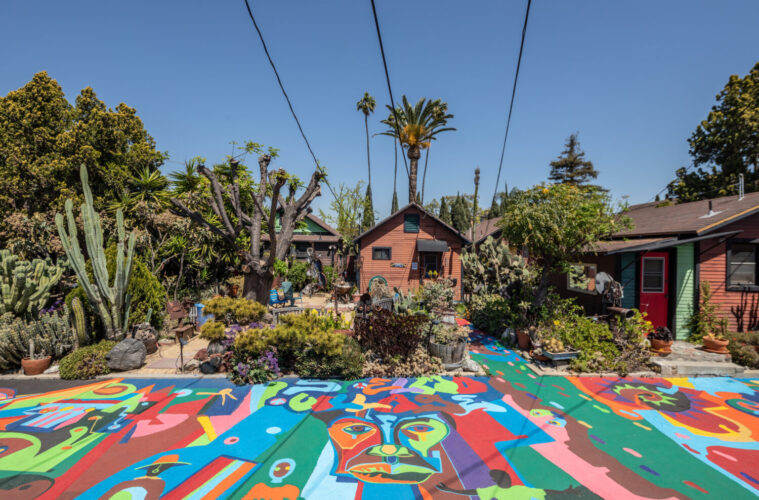
St. Elmo Village
4820-4846 West St. Elmo Dr., Los Angeles, CA 90019
Council District 10
This community-centric creative space located in Mid-City is a rare example of an artist enclave comprising residences, art studios, and cultivated landscapes. Founded by family members Rozzell and Roderick Sykes, it became a permanent space to display their art and welcome local and national artists to create and exhibit their work. The site was important to the Black Cultural Arts Movement, was an artist and community haven, and was an incubator for the Black Lives Matter movement. It is currently run by Jacqueline Alexander-Sykes and continues to host art workshops, festivals, and programs that engage local youth.
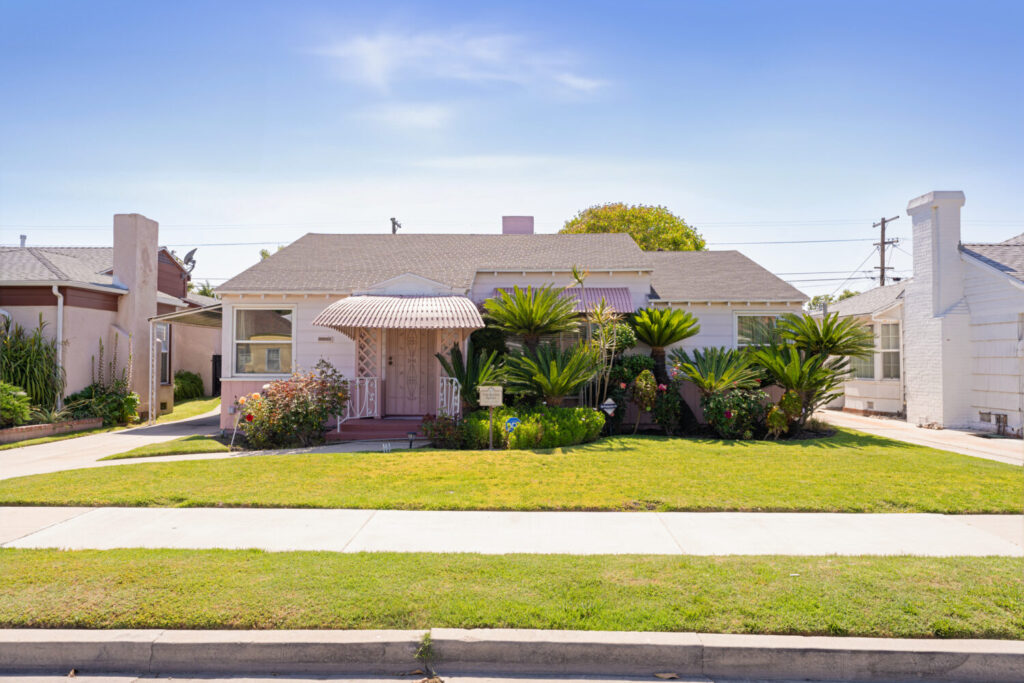
Tom and Ethel Bradley Residence (Courtesy Getty)
Tom and Ethel Bradley Residence
3807 Welland Ave, Los Angeles, CA 90008
Council District 10
Purchased by Tom and Ethel Bradley in 1950 despite racially restrictive covenants in the Leimert Park neighborhood, the building was built in 1940 and served as the home of the first Black mayor and the first Black First Lady of Los Angeles. Tom Bradley was one of the first African Americans to serve on the City Council and spent 20 years as mayor, the longest tenure of any mayor in the city’s history. He helped bridge gaps between diverse groups and interests across the city, a skill for which he is widely remembered. Ethel was a dedicated supporter of her husband and a skilled community leader in her own right.
Jewel’s Catch One
4061 W. Pico Boulevard, Los Angeles, CA 90019
Council District 10
Located in Mid-City, Catch One is the first African American female-owned disco club in Los Angeles and one of the city’s first gay nightclubs that welcomed LGBTQ+ people of color. Despite the prominence of bars and nightclubs to the LGBTQ+ community in the 1950s and 1960s, many did not allow people of color. Opened by Jewel Thais-Williams in 1973 and operated by her until 2015, it quickly became known as a hub for African American LGBTQ+ people. It also acted as a meeting space for numerous LGBTQ+ organizations and, during the HIV/AIDS epidemic, was a refuge and a venue for charity balls and fundraisers. Jewel was able to see the site designated before she recently passed away on July 7 of this year.
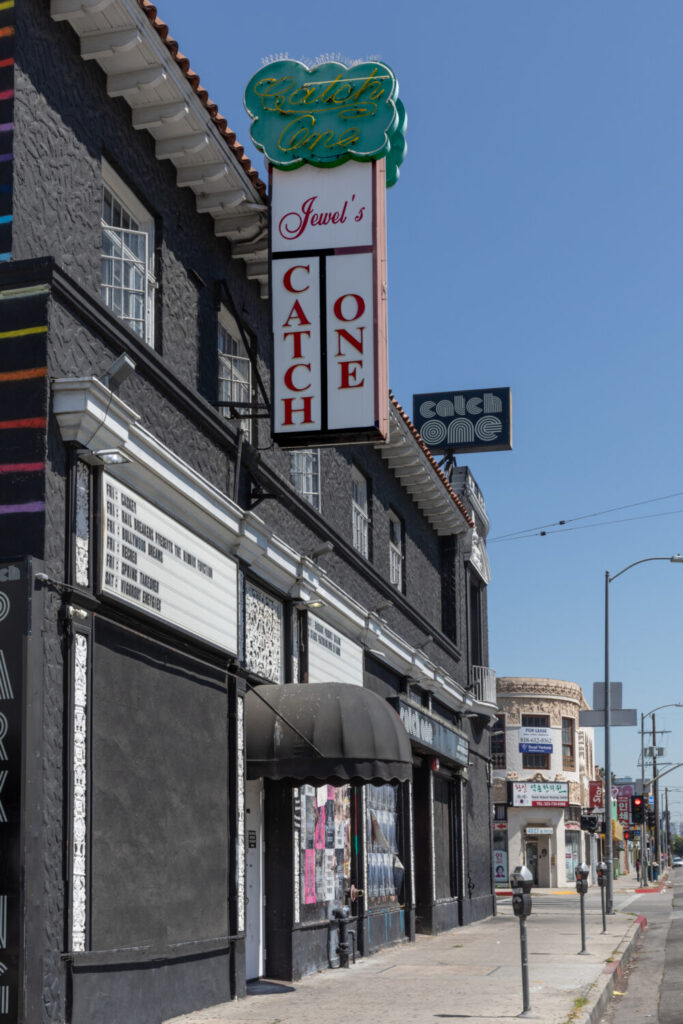
When Jewel’s Catch One opened in 1973, it was one of the first Black gay dance clubs in the US. (Courtesy Getty)
California Eagle
4071-4075 South Central Avenue, Los Angeles, CA 90011
Council District 10
Former home of one of the longest-running Black-owned and operated newspapers in Los Angeles, the California Eagle Newspaper was established by John Neimore in 1895. It continued to thrive once Charlotta Bass took over after Neimore passed in 1912. Bass was the first African American woman to run a newspaper in the U.S. The newspaper shed light on a variety of civil rights topics and gained national recognition for its coverage of segregation, discrimination, and issues of racial equity. The newspaper vacated the building around 1954, moving to two other locations before it folded.
New Bethel Baptist Church
503-505 E. Brooks Avenue, Venice, CA 90291
Council District 11
The establishment of the church in 1952 and the subsequent purchase of the subject property in 1957 coincided with a pivotal moment of African American migration to the Oakwood neighborhood. While African Americans have lived in Venice since the early 1900s, the Black population in Oakwood tripled as a result of the increased need for defense workers during World War II, as well as the displacement of African American and Latino residents of Santa Monica following the construction of the Santa Monica Freeway in the 1950s through 60s. Despite physical and demographic changes in Oakwood, New Bethel Baptist Church represents an anchor of stability for long-term residents, as well as a gathering place for returning friends and families who left the neighborhood.
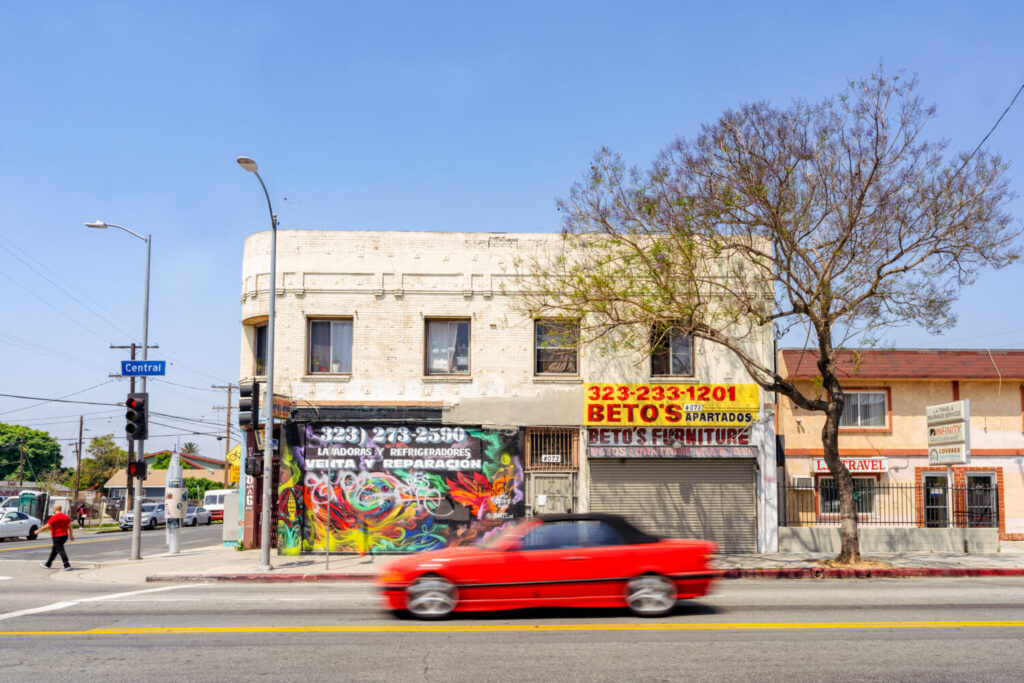
Former home of the Black Eagle Newspaper (Courtesy Getty)
Another major milestone for AAHPLA will be to collaborate with three historically African American neighborhoods in Los Angeles to develop better cultural preservation strategies. The project will work with steering committees in each neighborhood, beginning with Venice’s Oakwood neighborhood. Oakwood emerged as a Black enclave in the early 1900s as Black residents arrived for job opportunities—many helped build the Venice Canals, worked on the pier for the Abbot Kinney Company and other venues, and provided services for the Venice community as entrepreneurs. The next, Pacoima, was a major settlement for African Americans post-World War II, during a time when racially restrictive covenants prevented them from living in the San Fernando Valley. It gained recognition in the 1960s and 70s for its activism against police brutality, housing issues, and more. Finally, the Central Avenue corridor is a gem of musical heritage and legacy businesses, known as the jazz corridor during the 1930s and 50s, with a vibrant nightlife that earned it the nickname “Little Harlem.”
The AAHPLA project team continues to engage with the Los Angeles community to gather feedback about preservation practices that protect and celebrate local cultural heritage and learn what other sites the public wants to see receive historic landmark status. Anyone can submit questions or feedback to [email protected] and sign up for project updates.
In addition to AAHPLA, Getty is committed to broadening the awareness of and working to preserve Black cultural heritage. Other recent work in this area includes the Conserving Black Modernism initiative, which has just announced its third cohort of grantees; the African American Art History Initiative; and Getty’s joint acquisition of the archive of Paul R. Williams, one of the best-known 20th-century Black architects in the United States.